Blog

  • Patty Coldiron Fills Urgent Need with Urgent Care

    Patty Coldiron Fills Urgent Need with Urgent Care

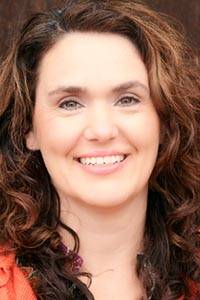
    The inspirational success stories of FNU graduates are many. Very few, however, start with dropping out of high school. Nonetheless, that is the way the story of how Patty Coldiron, MSN, FNP, Bridge 102, opened Hometown Urgent Care in January begins.
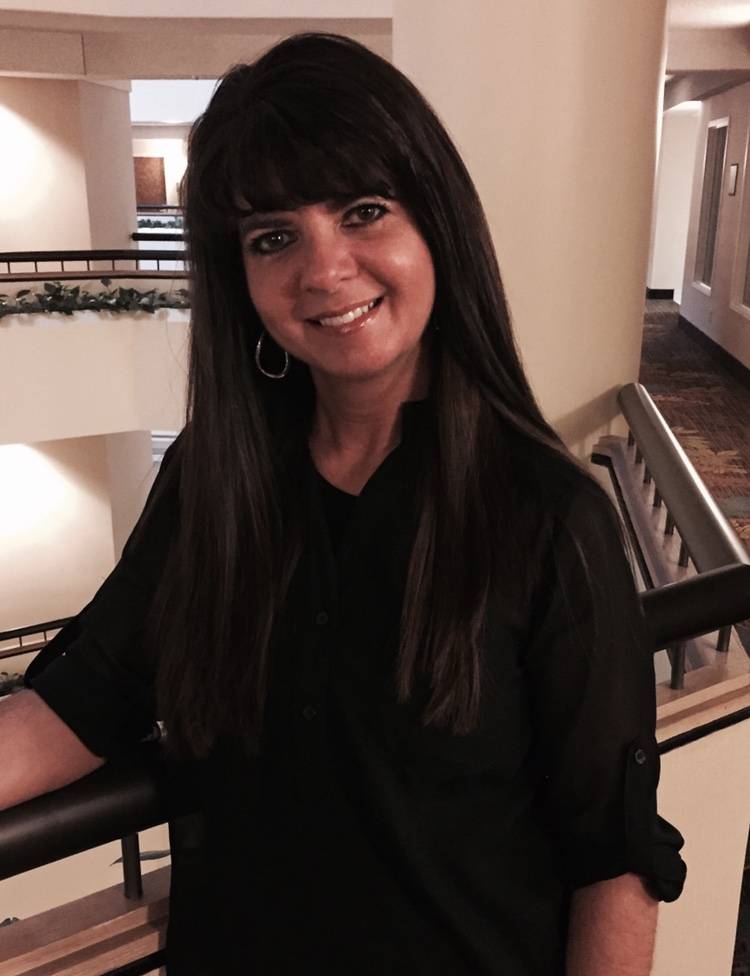
    Born and raised in rural Harlan County, Kentucky, Coldiron dropped out of high school and, at the age of 16, gave birth to her son Joshua, who was born with spina bifida.

    “He is the reason I went into nursing,” Coldiron said. “I wanted to know everything I could medically to be able to help him. Having knowledge in the field of nursing allowed me to help him physically and mentally, giving him the mindset he can do everything everyone else does, just a little differently.”

    Three years after Joshua’s birth, Coldiron went back to school and earned her GED. At 25, she began working as a Certified Nursing Assistant and worked for four years before being laid off. Undeterred, she kept moving forward.

    “I went to my local Community Action Agency and applied for the displaced worker’s program,” Coldiron said. “I was accepted and through that program, I received my licensed practical nurse degree. When the local community college bought the technical college, they came to me and asked if I would sign up for their Registered Nurse program.”

    In 2003, she graduated from Southeast Kentucky Community & Technical College with an associate’s degree in nursing. She worked in several areas, including on the medical/surgical floor and the ER, but her primary area was home health. With her career and goals coming into focus, Coldiron joined two of her friends in applying to FNU.

    “We all three were accepted, but I was the only one who decided to follow through,” said Coldiron, who graduated in 2015.

    During her last term, Joshua was in a motor vehicle accident and spent nearly a month in the ICU.

    “The days I had to work my mom (Pauline Boggs) would stay with him,” Coldiron said. “I sat in the hospital with him and would try to study and get ready for my boards. With the help of family and God, I finished and he eventually came home, but never the same. The knowledge I had from going to Frontier, without a doubt helped me care for him again, and let me keep him 14 more months after the accident.”

    Joshua passed away on May 31, 2016.

    “He was the kindest, gentle, humble person you would ever meet,” Coldiron said. “He was wheelchair dependent but that didn’t stop him. He was an avid outdoorsman. He loved to ride his ATV to hunt. He also loved to fish. He drove independently with gears fixed onto his car. He worked as a night watchman and in a factory making apparel for the armed forces. He lived a normal life.”

    Patty’s other son, Kacy, has a master’s degree in Occupational Safety and works in Atlanta. He and his wife Kendra have a son, Emmerich.

    Dealing with boards and Joshua’s passing, Coldiron pressed on. She worked at a local hospital as a family nurse-practitioner until, in April 2020, she was one of many to be laid off due to the COVID-19 Pandemic. She began working for a private-owned urgent care provider and had to travel for work. That was the turning point.

    “The latter part of 2020 I decided if I am ever going to start my business now is the time,” Coldiron said. “I asked medical assistant Katie Pierce if she would help me. She jumped in and got the insurance and providers credentialed. We opened Hometown Urgent Care in Harlan County on January 4, 2021.”

    Not only was opening her own practice what Coldiron needed, but it was also what the community needed as well.

    “In Harlan, there is the emergency room and primary care offices,” Coldiron said. “I knew from working the ER there was a need for urgent care. My community had never had an urgent care medical center.”

    Proof of that need was seen immediately. In the first five months of being open, Hometown Urgent Care has had more than 1,000 patients. The clinic employs two receptionists, three medical assistants, three nurse practitioners, and the office administrator. It is open daily from 10 a.m. to 8 p.m. to be accessible to working families.

    “The community has welcomed us with open arms,” Coldiron said. “Parents who work and struggle to get their children or themselves to a primary care provider are grateful for health care in hours that will work for them.”

    Coldiron knows that there are other communities like Harlan in need of an urgent care facility and intends to help fill that void in the future.

    “My goal is to open more Hometown Urgent Care clinics in other rural areas that have a need for this sort of clinic and are having to utilize the emergency rooms for minor and urgent illness, especially after hours,” she said.

    Coldiron’s drive and determination are apparent. With every setback, she seems to respond with even more resolve than ever. While that certainly comes from within, she credits FNU with developing her skills and preparing her to provide the care her community needs.

    “Frontier Nursing University gave me the knowledge to make a profound impact in health care from pediatrics all the way to geriatrics,” she said. “Frontier taught me through the program experience, didactic course, and clinical skills, to be above standard. Frontier not only gave me knowledge, but they also gave me confidence in the assessment, diagnosis, and delivery of treatment.”
  • Frontier Nursing University Awarded HRSA Grants Totaling $4,140,000

    Frontier Nursing University Awarded HRSA Grants Totaling $4,140,000

    The Health Resources and Services Administration (HRSA) has awarded Frontier Nursing University (FNU) two grants totaling $4,140,000. The HRSA Behavioral Health Workforce Education and Training grant totals $1,920,000 and the Nursing Workforce Diversity grant totals $2,220,000. HRSA, which is an agency of the U.S. Department of Health and Human Services, will award the funding for both grants in annual installments over the next four years. 

    “We are so thrilled and thankful to have been awarded these grants by the Health Resources and Services Administration,” FNU President Dr. Susan Stone said. “These funds will enable us to expand on the important work we are already doing to address two glaring needs in our nation’s healthcare system: a shortage of psychiatric-mental health nurse providers and a lack of diversity among healthcare providers. We have been dedicated and intentional in our efforts to prepare our students to fill these needs, and the HRSA grants are verification of our leadership in these areas of focus and of our potential to make substantially more progress in the years ahead.”

    The Behavioral Health Workforce Education and Training (BHWET) grant project will be led by Dr. Jess Calohan, DNP, PMHNP-BC, Chair of FNU’s Psychiatric Mental Health Nurse Practitioner Department. The project period extends from July 1, 2021, to June 30, 2025, with the award for the first year totaling $480,000. The goal of the project is to increase the number of psychiatric-mental health nurse practitioners who are diverse in race, ethnicity, and other underrepresented populations serving in rural and medically underserved communities through collaboration with clinical Experiential Training Site partners. The grant project will support curriculum development related to child/adolescent care, interprofessional team-based trauma-informed care, and additional telehealth simulations. Importantly, this grant will provide $290,000 annually in scholarships for Psychiatric-Mental Health Nurse Practitioner students. 

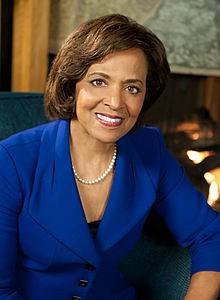
    The Nursing Workforce Diversity (NWD) grant will be led by FNU Chief Diversity and Inclusion Officer Dr. Geraldine Young, DNP, APRN, FNP-BC, CDCES, FAANP. The project period extends from July 1, 2021, to June 30, 2025, with the award for the first year totaling $555,000. The overarching goal of the NWD program is to increase the number and diversity of certified nurse-midwives across the United States who serve in rural and underserved areas in an effort to prevent and reduce maternal mortality. Central to this is the need to increase nurse-midwifery education and training opportunities for students from disadvantaged backgrounds and see them through to success. The grant provides $166,500 annually for scholarships for nurse-midwifery students of color. 

    FNU’s objectives of the project are to increase its percentage of students of color (SOC) enrolled in the certified nurse-midwifery program to 30% by 2025, to retain at least 85% of nurse-midwifery SOC, and to graduate a total of  75 nurse-midwifery SOC every year during the grant period (2021-2025). Additionally, FNU aims to increase the percentage of its faculty of color to 20% by 2025 and to retain at least 85% of faculty of color during the grant period. 

    “Research has shown that healthcare outcomes improve when culturally concordant care is provided,” Dr. Stone said. “These grant projects align with our own strategic plan goals to increase the diversity of our student body, our faculty, and our staff, with the understanding that doing so will improve the health care system in the U.S.”

  • FNU Announces The Winter Term Circle of Caring Award Winners

    FNU Announces The Winter Term Circle of Caring Award Winners

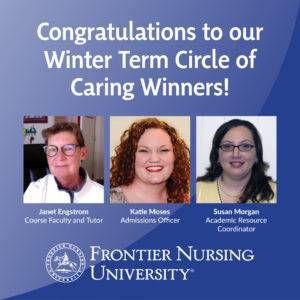
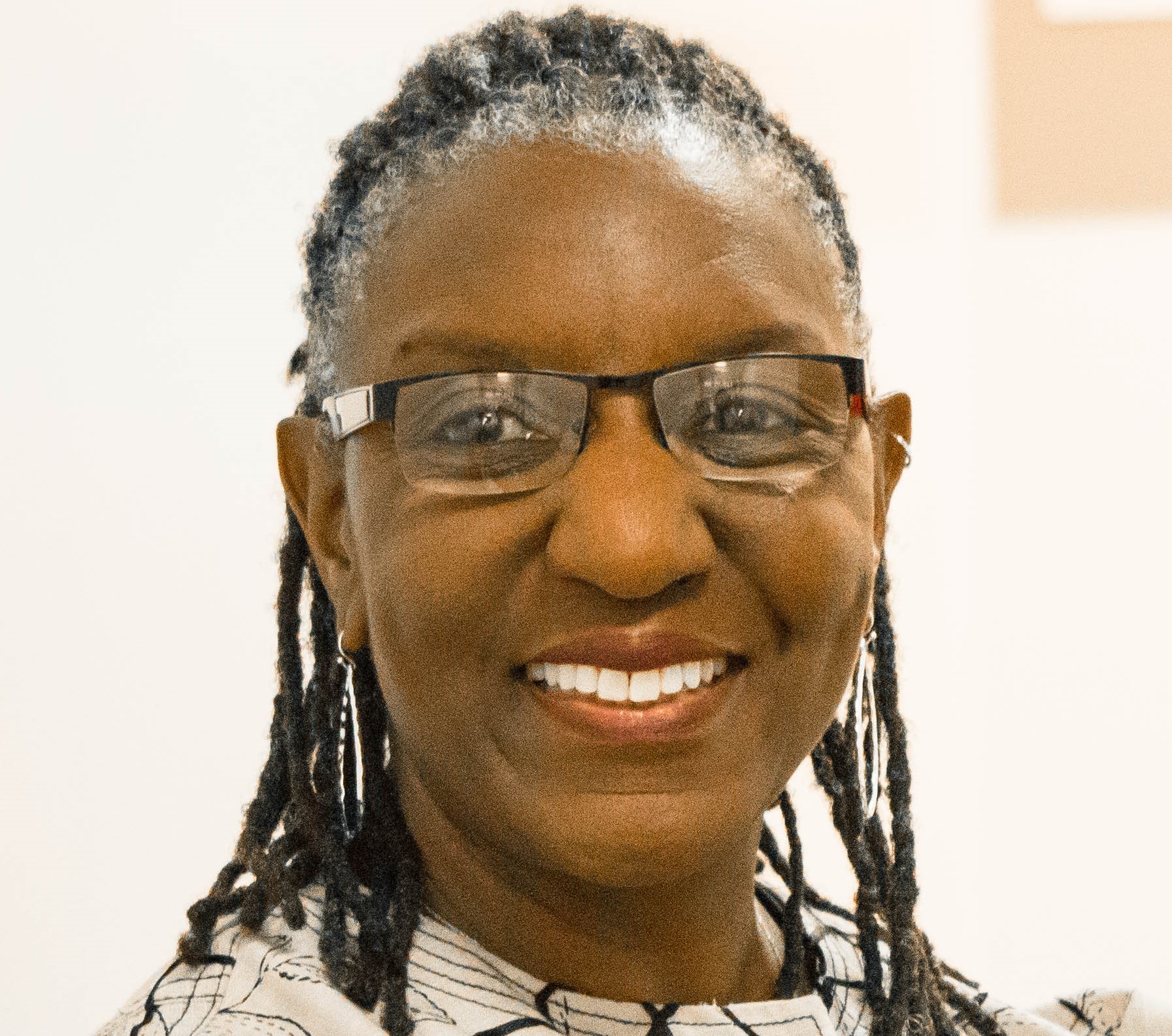
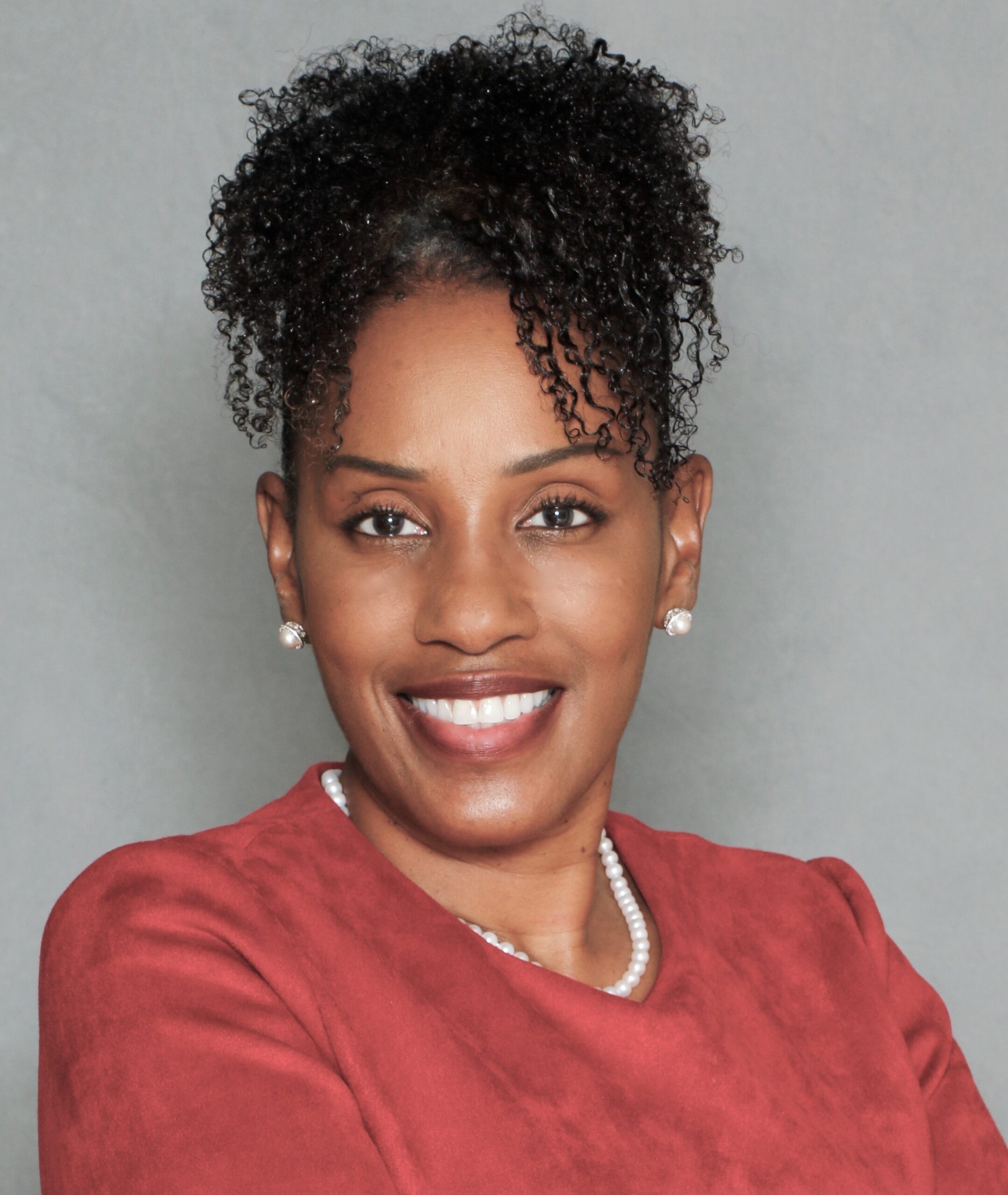
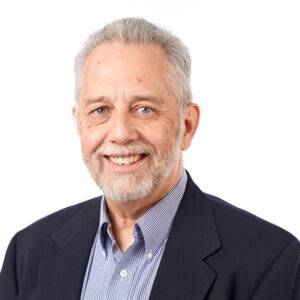
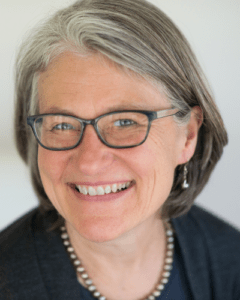
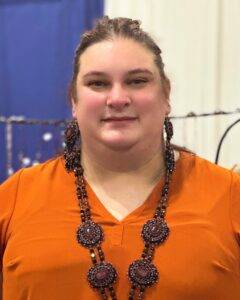
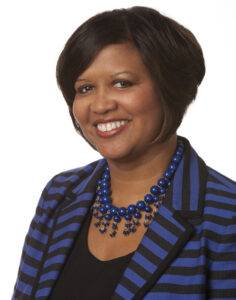
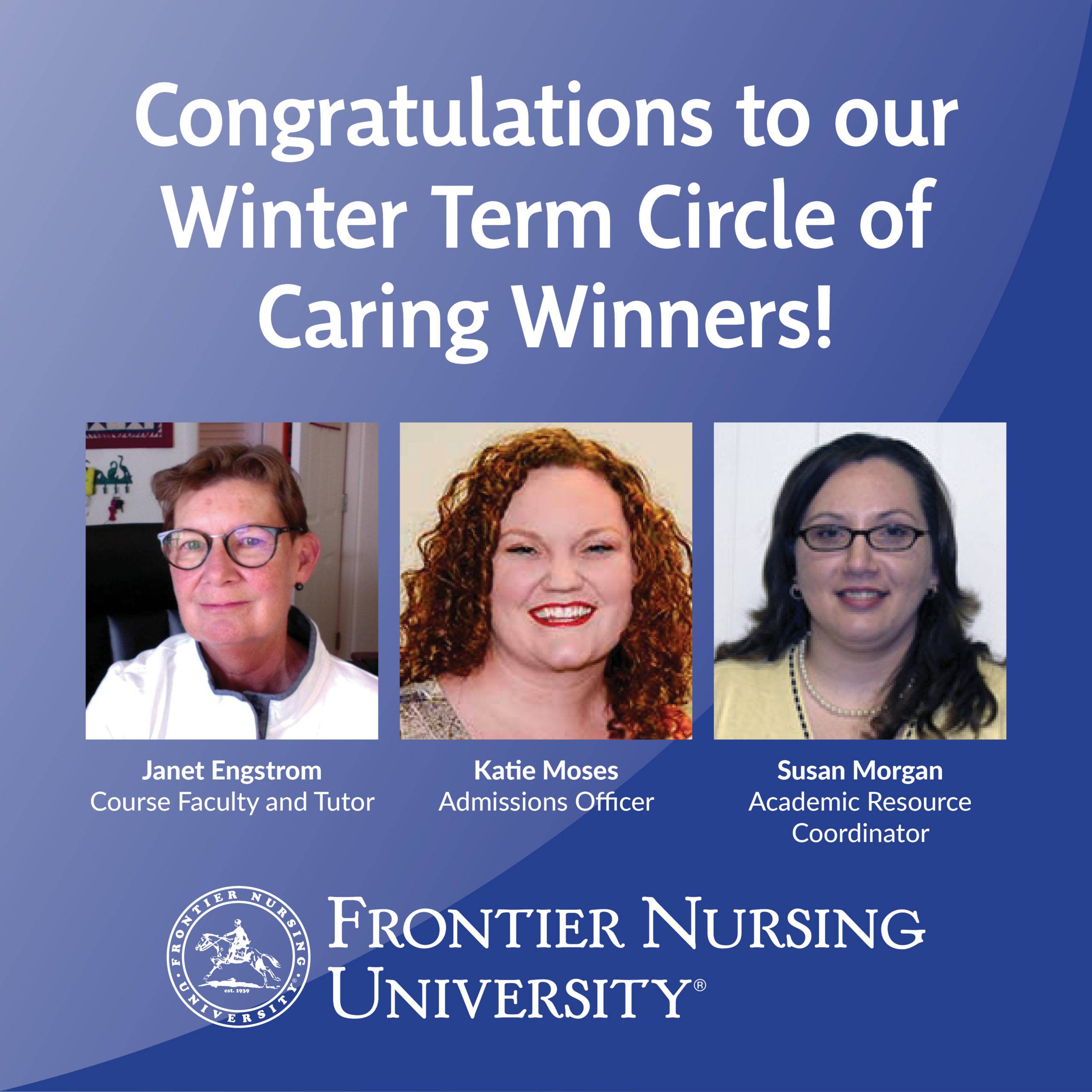
    Frontier Nursing University (FNU) is proud to announce our faculty and staff winners of the Winter term 2021 Circle of Caring Award! This year’s faculty winner is Jan Engstrom, and for the first time, there are two staff winners this quarter, Susan Morgan & Katie Moses, who are both admissions officers.

    Circle of Caring Winners
    Winter 2020 Circle of caring winners

    The Circle of Caring Award is given to recognize FNU faculty and staff members who go above and beyond in upholding our mission and contributing to our Culture of Caring.

    Nominations for this award were submitted anonymously by faculty and staff. A committee then voted on each nomination based on the following Culture of Caring characteristics: professionalism, mutual support, respect, positive communication, and inclusivity.

    Dr. Engstrom was nominated by three different sources this quarter. Here is what they had to say about why she deserved to be the winter Circle of Caring faculty winner:

    Nomination #1 – “This past term, Dr. Engstrom went above and beyond to assist the PC702 faculty/team when a colleague was out sick. She picked up several extra BBBs while continuing her diligent student assistance on our Discussion Q&A board. Dr. Engstrom is an unbelievable tutor and her flexibility to meet with students is unmatched. She is available on nights and weekends, hosting group and one-on-one sessions. Dr.Engstrom took on an extraordinary amount of work–and it should and needs to be acknowledged and celebrated. We are so lucky to have her as a colleague, friend, and example of excellence to our students. Additionally, Dr. Engstrom recently sent each of the faculty on our team a unique book that was chosen based on individual interests. It meant a lot to me and the others to feel seen and heard by a fellow team member.”

    Nomination #2 – “In the middle of the Winter 2021 term, one of our team members became ill and missed over three weeks of work. Dr. Engstrom offered to take over the two modules assigned to that faculty member. Jan taught the BBBs, reviewed the modules, and made sure the assignments were correct before they opened. The most amazing thing about this is that Dr. Engstrom is half-time in the course and tutors for 10 hours a week. On top of everything else she does, she took on a full-time faculty’s work for two modules. Taking on this work was a truly excellent show of professionalism and caring for the team and students. She went above and beyond. She truly exemplified the Culture of Caring at FNU.”

    Nomination #3 – Dr. Engstrom goes above and beyond for students. Students consistently praise Dr. Engstrom for her passion for her work, taking the time to meet with them, her communication style, and explaining course material effectively. She receives positive praise term after term.

    Upon hearing of her award, Dr. Engstrom responded, “I am deeply honored by this award. We are living at a time when we are facing the greatest health crisis in a century and undergoing sweeping social change. It is more important than ever to practice the principles in the Culture of Caring: respect, inclusivity, positive communication, mutual support, and professionalism. The words in Frontier Nursing University’s Culture of Caring are words to live by and can help us move peacefully and productivity through this challenging time.”

    Although Frontier historically only chooses one individual in each category per quarter, both Susan Morgan & Katie Moses stepped up to the plate and exemplified what a Culture of Caring means.

    Here is what their nominator had to say about their example:

    “Yesterday, I went to campus to receive my second covid shot. As I waited in line, I witnessed the most amazing kindness and service from my two coworkers, Susan Morgan & Katie Moses. After receiving their first shots, they buzzed around the long, long line of eager people waiting their turn outside. They chatted with many of these people but also brought wheelchairs and folding chairs for some of the older adults waiting outside. In one particular instance, they brought an elderly woman, “Miss Millie,” a wheelchair, wheeled her in to receive her shot and waited with her afterward. Miss Millie was quite frail and could not have navigated the long line and vaccine process without the additional help. Additionally, Miss Millie’s ride could not be located, so Morgan and Moses used their cell phones to call and try to locate her driver. On my way out, I watched them help Miss Millie into Susan’s car to drive the woman home. I do not believe Morgan and Moses were the “official FNU volunteers” on duty that day, yet, they were so kind and generous in helping others. They were wearing their blue polos and name badges and provided the perfect picture of an FNU employee. These two brought 110% FNU spirit to the vaccine clinic, and I loved witnessing such a beautiful act of kindness! I know Miss Millie was thankful to have them there supporting her, too.”

    Here is what Morgan and Moses said after hearing of their award:

    Morgan- “During the event in question, we did not think anyone saw us. We only saw an individual in need. I try to live by the words Kindness is free and most always accepted. We saw an individual in need, and no one was there to help her. It was my honor to meet her and to spend that time with her. She was a very wise lady with a kind heart. I did not look for any recognition and only want to be kind to others to make my little corner of the world a better place.”

    Moses- “Firstly, I am always pleasantly surprised to be considered for this award whenever I am nominated, so to be chosen is an honor. Secondly, I’d like to think that I am a person who tries to do what is right for someone in need, especially when it seems more of a necessity or obligation than just on a whim. I’m glad to be a part of a team that encourages kindness and recognizes those who show it to each other in this day and age when it is needed most.”

    Thank you to Jan, Susan and Katie for being an excellent example of FNU’s Culture of Caring! We love seeing all of the positive work people in the FNU community are doing every day! Click here to submit a nomination for the summer term Circle of Caring awards.

  • Student Spotlight: Rachel Featherstone- Filling the Gap of Post-Birth Care

    Student Spotlight: Rachel Featherstone- Filling the Gap of Post-Birth Care

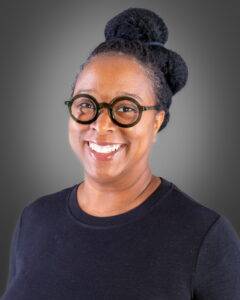
    Frontier Nursing University (FNU) Student Rachel Featherstone, WHNP-BC, MSN, PMH-C, hasHeather Featherstone spent their career finding problems in the world around them and looking for ways to meet those needs. Originally a member of the United States Army, Featherstone began to think about switching their career path after having a challenging birthing experience within an Army hospital.

    “I felt disrespected by a lot of the hospital staff and had a very emotionally draining delivery,” Featherstone said. “I walked away from that experience thinking when I get out of the military, I’m going to make a difference for other people in this position and become a midwife.”

    After finishing their time in the military, Featherstone became certified as a nurse and then moved on to FNU to pursue a Certified Nurse-Midwife degree when they realized that midwifery might not be the best fit for them after all. 

    “As a single mother who was already sleep-deprived, the schedule of a nurse-midwife simply didn’t seem like one that I would be able to sustain,” Featherstone said. “During that time, I also realized that my favorite part of midwifery wasn’t the births. What I really loved was sitting down and talking to people and building relationships with them as they transitioned into parenthood.”

    Following this revelation, Featherstone pivoted to the Women’s Health Nurse Practitioner (WHNP) program with the intention of pursuing a Psychiatric-Mental Health Nurse Practitioner (PMHNP) degree following graduation. Featherstone is currently in the clinical portion of earning their PMHNP.

    Once Featherstone earned their WHNP, they were given an exciting opportunity to build a cutting edge interventional psychiatry clinic with a physician where they were able to dive into research on neurotransmitters and learn all about mental health on a cellular level. However, they really missed working with pregnant and postpartum families. So, when COVID-19 changed the face of healthcare, Featherstone realized it was time to open their own telehealth practice. 

    “I knew I wanted to work where the need was the greatest,” Featherstone said. “After significant research, Idaho was the place I chose to open my telehealth clinic.”

    Featherstone chose Idaho because every county in the state is underserved in mental health services. Additionally, in 2020, Idaho saw an influx of population as people in California sought a cheaper cost of living. Families from multiple western states fled wildfires and chose to reside in a less volatile area.

    “Idaho was in desperate need of mental care before 2020,” Featherstone said, “even though I live in Virginia, I knew this was the community that most needed my services.”

    In November, Featherstone opened Eucaplytus Health, a private practice focusing on perinatal mental health. Upon opening, Featherstone reached out to the public health department, the doula community, and Idaho pediatricians to build a network that could best connect them to new patients who could be screen and treated early.

    One of Featherstone’s mottos for Eucaplytus Health is “bringing the heart of midwifery to mental health.” Featherstone chose this because although they transitioned away from midwifery, they still feel very connected to the mission of building relationships, sharing helpful information, and honoring the decisions of their patients. 

    “Perinatal health is so misunderstood by healthcare providers for how common these issues are,” Featherstone said. 

    Between 1 in 5 and 1 in 7 birth parents experience a mood disorder. Yet, many parents are afraid to take drugs for their mental health because they are scared of the effects on the baby. However, most of what these parents have heard is misinformation. The reality is that the risks are much higher for a new parent experiencing mental distress than for a fetus or baby whose parent is stable on psychiatric medication. 

    “I believe it is important to prepare birthing parents for the emotions they may face and inform them that medication is better for them and their baby than suffering,” Featherstone said. 

    “It is the 6-9 month postpartum period where we see the highest rates of suicides and overdoses following a pregnancy,” Featherstone said. “This is due to several factors. At this time, it is common for parents to have returned to work, be caring for multiple children, and have an expectation of feeling ‘normal’ again, when, instead, the family is constantly evolving and there is usually a lot of chronic sleep deprivation. Unfortunately, the combination of these factors can lead to a breaking point.”

    “I truly believe that the most important part of my job is listening,” Featherstone said. “So many women simply need someone to genuinely ask them how they are feeling, how their body is doing, and what struggles they are facing. OBGYNs and psychiatrists both do great work, but they are often overwhelmed by the unique needs of these patients. We need more people specifically trained and dedicated to helping parents in these transitional stages.”

    Featherstone is committed to reaching as many parents as possible with their services and has partnered with every form of willing insurance. Eucalyptus Health accepts Medicaid, Medicare, Tricare, and many commercial plans, with sliding scale also offered.

    “I struggled to find the right help when I needed it; I want to make sure that as many people as possible know that there are options,” Featherstone said. “Reaching underserved populations is what brought me to healthcare, and that is why I feel so aligned with Frontier.”

    “I have also been very pleased with the way FNU has addressed racial disparities in the history of the university, as well as how they have respected my requests and concerns as a non-binary provider. I am proud to be part of such an inclusive community that I see continuously working to do better to understand and support marginalized people.”

    Thank you, Featherstone, for your dedication to caring for underserved communities and bridging the gap between birth and psychiatric care. We cannot wait to watch the ripples of your work extend across the country as more providers become aware of this need. 

    Click the links to learn more about Frontier’s Women’s Health Care Nurse Practitioner Program, Psychiatric-Mental Health Nurse Practitioner Program, and our growing Diversity Inclusion Program


  • Frontier Nursing University Endows Scholarship Aimed  at Increasing Diversity in Health Care

    Frontier Nursing University Endows Scholarship Aimed at Increasing Diversity in Health Care

    Frontier Nursing University has endowed a new scholarship to support African American, Black, Native American, and Alaskan Native students. The scholarship, which will support 10 students per year, was established and approved by FNU’s Board of Directors during their quarterly meeting in April 2021.

    The scholarship is in keeping with the University’s mission, which is “to provide accessible nurse-midwifery and nurse practitioner education to prepare competent, entrepreneurial, ethical, and compassionate leaders in primary care to serve all individuals with an emphasis on women and families in diverse, rural, and underserved populations.” The University’s focus on diverse, rural, and underserved populations is in response to the persistent health care disparities in the United States. 

    “While our other endowed scholarships are needed by and available to students of all backgrounds, this particular scholarship is in direct response to the  health disparities for the designated groups,” FNU President Dr. Susan Stone said. “Data demonstrates that culturally concordant care improves health care outcomes, which is why we have made increasing the diversity of the health care workforce a strategic priority at FNU.” 

    A November 2020 study published by the Kaiser Family Foundation found that, among women with a college education or higher, Black women have a pregnancy-related mortality rate that is over five times higher than that of White women. The pregnancy-related mortality rate for Black women with a completed college education or higher is 1.6 times higher than the rate for White women with less than a high school diploma. 

    Disparities are also prevalent elsewhere. A 2019 report by the Centers for Disease Control (CDC) found that non-Hispanic Black persons were more than twice as likely as non-Hispanic or Pacific Islander persons to die of heart disease in 2017. Similarly, the U.S. Department of Health and Human Services reported that, in 2018,  American Indians and Alaska Natives were 50 percent more likely to be diagnosed with coronary heart disease than their white counterparts. The CDC also shared a report that found that 34% of COVID-19 deaths were among non-Hispanic Black people, though this group accounts for only 12% of the total U.S. population. 

    “Diversity, equity, and inclusion have been a top priority at FNU for more than a decade,” FNU Board Chair Dr. Michael Carter said. “Not only do we know that these DEI initiatives are the right thing to do ethically, but the data clearly indicates that a well-prepared, diverse health care workforce is vital to improve medical outcomes for all people. The decision to endow this scholarship was data-driven and in direct alignment with the mission of the University.”


    To establish this scholarship, FNU will designate $2.5 million to provide $100,000 in scholarships per year. This will be used to deliver ten $10,000 scholarships annually. Additionally, the fund will grow over time from investment and ongoing fundraising targeted for scholarships.

    The new scholarship joins a comprehensive list of financial support for FNU’s students. Through the generosity of its supporters and donors, FNU will provide nearly $500,000  in endowed scholarships to students in 2021. 

    “These scholarships are particularly important because, on average, despite our comparatively low tuition rates, many of our students graduate with nearly $60,000 in student loan debt,” Dr. Stone said. “Through awareness, fundraising efforts, and scholarships, we are committed to helping alleviate that burden. We want our graduates to be able to fully focus on being essential healthcare providers in their communities. However, due to the startling health outcomes for these specific groups, we knew we needed to address the needs of these particular students.” 

  •  FNU Offers New Course Focused on Providing Culturally Competent and Safe Care

     FNU Offers New Course Focused on Providing Culturally Competent and Safe Care

    In alignment with the school’s mission of providing accessible nurse-midwifery and nurse practitioner education to prepare competent, entrepreneurial, ethical, and compassionate leaders in primary care to serve all individuals with an emphasis on women and families in diverse, rural, and underserved populations, Frontier Nursing University (FNU) is excited to offer its new course, “Introduction to Cultural Safety.”
    As our country continues to face racism and discrimination, FNU remains committed to taking a stand for diversity, equity, inclusion (DEI), and antiracism for marginalized populations. To meet this time of crisis, FNU is taking a systemic approach to thread DEI and anti-racism throughout the university. This course is only a small part of the work being done to actively expand institutional capacity for DEI and anti-racism work.

    “The focus of the Introduction to Cultural Safety is on Native Americans, but the tenets can be applied to all populations,” Dr. Erin Tenney, the creator of the course, said. “In this course, we introduce the concept of cultural safety by centering on the Indigenous patient experience and learning to listen as the patient defines what safe care is.”

    By the end of the Introduction to Cultural Safety, learners will be able to:

    • Define cultural safety
    • Identify the three key tenets of cultural safety
    • Explain the impacts of colonization on Indigenous people in the U.S. 
    • Describe what culturally safe vs. culturally unsafe care may look like 
    • Discuss personal and systems change strategies for improving the cultural safety of care

    Dr. Tenney leads the course with guest instructor Dorene Waubanewquay Day. Day is an accomplished educator, midwife, activist, singer, and artist who consults with and works within many Indigenous and other communities and organizations to help restore and design culturally safe practices. In 2020, she was selected as a Luce Indigenous Fellow.

    In addition to being clinical faculty at FNU, Dr. Tenney is a certified nurse-midwife and women’s health nurse practitioner, Doulas of North America (DONA) International birth doula trainer, writer, and photographer who has worked within Indigenous health centers and communities throughout her nursing career of almost 20 years. 

    Dr. Tenney credits Day with being her teacher and mentor, “particularly about women’s health and traditional lifeways, birth and parenting, life, death, grief, healing and more.” Together, they have traveled to Native communities in the U.S. and Canada, providing birth and women’s health training. They also offer culturally-based doula and midwifery teachings, in addition to cultural safety training for health providers in the U.S.

    Those interested in the Introduction to Cultural Safety can enroll in the course at https://ceu.catalog.instructure.com/courses/introduction2cultural-safety.

    This activity is approved for 3.0 contact hour(s) of continuing education by the American Association of Nurse Practitioners. Activity ID# 21034781. This activity was planned in accordance with AANP Accreditation Standards and Policies

    This course and the many other diversity programs at the core of FNU have been essential as Frontier works to ensure sustainability, growth, and equitable services for our students, faculty, and staff. Even more importantly, this sort of work is essential in order for the university to truly fulfill its mission, achieve the goal of a diverse nursing and midwifery workforce, and improve health outcomes, especially for Black, Indigenous, and people of color (BIPOC). Although we have made notable progress, it is imperative that our DEI and anti-racism work continue to evolve and persist in order for us to serve our communities successfully. 

    To find out more about FNU’s efforts to increase diversity and improve cultural knowledge, visit our Diversity Impact Program page. FNU’s Diversity Impact Program has been active for over ten years. The program was designed to promote an inclusive learning and workforce environment at FNU, with the goal of increasing diversity in the nursing and midwifery professions by recruiting and retaining underrepresented students and employees.

    Editor’s Note: This program is supported by the Health Resources and Services Administration (HRSA) of the U.S. Department of Health and Human Services (HHS) as part of an award totaling $2,065,200. The contents are those of the author(s) and do not necessarily represent the official views of, nor an endorsement, by HRSA, HHS, or the U.S. Government.

  • Frontier Nursing University Celebrates Nurses Week May 6-12th

    Frontier Nursing University Celebrates Nurses Week May 6-12th

    Nurses Month LogoEach year, Frontier Nursing University looks forward to May, when we join with the American Nurses Association (ANA) in celebrating National Nurses Week. Although these celebrations have looked a bit different the past two years, the enthusiasm has only increased. As of this year, National Nurses Week has become National Nurses Month, and the World Health Organization (WHO) has extended the Year of the Nurse and the Midwife into 2021. Due to the COVID-19 pandemic, the world has seen a heightened need for nurses and midwives worldwide. The extension of the Year of the Nurse and Midwife demonstrates the continued support by WHO for the endless dedication and sacrifice of frontline workers throughout the pandemic.

    As nurses and midwives approach work in the second year of COVID-19, support and encouragement for frontline workers continues to be essential to keep our country moving forward. This week, Frontier joins with people across the nation to celebrate nurses by following the weekly themes outlined by the ANA for National Nurses Month. Below you can find each week’s theme along with ways FNU has stepped up to support nurses throughout the past year:

    Week 1: Self Care

    • When COVID-19 first closed down the FNU campus over a year ago, Frontier leadership quickly established a virtual hub for information and resources about the pandemic. On this page, students and faculty can find the most up-to-date data on the disease, as well as several self-care strategies provided by Dr. Jess Calohan, DNP, Associate Professor, and Department Chair of FNU’s Psychiatric-Mental Health Nurse Practitioner program.
    • Frontier is proud that its campus has been utilized as a vaccination site. It has been an honor to be a part of moving our community in a safe and healthy direction. While the vaccination process continues, FNU is asking community members to share photos of receiving or administering the vaccine here.

    Week 2: Recognition

    • As a nursing university, FNU is well aware of the sacrifices being made every day by the men and women serving on the frontlines. Throughout this year, the university has built a running blog to honor and share the stories of students, alumni, and faculty making a difference in the fight against COVID-19.

    Week 3: Professional Development

    Week 4: Community Engagement

    • During this period of isolation, Frontier has worked hard to expand community engagement and continue to provide support to faculty, staff and students alike. This has been done through Facebook groups, message boards, notes of encouragement, and so much more. During the past year, Frontier has found sharing stories of alumni, students, and preceptor successes to be an excellent resource for keeping the FNU family connected. If you are interested in sharing your story or know someone from FNU with a great story, please share it with the FNU communications team here
    • On top of COVID-19, the past year has also put on display the harsh disparities and racism that still exist in the country today. With the deaths of George Floyd, Brenna Taylor, and so many others, FNU was determined to continue the school’s tradition of hosting a Diversity Impact Conference. 2020 marked the ten-year anniversary of the conference and although it was moved to a digital platform, the enthusiasm for the mission, fantastic speakers and presentations, and the opportunity to have important conversations revolving around race, gender, and identity remained the same.
    • In a further effort to stand in solidarity with marginalized individuals, FNU also released an anti-racism statement that can be found here

    Frontier is proud to continue to celebrate, support, and educate nurses throughout the difficulties of this past year. If you or someone you know is interested in learning more about FNU and our commitment to lifting nurses of all ethnicities and backgrounds, visit our mission page

  • The Road to Dreams Fulfilled

    The Road to Dreams Fulfilled

    Nancy Reinhart, MPH, CNM, Class 155 knew what she was looking for, and was willing to travel as far as necessary to find it. Her journey has taken her from her hometown of Louisville to Hyden, Kentucky; Fort Hood, Texas; Shiprock, New Mexico; and, currently, Gettysburg, Pennsylvania. The common theme behind every choice and step she has made has been her drive to serve rural and underserved communities.

    Even with that as her guide, however, Reinhart did not set out to be a nurse-midwife. That began to change when she participated in Frontier’s Courier program during the summer between her junior and senior years of college.

    “My family has always been committed to helping people and giving service,” she said. “But the rural healthcare piece was inspired by my experience in the Courier program. I saw my first birth and it made a tremendous impact on me. I actually chose my master’s program because of that history.”

    After her Courier experience — which included meeting current FNU President Dr. Susan Stone, who was the Midwifery Program Director at that time — Reinhart earned a masters’ degree in public health and began a job in social justice. Soon thereafter she was contacted by Frontier and offered the opportunity to run the Courier program.

    “I just knew it was a good fit for me,” Reinhart said.

    It was also the beginning of her journey to become a nurse-midwife. Like all staff and faculty members at FNU, Reinhart attended Frontier Bound as part of her orientation. That experience convinced her that her dream of becoming a nurse-midwife could be a reality.

    “When I was at Frontier Bound I was so amazed at the diversity of people and ages that were starting this journey,” Reinhart said. “I had been thinking I was too old and too far along in life. I was putting up all these barriers against myself, but that dream just wasn’t leaving me and that really helped me to get over the hump. So I went ahead and started chipping away at the educational requirements while running the Courier program.”

    One of those requirements — acquiring clinical hours — proved to be a bit of a challenge. She found opportunities close to home at the University of Louisville and the Tree of Life Birth Center in southern Indiana. She enjoyed working with Damara Jenkins, MSN, CMN, Class 48, her primary preceptor at both sites, but both sites were in very high demand with other student requests. She also wanted some of her training to be in a rural setting with a strong collaborative physician-midwife model. Determined to find the experience she was looking for, she decided to expand her search.

     “There was an intense amount of clinical pressure on the sites local to me. As soon as I gave up a spot at both of the sites that I had for brief periods of time in Kentucky, they were taken by other students who needed clinical hours, particularly births,” Reinhart said. “I wanted to be at a higher volume site and one with a rural focus because that is how I envisioned practicing. That was a governing factor in why I chose to travel. It felt like to get what I was looking for, I was going to have to expand my horizons.”

    That led her to the Carl R. Darnall Army Medical Center in Fort Hood, Texas. There, her primary preceptor was FNU graduate Susan Clapp, MSN, CNM, Class 81. She next went to Northern Navajo Medical Center in Shiprock, New Mexico, where she was primarily precepted by Venay Uecke, CNM, and another FNU graduate, Kerena Satlzgiver, MSN, CNM, Class 91.

    “I traveled quite far,” Reinhart laughed. “We took our whole family on a roadshow from July to December in 2019.” Reinhart’s family consists of her husband, Dave Mitchell, who is a therapist, and three children ages 4, 9, and 11.

    Reinhart expressed her gratitude to all the preceptors who taught her and to all the families who allowed her to participate in their births as a student. She said she learned a tremendous amount from the regional variation in midwifery practices that she saw across four states during clinical.

    When the successful “roadshow” came to an end, it was time to find a full-time opportunity. Once again, the family had a vision for their desired next step.

    “My husband and I were pretty clear about what our priorities were,” Reinhart said. “I prioritized rural health as something I was committed to serving. So we looked at what places and locations both had job openings, were rural serving underserved, and were relatively close to home, family, and friends. I had job opportunities in New Mexico and far afield, but we limited our search to Virginia, Maryland, Pennsylvania, and North Carolina. I wanted to serve women in a rural area through a full-scope midwifery position with a good work-life balance. I also wanted to be in a place with really supportive physicians. I know what it’s like for midwives when they don’t have supportive physicians to work with. Gettysburg fit all those things for us.”

    Reinhart joined WellSpan OB/GYN in Gettysburg, Pennsylvania, as a full-scope nurse-midwife in July 2020. The practice, which consists of four nurse-midwives and four physicians, is the only one in the area that offers 24/7 nurse-midwifery care.

    “We serve several surrounding, rural counties,” Reinhart said. “We have a largely low socioeconomic class of women and families that we serve. This is an orchard and farming area, so we serve migrant workers and their families as a part of our base. Just like anywhere that you have a diverse population, we have language barriers. One thing I really value about our hospital is that we have in-person Spanish language translators. It is such a nice human touch to have that for someone going through labor and often scary situations.”

    The COVID-19 Pandemic has only added to the fear and stress of those situations, for both the patients and their caregivers.

    “One of the things I love about birth is the intimacy that midwives provide before, during, and after labor,” Reinhart said. “The pandemic definitely disrupts that process. Most of our patients are good champs about it, but it is a different experience when you’re in labor and you see your healthcare provider covered from head to toe with protective equipment. I grieve that for my patients and I look forward to a time when we can be more physically connected.”

    Reinhart went on to point out the mental health impact of the pandemic. Feelings of anxiety and isolation are understandably magnified when loved ones are not able to be as involved in welcoming a new addition to the family as they would like.

    “Sometimes partners aren’t allowed in the appointments depending on the level of infection we have in our county,” Reinhart said. “Postpartum, the experience with so many partnerships and families trying to have this source of joy in their home and not being able to share that baby’s life with loved ones because of the pandemic is pretty tough on people.” 

    Even after the pandemic is over, there will be other challenges in healthcare and society in general. While serving as a certified nurse-midwife is enough, Reinhart is determined to do more to help others. Already involved in the American College of Nurse-Midwives (ACNM), she intends to increase her participation and to seek more ways to make a difference in her community.

    “Frontier curriculum provided a high level of dedication to the aspects of public health, how the social determinants of health underlie our practice, identifying the political and practical trends that impact how we serve our clients,” Reinhart said. “That got me thinking about how I think of myself as a midwife outside of the hospital. What are the things I can be involved with in my community and ACNM to make a difference in the lives of the clients I serve to work to dismantle racism and other obstacles that people face to be able to be well and healthy? Frontier helped me see that bigger picture within the context of midwifery.”

    Even though she’s only been in Gettysburg less than a year, Reinhart said she is considering applying to the local human relations commission and plans to start a perinatal loss support group. Further on the horizon, she would like to get her doctorate and eventually teach. No matter how long the route, Reinhart has proven she’s willing to put in the work — and the miles — to reach whatever goal is in her sights. 

    Editor’s note: Nancy’s father, Philmar Reinhart, a longtime supporter of Frontier who was very supportive of Nancy’s journey into midwifery, passed away during the time it took this story to come to print. We mourn with the family and are thankful for Nancy and her father, who attended many FNU events. 

Request Information Apply Give Now