Blog

  • Staying Connected: How FNU is Promoting Community During COVID-19

    Staying Connected: How FNU is Promoting Community During COVID-19

    It’s been six months since COVID-19 began to significantly impact our nation, causing people, businesses and organizations to rethink everyday operations in the interest of public safety. While the Pandemic is forcing many schools to implement online learning for the first time, Frontier Nursing University (FNU) has been operating through a distance education model for more than 30 years. However, while at-home workspaces and virtual classrooms are business as usual for FNU faculty and students, a pandemic paired with ongoing social movements were not. 

    As they worked to transition vital in-person programming to a digital platform, FNU leadership quickly realized that success over the next few months would take more than reworking education modules. For students, faculty, and staff to meet the same expectations of past terms, FNU needed to expand their Culture of Caring by embracing their community through compassion, respect, and understanding.

    As a University with an excellent psychiatric-mental health nurse practitioner program, FNU is aware of how important it is to stay connected and have a healthy support system as our country works through this crisis. To help with this process, FNU has launched a series of new virtual engagement opportunities for faculty, staff and students to further strengthen the mental health of the Frontier community. 

    Below are some new practices that have been incredibly helpful in navigating the past several months in helping this community to stay encouraged, focused and energized:

    Building a Home Base

    As the threat of the Pandemic spread, FNU leadership quickly created a COVID-19 updates page on their website as a resource for the Frontier community. On the COVID-19 page are links to the most current information on state and national statistics, stories about our alumni out on the frontlines, and videos and information concerning self-care and mental health. 

    In an introductory video on our COVID-19 page, FNU President Dr. Susan Stone reaches out to students, faculty, and staff, with an encouraging message, setting an example of unity that reflects the FNU mission:

    “Even as we have responded to social distancing, we have not lost our sense of community, team-work, and caring for one another. In these difficult times, it is comforting and inspiring to see how we have all banded together and supported one another facing every question and challenge with ingenuity and creativity…Thank you for your support and the important roles that each of you plays in the FNU community…Stay strong during this difficult time, and please reach out to us if there is anything that we can do to support you.” 

    Focusing on Self-Care

    FNU has offered support to its community during these isolating times through various methods, including virtual lunches, mindfulness sessions and video chat support meetings. Support meetings were especially impactful, giving students, faculty and staff a safe space to openly discuss the effects of current events on their daily lives. On their COVID-19 page, FNU features a video on self-care strategies, in which  Dr. Jess Calohan, chair of the psychiatric-mental health nurse practitioner program, relates that “in a time of crisis and fear of the unknown, the mental health needs of individuals and groups require special attention.” FNU has been embracing this narrative for its community throughout the pandemic.

    Additionally, Dr. Calohan’s video emphasizes the importance of maintaining a daily schedule, making time for yourself and finding ways to stay in touch with family, friends and co-workers.  FNU acknowledges that everyone has developed additional stressors during the past several months. However, by focusing on sharing experiences and staying connected, they have maintained a foundation of community throughout this year. 

    Establishing a Support System

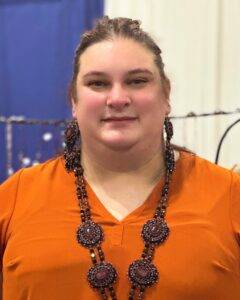
    Dr. Joanne Keefe, and Bridgett Lyall, our spring term Circle of Caring winners, are excellent examples of FNU community members who have exemplified what it means to support and strengthen morale during the past few months. Both of these women have gone above and beyond to show consideration and compassion for their teams, and they have both positively impacted the culture of FNU.

    Dr. Keefe, FNU’s course coordinator for epidemiology/biostatistics, leads a diverse team of five faculty members. In recent months she created a discussion board titled, ‘Self Calming and Self Care,’ where students and faculty have a safe space to gather and post inspirational poems and songs, meditation practices and share their personal experiences. Additionally, Dr. Keefe is holding weekly meetings to examine student and faculty needs, such as difficulty focusing and fears for sick family members, and discuss rising social concerns.

    Lyall, FNU’s academic records officer, is another example of a staff member going above and beyond to show support and care to her coworkers. Within hours of the Kentucky governor announcing that face masks would be mandatory in public places, Lyall made a campus-wide announcement that she made face masks for her colleagues. 

    The FNU community is thankful to have so many members displaying a culture of caring during these challenging times. As we all continue to work through the crisis, FNU is committed to remaining aligned with the standards of excellence that have made us a safe place and a reliable support center. 

    We encourage you to visit our COVID-19 page to be inspired by the stories of FNU students and alumni helping during the crisis and benefit from the resources provided. We are all in this together – even from afar!  


    Related Stories: 

    How FNU Transitioned In-Person Sessions to Online Success During COVID-19 

    4 Tips for Educators Transitioning to Online Learning During COVID-19
  • 4 Tips for Educators Transitioning to Online Learning During COVID-19

    4 Tips for Educators Transitioning to Online Learning During COVID-19

    When the ball dropped on January 1 of this year, no one expected the reality that is 2020. COVID-19 is undoubtedly making its mark on history – not just in terms of lives lost but also ways the threat has caused families, businesses, and organizations to alter their everyday lives. For most schools and universities, that has meant a transition from in-person to online learning. Thankfully, Frontier Nursing University (FNU) has been using a distance education model for more than 30 years, causing us to need significantly fewer adjustments than many universities. However, like all organizations, we still needed to reconsider our usual way of life in a few areas.
    We decided to keep an open mind as we innovated new program models and focused on self-care for our students, staff and faculty. We hope that what we have learned in the past few months, combined with our decades of distance education experience can positively impact other educators as the new school year kicks off.

    Here are four tips for educators making the switch to online learning during COVID-19:

    Don’t Be Afraid to Innovate New Course and Program Models.

    It’s unlikely most schools and universities had a “Pandemic Plan” pre-2020 – but when life throws you lemons…well, you know the rest. In the wake of such uncertain times, it’s essential to be willing to adapt usual course models or programs in the interest of student and faculty safety. The adjustments can be challenging, especially for institutions that have operated the same way for decades, but the educators willing to make these changes will thrive. 

    Although FNU relies on a distance education model, there are also in-person portions of each student’s journey that we quickly realized we needed to redesign effectively. As we began to look at reinventing our in-person programming, we had two main concerns –  maintaining a sense of trust and community in the new learning environment and upholding the top-quality education standards that FNU has held for almost 100 years.

    To maintain community, we centered our new programs around video technology like Zoom to keep students and educators engaged with each other throughout the experience. We expanded this model by incorporating small groups and break out sessions with an emphasis on team-building and fellowship while still following curriculum guidelines. 

    Our second challenge was upholding excellence in our courses as we transitioned intensive hands-on skills training to a digital platform. Reimagining activities like instructing students to remove sutures, or asking patients about their medical history without in-person conduct, took great innovation and creativity to remain comprehensive. However, we were ultimately able to meet these goals by working as a team and embracing new technologies. As a school, we were able to provide each student with the physical props needed to train from home in specific procedures and tasks. We then leaned again on Zoom and similar platforms for instruction and have been able to grade accurately through videos of students reenacting the skills taught to them via state-of-the-art simulation programs. We are grateful that the adaptive, persevering nature of our students and staff has allowed us to reinvent some of our most vital programing in a truly successful way. 

    As the old saying goes – you can’t change the direction of the wind, but you can adjust your sails. Now is the time to reevaluate and make the creative adjustments necessary to keep safety your priority while continuing to provide quality education.

    Create a Safe Space for Students to Process.

    As educators rush to find ways to maintain valuable student learning, it is also important to remember that another vital element of success lies in mental health. The educators who genuinely care for the wellbeing of their students will stand out from the rest. 

    Throughout this trying year, FNU instructors have implemented several new ways to check how students are coping mentally as they continuously open up new outlets of connection and communication. Some of the methods FNU instructors have found success in engaging students during this time include message boards, pre-class discussions, and Facebook groups. These tools allow students to vent frustrations, fears, and anxieties. They have also begun spreading inspirational messages, sharing meditation practices, and offering encouragement to one another. This simple digital platform has resulted in a greater sense of community throughout our student body, providing students who may be feeling isolated a place to connect.

    How can you support the mental health of your students? Don’t be afraid to leverage social media platforms or new technologies to check in on your student body.

    Remember your Own Mental Health.

    While your students’ mental health is essential, your staff and faculty’s mental health is just as vital.  It is easy to overexert yourself as an educator. To best help students with their educational and mental health needs, you cannot forget to prioritize your well-being.

    As one of our nursing instructors, Dr. Vicki Burns, wisely explains, “We cannot hope to bring comfort, community, and support to others if we are trying to access those things from an empty well. We must achieve a healthy work-life balance and care for ourselves physically, spiritually, and emotionally. We must keep as many healing rituals and routines in place as possible under the circumstances, and be careful guardians of what we allow ourselves to dwell upon. What we focus on can quickly become who we are, so we must be vigilant about how we wish that to look.”

    Many FNU instructors are involved in the student message boards, but they have also established additional ways to check-in with themselves and their co-workers. Faculty/staff Zoom lunches and support sessions have created a time to vent and chat, email chains of positive messages have offered encouragement, and an overall dedication to checking in and being kind has helped provide stability to our team and, in turn, our students.

    Take the time you need to prioritize self-care and implement ways to check in on your colleagues.

    Give Grace.

    Let us all remember the value of grace during these unsettling times. A Pandemic has a way of bringing life and what really matters into focus. 

    Throughout the past six months, FNU has been carefully reevaluating our policies and how they impact students in the wake of uncertainty. We’ve adjusted systems to allow for additional flexibility with deadlines, as many of our students are also working out on the Pandemic frontlines.

    Dr. Jane Houston, our DNP Program Director, helps us to remember how vital kindness and understanding are this year.

     “A little empathy can go a long way,” said Dr. Houston. “Remember how challenging it was to be a student before the advent of COVID-19?  We cannot even comprehend what today’s students are going through- balancing work, life, family, school, and possibly illness. Right now, it is our responsibility to balance empathy with rigor.”

    The end goal is always for students to get a full-quality education. However, if we can achieve that while giving allowances for the unexpected circumstances of 2020, our students will be better prepared to step into their new nursing roles with a kind heart and a strong spirit.

    Give grace to your students. Give grace to your colleagues. Give grace to yourself. We’ll get through this together! 

    For more information on ways that FNU is continuing to enhance student education and promote our students, faculty, and staff, visit our blog and COVID-19 updates page.

  • How FNU Transitioned In-Person Sessions to Online Success During COVID-19

    How FNU Transitioned In-Person Sessions to Online Success During COVID-19

    While Frontier Nursing University (FNU) has been using a distance education model for more than thirty years, it has always relied on critical in-person sessions of training and fellowship to nurture student success. When COVID-19 began to pose a severe threat in the United States, FNU leadership knew they needed to find a way to keep students safe, while still providing quality education. Now more than ever, the country realizes the value of qualified nurse practitioners and nurse-midwives, and FNU is committed to increasing the number of dedicated individuals heading out to the frontlines. To maintain this commitment, Frontier had to make significant adjustments to some of these foundational sessions, including Frontier Bound, Clinical Bound, and the clinical experience.

    When FNU realized the need to redesign Frontier Bound and Clinical Bound sessions, a lot needed to be considered. Both sessions are usually held at the Kentucky campus and allow for time to learn and connect with one another. Frontier Bound is a three-day introduction into the program, while Clinical Bound is a five-day clinical skill-intensive with hands-on training. How could FNU effectively hold these sessions without face-to-face interaction?

    FNU faculty quickly began developing a new plan to create a digital format for the sessions, which would still promote community and provide quality education. By expanding the use of Zoom and other video technology, they were still able to benefit from the engagement of face-to-face communications without health risks. Leadership has been pleasantly surprised to find that the new session format has allowed for the same sense of community and renewed inspiration that students and faculty have always looked forward to at these events. Students are reporting positive feedback for session content while still feeling connected and supported.

    Some of the specific changes made in the transition to an online format for Frontier Bound included taking extra time to invest in discussions of student concerns in the wake of COVID-19, conducting team-building activities, and assisting students with internet troubleshooting. Small breakout groups were especially helpful in ensuring an intimate setting in the distance environment.

    Considering that FNU Clinical Bound sessions are built around hands-on skill-building activities, reworking the program required a lot of dedication as faculty members attempted to produce equivalent training for students. What resulted is a whole new Clinical Bound program designed around online simulations and student reenactments delivered through Zoom meetings. Before the experience began, FNU shipped supplies to each student, such as a suture pad and perineum model. These supplies allowed Clinical Bound Faculty to teach practical skills such as hand placement for birth and suturing. Because students had their own simulation tools, faculty could watch them do return demonstrations. These demonstrations were assessed and graded by faculty when students submitted physical assessment validation videos. Despite all of the changes, FNU educators have continued to see quality work from adaptive students. Notably, FNU’s clinical preceptors rated the students who attended virtual Clinical Bound sessions with very little difference in performance compared to students who had participated in on-site Clinical Bound sessions. 

    Following Clinical Bound, the next step in a student’s journey is working alongside a preceptor during their clinical practicum. Unfortunately, as a result of COVID-19, many of Frontier’s clinical sites have been unable to accept students over the past few months. For FNU leadership, translating this aspect of the student experience was undoubtedly the most challenging. However, after weeks of brainstorming and development, Frontier’s dynamic faculty created an equivalent and innovative program to fill this gap. 

    FNU successfully built a Virtual Clinical Simulations program for displaced clinical students. The program’s state-of-the-art simulation design provides virtual, lifelike scenarios for students. Some topics addressed include: taking patient history, handling pregnancy concerns during the wake of COVID-19, breastfeeding, and postpartum issues. Much like the Clinical Bound training, leadership is receiving positive feedback from students and staff as knowledgeable, confident, new nurse practitioners and nurse-midwives emerge from the program. This type of educational experience replaced 135 hours of the then-minimum requirement of 675 hours of on-site clinical experience during the first months of the Pandemic. This dramatically decreased the stress for FNU’s clinical site placement during this critical period as they adjusted to the demands of the Pandemic. Due to the positive response to these simulated clinical experiences, Frontier will continue to supplement in-person clinical with a selected simulated clinical time that is led by FNU faculty.  

    Although the Frontier community can’t wait to all unite in in-person fellowship again, we rest easy in the meantime, knowing our students, faculty, and staff continue to exceed expectations in adaptability, kindness, and comprehension.

    For more information on ways that FNU is continuing to creatively and effectively adjust its curriculum to meet the community’s needs during COVID-19, visit the FNU blog and COVID-19 updates page.

    View this special issue of the FNU Quarterly Bulletin, which focuses on how the FNU community has answered the call to combat the COVID-19 Pandemic.

  • Graduate Nursing School: What’s It Like to Be A Student at FNU?

    Graduate Nursing School: What’s It Like to Be A Student at FNU?

    Frontier Nursing University (FNU) has a long history of caring for and serving women and families. Students who are new to Frontier can expect to find a community of nurse-midwives, nurse practitioners, and educators who celebrate a Culture of Caring with an emphasis on underserved and rural populations. 

    Through FNU’s distance learning program, students can earn a graduate degree in their community while being supported by a passionate faculty, staff and student network. Early coursework is completed in the student’s own home, on their time, with a workload of around 40 hours per week for full-time students, and approximately 30 hours per week for part-time students. The structure allows students to balance their current life and commitments with their desire to further their healthcare education through distance learning. 

    Although students work remotely, they don’t work in isolation. FNU programs emphasize community and students enjoy the support of instructors, mentors, and classmates. 

    “I don’t believe that anyone will find this same relationship that we all have in any other school, on-campus or distance,” said nurse-midwifery alumna Kate Lawrence.

    Nearly all FNU faculty are also nurse practitioners or nurse-midwives, and half still actively practice in addition to teaching. These leaders understand the challenges that students face and are always available to answer questions and support them throughout their Frontier journey. 

    Frontier recently added an office to support students in their search for clinical sites. The clinical outreach and placement unit helps students as they seek the optimal clinical site, preceptors, and experiences. This team collaborates with our Regional Clinical Faculty and Credentialing Department to make the transition into clinical as seamless as possible.

    Another vital resource offered to FNU students is the Alice Whitman Memorial Library. Our library is home to a wide range of useful resources, including books, journals and databases that can all be accessed online. The library boasts an excellent staff of librarians that answer reference calls and email inquiries throughout the week. FNU’s library is just one more way we aim to give students the support they need as they complete their studies at home.

    Despite the physical separation that comes with the distance learning model, we want our students to feel connected to their peers and faculty. It is for this reason that Frontier strives to provide students with the same level of social support and leadership opportunities that would be available through a traditional on-campus program.  

    “It’s not like any typical online program, in Frontier you interact over webinars… on a weekly basis. Instructors are always by my side, monitoring and assisting my way to success,” said FNU alumna Avnit Kainth, BSN.

    As a Frontier student, you may participate in peer mentoring, student council, and our Wide Neighborhoods Ambassador Program. FNU also hosts active chapters of Sigma Theta Tau International Honor Society Of Nursing and The Institute of Healthcare Improvement. Students seeking a high level of involvement will have plenty of opportunities to engage in the many programs FNU offers.

    “Frontier emphasizes how to recognize the need in your community. They teach you to be an entrepreneur with the intent of seeking out those in need and serving them,” said FNU alumna Jennifer Cameron, MSN, CNM.

    At FNU, our goal is to cultivate compassionate leaders and healthcare professionals. With dedicated faculty and staff, an excellent student network, and a variety of online resources, students have everything they need to build a foundation of knowledge that will lead to a long successful career. Go here to learn more about the FNU student experience.

    More Topics Related to Graduate Nursing School:

    Why Should I Become a Nurse-Midwife?

    Should I Consider a DNP?

    What Degrees Does FNU Offer?

    How Does FNU Focus on Diversity?

  • Alumni Spotlight: DNP Graduate Dr. Rhoda Ojwang Makes Worldwide Impact Through Non-Profit

    Alumni Spotlight: DNP Graduate Dr. Rhoda Ojwang Makes Worldwide Impact Through Non-Profit

    Frontier Nursing University (FNU) alumna Dr. Rhoda A. Ojwang, DNP, FNP-C, Class 17, is leading an organization with an ambitious mission: “To make healthcare accessible among the underserved in Kenya, across Africa, and eventually globally.”

    Dr. Ojwang, who lives in San Diego, California, works with Advanced Pain Associates, an interventional pain management practice in Imperial Valley treating and managing acute and chronic pains. She also serves as the president and founder of Healthcare Access International Group (HAIG), a 501c3 non-profit organization incorporated in San Diego in 2018 dedicated to making healthcare accessible worldwide. HAIG’s mission is made possible through short-term medical mission trips to underserved areas. 

    “I decided to start HAIG because I am originally from Kenya,” Ojwang said. “Growing up I was privileged to be brought up in a family where I went to the best schools and received top quality health care services when I was ill. Throughout my nursing career here in the United States, I constantly thought of ways to give back to my own people, particularly those who were not as privileged as I was. I had a burning desire to make healthcare accessible to those in need. Lack of access to healthcare and the increasing rate of poverty is a growing global public health problem. Although the same is true for developed nations, the developing nations are in dire need of basic healthcare.” 

    HAIG strives to connect people with sustainable healthcare systems to help individuals manage their diseases and stay connected with their health care providers. Ojwang says that HAIG is focusing on Kenya currently, and plans to spread its wings into some other underserved areas of Africa, and other parts of the world in the very near future.

    Ojwang was inspired by her father, who is an ear, nose, and throat (ENT) specialist in Kenya. He also organizes free medical clinics to help the community’s underserved population. 

    “My passion for serving the underserved came to fruition in April 2016 when I joined a group of health care professionals that went to deliver free medical care to an underserved area in Kenya,” Ojwang said. “This was my first medical mission trip. During this trip, I experienced an epiphany as to how much need there was among this community in terms of access and affordability of basic healthcare.”

    Dr. Ojwang began her nursing career at Southwest Tennessee Community College, where she received her Associate Degree in Nursing (ADN) in 2007. She obtained her Bachelor of Science in Nursing (BSN) at Chamberlain College of Nursing in 2010 and a Masters in Nursing (MSN) as a Family Nurse Practitioner (FNP) at Azusa Pacific University in 2013. Soon thereafter, she enrolled at FNU, obtaining her Doctor of Nursing Practice

    “I am a proud FNU alumnus and Wide Neighborhood Ambassador. The DNP role prepares the graduate for the leadership role in the clinical setting, education, and the executive level. Pertaining to HAIG, I believe my leadership skills have been amplified with the attainment of the DNP degree.” 

    HAIG’s work is 100 percent dependent on donations. All financial donations received go towards the purchase of medications and supplies. Currently, HAIG has three board members and 12 organizing team members.

    “We are all volunteers who share the same vision in making healthcare accessible to the underserved areas. Running a non-profit organization is not an easy task. You have to ensure the people you are working with share the same vision as the organization does.” 

    In 2019, HAIG served the underprivileged community in Kitale, Kenya, during a five-day medical mission trip. Over 900 patients were served through free health screenings for cervical and breast cancer, diabetes, and hypertension, wound care, HIV testing and counseling, ENT, and vision screenings. Patients were referred for continuity of care, treatment initiation, medication management, and follow-up. This was made possible through a partnership with AMPATH Kenya, which is an academic medical partnership between North American Academic Health Centers led by Indiana University School of Medicine, and Moi University School of Medicine in Kenya. AMPATH’s mission is to make quality healthcare achievable and sustainable for all. The partnership between AMPATH and HAIG provides comprehensive and preventive care through a sustainable health system that reduces health disparities. HAIG’s 2020 medical mission trip that was scheduled for June 15-18 in Kisumu, Kenya was canceled due to the Covid-19 pandemic. “We are hopeful that 2021 will be a promising year to the people of Kisumu in need of HAIG’s medical services”

    “HAIG is also very supportive of students and would be willing to take a few FNU students on its upcoming medical mission trips (post-COVID-19) to experience treatment and management of tropical diseases among other cases rarely seen in the United States. HAIG would like to establish this long-lasting partnership with FNU. Student participation in HAIG’s medical mission trips would count towards their clinical hours as the HAIG team has medical professionals who would offer preceptor-ship and sign for hours.” 

    Ojwang said that one of the primary areas of focus for HAIG is preventative medicine. She noted that cervical cancer is the second most common cancer among women in low and middle- income countries, due to inadequate access to screening and treatment.

    “HAIG is at the forefront of increasing awareness about this killer disease through screening and vaccination. Global health focuses on improving people’s health worldwide, reducing inequalities, and protecting society from global threats such as preventable diseases that do not stop at the national borders.” 

    To learn more about HAIG, visit their website at www.haighealthcare.net

    At the heart of Frontier Nursing University is a talented and diverse community of students, alumni, faculty, staff, Couriers, and preceptors. Spotlight blogs feature members of our FNU community who are focused on the mission of educating nurse-midwives and nurse practitioners to deliver quality health care to underserved and rural populations.

  • Building the Future of the Healthcare System: The Value of Becoming a Preceptor Today

    Building the Future of the Healthcare System: The Value of Becoming a Preceptor Today

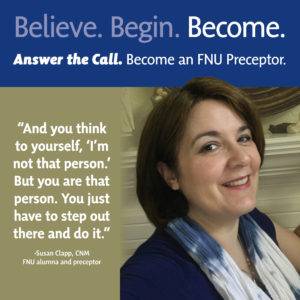
    Frontier Nursing University (FNU) is a community of students, educators, graduates and staff working together to expand access to quality, compassionate care in rural and underserved populations. To continue placing attentive, responsible advanced practice nurses into the field, we need partners who believe in our mission. With more than 2,400 nurse-midwife and nurse practitioner students from all 50 states, we are always in need of kind, intelligent, professional preceptors to lead our passionate students through their clinical experience. Will you be the one to answer the call?

    By volunteering time and services as a preceptor, qualified nurse-midwives and nurse practitioners can touch innumerable lives and make a vital difference in the future of nursing and midwifery. Preceptors serve as the graduate nursing student’s teacher, supervisor and evaluator during their clinical practicum, giving them incredible influence over what kind of nurse the student will become. 

    In recent months the world has seen an increased need and appreciation for those in the nursing profession. More than ever, it is imperative that our country has educated, quality healthcare workers. When a certified nurse-midwife or nurse practitioner steps up to become a preceptor, they choose to meet the needs of communities across the country by bringing energetic new nurses to the field during these unprecedented times. 


    “My preceptor is very valuable to me,” said Stephanie Allotey, MSN, CNM, DNP, Class 31. “You can feel and know that they want you here and want you to become the best nurse-midwife.”
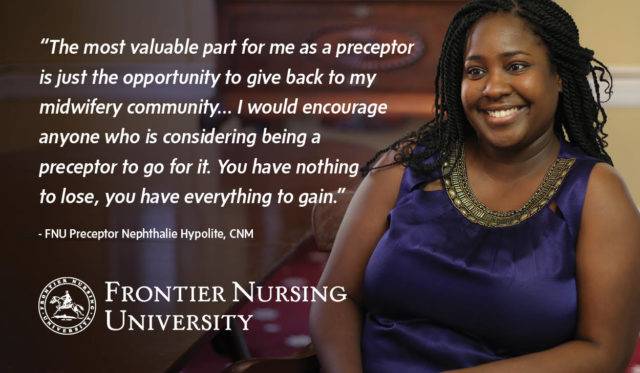
    Nephthalie Hypolite, CNM, was inspired to become a preceptor because of her experience being “challenged and pushed” to become the midwife she is today. 

    “I would encourage anyone who is considering being a preceptor to go for it. You have nothing to lose, and you have everything to gain,” said Hypolite. “The friendships that you build with the new generation of midwives, the fact that you learn along with your students, and that you’re giving back to the midwifery community is just invaluable.” 

    She had many more great things to say in her video for our “Becoming a Preceptor” series.


    Our faculty and staff are aware that choosing to become a preceptor is a big decision, and we are eager to support our preceptors throughout that journey. FNU’s clinical services coordinator will work with preceptors to help them utilize the online preceptor profile portal, provide information regarding FNU’s Master and Expert Preceptor programs, and answer questions regarding preceptor honorariums. In addition, Regional Clinical Faculty (RCF) are available to support the preceptor by providing guidance in student clinical issues. 

    In addition to providing faculty support to our preceptors, FNU also makes sure to reward those willing to help create dedicated nurses through various benefit programs. All preceptors at FNU gain access to free Continuing Education Units (CEUs) on essential topics like pharmacology and online training courses like, “The Gift of Precepting” and “The Master Preceptor,” which our faculty designed to help our preceptors have the best experience possible. Additionally, preceptors will earn a 10 percent discount on all non-matriculating courses at FNU, obtain documentation of their precepting hours for recertification purposes, and receive an honorarium based on the percentage of time spent precepting students.

    According to Audra Cave, DNP, FNP-BC, preceptor in Spindale, NC, precepting presents an excellent opportunity to give back to the community of family nurse practitioners (FNPs).

    “I want to help the next generation of FNP providers as I had help along the way too,” said Cave. “I also learn from students. Precepting keeps me on my toes.”


    FNU is a school founded on making a difference in our world through honest, compassionate nursing and midwifery care. We believe we further that mission when we onboard excellent preceptors to help us bring confident, new nurse-midwives and nurse practitioners into the field. Our preceptor program is centered around providing a productive and beneficial program for both student and preceptor, and our testimonials show just how impactful this program can be.
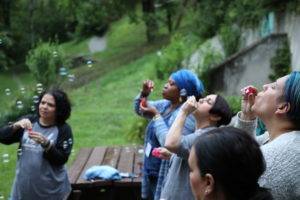
    If supporting a future generation of nurse-midwives as a preceptor sounds like an excellent fit for you, please fill out our preceptor inquiry form. An FNU representative will follow up with you on the next steps for taking on this inspiring role. You can also learn more about precepting in our “Becoming a Preceptor” video series on YouTube.

    For additional information, email our Department of Clinical Outreach and Placement at ClinicalAdvising@frontier.edu. 

  • Graduate Nursing School: How Does FNU Focus on Diversity?

    Graduate Nursing School: How Does FNU Focus on Diversity?

    The recent events in our country have provided a glaring reminder that, unfortunately, not all people in our nation are provided with the rights, justice, and dignity they deserve. As President Dr. Susan Stone said in her recent statement to the Frontier Nursing University (FNU) community:
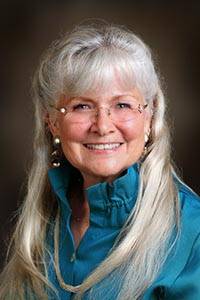
    “Deep racial, ethnic, and socioeconomic inequities exist in our country. The killings of George Floyd, Breonna Taylor, David McAtee, and so many others across this country at the hands of those who are supposed to protect us are indicators that we have a very long way to go in our efforts to eradicate systemic racism.”

    Systemic racism has an impact on every person, institution, and industry in our nation. For years, the FNU community has been passionate about fighting systemic racism within the healthcare system, and that passion continues to grow in light of our current climate. We understand that where diversity is lacking among healthcare professionals, patients suffer. 

    FNU is dedicated to helping diversify the nursing and nurse-midwifery workforce in primary care. Our distance education model places its focus on preparing a diverse workforce of competent, entrepreneurial, ethical, and compassionate healthcare leaders that provide culturally-concordant care, helping improve health outcomes for women and families, especially in rural and underserved populations.

    Here are a few ways FNU prioritizes diversity:

    Office of Diversity, Equity, and Inclusion 

    FNU has been committed to expanding diversity representation in faculty, staff, and students since 2006. In 2017, FNU added a Chief Diversity and Inclusion Officer (CDIO) position, which is a member of the President’s Cabinet. Dr. Maria Valentin-Welch was FNU’s first CDIO and, behind her leadership, the Office of Diversity, Equity, and Inclusion (DEI) has now grown to include the CDIO (Geraldine Young), Diversity and Inclusion Coordinator (Chris Turley) and Assistant Director of Diversity and Inclusion (Devon Peterika). 

    The goal of FNU’s Office of DEI is to ensure students, faculty, and staff are provided with an environment that promotes diversity, equity, and inclusion, and encourages the success of all community members. The Office of DEI encompasses an atmosphere built on a culture of caring and solicits the equitable perspectives of students, faculty, and staff regardless of race, gender, sexual preference or identity, disability, and/or religion.

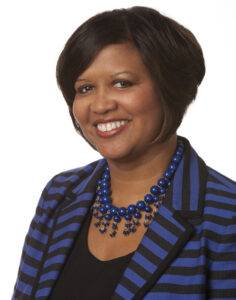
    In early 2020, Dr. Geraldine Young became the newest CDIO. Dr. Young has a rich history serving rural Mississippi through a wide variety of health, inclusion, and social mobility projects. In a recent interview, Dr. Young shared her enthusiasm over having the opportunity to “expand the impact of diversity, equity and inclusion efforts at FNU to improve the health outcomes of diverse patient populations in underserved and rural areas in the U.S.” 

    Diversity Impact Program

    One of the top ways that FNU makes diversity, equity, and inclusion a priority is through our Diversity Impact Program. The Diversity Impact Program was created in 2010 to promote an inclusive learning and workforce environment within our University with the goal of recruiting and retaining more underrepresented students and employees. Expanding the pool of nurse-midwives and nurse practitioners to include more underrepresented groups helps to strengthen our University and the healthcare world as a whole. We have been thrilled to see FNU’s enrollment of students of color rise from 9 percent to 24 percent since the introduction of the program, and we are excited to see that number continue to grow.

    The Diversity Impact Program offers many ways for students to find their voice including scholarship opportunities, a quarterly speaking series with discussions focused on cultural awareness and inclusion, access to our multicultural center, opportunities to represent FNU at national conferences and events, and opportunities to participate in workgroups, committees and a closed Diversity Impact social media group. 

    Diversity Impact Conference

    FNU loves celebrating our differences throughout the year with a variety of events and activities, especially the annual Diversity Impact Conference. This year, we hosted the 10th Annual Diversity Impact Conference with the theme, “Year of the Nurse and Midwife 2020: Increasing Diversity, Equity, and Inclusion.” The theme follows the lead of the World Health Organization (WHO) which designated 2020 as the Year of the Nurse and the Midwife. At FNU, we believe that in order to provide the best quality nursing and midwifery care to all people, cultural respect and inclusion are essential. Unlike our previous conferences, this year’s event was fully virtual due to the current COVID-9 Pandemic, but we were pleased to see high engagement and great feedback! 

    In 2019, the in-person conference was packed with activities and workshops on a variety of topics including positive marginality, indigenous/Native American nurse-midwives, and the LGBTQ community. Our central goals of the conference are for students to leave feeling more comfortable sharing their own beliefs and experiences while also learning how to create meaningful connections across all backgrounds and communities.

    Diversity Impact Quarterly Speaking Series

    In addition to the Diversity Impact Conference, FNU holds a quarterly speaking series, encouraging our students and employees to become global thinkers and healthcare leaders within their communities. The series includes discussions on cultural awareness and inclusion to enhance each student’s experience to better serve diverse populations with confidence and ease. The series offers a unique aspect of shared perspectives that promote cross-cultural learning among students and their peers, along with the overall pursuit of academic success as a student-learner.

    National Diversity Conferences and Events

    Each year, FNU’s Office of DEI – Diversity Impact Program represents the University at nursing events around the U.S. FNU highlights the diversity program at several professional conferences through presentations, networking, exhibits, and recruitment of underrepresented students and employees. Students are given the opportunity to attend conferences as Student Ambassadors. With the availability of the Professional Organization Mentoring Program (POMP), the Office of DEI also provides mentoring services for underrepresented students at professional conferences. In 2020, many conference and event participation opportunities have been offered virtually instead of in person. These activities are intended to bring awareness to the need for diversity, equity, and inclusion in nursing.

    Diversity and Inclusion Committee

    At FNU, our students have the opportunity to join the Diversity and Inclusion Committee. This committee consists of faculty, staff, and students that are passionate about developing, promoting, and providing programs and resources to enhance diversity, equity and inclusion throughout the University and healthcare workforce.

    FNU was honored to receive the prestigious INSIGHT Into Diversity Health Professions Higher Education Excellence in Diversity (HEED) award in both 2018 and 2019. Although we are proud to be recognized for diversity, equity and inclusion efforts, we know that to truly champion diversity and improve health outcomes for as many women and families as possible, we must continue to push the envelope when it comes to inclusion awareness. 

    If you are interested in learning more about the efforts FNU is making to celebrate diversity, please visit our Diversity, Equity, and Inclusion in Nursing and Midwifery page.  Additionally, if you want to be a part of a university with a passion to include and support those of all backgrounds, please visit the FNU admissions page. We would love to have you in our community!

    “We oppose injustice and cruelty and condemn racism in all its forms. We support peaceful protests and demonstrations and join all those working to end systemic racism, racial violence, and police brutality. We are committed to building a culture that is inclusive and caring for all.” – Dr. Susan Stone 

    Read FNU’s full Antiracism Statement here.


    More Topics Related to Graduate Nursing School:

    Why Should I Become a Nurse-Midwife?

    Should I Consider a DNP?

    What Degrees Does FNU Offer?

  • FNU’s Dean of Nursing Joan Slager Selected as a 2020 American Academy of Nursing Fellow

    FNU’s Dean of Nursing Joan Slager Selected as a 2020 American Academy of Nursing Fellow

    Frontier Nursing University (FNU) is proud to announce that Dean of Nursing, Dr. Joan Slager has been selected as one of the American Academy of Nursing’s 2020 class of new fellows.
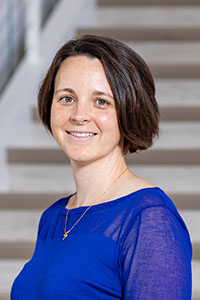
    Dr. Slager was a member of FNU’s first CNEP graduate class in 1991 and proceeded to complete her Master of Science in Nursing in 1993. Early on in her career, Dr. Slager helped to establish Bronson Women’s Service in Kalamazoo, Mich., which is now the state’s largest midwifery service.  Dr. Slager has spent over 20 years practicing as a full-scope midwife and has served as a preceptor for over 100 FNU students; she officially became the school’s Dean of Nursing in the fall of 2018.

    The American Academy of Nursing is composed of over 2,700 Fellows who serve the public and the nursing profession by driving necessary reforms in the American health system. The Academy accomplishes this goal by advancing health policy, practice, and science through strong leadership and organizational integrity. This October, the Academy will be inducting 230 new Fellows into their community, including Dr. Slager. The 2020 class of Fellows will represent 39 states, the District of Columbia, the U.S. territory of Guam, and 13 countries.

    Each year, a committee of appointed Fellows combs through hundreds of applications and selects new Fellows based on their significant contributions to the public health community. Academy Fellows represent the nursing community’s best and brightest featuring remarkable leaders in current roles as deans, university presidents, hospital chief executives, and researchers. More than 90 percent of Fellows hold doctoral degrees, and all Fellows have completed masters programs.

    This year, the Academy is excited to host its first virtual induction ceremony during the last weekend of October when they will honor the 2020 class of Fellows for their vital role in the health care community. The ceremony will take place on Saturday, Oct. 31 during the Academy’s annual Transforming Health, Driving Policy Conference. This year’s conference theme is “In Crisis and Calm: Leading with a Purpose” and will feature keynote speakers, break out sessions, and interactive panel sessions, among other exciting opportunities to strengthen the nursing community.

    With the virtual format, this year’s induction ceremony can be viewed by friends, family, and colleagues who may not have attended the traditional event. Additionally, this year’s induction will include personalized video vignettes honoring each inductee as a unique way to celebrate each individual’s exceptional accomplishments during the International Year of the Nurse and the Midwife.

    To find out more about the Transforming Health, Driving Policy Conference, visit the Academy’s conference website or register here.

    Congratulations again to Dr. Slager and all of the other professionals being inducted into the 2020 class of American Academy of Nursing Fellows!

Request Information Apply Give Now