Blog

  • Congratulations to 2021’s ACNM Election Winners!

    Congratulations to 2021’s ACNM Election Winners!

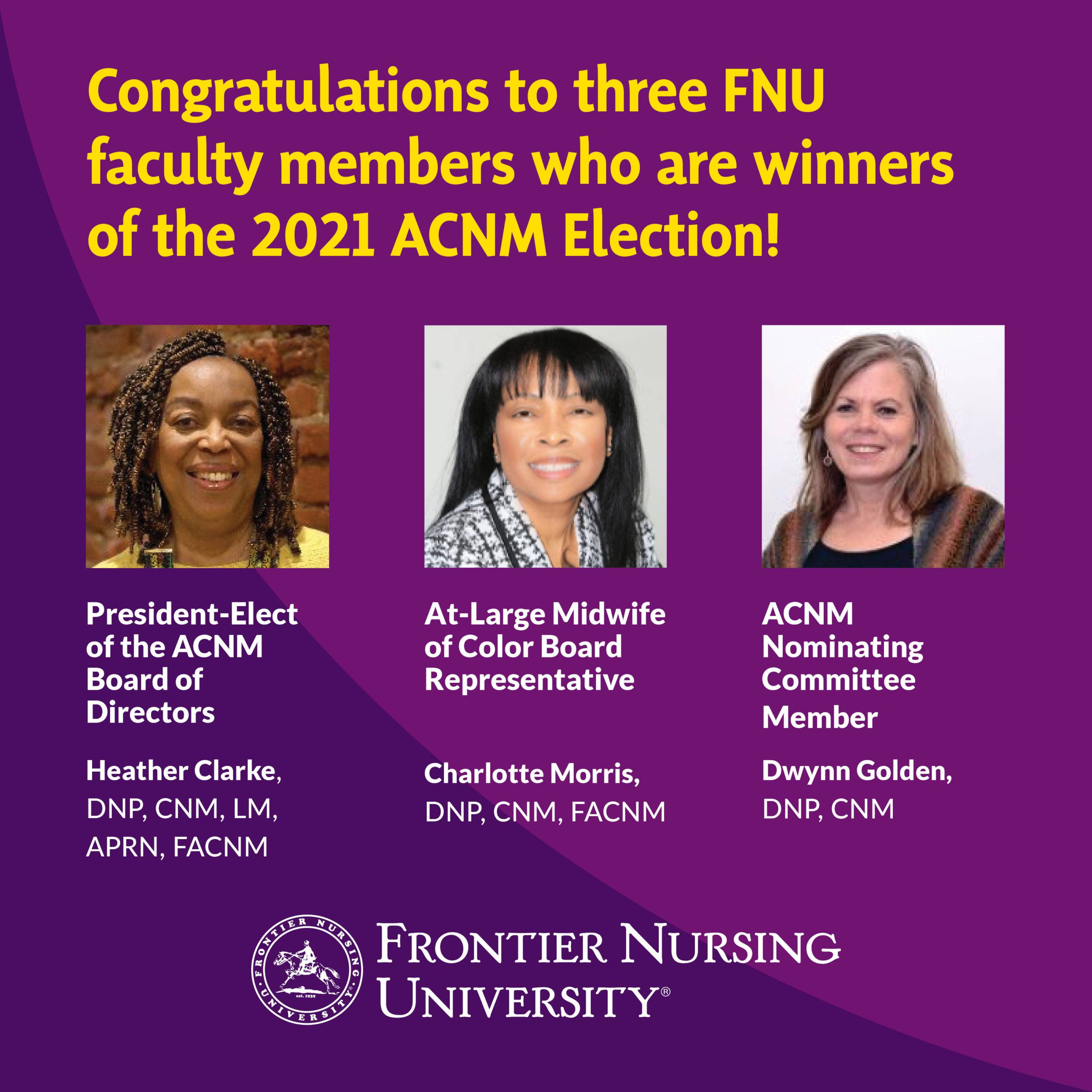
    FNU Faculty Elected as ACNM OfficialsThe American College of Nurse-Midwives (ACMN) recently announced the winners of this year’s election. Frontier Nursing University (FNU) faculty and staff are excited to celebrate the three community members who will be serving with ACNM.

    Here are the FNU faculty members who have been elected into leadership positions with ACNM:


    President-Elect of the ACNM Board of Directors: Heather Clarke, DNP, CNM, LM, APRN, FACNM

    Dr. Heather Clarke is an assistant professor at Frontier Nursing University with a midwifery career that spans over 41 years including a rich history of clinical practice, public health, and academia. Throughout that time, she has been an active member of ACNM. Beginning in the mid-1980s, she served as Treasurer on the board of the New York ACNM chapter when it successfully fought to develop the first state board of midwifery in the US and paved the way for the development of the LM credential that is equally inclusive of CMs and CNMs.

    Racial unrest and calls for equity are not new to the ACNM. Dr. Clarke was present in 1987 when the ACNM ad hoc committee on minority affairs was formed to give voice to midwives of color for the first time in its history. The ad hoc committee changed its name in the 1990s and became the standing ACNM Midwives of Color Committee (MOCC). Following previous pioneers, Dr. Clarke became the chairperson of MOCC in 2013. Under her leadership, MOCC continued to fundraise for the Watson scholarship for midwifery students of color and developed the Carrington-Hsia-Nieves scholarship to support doctoral education. Her other leadership positions included Co-Chair of the ACNM Students and New Midwives Committee and alternate ACNM representative to US-MERA. Dr. Clarke’s active engagement within ACNM has prepared her for leadership at the highest level.

    Dr. Clarke has five specific goals in mind: 

    1.  To increase the midwifery workforce and expand its diversity to reflect that of our consumers.
    2.  To push for system change that centers midwives as the primary healthcare providers for women and people throughout the reproductive health cycle.
    3.  To close the gap in MCH disparities among BIPOC families.
    4.  To establish consensus for implementation practices that build engagement, equity, inclusion, and respect for all members.
    5.  To strengthen ACNM’s ability to better support the professional development of its members, and thereby increase its membership.

    At-Large Midwife of Color Board Representative: Charlotte Morris, DNP, CNM, FACNM

    Dr. Charlotte Morris is an Assistant Professor at Frontier Nursing University, where she is course faculty in two courses, Introduction to Independent Practice and Gynecologic Health. In addition to her coursework, Dr. Morris serves as a tutor for students needing additional academic support. She also serves as the Co-Chair of the Diversity and Inclusion Committee, supporting the work of the Office of Diversity Equity and Inclusion.

    Dr. Morris has spent over 30 years in clinical practice committed to midwifery care for women in under-served communities. She established and served as Director of Temple Hospital’s Midwifery Practice in Philadelphia for over ten years. In 2012, she expanded her education and earned her DNP from Temple University. In ACNM, Dr. Morris has served as Chair of the Membership Committee and Secretary of the MOCC under two different chairs. Throughout this role, Dr. Morris has maintained member lists, contact information, and communication from various committee meetings and activities. Currently, Dr. Morris continues to support MOCC through the mentoring program. She also served as an elected member of the Nominating Committee and serves on ACNM Liability Committee, helping develop peer support tools for midwives experiencing adverse outcomes in clinical practice.

    In addition to her academic achievements and work within ACNM, Dr. Morris is committed to service in the community. She serves as secretary on the executive board of a faith-based organization with 4,000 members. In this role, she maintains confidential documents, including financial records, legal papers, and minutes from general and executive board meetings and all archived documents. 


    ACNM Nominating Committee Member: Dwynn Golden, DNP, CNM

    Dr. Dwynn Golden has worked at Frontier Nursing University as clinical and didactic faculty for midwifery and women’s health nurse practitioner students since 2012. She has been a midwife since 1993. Dr. Golden was in a full-scope practice from 1992-2012, then was the manager at a prenatal clinic, where she brought Centering Pregnancy to the practice. Dr. Golden has been an active ACNM member since she became a midwife and regularly attends regional and national meetings. She pursued this role to better serve the needs of midwives across the country and ensure the representation of all members.

    Dr. Golden was the secretary of the Sigma Theta Tau chapter, Chi Pi, at Frontier Nursing University from 2016-2020 and attended the international congress of Sigma Theta Tau as a delegate in 2019. She believes that serving as part of the nominating committee will help her to engage with the leaders of ACNM and bring forward midwives who can provide leadership and representation for midwives across the country.

    Additionally, this year’s nominating committee for the ACNM elections included FNU faculty Dr. Nena Harris and Dr. Linda McDaniel. Transitioning out of her current role as ACNM president is Dr. Cathy Collins-Fulea, who spent the past year unifying midwives across the country while advocating for inclusion and celebrating diversity. FNU couldn’t be more proud to be so involved with the wonderful ACNM organization!

    Join FNU in congratulating all of the ACNM’s new leaders during the virtual 66th ACNM Annual Meeting, May 21 – 25, 2021.

    To read more about each of the elected officials, visit the ACNM announcement blog here.
  • Frontier Nursing University Celebrates Public Health Week

    Frontier Nursing University Celebrates Public Health Week

    Frontier Nursing University (FNU) is excited to join healthcare organizations across the United States to celebrate National Public Health Week, organized by the American Public Health Association (APHA). This year’s theme for the week is Building Bridges to Better Health. 

    As the APHA describes, “We may be physically distant from each other, but now it’s more important than ever to come together. Making communities safe and healthy is public health’s top priority. COVID-19 has made that even more important. Even though we won’t gather in person, social media and virtual platforms make it easier than ever for us to connect, create and take action.”

    Each day during National Public Health Week, the APHA will focus on a critical health topic and identify ways individuals can make a difference. The daily topics are featured here, along with recent blogs FNU has published throughout the year highlighting these important subjects.

    Monday: Rebuilding

    • FNU’s Vision and Mission statement are centered around building up rural and underserved communities. We strive to make our programs as accessible as possible and encourage our students to remain in their communities to serve those in need.

    Tuesday: Advancing Racial Equity  

    • Following the murder of George Floyd, FNU President Susan Stone issued a statement on diversity, equity, and inclusion.
    • Last month, FNU announced a new course- Introduction to Cultural Safety. This course, now live, is designed to help FNU students and anyone in the health care community gain a better understanding of how to treat patients in Native American communities.
    • During virtual events celebrating National Midwifery Week and National Nurse Practitioner Week, FNU included topics of inclusions such as Racial Disparities in Maternity Care and Dismantling Implicit Bias.

    Wednesday: Strengthening Community

    Thursday: Galvanizing Climate Justice

    • The American Public Health Association has several resources on climate justice and efforts to protect the natural environment. Using #ClimateChangesHealth, the APHA offers fact sheets, COVID-19 resources, and more.

    Friday: Constructing COVID-19 Resilience

    • FNU has kept an updated COVID-19 page throughout the pandemic with the latest resources, guidelines, and statistics.
    • FNU’s Versailles campus became an early vaccination site.

    Saturday: Uplifting Mental Health and Wellness

    Sunday: Elevating the Essential Health Workforce

    • Throughout the pandemic, FNU has hosted a blog series highlighting the work students and alumni are doing on the frontlines.

    Please join FNU in working towards the collective goal of improving the health of our nation! To learn more about National Public Health Week and how you can participate, visit NPHW.org.

  • FNU Associate Professor Dr. Vicky Stone-Gale and her  daughter Dr. Jennifer Stone Make Florida History

    FNU Associate Professor Dr. Vicky Stone-Gale and her daughter Dr. Jennifer Stone Make Florida History

    In October, FNU Associate Professor Vicky Stone-Gale, DNP, APRN, FNP-BC, FAANP, and her daughter Jennifer Stone, DNP, APRN, FNP-BC became the first APRNs licensed as autonomous advanced practice registered nurses in the state of Florida. They received the good news after a house bill permitting select APRNs to practice in primary care was signed into law by the Florida governor earlier this year. The Autonomous Nurse Practitioner practices in primary care settings permitting the APRN to be independent of physician general supervision to provide care throughout Florida.
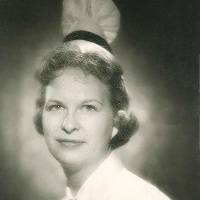
    “This has been a long time coming for APRNs in Florida,” Dr. Stone-Gale said. “There are many of my Florida colleagues that were alongside me working on these efforts to make this bill pass successfully. It definitely was not a single effort and we still have more work to do for CNMs and other specialties. To be able to pave the way for not only the seasoned APRNs but for all of our younger colleagues to be autonomous moving forward in their careers is amazing. My daughter and I received our DNP together and talked about the day this would happen. Now it is a reality and I am not only proud to share this with her, but am excited for her future as an autonomous APRN.” 

    Dr. Stone-Gale and Dr. Stone both practice in primary care in Fort Lauderdale. A longtime

    nursing advocate, Dr. Stone-Gale is the President of the South Florida Council of Advanced Practice Nurses (SFCAPN). Following in her footsteps, Dr. Stone is the practicum coordinator for the nurse practitioner program at Walden University and serves as the Nominating Committee Chair on the board for the SFCAPN.

  • New FNU Scholarship Created Following A Generous Bequest

    New FNU Scholarship Created Following A Generous Bequest

    The Loane family of Harrodsburg, Kentucky, has made a generous bequest in memory of Mary Elizabeth “Pat” Loane (February 28, 1936-July 3, 2019).

    “She was a beloved wife, mother of four children, and a registered nurse graduate of Good Samaritan School of Nursing,” said Jeff Loane, her husband of 60 years. Now closed, the Good Samaritan School of Nursing was located in Lexington, Kentucky. “She practiced her profession in the fields of obstetrics, mental health, public health, and long-term care.”

    Joining in the bequest are the four Loane children: Jeffrey D. Loane, Jr., Christi E. Phillips, Cynthia D. Sheldon, and Martin T. Loane. 

    Born in Burgin, Kentucky, Mary Elizabeth “Pat” Loane was the daughter of the late James and Blanche Duncan Campbell. She worked as a registered nurse at Ephraim McDowell RegionalMedical Center in Danville, Kentucky; the James B. Haggin Memorial Hospital in Harrodsburg, Kentucky; and Kentucky State Hospital.

    “She spent a long, active, and varied career in nursing,” Mr. Loane said. “She worked in just about every setting you can work in as a nurse.”

    Though she was not a midwife, Mrs. Loane was interested in and very supportive of the profession.

    “She knew of Frontier and some classmates of hers had moved down to eastern Kentucky to get involved in midwifery,” Mr. Loane said, noting that the family was reminded about Frontier

    when they saw the campus sign and an ad on TV. “As a family, we thought about a bequest to Frontier after she died. We wanted to give to something of a lasting nature that she supported.”

    The Loane family bequest will carry on Mrs. Loane’s memory for generations to come in the form of an endowed scholarship for FNU students.

  • A Message to Our Community Mary Breckinridge Task Force (MBTF) Update

    A Message to Our Community Mary Breckinridge Task Force (MBTF) Update

    Frontier Nursing University (FNU) has a focused effort on diversity, equity, and inclusion (DEI). That effort requires a deep look into our past and how that history affects our FNU culture and community today. This required the development of the Mary Breckinridge Task Force (MBTF). The MBTF was formed and charged with exploring the history and legacy of our founder, Mary Breckinridge, to uncover and understand the nuances of her beliefs and how these affected the formation and development of FNU. Credit for this effort must be first given to the group of students who brought the request for acknowledgment of our past to administration in 2018. Next, we must credit the group of students, faculty, staff, and external members who stepped forward and answered the call to serve on the task force. We are forever grateful for their passion and commitment.

    The MBTF found evidence that Mary Breckinridge did hold racist beliefs. She believed in white superiority and wrote about eugenics and the value of segregation, encouraging brotherhood rather than equality. Helen Browne, a close colleague of Mary Breckinridge, reported in her oral history that Mary Breckinridge refused to sit at the table with a Black person. Further, Mary Breckinridge refused to hire Black midwives.

    We acknowledge Mary Breckinridge’s contributions as the founder of FNU and as a pioneer in public health nursing and nurse-midwifery. At the same time, we denounce her discriminatory beliefs and actions.

    Frontier Nursing University rejects racism, bigotry and hate in all forms.

    We acknowledge the racist and eugenics beliefs that were intertwined in the university’s beginnings. Frontier Nursing University sincerely apologizes to Black, Indigenous and People of Color for a history that has failed to honor the inherent right of all individuals to equitable treatment and opportunity. The university draws upon its rich legacy of pioneering and innovation to rise to the call for reform.

    FNU is committed to using what we have learned to move forward in our goal to become a truly inclusive university. The MBTF included a comprehensive set of recommendations for actions for the future. These are currently being used as a resource by FNU’s newly formed President’s Task Force for DEI to create an action plan for our future.

    We recognize that the beliefs of the past affect who we are today. Diversity, equity, and inclusion initiatives have been part of our core strategies since 2006. We have made great strides since then, but we know that there is still much more to be done. We are fully committed to using these lessons learned from our past to continue to move us forward to becoming a truly antiracist university.

    To view the entire MBTF Report click HERE

  • Alumni Spotlight: Christina Felten, A Life of Service Driven by a Passion for Labor and Delivery

    Alumni Spotlight: Christina Felten, A Life of Service Driven by a Passion for Labor and Delivery

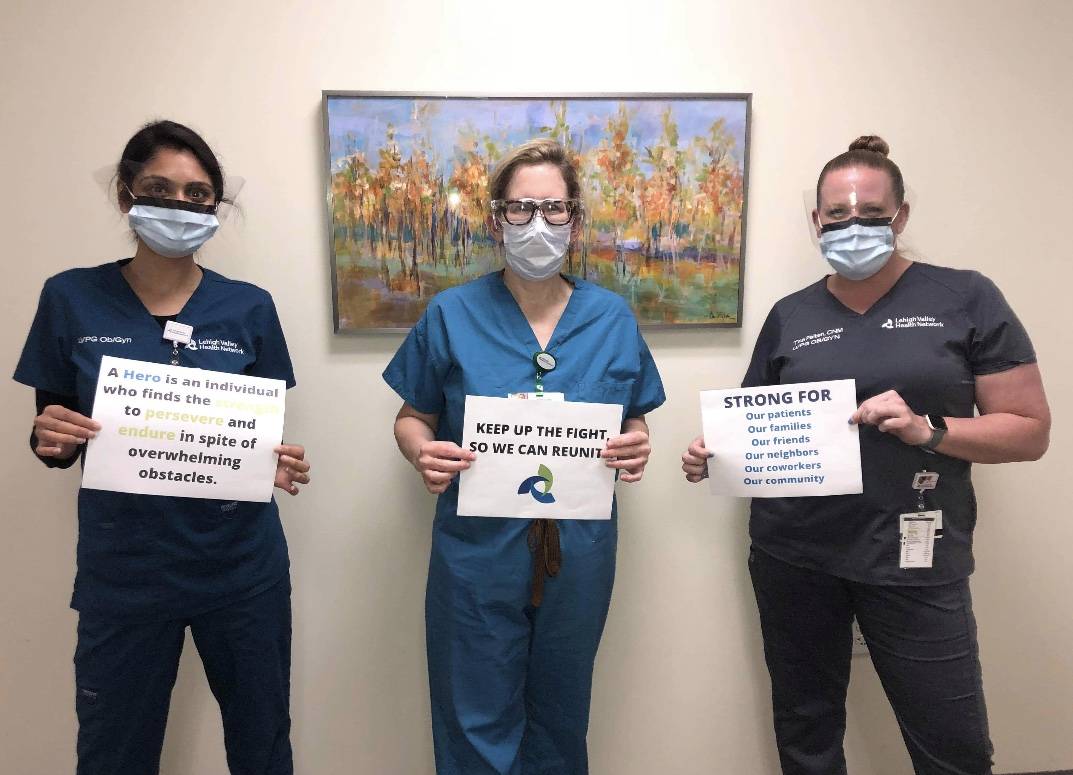
    Frontier Nursing University (FNU) Alumni Christina Felten, DNP, CNM, RNC-OB, has spent her career serving others. At the time of her high school graduation, she was a nurse’s aide who quickly became an EMT. However, her life changed when she was floated to labor and delivery and fell in love with supporting women during birth.

    “I had already been accepted into a different program at Bloomsburg University, but after spending some time in the labor unit, I knew I had found my calling. I got in touch with the nursing department and convinced them to let me switch programs,” Felten said.

    However, before Felten finished earning her degree, the twin towers were struck in NYC, and Felten was called to another form of service. She quickly signed up to join the navy and was caring for wounded soldiers within a few short months as a Naval Nurse Corps Officer. 

    While Felten thrived tending to the soldiers, she admits that her heart knew labor was where she was meant to serve.

    “Although it was extremely difficult for me to leave the soldiers,  I had never lost my passion for labor and delivery. I put in for multiple transfers and was eventually sent to the post-partum floor. However, as soon as my patients were tucked in for the night, I shadowed the labor and delivery nurses because I knew that was what I really wanted to,” Felten said.

    Despite it being incredibly challenging to work through school while in the Navy, Felten set her mind to it when she found out about FNU- although she admits she didn’t entirely know what she was signing up for.

    “When I saw FNU’s nurse-midwifery program I thought it sounded exactly like what I wanted to do. I wasn’t sure what a nurse-midwife was, but the description fit like a glove, so I went for it,” Felten laughed. 

    Later in her career, Felten’s unexpected midwifery path would play to her advantage. Felten was the first midwife to be hired by the Lehigh Valley Physician Group, and she did so by explaining midwifery to those less familiar with the practice. 

    “When I applied for the job, they initially weren’t looking for a midwife, so I explained, I’m essentially a nurse-practitioner who delivers babies. And it worked,” Felten said.

    Felten knew that being the first midwife would come with challenges, and it took time for the hospital to understand her value.

    “For years, I was just doing postpartum rounds and seeing patients in the office, which wasn’t what I signed up for, I wanted to deliver babies,” Felten said.

    Felten even left Lehigh for a time to work elsewhere. However, following her absence, the hospital hired another FNU alumni, Sherilyn Gibbs, DNP, CNM, who really transformed the program. Shortly after Gibbs was hired,  Felten received a phone call asking her to return to Lehigh Valley.” 

    “What we have now is a true collaboration between the doctors and the midwives,” Felten said. “We have become ingrained in the culture of the hospital so that patients and healthcare workers who might not have known much about midwifery, now see us at work and realize we are educated professionals,” Felten said. 

    According to Felten, COVID-19 only enhanced this sense of togetherness. “During COVID, there was no room for ‘Us vs. Them’ mentality,” Felten said. “We have all been one team throughout the pandemic.”

    “That doesn’t mean this year wasn’t hard though,” Felten said. “Some days, it was easy to feel bitter when we were working overtime while so many others were staying at home. Some days felt lonely; as midwives, we love bonding with our patients, and the layers of PPE made everything feel distant. We’ve had to reevaluate so much of what we do.”

    Felten said that on her most challenging days, she would think back to a memorable patient experience from early in her health care journey. When Felten was serving injured soldiers, she treated a man from Pittsburgh  whose leg was damaged by an IED explosion. He always enjoyed her accent and called her Nurse Philly. 

    One night she heard him screaming for ‘Nurse Philly’, and when she went to him, he was watching a video someone had sent him of the blast that left him scarred. He was frightened and just needed someone to hold his hand. 

    Years later, he requested Felten to assist his wife with the birth of their twins. During that much happier time, she was able to again hold his hand.

    “What I’ve realized is that life doesn’t always turn out as you expect, and sometimes you might not feel like you’re in the right place, but life has a way of circling back around. If you follow the path your heart is leading you towards, it’s amazing the way things line up,” Felten says.

  • FNU Graduates Realize Dream of Opening Their Own Nurse-Midwifery Practice

    FNU Graduates Realize Dream of Opening Their Own Nurse-Midwifery Practice

    Not even a pandemic could end this lifelong dream. Going to school while working full time and raising a family didn’t stand in the way either. Some things are just meant to be.
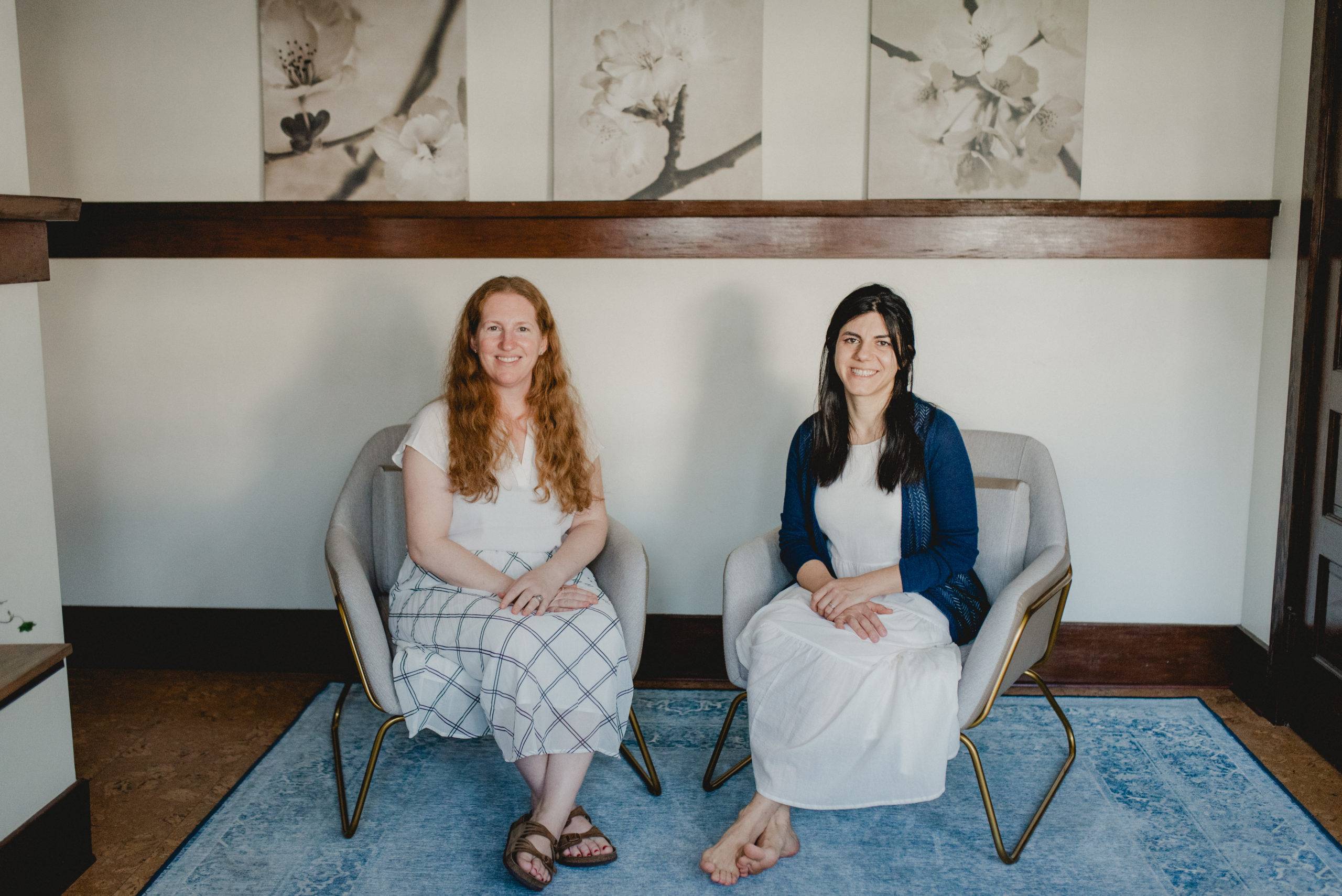
    That’s how Naomi Elizabeth Drucker, MSN, CNM, Bridge 138, and Lilit Baldjyan Sarkissian, RN, MSN, CNM, Class 143, felt when they held a grand opening for Los Angeles Midwives on December 16, 2020. The grand opening was virtual, but the building, the practice, the midwives, and their guests were all quite real. It was the fulfillment of a dream that Drucker and Sarkissian shared when they worked together as labor and delivery nurses at Cedars-Sinai Hospital. 

    “Even when I was a registered nurse, I knew I wanted to be a midwife,” Sarkissian said. “I saw that in Naomi and I saw that in me too. We never officially talked about where we would be today but we jokingly referred to starting our own practice. The reality of it happening sounded too good to be true.”

    While they had secured office space in September, the December grand opening event made it all feel real. The event lasted approximately 90 minutes with a large percentage of the 75-plus RSVP’d guests dropping into the virtual event for at least a part of the celebration. Among those in attendance were doulas, nurses, and nurse-midwives. Among the many notable attendees were the President of the California Nurse-Midwives Association and FNU graduate Paris Maloof-Bury, CNM, Class 140; FNU graduate Shadman Habibi, CNM, Class 19, lead CNM with the UCLA Nurse-Midwives; and Kathleen Belzer, the President of the California Nurse-Midwives Foundation. Activities included a virtual tour of the facility, an introduction to the nurse-midwives, and some interactive games and conversations.

    “The grand opening raised awareness among other midwives and birth workers so they have a clearer understanding of what we are doing and what we have to offer,” Drucker said. 

    One of the unique things that Los Angeles Midwives has to offer is in-patient delivering privileges at Cedars-Sinai Medical Center, allowing them to provide midwifery care and services to their patients while having their babies in the hospital setting. Drucker and Sarkissian are the first CNM team to have such privileges at the hospital. 

    “Almost all of our clients come to us instead of another midwife because they know we have access to Cedars,” Drucker said. “For anybody planning an out of hospital birth, it’s very important to have a solid backup plan. We’re the only ones who can offer a seamless transition to the hospital without losing your birth team. That’s very important to all of our clients.”

    Equally important to current and prospective clients is the strong reputation that Drucker and Sarkissian carry within the profession. 

    “Most of our inquiries are coming from a recommendation from doulas,” Sarkissian said. “Word of mouth in this business is so powerful because there’s a trust component. I trust my doula and my doula trusts you, so I’m going to trust you.”

    Those connections with doulas and others in the birthing community have been developed over long periods of time. Drucker began her career as a doula 20 years ago and has continued to value and maintain those relationships over the years. 

    The Los Angeles Midwives recognize the importance of building trust and have established virtual Sunday meet and greets to better get to know their prospective clients. Working in the hospital setting, they saw first-hand the importance of having trust and a healthcare advocate during the birthing process. While working as labor and delivery nurses, Drucker and Sarkissian both took note of things they would do differently if and when they had their own practice. Drucker frequently jokes that she was an undercover midwife working as a labor and delivery nurse. 

    “There was one midwife at Cedars who had a private practice before we did,” Drucker said. “I would often ask her questions because I knew that down the road that’s what I wanted to do. My biggest concern was leaving a big institution where I get a great paycheck and have benefits. She said that will be the least of your worries. Your biggest worry is going to be finding a partner so you don’t kill yourself with the hours. I gained a lot of confidence from her. There is enough interest for sure, definitely for the special service we are offering that includes access to the hospital.”

    Drucker worked independently for the first two years after leaving her nursing job, while Sarkissian took a full-time nursing instructor role at West Coast University (WCU) shortly after passing her national board certification.  

    “As a labor and delivery nurse, you really get to support these women in labor and help them make decisions and advocate for them,” Sarkissian said. “What drives you to become a midwife is when you see all of this in a medical setting and you can’t help but think to yourself ‘I wouldn’t have done it that way’ or ‘I wish she wasn’t coerced into that decision.’ You want to be in that seat where you’re making those decisions and managing her care. I want to be able to empower these women to be part of their own healthcare decisions. That’s one of the hallmarks of midwifery that we don’t see playing out the majority of the time in a medical setting.”

    While Sarkissian was teaching at WCU, and concurrently serving as a clinical instructor at UCLA’s School of Nursing, she remained focused on her mission to join Drucker as a private practice midwife. Drucker guided her through the process of attaining delivering privileges. 

    “I left my job to get privileges while I taught full time. Naomi guided me throughout the whole thing,” said Sarkissian, who continues to be clinical faculty at UCLA’s School of Nursing. “It’s scary to call doctors and say ‘will you be my backup provider?’ She already had all those conversations. The groundwork was there. Plus, working at Cedars as registered nurses, where we had a working relationship and trust definitely helped.”

    The Los Angeles Midwives have hit the ground running, beginning the new year with approximately 20 pregnant patients and 10 postpartum patients. They estimate that about 80 percent of their patients prefer a home birth, but the hospital privileges are a comforting assurance.

    “If we need to go to the hospital, I still get to continue to take care of my patient,” Sarkissian said. “With the rest of the great midwives who don’t have these privileges, if there’s a reason to go to the hospital, that care ends because they can’t go with them.”

    Drucker estimates that only about 15 percent of the time do they need assistance from their backup provider, who would perform procedures such as C-sections at the hospital. But even in those cases where physician backup is required, Drucker and Sarkissian are still able to be there, actively involved in the care and advocacy of their patients.

    That personal connection and care are just as important to the Los Angeles Midwives as they are to their patients. They understand that it is what makes them a success, and it is why they have no immediate plans to expand their business. 

    “It’s such a personal business and people really do come for us — not just a midwife — they are coming for us in particular,” Drucker said. “I imagine it would change the flavor of our service if we had a team of midwives.” 

    Both Drucker and Sarkissian are content with the size, scope, and model of their practice. They are quick to thank their families, friends, and colleagues for helping them reach this point. It takes an immeasurable amount of support to be able to work full time, go to school full time, and raise a family all at once. They also credit Frontier Nursing University with playing a key role in making Los Angeles Midwives a reality.  

    “Frontier has a stellar reputation,” Drucker said. “As far as securing clinical sites and promoting ourselves, people love to know that we went to Frontier. As a working mother of four sons, I worked the night shift through my whole master’s degree and it was doable. I couldn’t have done that with any other program. I’m really grateful. I’m also grateful for the on-campus experience that we had. It was manageable and it allowed us to connect and meet these great midwives who are so passionate about some facets of midwifery that I had never even considered to be important. I think Frontier gave me a great foundation. I’m very proud to let people know that I went to Frontier.” 

    “I had a baby who was one when I started school and had two other babies while I was in school, also working the night shift,” Sarkissian said. “That ability to be able to go to school and realize my dreams would have not been possible with any other school. That being said, it wasn’t just any online program. I always felt that connection, even though I was thousands of miles away. Frontier has it figured out. They know what it takes to educate students using an online medium but still have that connection. I felt supported and the knowledge that I received and the education that I got were top notch. That was even more clear to me when the pandemic hit and I was an instructor at a university and I had to teach online. I got to use a lot of the things I learned as a student as an instructor.”

    “I am extremely proud and honored to have attended Frontier,” Sarkissian continued. “I think as a midwifery school, it is one of the top schools and I can see why they have that reputation. They have it figured out and it’s the right way to do it.”

    The same could be said about the Los Angeles Midwives. 

  • New Introduction to Cultural Safety Course Available to All

    Beginning this spring, FNU will be offering a new course, “Introduction to Cultural Safety.” The course will be made available not only to the FNU community but to anyone interested in the course and its areas of focus.

    The curriculum was developed by FNU clinical faculty Dr. Erin Tenney, CNM, DNP, Class 14. The three-hour CE course has been reviewed by five fellow FNU faculty members. Those taking the course will learn about Native American history and culture in order to better comprehend cultural safety. This requires not only understanding the Native American culture, but also self-reflection and awareness on the part of the healthcare provider. 

    “The focus of the Introduction to Cultural Safety is on Native Americans, but the tenets can be applied to all populations,” Dr. Tenney said. “We will introduce the concept of cultural safety and center on the Indigenous patient experience, learning to listen as the patient defines what safe care is.”

    By the end of the Introduction to Cultural Safety, learners will be able to:

    1. Define cultural safety
    2. Identify the three key tenets of cultural safety
    3. Explain the impacts of colonization on Indigenous people in the U.S. 
    4. Describe what culturally safe vs. culturally unsafe care may look like 
    5. Discuss personal and systems change strategies for improving the cultural safety of care

    The course is led by Dr. Tenney with guest instructor  Dorene Waubanewquay Day. In addition to being clinical faculty at FNU, Dr. Tenney is a certified nurse-midwife and women’s health nurse practitioner, DONA International birth doula trainer, writer, and photographer who has worked within Indigenous health centers and communities throughout her nursing career of almost 20 years. 

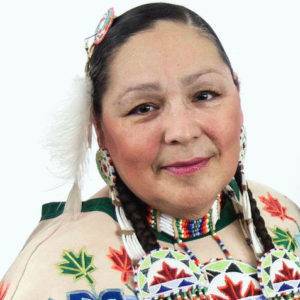
    Dorene Waubanewquay Day is an accomplished educator, midwife, activist, singer, and artist who consults with and works within many Indigenous and other communities and organizations to help restore and design culturally safe practices.  In 2020, she was selected as a Luce Indigenous Fellow.

    Dr. Tenney credits Dorene with being her teacher and mentor, “particularly about women’s health and traditional lifeways, birth and parenting, life, death, grief, healing and more.” Together, they have traveled to Native communities in the U.S. and Canada to provide birth and women’s health training. They have also provided culturally-based doula and midwifery teachings, in addition to cultural safety training for health providers in the U.S.

    Those interested in the Introduction to Cultural Safety can enroll in the course at https://ceu.catalog.instructure.com/courses/introduction2cultural-safety.

    Editor’s Note: This program is supported by the Health Resources and Services Administration (HRSA) of the U.S. Department of Health and Human Services (HHS) as part of an award totaling $2,065,200. The contents are those of the author(s) and do not necessarily represent the official views of, nor an endorsement, by HRSA, HHS, or the U.S. Government. 

Request Information Apply Give Now