Blog

  • Personal Tragedy Inspires Holly Howell’s Commitment to Serve

    Personal Tragedy Inspires Holly Howell’s Commitment to Serve

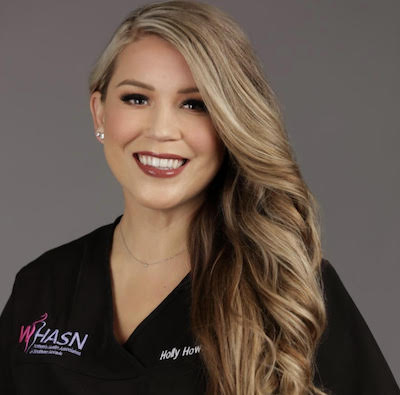
    Even as a child, FNU alumni Holly Howell, MSN, CNM, knew she wanted to be a nurse. It was a not-so-subtle nudge that pushed her in the right direction.

    “At a very young age, I have a very vivid memory of my aunt, heavily pregnant, asking me to feel her belly, and the baby made a really large movement,” Howell said. “In my head, it’s still the largest movement I’ve ever felt from a baby. I was fascinated and intrigued by it. From then on, I knew that I wanted to work in the maternal-child field. I wanted to deliver babies. It was my end goal. I’m really proud of myself that I made it, and I’m doing it.”

    Howell grew up in Nevada and earned a Bachelor of Science in Nursing from Nevada State College, becoming the first woman in her family to graduate from college. With her focus on attending births and caring for pregnant women, she chose Frontier Nursing University to guide her to her goal of becoming a Certified Nurse-Midwife. During her time at FNU, she was awarded the Jesse Smith Noyes Scholarship.

    “Receiving the scholarship definitely helped me to complete the program at Frontier and also relieved some of the burdens of student loan debt,” she said. “Frontier prepared me really well for midwifery care and caring for patients. It has also given me a great network of midwifery friends and partners that I can lean on during stressful times and reach out to for questions or similar experiences. Those deep bonds were created during on-campus sessions and study groups as we went through the program together, leaning on each other during stressful times. Since then, we have been able to stay in contact via social media really well.”
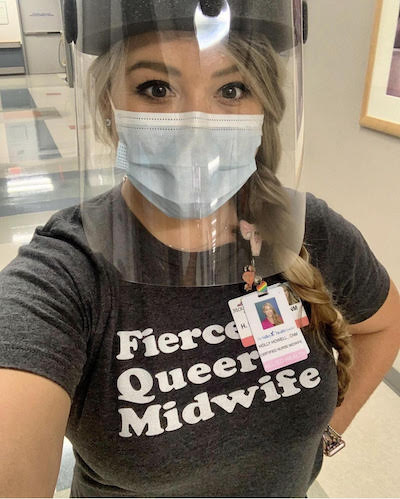
    Today, Howell works as a nurse-midwife at two different locations in Las Vegas, both of which are part of the Women’s Health Associates of Southern Nevada. Her usual routine includes morning rounds at the hospital before arriving at the clinic between 8:45 and 9:00 a.m. The clinic includes three collaborating physician partners and two collaborating midwifery partners in addition to Howell. She sees between 25 and 35 patients per day.

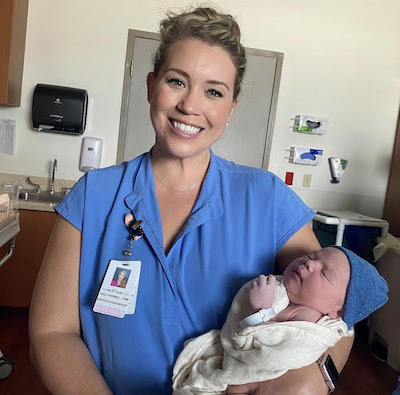
    “They are primarily pregnant and OB patients, but I do also do birth control consults, menopausal care, annual exams, and IUD insertions,” she said. “We’re a very busy OB practice, and I see primarily pregnant people and postpartum visits. I also deliver quite a few babies every month, so I’m in and out of the hospital all the time. Yesterday (March 22, 2022), I actually set a record for myself and delivered five of my own babies in a 24- hour period. I didn’t sleep much.”

    It was yet another taxing day in what has been a taxing two years during the COVID-19 pandemic. Howell has relied on her training and knowledge to try to be a steadying and calming influence for her patients.

    “The pandemic has been really scary and taxing for a lot of people, especially for pregnant people,” Howell said. “They have been very anxious during the pandemic and have needed a lot of support, education, and reassurance.”

    With several of her patients contracting COVID, Howell saw first-hand the additional risks that pregnant women faced.
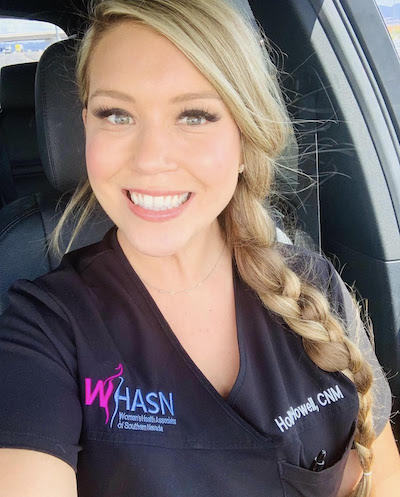
    “During labor and birth, I pride myself on making sure that I’m practicing in an evidence-based way and that I am giving family-centered and patient-centered care.”
    – Holly Howell, MSN, CNM, FNU Alumni

    “We saw how it could affect pregnant people and how they have an increased risk of getting sicker than the normal population,” Howell said. “I’ve been doing a lot of counseling and education that I was doing before, but it’s a little bit more sensitive because they know that they are at a higher risk for getting more severe symptoms than a non-pregnant person.”

    Howell also counseled patients about the vaccines. She helped them through their understandable fear and anxiety by “staying up to date with all of the current recommendations so I could give my patients good evidence-based answers to the questions.”
    As if the pandemic was not difficult enough to cope with, Howell and her wife Dana faced their own personal tragedy late last year.

    “I gave birth to my son Huck Wilder at 20 weeks gestation,” Howell said. “It’s a very scary and traumatic way to be on the other side and be the patient. I had really amazing nurses and a certified nurse-midwife that took great care of me. But I just love him and miss him every day. I’m grateful that I had him and that he was here, and I am grateful for the opportunity to be a patient and to be on the other side of women’s health. I think going through this experience will make me a better, more empathetic provider. I’m sad that I had to experience that, but really am grateful for the time that I did have with him.”

    Though pained, Howell speaks openly about her experience and the immeasurable impact Huck has had on her.

    “He has been an inspiration for me to take really good care of pregnant people and also try to decrease the traumatic birth experience that people and families have during labor and birth,” she said. “I also had a really severe postpartum hemorrhage and do have some PTSD and trauma from my birth with no fault to my providers at all, just to the situation. My experience losing Huck has definitely given me insight and motivated me to provide the best care I can for birthing people and families.”

    Perhaps that is why Howell is much more than a provider. She states in her own profile on the Women’s Health Associates of Southern Nevada that she “is an advocate empowering women, natural childbirth, breastfeeding, women’s reproductive rights, and health equality for the LGBTQIA+ community.” One example of how she advocates for her patients is she has stopped using stirrups during pelvic exams and births unless the patient requests them. She finds that this gives the patient more autonomy over their own body and better freedom of movement.
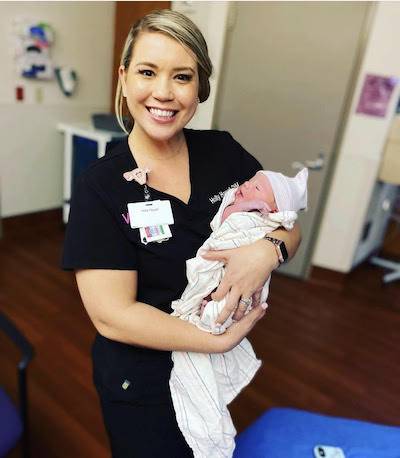
    “I pride myself on practicing in a trauma-informed way,” Howell said. “I always ask for consent and permission before I do any kind of pelvic or invasive exam. During labor and birth, I pride myself on making sure that I’m practicing in an evidence-based way and that I am giving family-centered and patient-centered care. I give patients options, and we have in-depth discussions before any interventions are completed, making sure that they are well educated about their bodies and their different options during labor and childbirth.”

    In addition to educating and informing her patients, Howell wants to make sure her patients feel accepted and welcomed into a clinic that is safe and inclusive.

    “I am a proud gay woman and advertise that on my website,” Howell said. “Hopefully, LGBTQIA+ people can come and see me and find a safe environment where they can be free to be themselves and be more comfortable with invasive exams and care.”

    Howell dreams of one day opening her own birth center, but for now, she is happy right where she is at, living out her childhood dreams every day, to the significant benefit of her community.

    “We provide really great service to a lot of women and give them a happy medium between home birth or birth center care,” she said. “I’m really happy being a resource for the women who are not eligible for home birth or birth center care because I can still give them that low intervention, calm environment in the hospital setting. I am very happy with where I am at.”

    To read more spotlight stories on the important work our alumni are doing, please visit this page.
  • National Academies of Practice Inducts Dr. Vicky Stone-Gale as a Distinguished 2022 Fellow

    National Academies of Practice Inducts Dr. Vicky Stone-Gale as a Distinguished 2022 Fellow

    The National Academies of Practice (NAP) recently announced the election of Dr. Vicky Stone-Gale, DNP, APRN, FNP-BC, FAANP, FNAP, as a Distinguished 2022 Fellow. Class of 2022 Fellows were welcomed into the National Academies of Practice during the awards and induction ceremony in San Diego, California, on March 5, 2022.
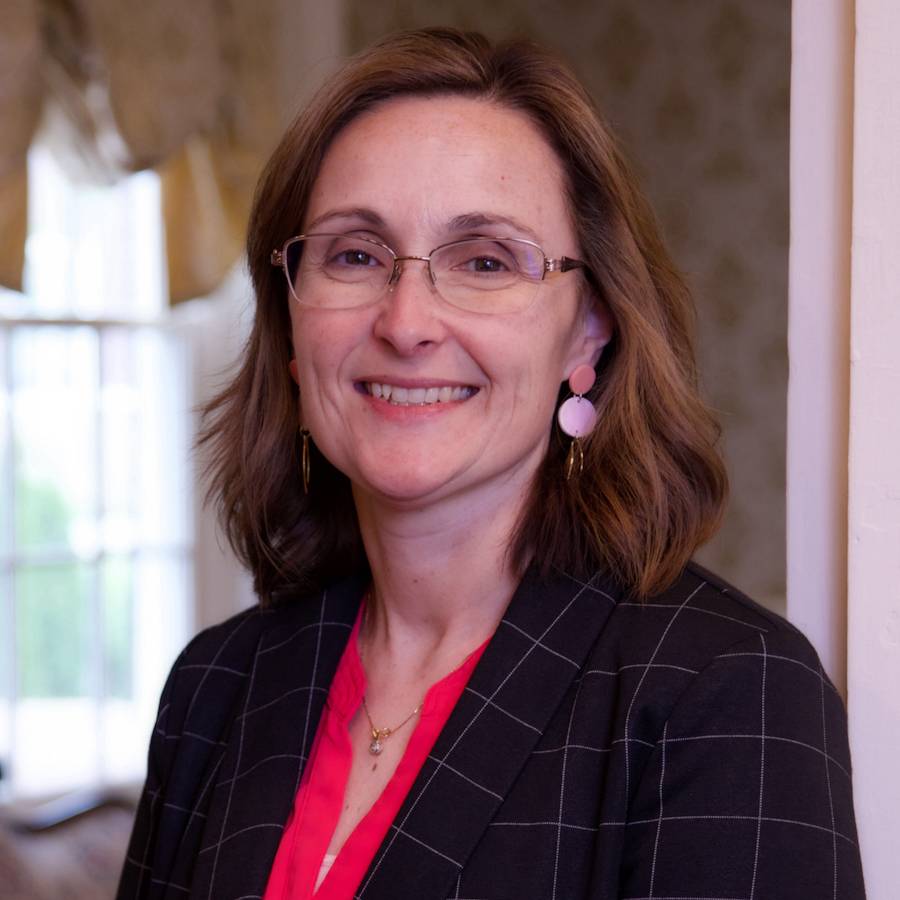
    In the fall of 2020, Dr. Stone-Gale and her daughter Jennifer Stone, DNP, APRN, FNP-BC, became the first APRNs licensed as autonomous advanced practice registered nurses in the state of Florida. They received the good news after a house bill permitting select APRNs to practice in primary care was signed into law by the Florida governor earlier that year. The Autonomous Nurse Practitioner practices in primary care settings permitting the APRN to be independent of physician general supervision to provide care throughout Florida.

    “To be elected by my peers as a Fellow of the National Academies of Practice is truly an honor,” Dr. Stone-Gale said. “This organization works toward the common goal of working with all professions to advocate for quality healthcare for all individuals. This will only improve the outcomes of our patients, which is what is needed for everyone.”

    Founded in 1981, NAP is an interprofessional, nonprofit organization with membership representing a range of healthcare professions willing to serve as distinguished advisors to healthcare policymakers in Congress and elsewhere. The mission of the National Academies of Practice is to serve as distinguished professionals advancing interprofessional healthcare by fostering collaboration and advocating policies in the best interest of individuals and communities.

    The academies within the National Academies of Practice include Allopathic and Osteopathic Medicine, Athletic Training, Audiology, Dentistry, Nursing, Occupational Therapy, Optometry, Pharmacy, Physical Therapy, Podiatric Medicine, Psychology, Social Work, Speech-Language Pathology, and Veterinary Medicine.

    Fellowship in the National Academies of Practice is an honor extended to those who have excelled in their profession and are dedicated to furthering interprofessional practice, scholarship, and policy in support of interprofessional care. The central purpose of NAP is to advise public policymakers on health care issues using NAP’s unique perspective — that of expert practitioners and scholars joined in interprofessional dialogue and advocacy.

    To learn more about Dr. Stone-Gale and her work in advocacy, listen to our podcast.

  • Get to Know FNU’s New Chief Advancement Officer Bobbi Silver

    Get to Know FNU’s New Chief Advancement Officer Bobbi Silver


    Chief Advancement Officer
    Bobbi Silver

    On the surface, it is natural to assume that the role of an advancement officer is to raise money. It is true that fundraising is central to the position, but at its core, it is really about connecting and building relationships.

    “People give to people,” Frontier Nursing University Chief Advancement Officer (CAO) Bobbi Silver said. “Yes, we need to provide important funding to our institutions, but it’s also important that we have meaningful connections with people to facilitate support for the institution in ways that they are passionate about. We want to treat people with respect and kindness and connect them to the university.”

    Silver, who began her role as Frontier’s Chief Advancement Officer on March 28, 2022, brings nearly 20 years of experience in fundraising and marketing. Most recently, she served as the Director of Development at the Diocese of Lexington. Prior to that, she was the Vice President of Philanthropy at the YMCA of Central Kentucky and worked in fundraising roles at the University of Kentucky. Read Our Q&A with Bobbi

    In each of those roles, she saw the value of connecting people to causes that were important to them. At Frontier, she found a cause that is important to her.

    “I love Frontier’s mission and how it started in Eastern Kentucky, focusing on this unmet need to help people and families in rural areas,” Silver said. “Our purpose is to change the landscape and healthcare of rural and marginalized communities. I was also drawn to our commitment to diversity and inclusion. Not all places follow through with their spoken intentions. At Frontier, we hold our feet to the fire. We are what we say we are, and that’s important to me.”

    Commitment to service and purpose comes naturally to Silver, whose father served in the U.S. Army. He was on active duty during her childhood, which meant the family was frequently on the move. They lived in Belgium, Alaska, Colorado, and Virginia before moving back to Maryland, where her parents were originally from. After finishing high school, Silver graduated from McDaniel College in Westminster, Maryland. She found a job in Savannah, Georgia, where she met her husband, Matthew, who was stationed there as an Army Ranger. The couple made their way back to Kentucky, where Matthew’s parents lived.

    Silver began working in a nonprofit setting early on in her career. Her first jobs out of college had been sales-related, but a position with a non-profit organization helped her find her true calling.

    “I always had this yearning to do good for others,” said Silver. “When we moved to Kentucky, I looked for fundraising-related positions. My first job when we moved to Kentucky was fundraising and corporate support for WEKU (a non-profit radio station at Eastern Kentucky University). From there, I moved into other roles where I worked with some great people and got to learn about the fundraising world.”

    “Stay connected. Stay connected to your faculty. Become a preceptor. Give back with a scholarship. Lift someone else up. Look for alumni in your region you could connect with. Giving is important, but it’s not just about money.”
    – Bobbi Silver, FNU Chief Advancement Officer

    Silver’s impressive record of success in development, alumni relations, external affairs, grants management, and marketing made her a strong candidate for Frontier’s CAO position. But it was her immediate connection to Frontier’s mission and culture that made her a natural fit.

    “We are so excited to welcome her and her family to the Frontier community,” FNU President Dr. Susan Stone, CNM, DNSc, FAAN, FACNM, said. “We know she will help us continue to grow and successfully fulfill our mission.”

    To do that, Silver wants to know why the members of the FNU community are passionate about Frontier. She wants to know their stories and how they got where they are.

    “Fundraising is caring about people, which fits perfectly with our Culture of Caring,” she said. “It’s meeting people and hearing about their journeys. Where were the stumbling blocks? What connections to the university helped them through those? That’s my favorite part about fundraising.”

    Silver said that she wants to focus on building lifelong connections with students to keep them better engaged with the university throughout their careers and beyond.

    “If I could say anything to the students, I would say philanthropy involves giving, but it’s not just that. Philanthropy is about giving of ourselves and includes volunteering and giving back, lifting someone else up,” Silver said. “I recently watched a video in which Kitty Ernst said, ‘Don’t ever leave.’ I think that’s the perfect phrase. Stay connected. Stay connected to your faculty. Become a preceptor. Give back with a scholarship. Lift someone else up. Look for alumni in your region you could connect with. Giving is important, but it’s not just about money.”

    Get Involved

    Silver intends to build deeper connections with alumni and hopes that many will come to visit the new Versailles campus.
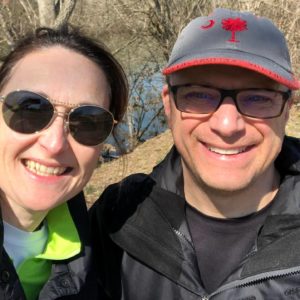
    “We want to connect with our alumni in a more intentional way,” she said. “We want to get them on campus so they can see it and celebrate it. There’s a lot for our alumni and friends to be proud of. It’s a great time to get engaged. It’s an open invitation to call me and come visit.”

    Silver is quite active away from her work at the university. The Silvers have two children, Calvin, who is in college, and Eden, who is in high school and active in sports. Silver also enjoys hiking with Matthew and their dog and dreams of one day taking a trip to Scotland.

    “Family connection is a number one priority for me,” Silver said. “I recognize how precious time is right now because my kids are growing up. Once they reach this teenage and low 20 age, time just tumbles over itself so much faster. I try to be more focused on living in the moment.”

    Silver has already found a home at Frontier. In just her first few months at the university, she feels connected to the university, its mission, and its people.

    “I have found that this place has been incredibly welcoming, warm, and very encouraging to put yourself out there, learn, and take risks. That’s who we are,” she said. “I’m excited to be with this incredible faculty and wonderful staff. Everyone is happy to be here and to help in any way. That sense of service speaks to my heart. I want our department to be of service to others. Our goal is to support the university in all the ways we can, and I think we have a really great team that can do that.”

    Get to Know Bobbi Silver

    What do you like to do in your free time?
    I like to read (especially any Agatha Christie-inspired mysteries), hike, be outside, going to the theater to see plays, watch my youngest son participate in high school track, and visit my oldest son at college. I love NFL football, especially my Baltimore Ravens. (I was born in Baltimore.)

    What attracted you to your role at FNU?
    I am a first-generation college graduate and am particularly interested in helping students from rural or marginalized communities with their education. FNU’s history and commitment to these same communities drew my attention to this position. The faculty, staff and students here are an incredibly caring community and I am truly grateful to serve in this role.

    Do you have any fun facts you’d like to share?
    -I grew up an Army Brat and moved around quite a bit. Through high school, I lived in two countries, four states, and went to nine different schools. I’m not afraid of change!

    -I love a good road trip.
    -I prefer to listen to audiobooks rather than music.
    -I love to bake.

    What are you most excited about in this new position?
    Frontier is in a great place in its evolution. I am excited to start in this role at this point in time to engage with our alumni, celebrate our new campus, and work with the community. I have a great team who are dedicated to Frontier, which makes my job so much easier. I truly appreciate the joyful spirit I have encountered at Frontier and how diligent everyone is in working together to transform health communities.

    Do you have a favorite quote, and why?
    “The most difficult thing is the decision to act, the rest is merely tenacity.” -Amelia Earhart; I love this quote because it’s a great reminder to be brave, to experience the world, and to see joy. I am an overthinker and while that certainly has its place, I sometimes need a reminder to make the daring decision and be bold.

    Do you have any TV shows to recommend or that you enjoy?
    Lately, I’ve been watching the entire series of Ina Garten’s Back to Basics on Discovery+. Her voice is so soothing and I’m picking up some great cooking tips.

  • Faculty Spotlight: Dr. Kristin Gianelis Recognized with Circle of Caring Award

    Faculty Spotlight: Dr. Kristin Gianelis Recognized with Circle of Caring Award

    At the heart of Frontier Nursing University is a talented and diverse community of students, alumni, faculty, staff, Couriers and preceptors. Spotlight blogs feature members of our FNU community that are focused on the mission of educating nurse-midwives and nurse practitioners to deliver quality health care to underserved and rural populations.

    Frontier Nursing University (FNU) is proud to recognize faculty member Kristin Gianelis, DNP, APRN, ANP, WHNP, who was one of the recipients of the Winter 2021 Circle of Caring Award.
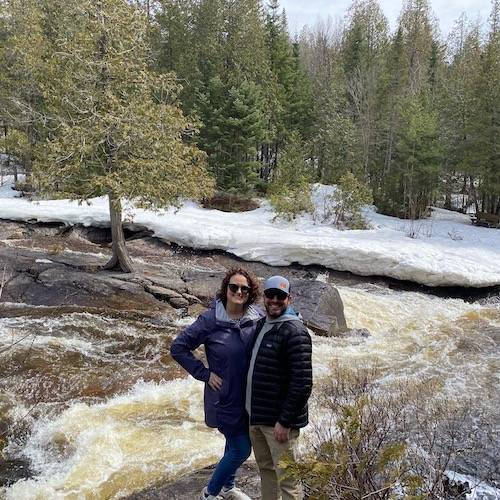
    A resident of Barrington, Rhode Island, Gianelis serves as a Doctor of Nursing Practice (DNP) faculty member for FNU. Through this role, she mentors DNP students to become agents of change in their communities. Outside of her work with the university, she also works in a clinical setting and dedicates her time to improving healthcare access for underserved populations.

    “If I can provide patient-centered care to even a few individuals who wouldn’t have been able to receive healthcare otherwise, I consider my work a success,” she said. “I walk into each clinical day not knowing what I will encounter, but with only the intention of providing each person dignity, respect and the opportunity to have their individual needs met.”

    Over the last 17 years, Gianelis has worked in a variety of settings as a dual-certified Women’s Health and Adult Nurse Practitioner. She currently works for an urban Federally Qualified Health Center (FQHC) and provides OB/GYN care for a gender-diverse and largely undocumented immigrant population.

    Gianelis said her initial inspiration to pursue nursing was to help women and families navigate normal life changes, but her scope of perspective has changed throughout her career.

    “As I have developed a more broad understanding of gender and sexuality, I would now say that I recognized the importance of this aspect of our beings and honor the unique path to sexual wellness for each individual,” she said. “It is my honor to give voice to all individuals and provide patient-centered sexual health care across the lifespan.”

    Before receiving her bachelor’s degree from Wheaton College in Norton, Massachusetts, Gianelis applied for immediate direct entry into a Master of Science in Nursing (MSN) program.

    “I finished my bachelor’s on a Saturday and started my master’s on the following Monday,” she said.

    Gianelis earned her MSN in 2005 after taking a break to work as a Registered Nurse (RN). She worked as a Nurse Practitioner (NP) for 13 years before earning her Doctor of Nursing Practice (DNP) from FNU.

    “Obtaining my doctoral degree taught me to think differently,” she said. “It opened my eyes to quality improvement, developed leadership skills and gave me the confidence to be an agent of change in my community.”

    After earning her DNP from FNU, Gianelis decided to stay with the university as a faculty member.

    “I chose to work at Frontier because I firmly believe in the mission of this institution. I believe that health equity starts with educating a strong healthcare workforce for the entire country, especially those areas that are underserved.”
    – Kristin Gianelis, DNP, APRN, ANP, WHNP

    “I chose to work at Frontier because I firmly believe in the mission of this institution,” she said. “I believe that health equity starts with educating a strong healthcare workforce for the entire country, especially those areas that are underserved.”

    Gianelis said she embraces FNU’s Culture of Caring, not only when interacting with fellow faculty members, but also with students.

    “Working in the DNP program, I have the opportunity to mentor students longitudinally during their clinical quality initiative,” she said. “While they are my students, they are also my colleagues – fellow APRNs working in other parts of the country. Through our interactions, I have the opportunity to understand how practice and policy differs nationwide, while also expanding on my own narrow experience of life in the northeast. Not only does this enrich my life intellectually, but I am embraced by each students’ warmth and openness to share their experiences and unique points of view.”

    The Culture of Caring also is important in the context of Diversity, Equity and Inclusion (DEI) work at FNU, Gianelis said.

    “I am here to amplify marginalized voices, shelter those who need rest, and support diversity in all its beauty,” she said.
    Gianelis is married to her husband Steve, and has two children and a dog. She enjoys traveling, boating, cooking and reading.

    Thank you, Kristin, for your dedication to providing healthcare access to underserved populations and for living out our Culture of Caring!

    If you know an FNU staff or faculty member that goes above and beyond, nominate them now for the Circle of Caring Award!

  • Boston Midwife Prepares to Open Alabama’s First Birth Center

    Boston Midwife Prepares to Open Alabama’s First Birth Center

    To the casual observer, opening Birth Sanctuary Gainesville might not make a lot of sense. First, Gainesville is a rural town in Alabama with a population of less than 200. Second, because of state regulations that severely restrict the scope of care nurse-midwives can provide, there are no birth centers in the entire state. That is about to change because FNU alumni Dr. Stephanie Mitchell, DNP, CNM, CPM, plans to open Birth Sanctuary Gainesville later this year. While the uncertainties are many, Mitchell insists, “It will get done.”

    Mitchell is the sort of person who finds ways to get things done. Barriers represent an opportunity rather than a permanent roadblock. Even her road to becoming a nurse-midwife was a circuitous one. Where others might have given up and changed course, Mitchell never wavered from her plan.

    Growing up in urban Boston, Massachusetts, in the 1980s, Mitchell’s first thoughts of pursuing a medical career began by watching The Cosby Show.

    “My very first exposure to childbirth was on television,” Mitchell said of The Cosby Show. “It was very shocking to me because the family would have mirrored my family, except that they were completely different echelons of human society. We were struggling along in the hood, the ghetto, dealing with all the things that 1980s Boston brought for a low-income black family. It was the opposite on TV. The father was an obstetrician, and the mother was a lawyer. That was my first exposure to pregnancy, and the healthy dynamic of that family really appealed to me and stuck with me.”

    Her second exposure to pregnancy and her first to obstetrics came a few years later when she was 16 and pregnant. She had collaborative care with an obstetrician and a midwife.

    “The way my body was honored during that process of pregnancy is really cemented into my mind,” she said. “I figured out that the word wasn’t ‘obstetrician’ or ‘obstetrics’ – it was ‘midwife’. I thought, ‘How do I do that?’”

    She did that by having her baby, finishing high school, attending community college, and going on to earn her BSN from Curry College. She knew she wanted to be a midwife and wanted to attend Frontier Nursing University. She also knew that she needed to gain experience, preferably in labor and delivery. She worked in pediatrics for about six years before getting into a labor and delivery unit, where she worked for six years before applying to Frontier. She continued working in labor and delivery while she earned her MSN and DNP from FNU, the latter in 2019.

    “The hospital I worked at was a lovely place in the backdrop of my neighborhood in Boston. I learned so much and have deep respect for my colleagues there,” Mitchell said. “But it was shocking to me to get to the labor and delivery unit and realize that the medical staff was not reflective of the community. I had come from the Boston Children’s Hospital, and we had a very diverse staff. I got to the labor and delivery unit, and it was shocking to be one of three black nurses on a staff of 120 in that unit. That was difficult because there are so many stark cultural differences between the care providers and those that they are caring for.”
    Mitchell had learned the importance of diversity at an early age when she was part of a busing program aimed at addressing segregation in the city. She attended school in a predominantly white school system.

    “You learn to interact with people who are definitely not from your community,” she said. “To have experience with individuals that don’t look like you, don’t talk like you, don’t have the same cultural norms as you, provides exposure that’s valuable in life. Midwives and advanced nurse practitioners are not always going to be black or people of color or LGBTQ, but you have to have people in place who are truly antiracist and empathetic.”

    Mitchell was also concerned about what she termed “the conveyor belt of care” that sometimes persists in hospitals with high volumes of patients. She wanted to practice in a different setting, where more time could be spent with the patients in a less frantic environment. She wanted to open a birth center and started looking into the prospects in Boston. She soon realized that funding would be a problem, as would the significant amount of competition. She shelved the idea temporarily until she and her husband Jamie moved to Gainesville, Alabama, where Jamie had family.

    Jamie is a successful pitmaster who got into the catering business. When the catering business became overwhelming, the Mitchells realized that a restaurant would be the better option. Starting a restaurant in Boston would not only be expensive but also involve a great deal of competition.

    “He wanted to get rid of the landlord and the competition, so we came down here to Gainesville and built a restaurant,” Mitchell said. The Alabama Rib Shack is open Friday through Sunday, with the capacity to cater as needed.

    As they prepared to move, Mitchell began researching places where she might be able to work. She soon found that there are no birth centers in the state. Further, in Gainesville and the surrounding area, there is no access to family planning services, midwifery care, or obstetric care.

    “If you’re pregnant, it’s a desert,” Mitchell said. The nearest options are approximately 45 miles away in Tuscaloosa or across the state line into Mississippi.

    It didn’t take long for Mitchell to think about opening her own birth center in Alabama. Not only did she need it as a source of income, but the community needed it as well.

    “I’ve always valued the low volume, slower-paced care that can be offered through midwifery,” Mitchell said. “I had a good amount of surface information to build on what it would mean to build a birth center in Alabama. It was important to me to work in the black and not be in a situation where I am over my head and sink myself before I get started. Kitty Ernst wisely once reminded me to follow the money. I followed the business model that my husband has followed for years – eliminate the competition and eliminate the landlord. There is no competition in Alabama, and people deserve to have options. To not have it as an option is unconscionable.”

    While many would agree with that, few have been as determined as Mitchell to bring about the necessary changes. One of the primary barriers created by the state’s legislation and regulation of midwives is the prevention of independent practice. Mitchell sought out physicians with whom she could partner to provide collaborative care but found none.

    Midwives who attended out-of-hospital births in Alabama were jailed until 2019 when the state began issuing midwifery licenses for Certified Professional Midwives (CPM) for the first time since 1976. Contrary to Certified Nurse-Midwives (CNM), who have nursing degrees, CPMs are not required to have a nursing degree. Despite being a CNM, Mitchell had to get a CPM license so she could practice in Alabama.

    “I was annoyed that I had to be a CPM because it prevents me from offering those full range of comprehensive health services,” Mitchell said. “ I see the value in being a Certified Nurse-Midwife. I see the value of being able to provide that umbrella of comprehensive care. Why would anyone ever specifically go the path of CNM only to be boxed in a corner to be a CPM? Prescriptive authority, billing insurance, access medications, full-scope care – it’s all gone. Especially in a healthcare desert like Alabama, it doesn’t make any sense. I’m still fighting that battle. It will take a while. But it’s not, ‘we can’t do it,’ it’s ‘we haven’t done it yet.’”

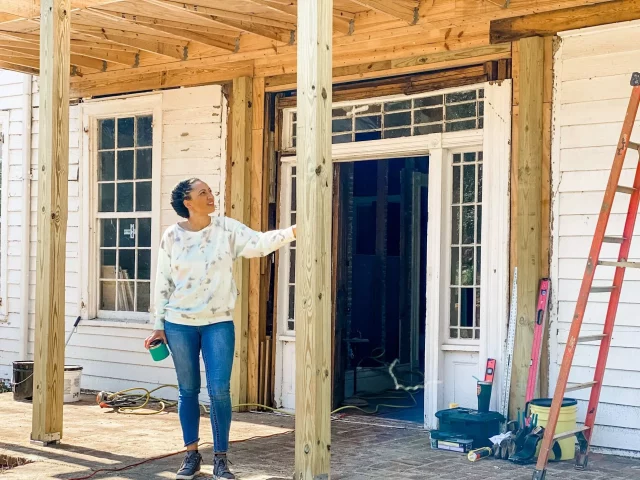
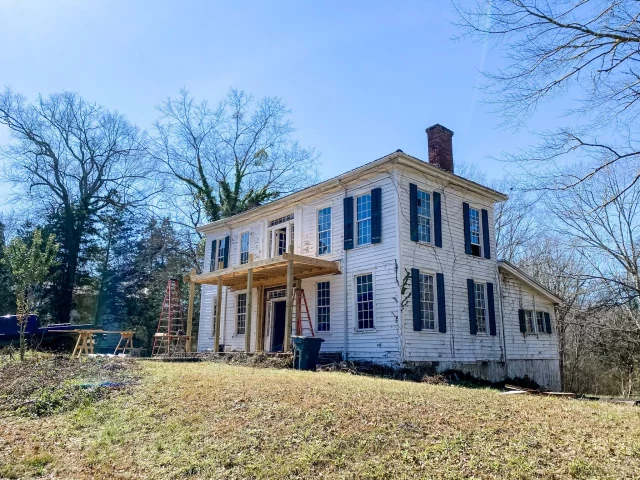
    Mitchell says that the Alabama Birth Center Coalition, Alabama Midwife’s Association, the Alabama Board of Midwifery, and the Alabama chapter of the American College of Nurse-Midwives are all lobbying for change. In the meantime, she is pressing forward with Birth Sanctuary Gainesville. For years on their visits to Alabama, Mitchell had admired an old two-story home in Gainesville. Built in 1835, it is a registered historic landmark. It sat empty for years until, shortly after they moved, Mitchell saw that it was for sale. The Mitchells bought it and began renovation and construction to convert it into a birth center.

    The roof, soffits, plumbing, electrical, and HVAC all had to be replaced or updated, but the structure was good, and the price and location were right. An exam room and a bathroom have been added, and the work continues with hopes of opening later this year.

    “My first goal is to get this birth center opened this year and have our first birth here this year,” Mitchell said.

    Grassroots efforts have provided the majority of the funding for the construction of the birth center. One fundraiser is a legacy walkway campaign in which people can purchase bricks and inscribe their own messages. Another fundraiser included the creation of three $5,000 scholarships that will go to BIPOC (Black, Indigenous, and people of color) midwifery students.

    “This grassroots effort is a constant return back into the systems we’re working in,” Mitchell said. “It’s been overwhelming. I’ve been filled with gratitude, and I remain so humble about this project, reminding myself that this isn’t a ‘me project.’ This is a project that will impact so many families just to be able to have that access to care.”

    Mitchell hopes to continue to give back to the nurse-midwifery profession by precepting students. She knows drawing them to rural Alabama might be difficult so that the birth center will include a special space for students. Mitchell describes it as a calm room where students will be able to rest or sleep in their own private space.

    Until the birth center is ready to open, Mitchell is operating as an LLC and providing home birth services as a CPM. She plans to continue to offer home births even after Birth Sanctuary Gainesville is fully operational. She is also working with the University of Alabama-Birmingham’s midwifery program, assisting with course development and serving as an adjunct professor.

    “I have been delighted to take part in that program,” she said. “I believe that’s the solution. UAB is a stronghold for the state. They are highly influential, and what better investment into the future of maternal healthcare and pregnancy healthcare than having a school that is going to be educating the midwives? That will lay the groundwork for accessibility in ways that we haven’t even thought about in this state.”

    Mitchell has successfully managed to fund the birth center to this point and continues to advocate for more access to nurse-midwifery care in the state. She has overcome many obstacles and knows many more loom ahead, not the least of which is the potential patient population.

    “It doesn’t make any sense to build a birth center here,” she said. “The same thing about my husband having a restaurant here. It seems highly unlikely and improbable. But what he has learned is that people will travel for quality. They will do it in Alabama for barbecue in a minute. There is the same sort of model in terms of accessibility. We’re talking zero freestanding birth centers in the state. It becomes a question of, ‘Do you want to travel to get care?’”

    Mitchell said that, in order to help with that, they are even considering providing space for families who make the journey with their loved ones. It’s true that travel is a potential hurdle, but true to her nature, Mitchell sees not only the barrier but also the potential solution. In the end, it all makes perfect sense.

    Are you interested in learning more about Certified Nurse-Midwives? Learn about the care they provide.

    Editor’s Note:
    Dr. Mitchell wishes to acknowledge her husband, Jamie. “Making the journey into midwifery with a family could have been my insurmountable obstacle. He’s been my stronghold for the last 20-plus years.” She also expressed her gratitude for the support of her children, Jasmyn, Jaymie, Jayar, and Jesse, and wished to acknowledge former FNU Academic Advisor and current Clinical Advisor Carisa Lipp. “I loved so many of the faculty, but none so much as Carisa. She was the constant person of contact at FNU as I made my way through each term. I can’t say how much her guidance meant. Funny that it wasn’t a midwife who I’d describe as most impactful, but that just goes to show that one’s biggest support can come from unexpected places if you keep your eyes peeled and your heart open!”

  • FNU’s Annual Diversity Impact Conference to Be Held September 27-29

    FNU’s Annual Diversity Impact Conference to Be Held September 27-29

    The Frontier Nursing University (FNU) Diversity Impact Planning Ad-hoc (DIPA) Committee is proud to announce that the Diversity Impact Conference “Engaging Diverse Voices in Sustained Dialogue to Build Community Trust” will be held on September 27-29, 2022, on the Zoom platform for FNU students, alumni, faculty, and staff!
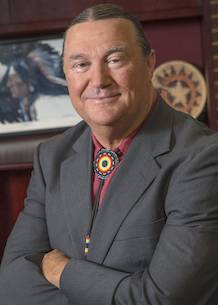
    FNU is extremely excited about this year’s conference. The DIPA Committee has been diligently working on planning an innovative, interactive, online version of the conference.

    The purpose of this conference is to increase awareness of the importance of diversity, equity, and inclusion (DEI) in healthcare, and to recognize trailblazing nurse-midwives and nurse practitioners who have been influential in integrating DEI into healthcare. The goal of this conference is to evaluate mechanisms on how to engage in sustained dialogue as a tool for community trust-building.

    “The Office of Diversity, Equity and Inclusion is excited to host FNU’s twelfth annual Diversity Impact conference,” said FNU Interim Chief Diversity and Inclusion Officer Paula Alexander-Delpech, Ph.D., PMHNP-BC, APRN. “Hailed as a Frontier signature event, this year’s conference promises to be quite impactful with national and international speakers. The goal of the conference is to evaluate mechanisms on how to engage in sustained dialogue for community trust-building. A hallmark of FNU is to educate students within their own communities, as such, this year’s conference theme centers around developing action-oriented processes to build relationships around shared communities.”

    There will be several speakers over the course of the event, including Dr. Angelique Harris, Ph.D., Dr. John Lowe, Ph.D., FAAN, and Dr. Brigit Carter, Ph.D., MSN, RN, CCRN, FAAN. On Tuesday, we will be hosting a screening of the film “APART”.

    FNU is a national leader in DEI and a four-time winner of the INSIGHT Into Diversity “Higher Education Excellence in Diversity (HEED) Award, recognized in 2018-2021. FNU is also a recipient of the Health Resources and Services Administration (HRSA) Nursing Workforce Diversity (NWD) Grant.

    “Thank you so much for all of the hard work that you put into making the virtual Diversity Impact Conference happen this year. Every single speaker and activity was informative and inspirational. This was my first year attending, but it will certainly not be my last,” FNU alumni Melinda Hancock said of a previous Diversity Impact Conference.

    This free virtual event is open to FNU students, alumni, faculty, and staff. The FNU community can register for this event at this link.

    About Frontier Nursing University
    The mission of FNU is to provide accessible nurse-midwifery and nurse practitioner education to prepare competent, entrepreneurial, ethical, and compassionate leaders in primary care to serve all individuals with an emphasis on women and families in diverse, rural, and underserved populations. FNU offers graduate Nurse-Midwifery and Nurse-Practitioner distance education programs that can be pursued full- or part-time with the student’s home community serving as the classroom. Degrees and options offered include Doctor of Nursing Practice (DNP), Master of Science in Nursing (MSN), or Post-Graduate Certificates. In 2021, Frontier was named a “Great College to Work For” by the Great Colleges to Work For® program. In 2022, Frontier Nursing University’s Family Nurse Practitioner program was ranked as the third-best Online Family Nurse Practitioner Master’s Program according to rankings compiled and released by U.S. News and World Report. To learn more about FNU and the programs and degrees offered, please visit Frontier.edu.

  • Frontier Nursing University Community Members Recognized at 2022 ACNM Conference

    Frontier Nursing University Community Members Recognized at 2022 ACNM Conference


    Faculty, staff, students, alumni and preceptors of Frontier Nursing University (FNU) had the opportunity to attend the 67th Annual American College of Nurse-Midwives (ACNM) Meeting and Exhibition from May 21 to May 25. ACNM was back in person for the first time in two years with a virtual option. FNU is excited to highlight the many FNU community members who presented or were recognized and received awards during this year’s ACNM Conference. We commend all of these individuals for their excellent work as nurse-midwifery leaders!
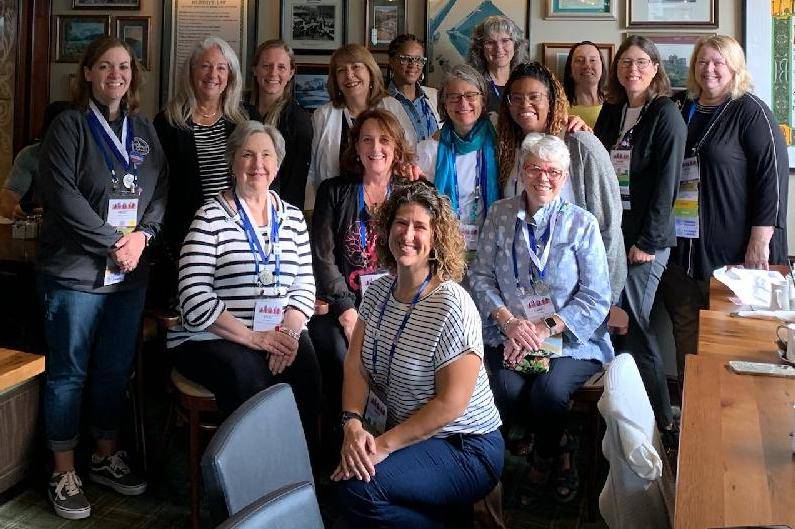
    Awards & Honors:

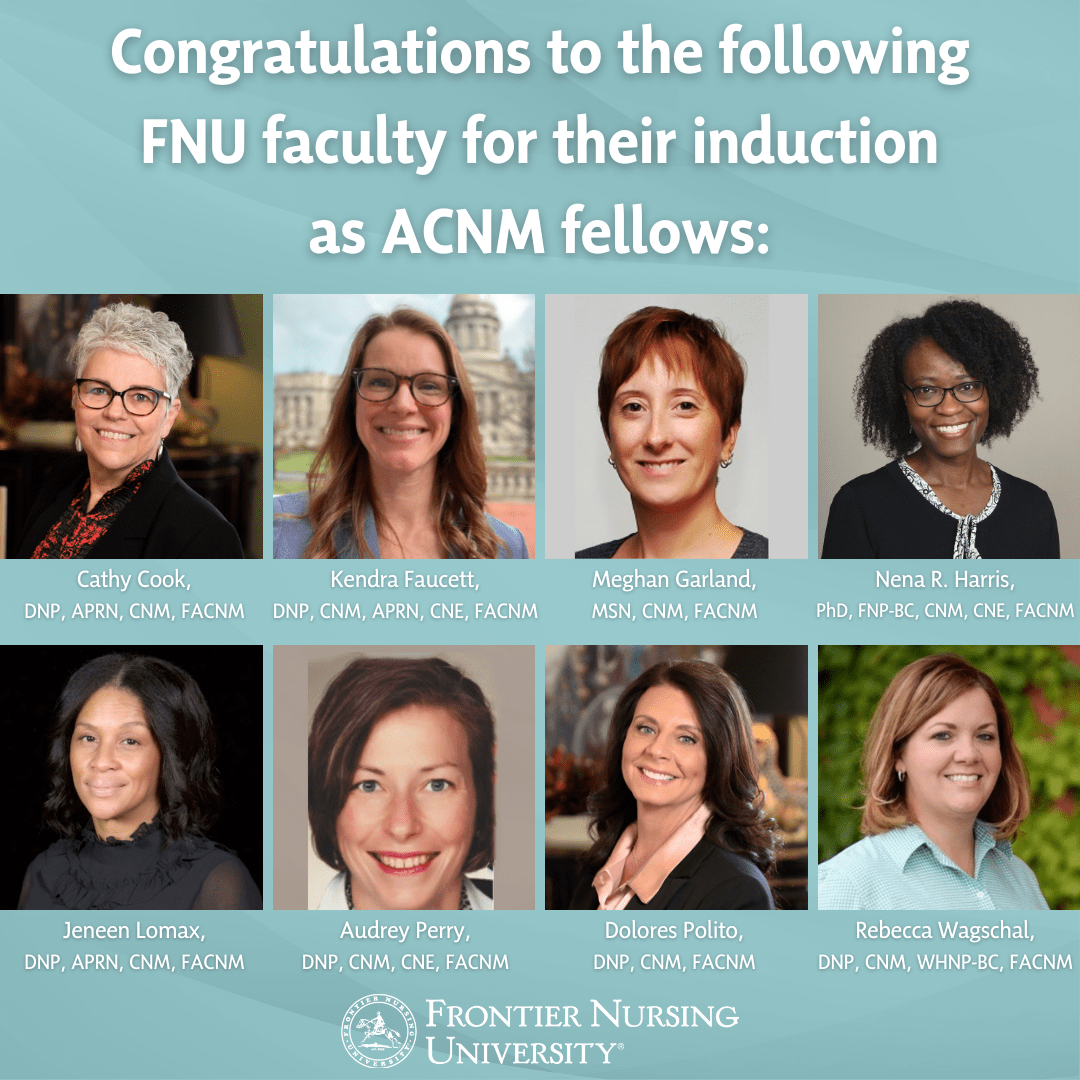
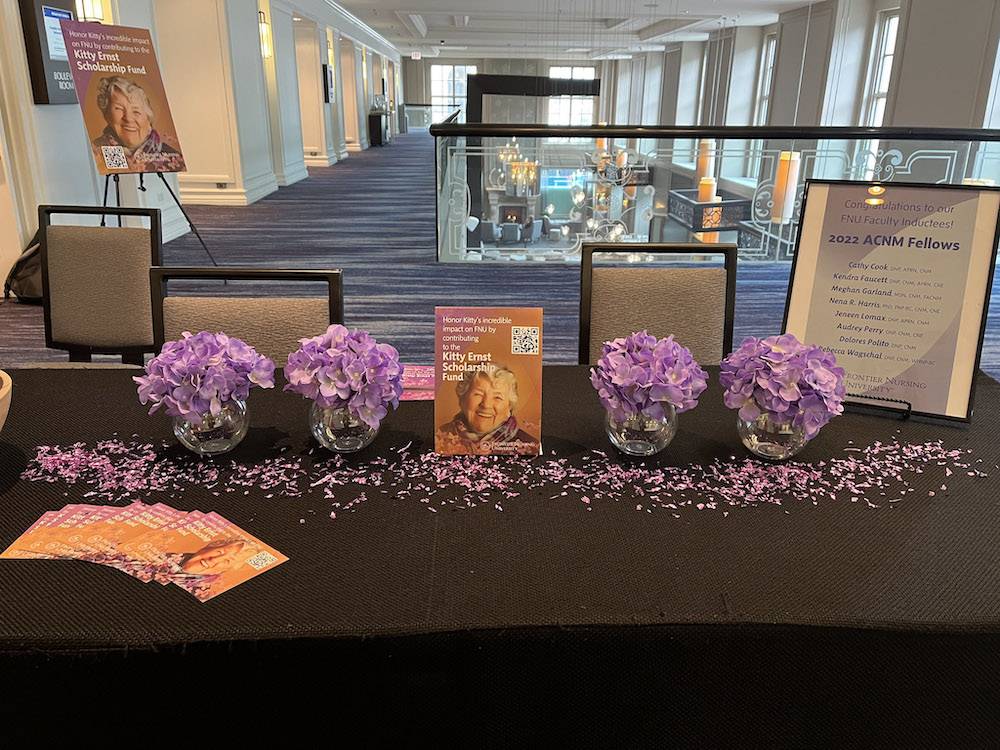
    Newly Inducted FNU ACNM Fellows:

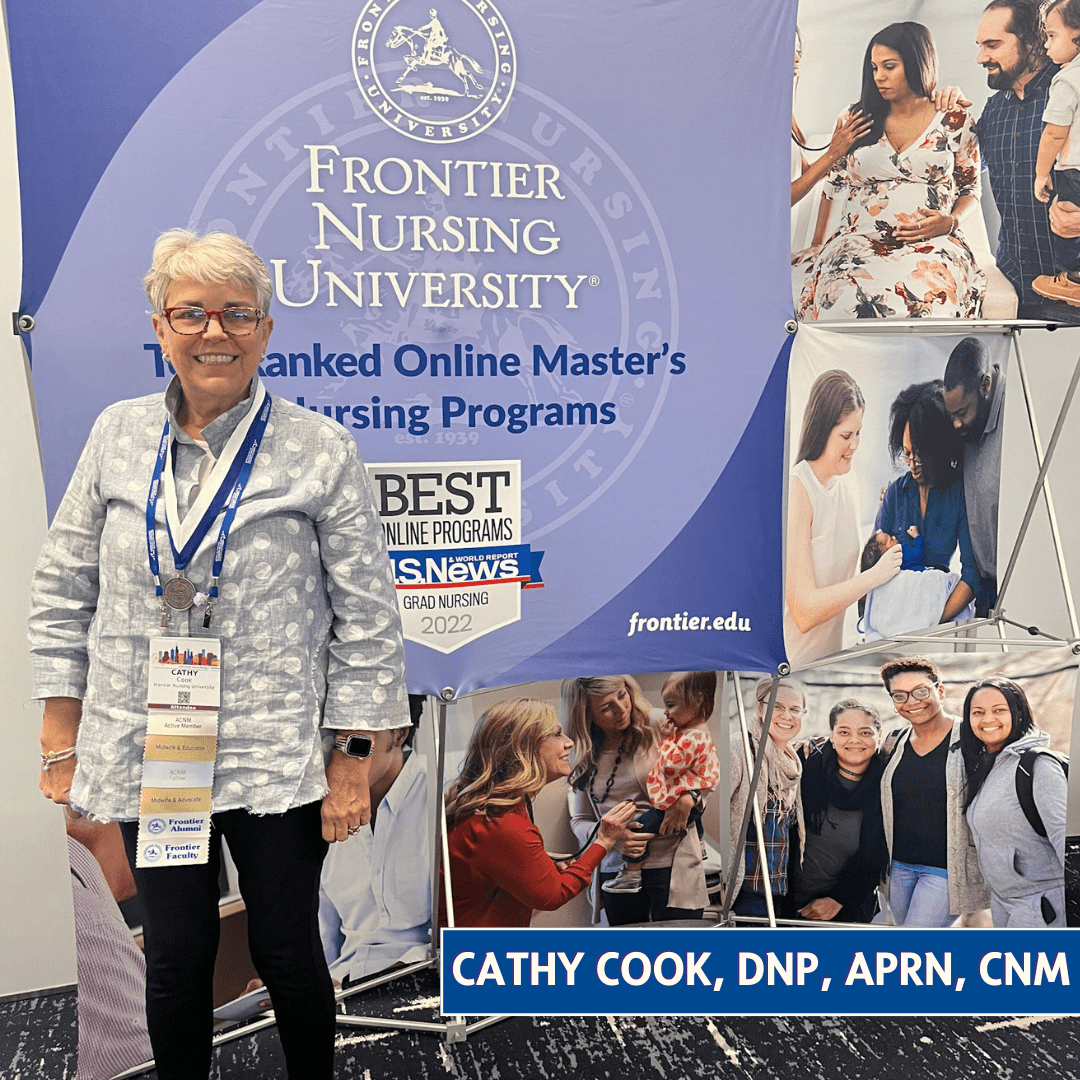
    • Cathy Cook
    • Kendra Faucett
    • Meghan Garland
    • Nena R. Harris
    • Jeneen Lomax
    • Audrey Perry
    • Dolores Polito
    • Rebecca Wagschal

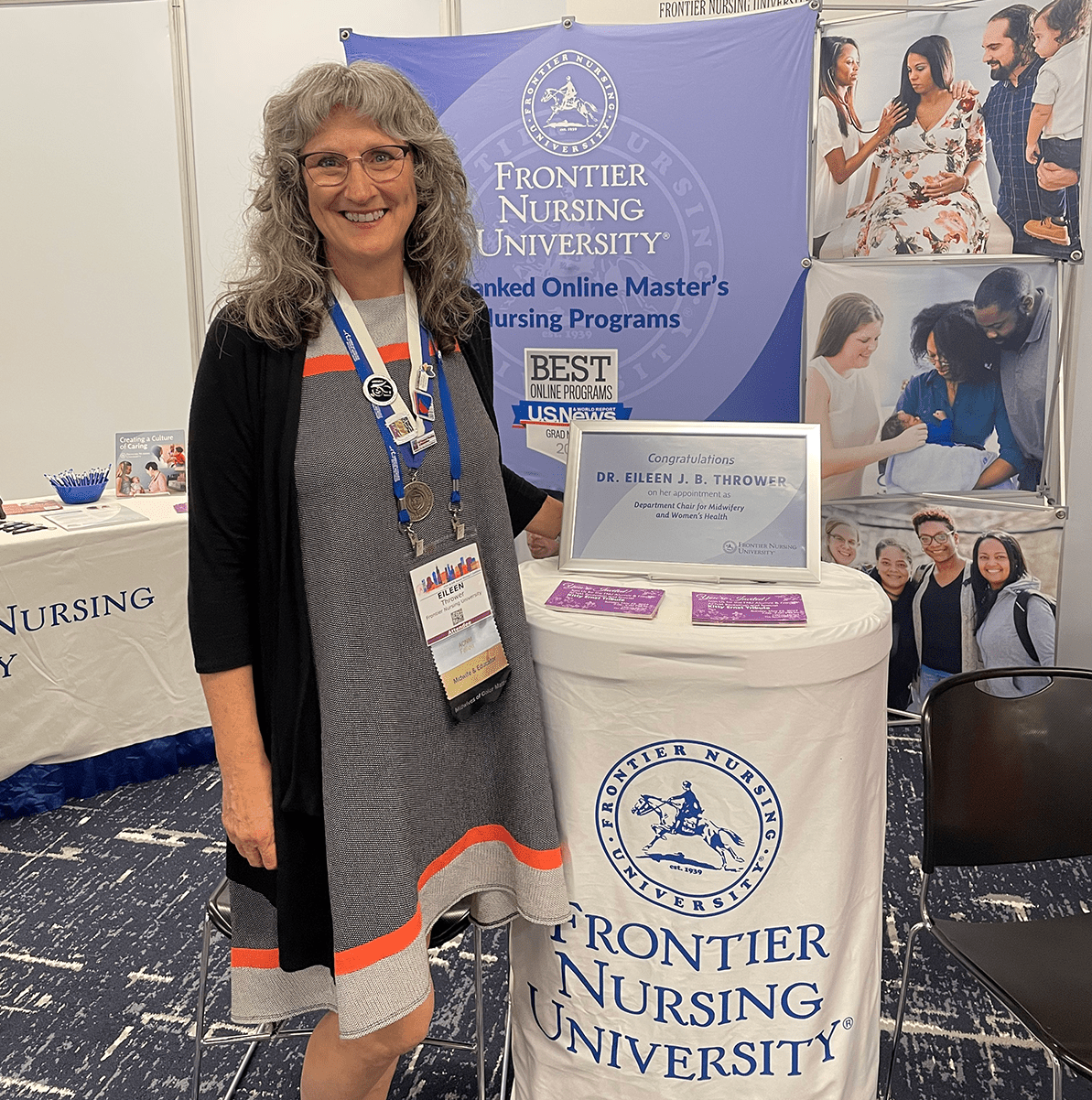
    Eileen Thrower, Ph.D., CNM

    We announced Eileen Thrower, Ph.D., CNM, as the Department Chair for the Department of Midwifery and Women’s Health.

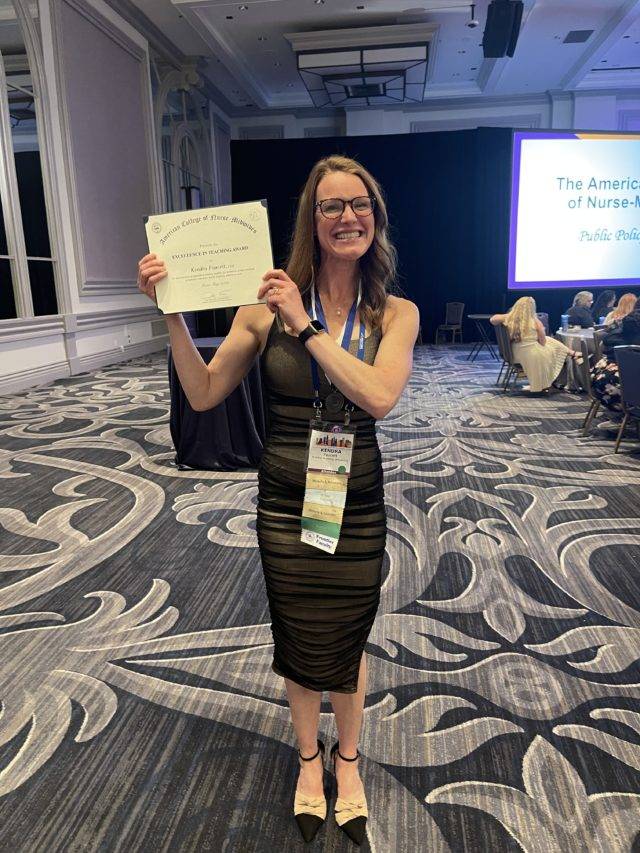
    Dr. Kendra Faucett


    Heidi Loomis, CRNP, CNM
    Photo by FergyPIX.com

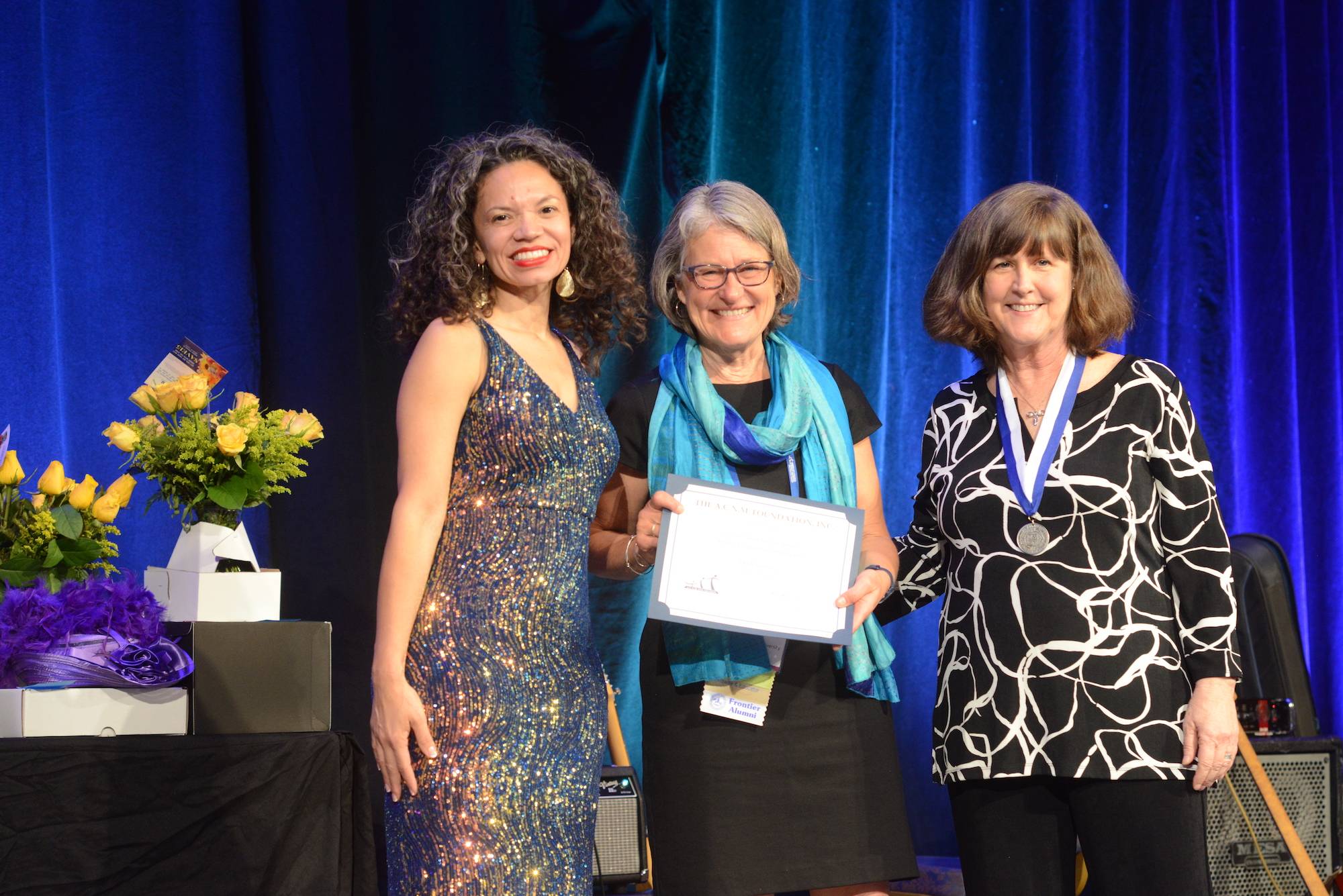
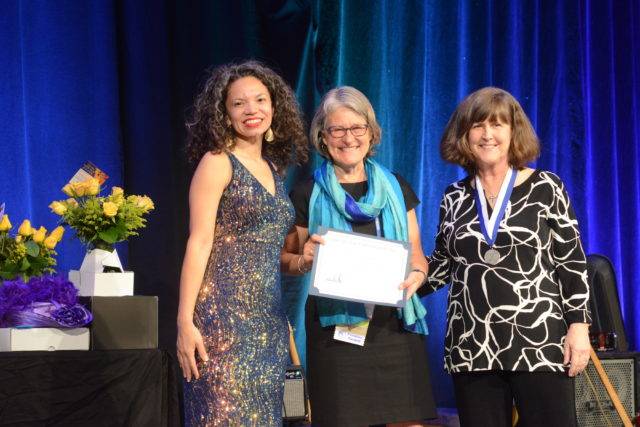
    FNU faculty member, Heidi Loomis, received the ACNM Foundation’s 2022 W Newton Long Award for the Advancement of Midwifery, and faculty member Dr. Kate Woeber was a recipient of the Thacher Community Grants. Dr. Kendra Faucett received the “Excellence in Teaching” Award this year.

    Faculty & Student Presentations:

    • Kendra Faucett – AMCB Boot Camp Test Prep Workshop & Test Taking Tips
    • Laura Manns-James – Reducing Racism in Midwifery Education: Using the Program Content Toolkit
    • Mary Kay Miller – Promoting Vaginal Intended Deliveries (PROVIDE) in Florida: Quality improvement lessons learned from three DNP Projects
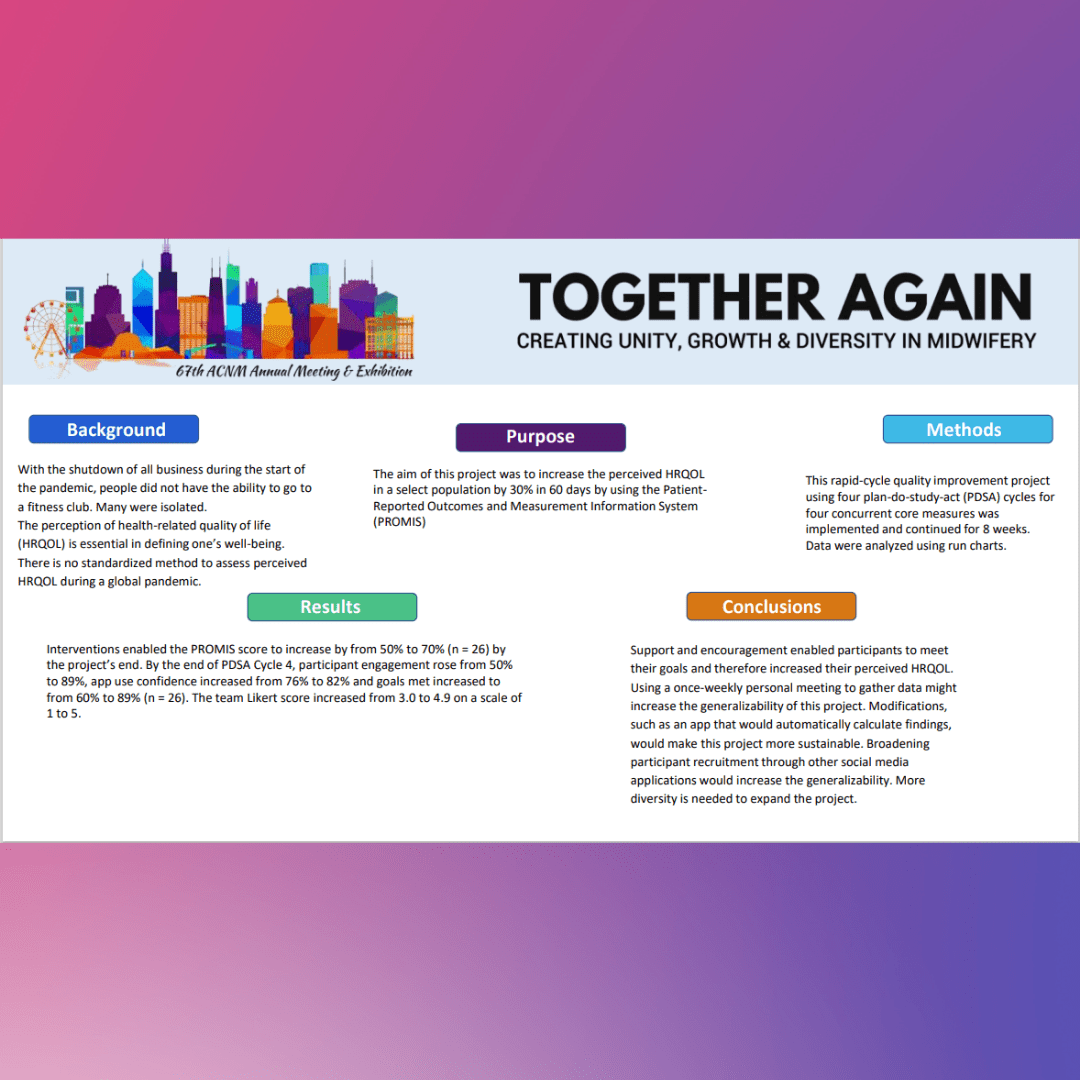
    • Cathy Cook – Implementing a Patient-Centered Virtual Wellness Program in a Select Population During a Global Pandemic
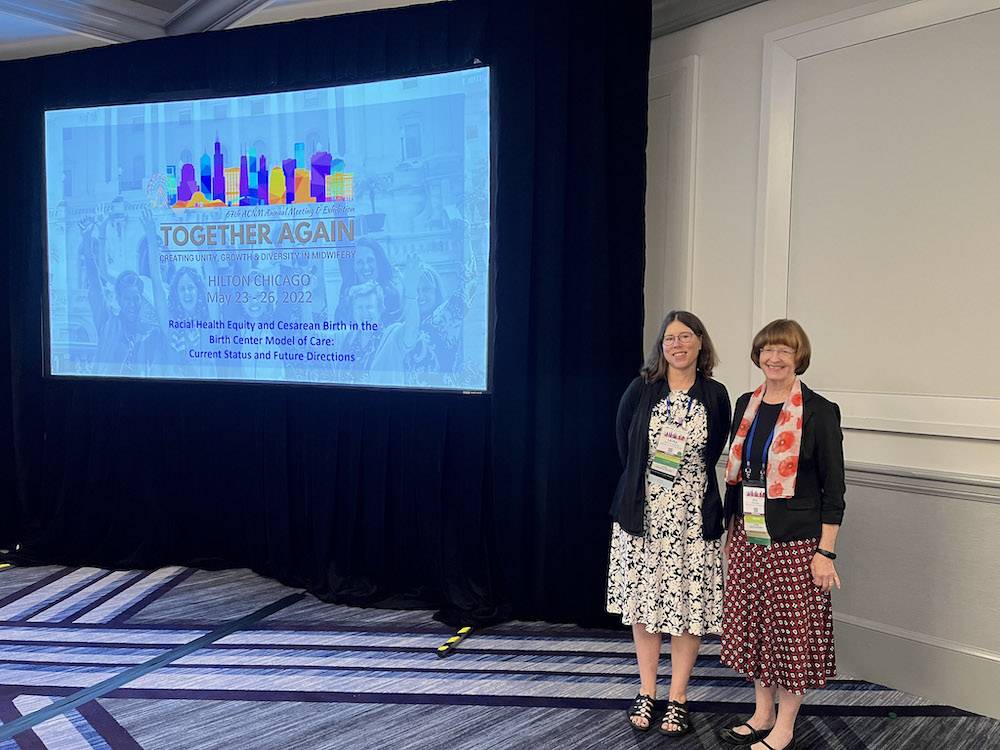
    • Jill Alliman, Laura Manns-James, and Shaughanassee Vines – Racial Health Equity and Cesarean Birth in the Birth Center Model of Care
    • Cindy Farina – Ibrexafungerp, A New Antifungal Agent for the Treatment of Vulvovaginal Candidiasis Poster Presentation
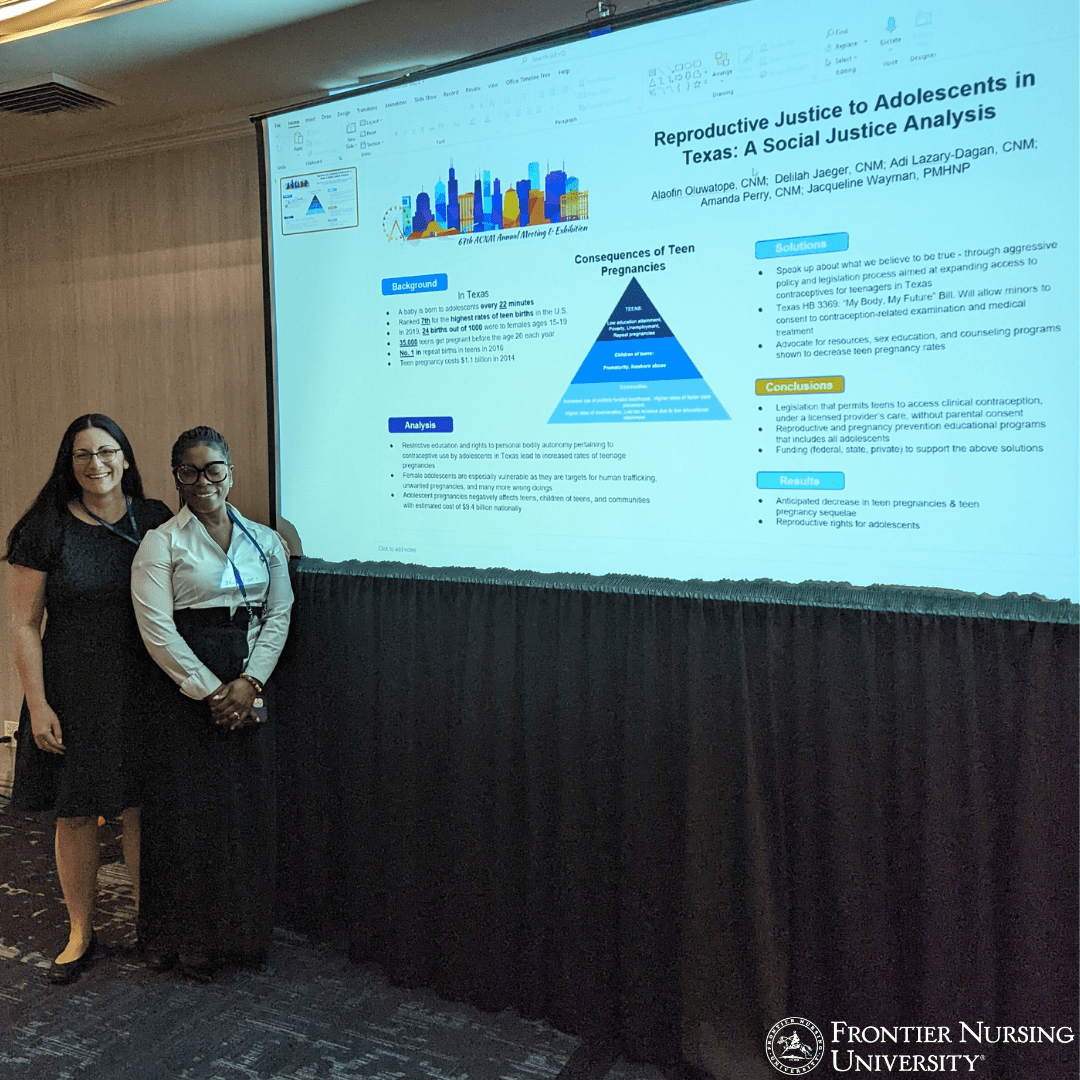
    • Current DNP Students Oluwatope Alaofin and Adi Lazary-Dagan – Reproductive Justice to Adolescents in Texas: A Social Justice Analysis

    FNU Presence:

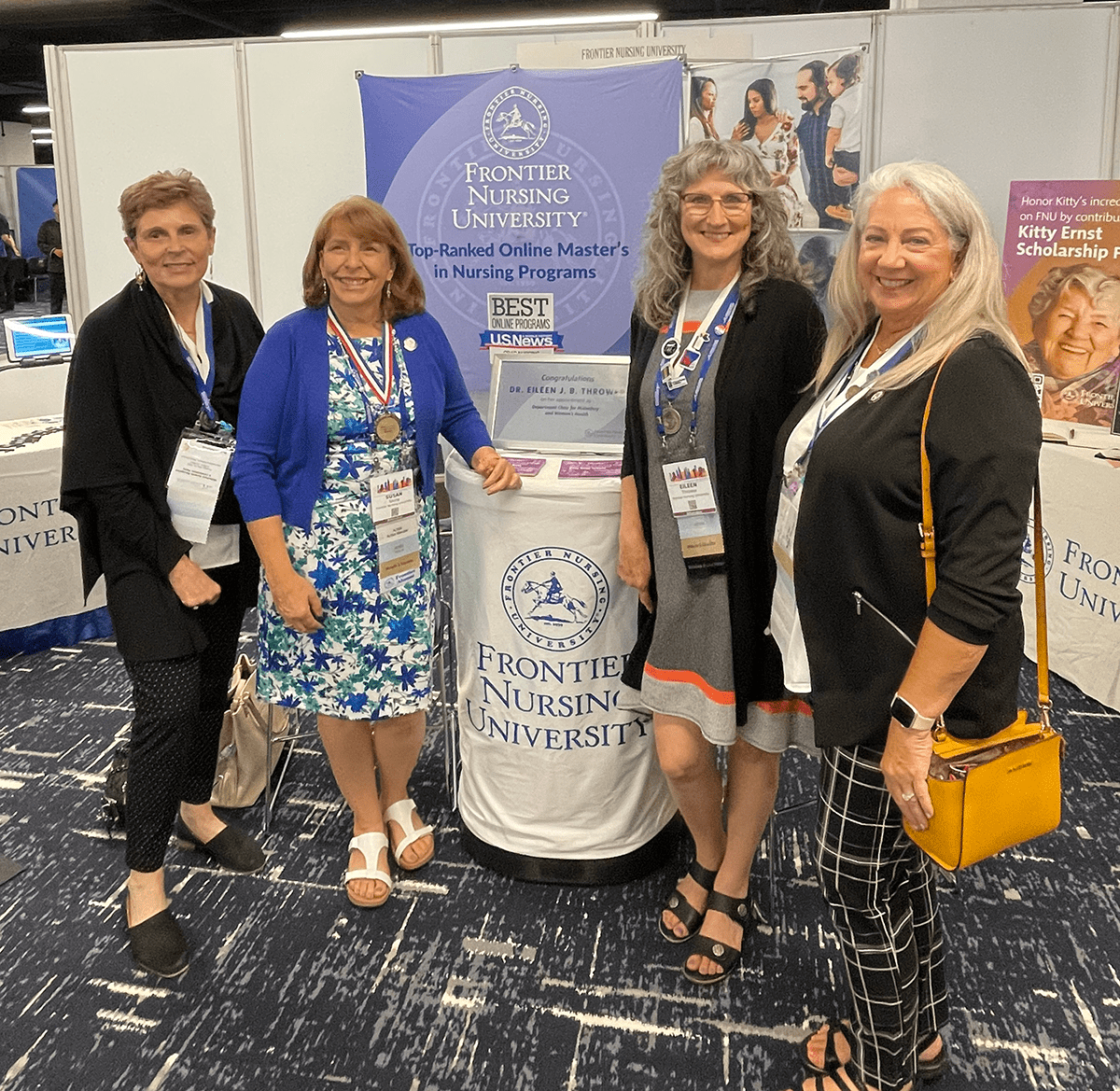
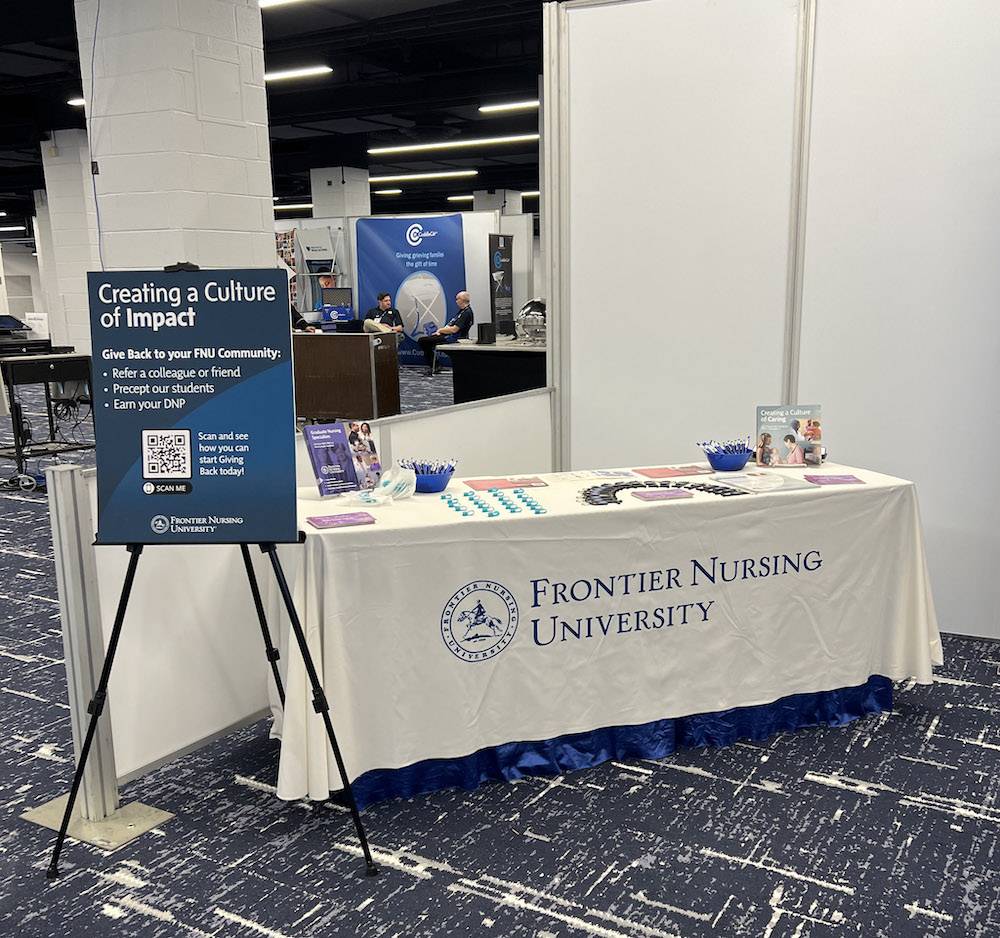
    FNU’s exhibit booth was busy with faculty, staff, students, alumni and preceptors! Our booth focused on ways the FNU community can give back, like by referring a colleague or friend to FNU, precepting FNU students, or by continuing schooling by getting your DNP.

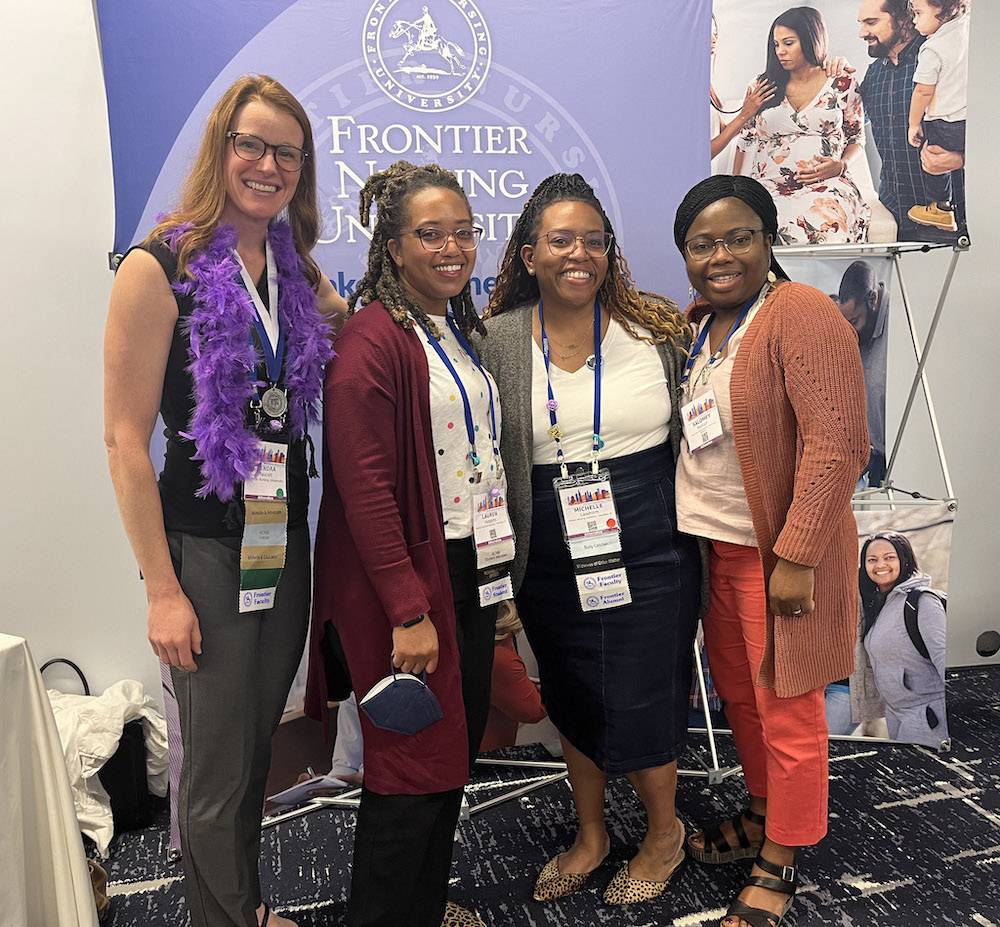
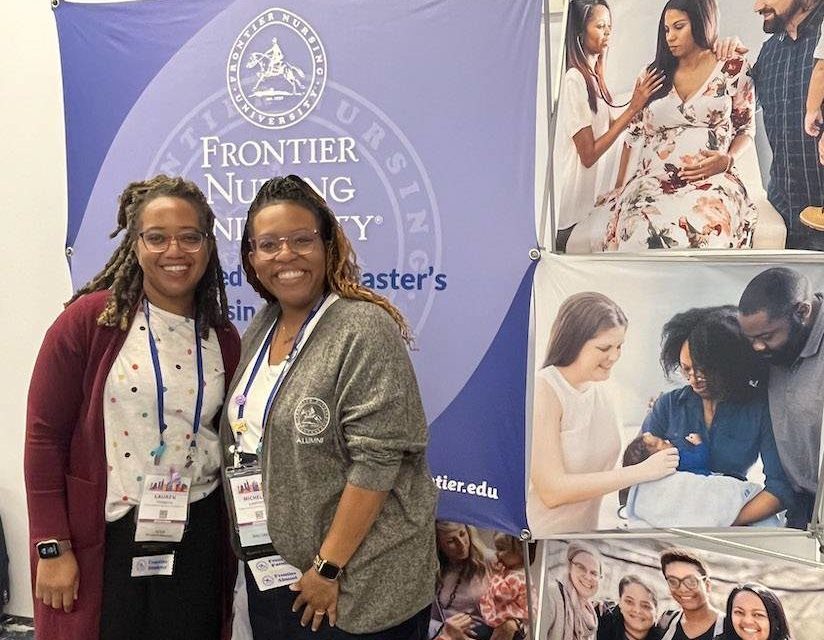
    Student Lauren Huggins attended the conference with FNU faculty member Dr. Michele Lawhorn as part of FNU’s Professional Organizational Mentoring Program (POMP). POMP offers underrepresented nurse-midwifery students and nurse practitioner students the opportunity to be mentored by faculty members at designated conferences, such as the ACNM annual meeting. It expands students’ learning, educational and professional experiences.

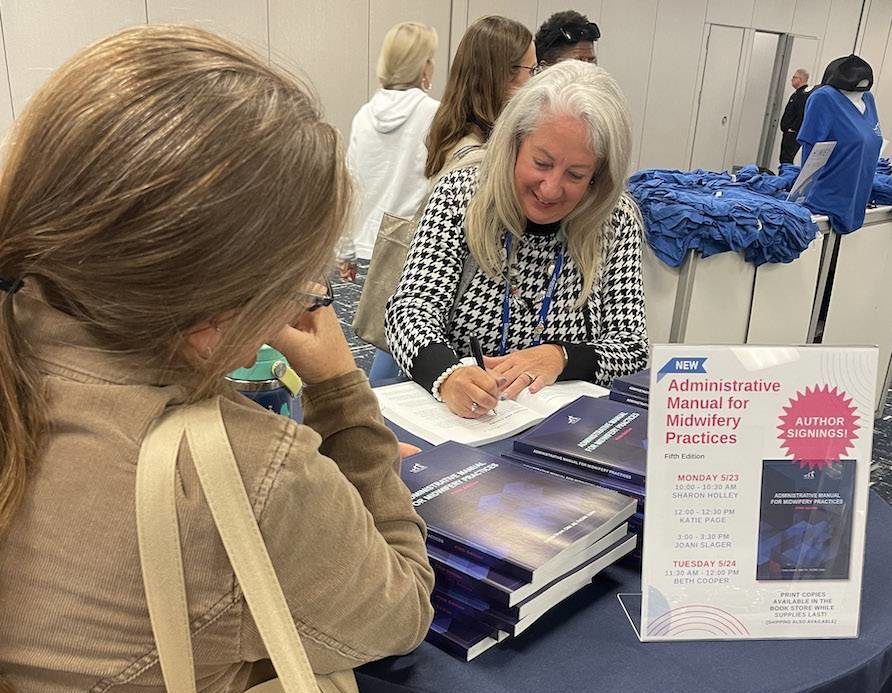
    FNU Dean of Nursing Dr. Joan Slager signed copies of the book “Administrative Manual for Midwifery Practices” for attendees. Dr. Slager authored the chapter on billing and coding.

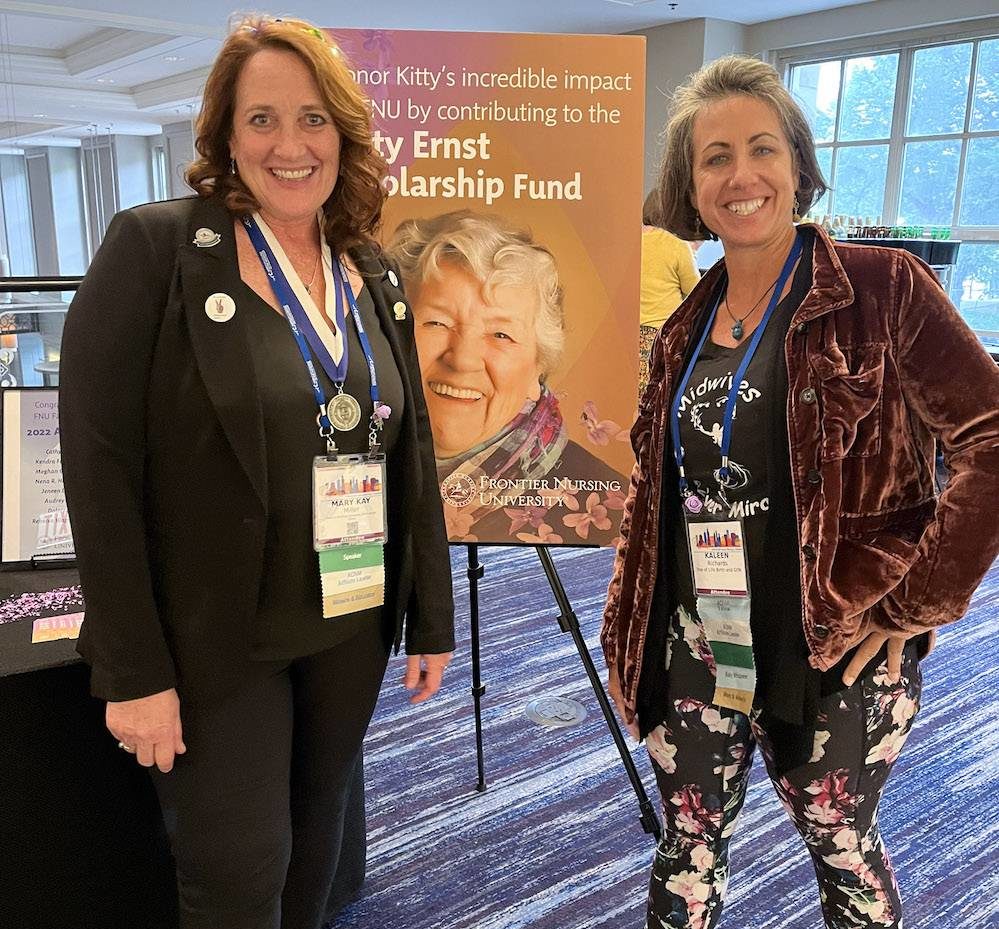
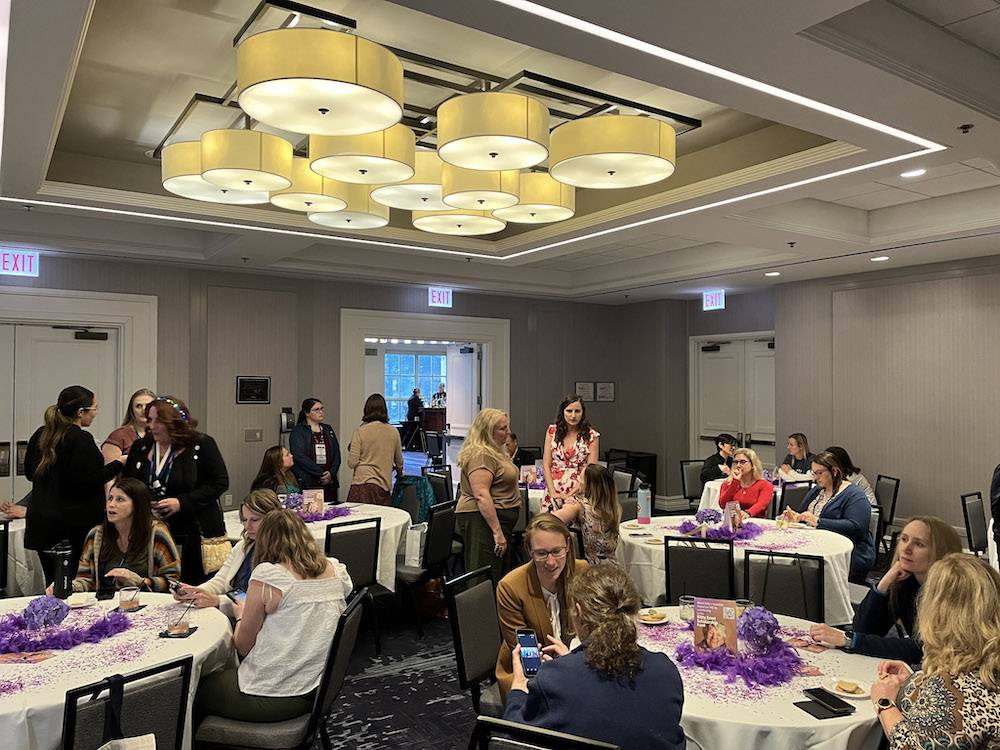
    On Sunday evening we held the FNU Alumni & Friends Reception where we celebrated the life of Kitty Ernst. We shared our Kitty Ernst tribute film. It was a wonderful evening remembering and honoring a wonderful leader and midwifery pioneer and reconnecting with the FNU community in person.

    We also had the opportunity to recognize our dedicated preceptors during the reception.

    Congratulations to FNU faculty member, Cathy Collins-Fulea, who served as President of ACNM for the last three years, and to the new ACNM President, Heather Clarke, who is a former FNU faculty member. Clarke was inducted on the last day of the convention. We appreciate your time and dedication to the advancement of midwifery.

    We look forward to coming together again at ACNM next year in Orlando! You can view more photos of FNU’s presence at ACNM here.

    If you are an FNU faculty, student, or alumni who was recognized at this year’s ACNM Annual Meeting & Exhibition and not included in this blog, please email your recognition or presentation to FNUNews@frontier.edu so we can include you.

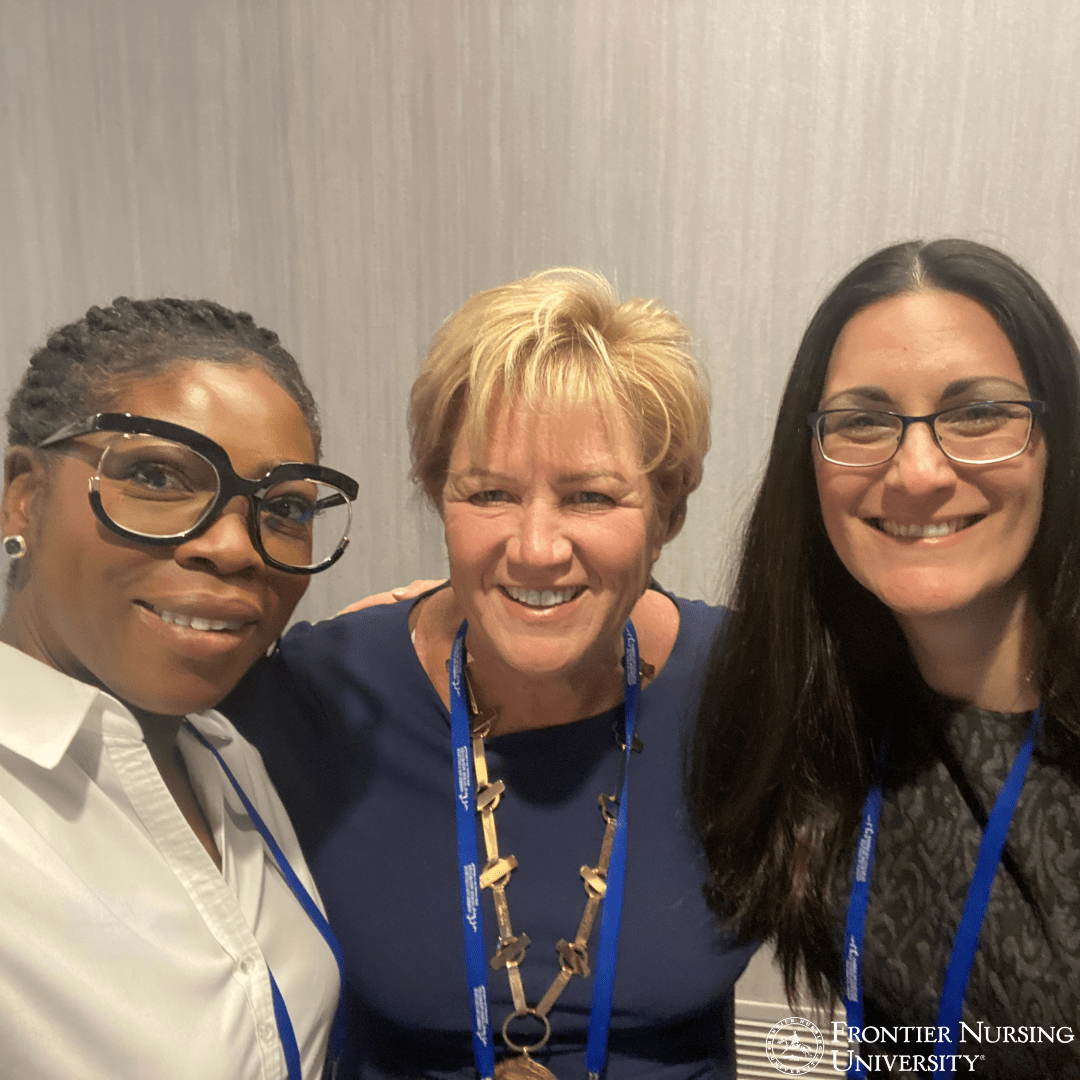
    Stephanie Boyd, Director of Clinical Outreach and Placement pictured with FNU alumni and current preceptor, Nikia Grayson, DNP, MPH, CNM, FNP.

  • Staff Spotlight: Megan Cadwell Receives Winter Circle of Caring Award

    Staff Spotlight: Megan Cadwell Receives Winter Circle of Caring Award

    At the heart of Frontier Nursing University is a talented and diverse community of students, alumni, faculty, staff, Couriers and preceptors. Spotlight blogs feature members of our FNU community that are focused on the mission of educating nurse-midwives and nurse practitioners to deliver quality health care to underserved and rural populations.

    Throughout her time working with Frontier Nursing University (FNU), Megan Cadwell has made it a mission to exemplify the university’s Culture of Caring every day. Working as a staff member with FNU since September of 2020, Cadwell serves as the Assistant Director of Clinical Credentialing.

    Before working with FNU, Cadwell worked for the Lexington-Fayette County Government Health Access Nurturing Developmental Services through the Family Care Center, where she helped families of expectant mothers.

    In her current role, Cadwell and her team assist students in the clinical credentialing process as they progress through their clinical practicum.

    “Our team strives to create the best experience possible for our students,” Cadwell said. “It’s important to be empathetic with our students and show them we want to help the best we can to make life a little less stressful. It’s also important to be mindful and show respect and compassion to each and every person we interact with. You never know what someone is going through, whether it be our colleagues or students.”

    Cadwell said one way in which FNU’s Culture of Caring is particularly important is when considering goals and improvements with Diversity, Equity and Inclusion (DEI) initiatives. The Culture of Caring includes five elements: professionalism, inclusivity, respect, positive communication and mutual support.

    “In order to be inclusive, we must be mindful, open, aware, empathetic and so many of the other elements of the Culture of Caring, to provide the best support for our DEI initiatives.”
    – Megan Cadwell, Assistant Director of Clinical Credentialing

    “In order to be inclusive, we must be mindful, open, aware, empathetic and so many of the other elements of the Culture of Caring, to provide the best support for our DEI initiatives,” she said.

    Overall, Cadwell said implementing the tenants of the Culture of Caring has come naturally, as these principles are very engrained in her entire team’s outlook.

    “I have never experienced such positivity and support as I have received at Frontier. It’s my goal to give that back to each and every person we interact with,” she said. “Life truly ‘takes a village,’ and I’ve been so blessed to find such supportive, caring and compassionate individuals with our Frontier family.”

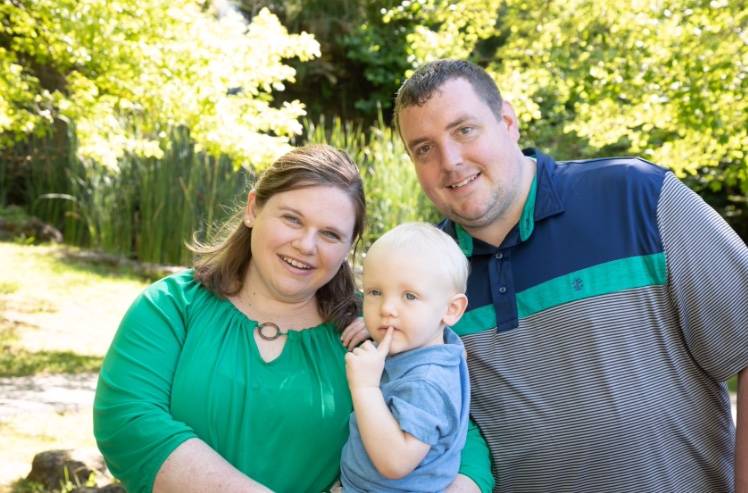
    Outside of her work with FNU, Cadwell, who lives in Lexington, enjoys spending time with her husband, toddler and dog. They enjoy spending time outside and visiting family. She said even outside of work, she tries to apply the Culture of Caring to her day-to-day life.

    “Any interaction I have, I want to utilize the Culture of Caring elements,” she said.

    This is no surprise as Cadwell received four nominations for the Winter Circle of Caring Award. Part of one nomination said, “Megan always has a smile on her face and is very professional. She always will do her best to make the student the priority. I truly appreciate that she emulates all 5 of the Circle of Caring Award elements every day.”

    Thank you, Megan, for embracing the Culture of Caring and for your dedication to students at FNU. To meet the rest of FNU’s clinical credentialing team, click here.

Request Information Apply Give Now