
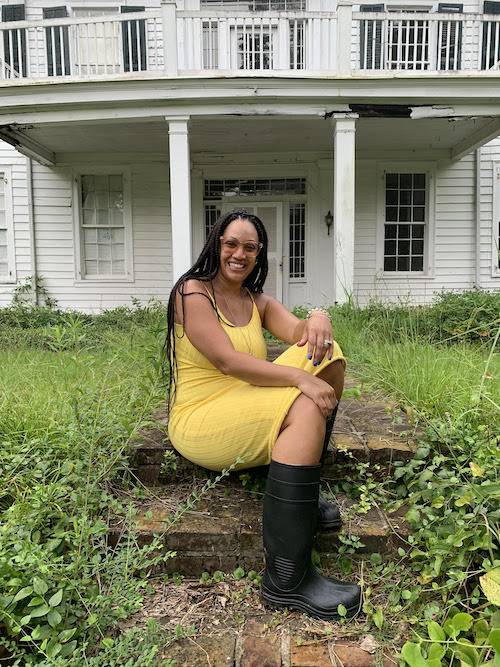
 To the casual observer, opening Birth Sanctuary Gainesville might not make a lot of sense. First, Gainesville is a rural town in Alabama with a population of less than 200. Second, because of state regulations that severely restrict the scope of care nurse-midwives can provide, there are no birth centers in the entire state. That is about to change because FNU alumni Dr. Stephanie Mitchell, DNP, CNM, CPM, plans to open Birth Sanctuary Gainesville later this year. While the uncertainties are many, Mitchell insists, “It will get done.”
Mitchell is the sort of person who finds ways to get things done. Barriers represent an opportunity rather than a permanent roadblock. Even her road to becoming a nurse-midwife was a circuitous one. Where others might have given up and changed course, Mitchell never wavered from her plan.
Growing up in urban Boston, Massachusetts, in the 1980s, Mitchell’s first thoughts of pursuing a medical career began by watching The Cosby Show.
“My very first exposure to childbirth was on television,” Mitchell said of The Cosby Show. “It was very shocking to me because the family would have mirrored my family, except that they were completely different echelons of human society. We were struggling along in the hood, the ghetto, dealing with all the things that 1980s Boston brought for a low-income black family. It was the opposite on TV. The father was an obstetrician, and the mother was a lawyer. That was my first exposure to pregnancy, and the healthy dynamic of that family really appealed to me and stuck with me.”
Her second exposure to pregnancy and her first to obstetrics came a few years later when she was 16 and pregnant. She had collaborative care with an obstetrician and a midwife.
“The way my body was honored during that process of pregnancy is really cemented into my mind,” she said. “I figured out that the word wasn’t ‘obstetrician’ or ‘obstetrics’ – it was ‘midwife’. I thought, ‘How do I do that?’”
She did that by having her baby, finishing high school, attending community college, and going on to earn her BSN from Curry College. She knew she wanted to be a midwife and wanted to attend Frontier Nursing University. She also knew that she needed to gain experience, preferably in labor and delivery. She worked in pediatrics for about six years before getting into a labor and delivery unit, where she worked for six years before applying to Frontier. She continued working in labor and delivery while she earned her MSN and DNP from FNU, the latter in 2019.
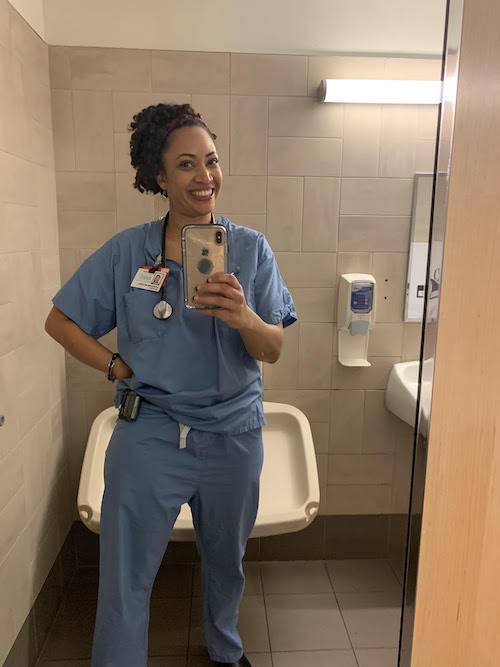 “The hospital I worked at was a lovely place in the backdrop of my neighborhood in Boston. I learned so much and have deep respect for my colleagues there,” Mitchell said. “But it was shocking to me to get to the labor and delivery unit and realize that the medical staff was not reflective of the community. I had come from the Boston Children’s Hospital, and we had a very diverse staff. I got to the labor and delivery unit, and it was shocking to be one of three black nurses on a staff of 120 in that unit. That was difficult because there are so many stark cultural differences between the care providers and those that they are caring for.”
Mitchell had learned the importance of diversity at an early age when she was part of a busing program aimed at addressing segregation in the city. She attended school in a predominantly white school system.
“You learn to interact with people who are definitely not from your community,” she said. “To have experience with individuals that don’t look like you, don’t talk like you, don’t have the same cultural norms as you, provides exposure that’s valuable in life. Midwives and advanced nurse practitioners are not always going to be black or people of color or LGBTQ, but you have to have people in place who are truly antiracist and empathetic.”
Mitchell was also concerned about what she termed “the conveyor belt of care” that sometimes persists in hospitals with high volumes of patients. She wanted to practice in a different setting, where more time could be spent with the patients in a less frantic environment. She wanted to open a birth center and started looking into the prospects in Boston. She soon realized that funding would be a problem, as would the significant amount of competition. She shelved the idea temporarily until she and her husband Jamie moved to Gainesville, Alabama, where Jamie had family.
Jamie is a successful pitmaster who got into the catering business. When the catering business became overwhelming, the Mitchells realized that a restaurant would be the better option. Starting a restaurant in Boston would not only be expensive but also involve a great deal of competition.
“He wanted to get rid of the landlord and the competition, so we came down here to Gainesville and built a restaurant,” Mitchell said. The Alabama Rib Shack is open Friday through Sunday, with the capacity to cater as needed.
As they prepared to move, Mitchell began researching places where she might be able to work. She soon found that there are no birth centers in the state. Further, in Gainesville and the surrounding area, there is no access to family planning services, midwifery care, or obstetric care.
“If you’re pregnant, it’s a desert,” Mitchell said. The nearest options are approximately 45 miles away in Tuscaloosa or across the state line into Mississippi.
It didn’t take long for Mitchell to think about opening her own birth center in Alabama. Not only did she need it as a source of income, but the community needed it as well.
“I’ve always valued the low volume, slower-paced care that can be offered through midwifery,” Mitchell said. “I had a good amount of surface information to build on what it would mean to build a birth center in Alabama. It was important to me to work in the black and not be in a situation where I am over my head and sink myself before I get started. Kitty Ernst wisely once reminded me to follow the money. I followed the business model that my husband has followed for years – eliminate the competition and eliminate the landlord. There is no competition in Alabama, and people deserve to have options. To not have it as an option is unconscionable.”
While many would agree with that, few have been as determined as Mitchell to bring about the necessary changes. One of the primary barriers created by the state’s legislation and regulation of midwives is the prevention of independent practice. Mitchell sought out physicians with whom she could partner to provide collaborative care but found none.
Midwives who attended out-of-hospital births in Alabama were jailed until 2019 when the state began issuing midwifery licenses for Certified Professional Midwives (CPM) for the first time since 1976. Contrary to Certified Nurse-Midwives (CNM), who have nursing degrees, CPMs are not required to have a nursing degree. Despite being a CNM, Mitchell had to get a CPM license so she could practice in Alabama.
“I was annoyed that I had to be a CPM because it prevents me from offering those full range of comprehensive health services,” Mitchell said. “ I see the value in being a Certified Nurse-Midwife. I see the value of being able to provide that umbrella of comprehensive care. Why would anyone ever specifically go the path of CNM only to be boxed in a corner to be a CPM? Prescriptive authority, billing insurance, access medications, full-scope care – it’s all gone. Especially in a healthcare desert like Alabama, it doesn’t make any sense. I’m still fighting that battle. It will take a while. But it’s not, ‘we can’t do it,’ it’s ‘we haven’t done it yet.’”
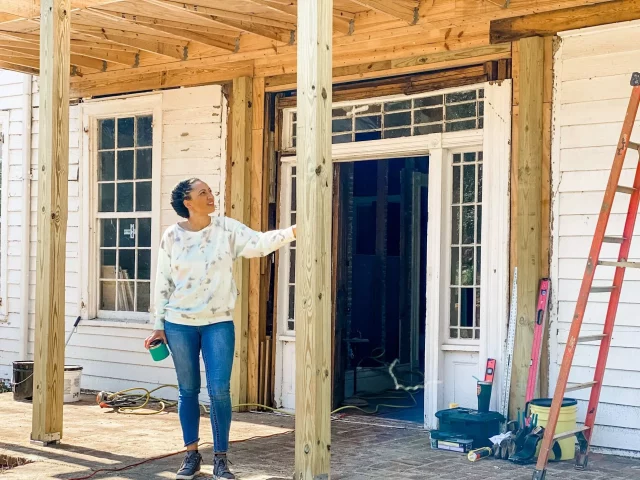
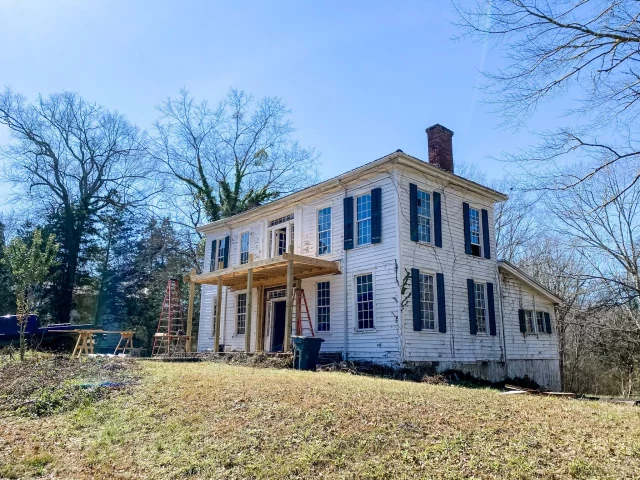 Mitchell says that the Alabama Birth Center Coalition, Alabama Midwife’s Association, the Alabama Board of Midwifery, and the Alabama chapter of the American College of Nurse-Midwives are all lobbying for change. In the meantime, she is pressing forward with Birth Sanctuary Gainesville. For years on their visits to Alabama, Mitchell had admired an old two-story home in Gainesville. Built in 1835, it is a registered historic landmark. It sat empty for years until, shortly after they moved, Mitchell saw that it was for sale. The Mitchells bought it and began renovation and construction to convert it into a birth center.
The roof, soffits, plumbing, electrical, and HVAC all had to be replaced or updated, but the structure was good, and the price and location were right. An exam room and a bathroom have been added, and the work continues with hopes of opening later this year.
“My first goal is to get this birth center opened this year and have our first birth here this year,” Mitchell said.
Grassroots efforts have provided the majority of the funding for the construction of the birth center. One fundraiser is a legacy walkway campaign in which people can purchase bricks and inscribe their own messages. Another fundraiser included the creation of three $5,000 scholarships that will go to BIPOC (Black, Indigenous, and people of color) midwifery students.
“This grassroots effort is a constant return back into the systems we’re working in,” Mitchell said. “It’s been overwhelming. I’ve been filled with gratitude, and I remain so humble about this project, reminding myself that this isn’t a ‘me project.’ This is a project that will impact so many families just to be able to have that access to care.”
Mitchell hopes to continue to give back to the nurse-midwifery profession by precepting students. She knows drawing them to rural Alabama might be difficult so that the birth center will include a special space for students. Mitchell describes it as a calm room where students will be able to rest or sleep in their own private space.
Until the birth center is ready to open, Mitchell is operating as an LLC and providing home birth services as a CPM. She plans to continue to offer home births even after Birth Sanctuary Gainesville is fully operational. She is also working with the University of Alabama-Birmingham’s midwifery program, assisting with course development and serving as an adjunct professor.
“I have been delighted to take part in that program,” she said. “I believe that’s the solution. UAB is a stronghold for the state. They are highly influential, and what better investment into the future of maternal healthcare and pregnancy healthcare than having a school that is going to be educating the midwives? That will lay the groundwork for accessibility in ways that we haven’t even thought about in this state.”
Mitchell has successfully managed to fund the birth center to this point and continues to advocate for more access to nurse-midwifery care in the state. She has overcome many obstacles and knows many more loom ahead, not the least of which is the potential patient population.
“It doesn’t make any sense to build a birth center here,” she said. “The same thing about my husband having a restaurant here. It seems highly unlikely and improbable. But what he has learned is that people will travel for quality. They will do it in Alabama for barbecue in a minute. There is the same sort of model in terms of accessibility. We’re talking zero freestanding birth centers in the state. It becomes a question of, ‘Do you want to travel to get care?’”
Mitchell said that, in order to help with that, they are even considering providing space for families who make the journey with their loved ones. It’s true that travel is a potential hurdle, but true to her nature, Mitchell sees not only the barrier but also the potential solution. In the end, it all makes perfect sense.
Are you interested in learning more about Certified Nurse-Midwives? Learn about the care they provide.
 Editor’s Note:
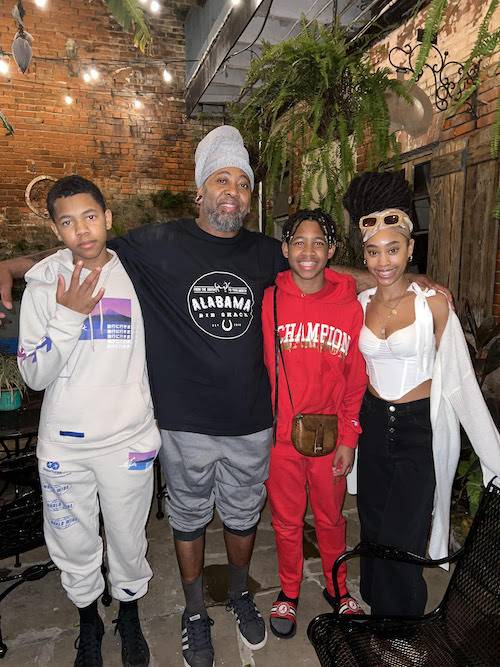
Dr. Mitchell wishes to acknowledge her husband, Jamie. “Making the journey into midwifery with a family could have been my insurmountable obstacle. He’s been my stronghold for the last 20-plus years.” She also expressed her gratitude for the support of her children, Jasmyn, Jaymie, Jayar, and Jesse, and wished to acknowledge former FNU Academic Advisor and current Clinical Advisor Carisa Lipp. “I loved so many of the faculty, but none so much as Carisa. She was the constant person of contact at FNU as I made my way through each term. I can’t say how much her guidance meant. Funny that it wasn’t a midwife who I’d describe as most impactful, but that just goes to show that one’s biggest support can come from unexpected places if you keep your eyes peeled and your heart open!”
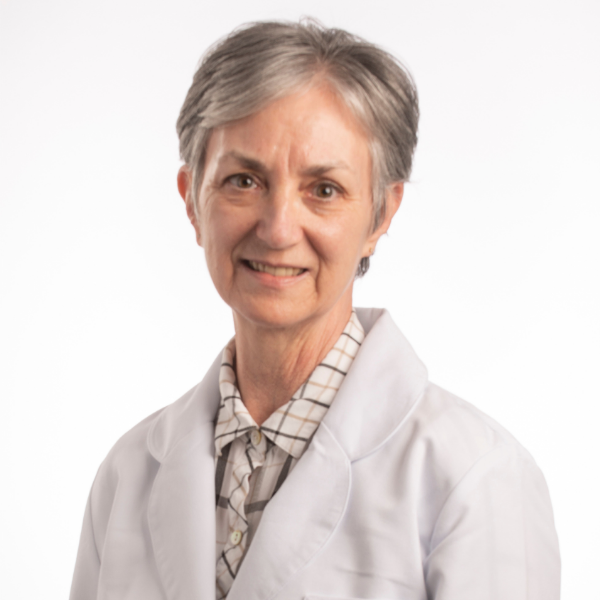
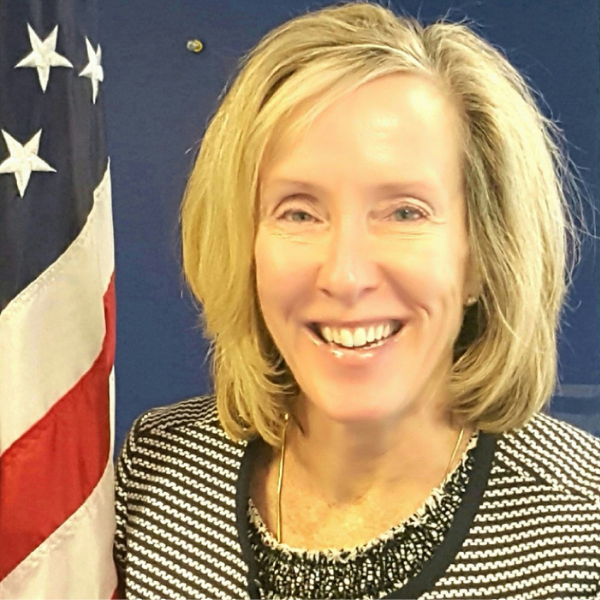



 Carrie Belin is an experienced board-certified Family Nurse Practitioner and a graduate of the Johns Hopkins DNP program, Johns Hopkins Bloomberg School of Public Health, Georgetown University School of Nursing, and Johns Hopkins School of Nursing. She has also completed fellowships at Georgetown and the University of California Irvine.
 Angie has been a full-scope midwife since 2009. She has experience in various birth settings including home, hospital, and birth centers. She is committed to integrating the midwifery model of care in the US. She completed her master’s degree in nurse-midwifery at Frontier Nursing University (FNU) and her Doctorate at Johns Hopkins University. She currently serves as the midwifery clinical faculty at FNU. Angie is motivated by the desire to improve the quality of healthcare and has led quality improvement projects on skin-to-skin implementation, labor induction, and improving transfer of care practices between hospital and community midwives. In 2017, she created a short film on skin-to-skin called
 Justin C. Daily, BSN, RN, has ten years of experience in nursing. At the start of his nursing career, Justin worked as a floor nurse on the oncology floor at St. Francis. He then spent two years as the Director of Nursing in a small rural Kansas hospital before returning to St. Francis and the oncology unit. He has been in his current position as the Chemo Nurse Educator for the past four years. He earned an Associate in Nurse from Hutchinson Community College and a Bachelor of Science in Nursing from Bethel College.
 Brandy Jackson serves as the Director of Undergraduate Nursing Programs and Assistant Educator at Wichita State University and Co-Director of Access in Nursing. Brandy is a seasoned educator with over 15 years of experience. Before entering academia, Brandy served in Hospital-based leadership and Critical Care Staff nurse roles. Brandy is passionate about equity in nursing education with a focus on individuals with disabilities. Her current research interests include accommodations of nursing students with disabilities in clinical learning environments and breaking down barriers for historically unrepresented individuals to enter the nursing profession. Brandy is also actively engaged in Interprofessional Education development, creating IPE opportunities for faculty and students at Wichita State. Brandy is an active member of Wichita Women for Good and Soroptimist, with the goal to empower women and girls. Brandy is a TeamSTEPPS master trainer. She received the DASIY Award for Extraordinary Nursing Faculty in 2019 at Wichita State University.
  Dr. Sabrina Ali Jamal-Eddine is an Arab-disabled queer woman of color with a PhD in Nursing and an interdisciplinary certificate in Disability Ethics from the University of Illinois Chicago (UIC). Dr. Jamal-Eddine’s doctoral research explored spoken word poetry as a form of critical narrative pedagogy to educate nursing students about disability, ableism, and disability justice. Dr. Jamal-Eddine now serves as a Postdoctoral Research Associate in UIC’s Department of Disability and Human Development and serves on the Board of Directors of the National Organization of Nurses with Disabilities (NOND). During her doctoral program, Sabrina served as a Summer Fellow at a residential National Endowment of the Humanities (NEH) Summer Institute at Arizona State University (2023), a summer fellow at Andrew W. Mellon’s National Humanities Without Walls program at University of Michigan (2022), a Summer Research Fellow at UC Berkeley’s Othering & Belonging Institute (2021), and an Illinois Leadership Education in Neurodevelopmental and related Disabilities (LEND) trainee (2019-2020).
 Vanessa Cameron works for Vanderbilt University Medical Center in Nursing Education & Professional Development. She is also attending George Washington University and progressing towards a PhD in Nursing with an emphasis on ableism in nursing. After becoming disabled in April 2021, Vanessa’s worldview and perspective changed, and a recognition of the ableism present within healthcare and within the culture of nursing was apparent. She has been working since that time to provide educational foundations for nurses about disability and ableism, provide support for fellow disabled nursing colleagues, and advocate for the disabled community within healthcare settings to reduce disparities.
 Dr. Lucinda Canty is a certified nurse-midwife, Associate Professor of Nursing, and Director of the Seedworks Health Equity in Nursing Program at the University of Massachusetts Amherst. She earned a bachelor’s degree in nursing from Columbia University, a master’s degree from Yale University, specializing in nurse-midwifery, and a PhD from the University of Connecticut. Dr. Canty has provided reproductive health care for over 29 years. Her research interests include the prevention of maternal mortality and severe maternal morbidity, reducing racial and ethnic health disparities in reproductive health, promoting diversity in nursing, and eliminating racism in nursing and midwifery.
 Dr. Lisa Meeks is a distinguished scholar and leader whose unwavering commitment to inclusivity and excellence has significantly influenced the landscape of health professions education and accessibility. She is the founder and executive director of the DocsWithDisabilities Initiative and holds appointments as an Associate Professor in the Departments of Learning Health Sciences and Family Medicine at the University of Michigan.
 Dr. Nikia Grayson, DNP, MSN, MPH, MA, CNM, FNP-C, FACNM (she/her) is a trailblazing force in reproductive justice, blending her expertise as a public health activist, anthropologist, and family nurse-midwife to champion the rights and health of underserved communities. Graduating with distinction from Howard University, Nikia holds a bachelor’s degree in communications and a master’s degree in public health. Her academic journey also led her to the University of Memphis, where she earned a master’s in medical anthropology, and the University of Tennessee, where she achieved both a master’s in nursing and a doctorate in nursing practice. Complementing her extensive education, she completed a post-master’s certificate in midwifery at Frontier Nursing University.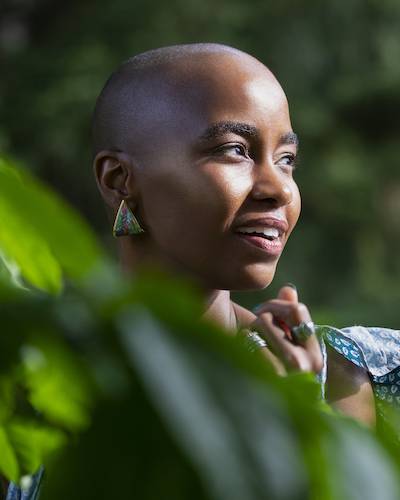

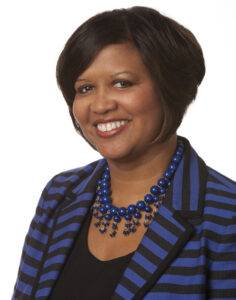 Dr. Tia Brown McNair is the Vice President in the Office of Diversity, Equity, and Student Success and Executive Director for the Truth, Racial Healing, and Transformation (TRHT) Campus Centers at the American Association of Colleges and Universities (AAC&U) in Washington, DC. She oversees both funded projects and AAC&U’s continuing programs on equity, inclusive excellence, high-impact practices, and student success. McNair directs AAC&U’s Summer Institutes on High-Impact Practices and Student Success, and TRHT Campus Centers and serves as the project director for several AAC&U initiatives, including the development of a TRHT-focused campus climate toolkit. She is the lead author of From Equity Talk to Equity Walk: Expanding Practitioner Knowledge for Racial Justice in Higher Education (January 2020) and Becoming a Student-Ready College: A New Culture of Leadership for Student Success (July 2016 and August 2022 Second edition).