Frontier Nursing University has a long history as early adopters of new technology and innovations. FNU’s distance education model, for example, was implemented before the internet, relying instead on the U.S. mail to allow students to continue to work in their communities while pursuing their degrees.
Frontier strives to be at the forefront, embracing change and new technologies, always through the lens of the university’s mission and vision. That was the approach that course coordinator Angela Mitchell, DNP, FNP-BC, CNE, took when exploring the use of artificial intelligence (AI) in one of her courses.
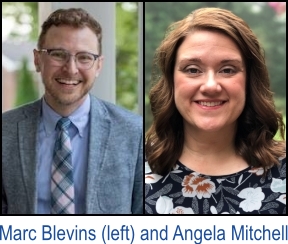
“Not everyone is on the AI bandwagon,” Dr. Mitchell said. “I recognize there are some significant ethical questions that are being asked about AI use related to the environment, resource usage, being equitable, communities that are being impacted, who is the owner of information. But I also am being charged with preparing students authentically for the world they will have upon graduation. AI is a part of the healthcare system. That is how I made the decision to use AI.”
She had the freedom to make such a decision because of the university’s pioneering history, with which she is very familiar. Mitchell’s first job was with the Frontier Nursing Service in 2002, where she served as faculty at the then School of Midwifery and Family Nursing.
“As a newbie, I was brought into this culture of, ‘if you come up with a way of doing something, we will probably be good with it,’” she said. “Be creative and use what you have.”
Mitchell wasn’t interested in paying large sums of money for a one-size-fits-all market product. She wanted something tailored specifically for her students. Once reluctant to embrace AI, Mitchell understood that it was here to stay, whether she embraced it or not.
“I realized the ground that I am standing on is shifting. Just like when I got my first iPhone. I can’t unsee what I have seen. So, I started on my own and I had some wow moments in using AI for myself. It helped me come up with questions, learning activities, and to teach better and more efficiently.”
Efficiency is essential with a class such as Mitchell’s, with 300 students or more. But so is a personalized experience. Was there a way AI could help? Mitchell started experimenting with Copilot to find out.
“Having individual experiences and letting students do something and getting immediate feedback from a faculty member is very challenging. We do two activities during the term in which faculty are working with a group of 12 to 15 students, but not one on one.”
With the aid of her fellow faculty members, she developed a program for her students to use in an assignment. The assignment would take the place of a previous assignment that had become outdated, thanks largely to AI.
“We had a previous one where we asked students two reflection questions. We would ask them a question, and they would type out an answer. When we first started doing this, we wanted students to dig a little deeper into the answers they provided. But over time, those answers started to become very polished and very similar. My students were using AI whether or not I endorsed it, whether or not I told them not to use it. That really helped me shift my mindset.”
Mitchell’s first attempt at the AI project was on the right track, but additional help was needed to fine-tune it.
“There were a few snafus,” Mitchell said. “This is where my cup runneth over from the support of IT. Our IT department is just essential. They saw my need; they knew what I had been working on.”
Chief Information and Digital Officer Marc Blevins and several other IT team members sat on a call with Mitchell the same day the glitches in the program were discovered. Together, they identified the problem and resolved it the same day.
“Sometimes you think you’re all alone in this and everybody has their own to do list,” Mitchell said. “But that moment when Marc and his team got on a call with me — Marc said, ‘This is actually what we want to be doing — technology that is interfacing with students and learning.’”
Mitchell describes the AI tool she created as a reflection coach. It doesn’t give students the answer, but it guides them in posing questions. The agent was designed using the Socratic method of reflecting back and asking the student questions for clarification.
“Other than maybe the first few students who took it out for a spin for me, the students didn’t experience a problem,” Mitchell said. “It was one of those full circle moments that is one of the reasons I like to work at Frontier. You’re not in this endeavor by yourself. This is a team sport.”
The program helps students in a variety of ways. Students can complete the assignment using voice to text and receive real time responses and prompts from the AI agent. Feedback from students demonstrated that the agent helped them clarify what they meant by the words they used and helped them organize their thoughts and ideas.
“I wanted to pause and recognize the moment that, as a university, we are doing something we have never done before,” Mitchell said, noting that the project was of no additional cost to students nor the university. “We have to celebrate these small victories. I don’t want anybody to get the idea that this is some elaborate, very sophisticated thing. It’s very basic, but something two years ago I would have never dreamt possible.
“I was fortunate enough to know some of the original pioneers of Frontier. We stand on the shoulders of those who have come before us. We might not be on horses, and it might be a little more sophisticated, but this is in our DNA at Frontier.”



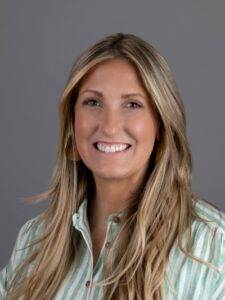
 Carrie Belin is an experienced board-certified Family Nurse Practitioner and a graduate of the Johns Hopkins DNP program, Johns Hopkins Bloomberg School of Public Health, Georgetown University School of Nursing, and Johns Hopkins School of Nursing. She has also completed fellowships at Georgetown and the University of California Irvine.
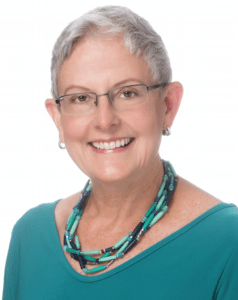
 Angie has been a full-scope midwife since 2009. She has experience in various birth settings including home, hospital, and birth centers. She is committed to integrating the midwifery model of care in the US. She completed her master’s degree in nurse-midwifery at Frontier Nursing University (FNU) and her Doctorate at Johns Hopkins University. She currently serves as the midwifery clinical faculty at FNU. Angie is motivated by the desire to improve the quality of healthcare and has led quality improvement projects on skin-to-skin implementation, labor induction, and improving transfer of care practices between hospital and community midwives. In 2017, she created a short film on skin-to-skin called
 Justin C. Daily, BSN, RN, has ten years of experience in nursing. At the start of his nursing career, Justin worked as a floor nurse on the oncology floor at St. Francis. He then spent two years as the Director of Nursing in a small rural Kansas hospital before returning to St. Francis and the oncology unit. He has been in his current position as the Chemo Nurse Educator for the past four years. He earned an Associate in Nurse from Hutchinson Community College and a Bachelor of Science in Nursing from Bethel College.
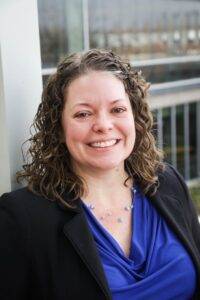
 Brandy Jackson serves as the Director of Undergraduate Nursing Programs and Assistant Educator at Wichita State University and Co-Director of Access in Nursing. Brandy is a seasoned educator with over 15 years of experience. Before entering academia, Brandy served in Hospital-based leadership and Critical Care Staff nurse roles. Brandy is passionate about equity in nursing education with a focus on individuals with disabilities. Her current research interests include accommodations of nursing students with disabilities in clinical learning environments and breaking down barriers for historically unrepresented individuals to enter the nursing profession. Brandy is also actively engaged in Interprofessional Education development, creating IPE opportunities for faculty and students at Wichita State. Brandy is an active member of Wichita Women for Good and Soroptimist, with the goal to empower women and girls. Brandy is a TeamSTEPPS master trainer. She received the DASIY Award for Extraordinary Nursing Faculty in 2019 at Wichita State University.
 Dr. Sabrina Ali Jamal-Eddine is an Arab-disabled queer woman of color with a PhD in Nursing and an interdisciplinary certificate in Disability Ethics from the University of Illinois Chicago (UIC). Dr. Jamal-Eddine’s doctoral research explored spoken word poetry as a form of critical narrative pedagogy to educate nursing students about disability, ableism, and disability justice. Dr. Jamal-Eddine now serves as a Postdoctoral Research Associate in UIC’s Department of Disability and Human Development and serves on the Board of Directors of the National Organization of Nurses with Disabilities (NOND). During her doctoral program, Sabrina served as a Summer Fellow at a residential National Endowment of the Humanities (NEH) Summer Institute at Arizona State University (2023), a summer fellow at Andrew W. Mellon’s National Humanities Without Walls program at University of Michigan (2022), a Summer Research Fellow at UC Berkeley’s Othering & Belonging Institute (2021), and an Illinois Leadership Education in Neurodevelopmental and related Disabilities (LEND) trainee (2019-2020).
 Vanessa Cameron works for Vanderbilt University Medical Center in Nursing Education & Professional Development. She is also attending George Washington University and progressing towards a PhD in Nursing with an emphasis on ableism in nursing. After becoming disabled in April 2021, Vanessa’s worldview and perspective changed, and a recognition of the ableism present within healthcare and within the culture of nursing was apparent. She has been working since that time to provide educational foundations for nurses about disability and ableism, provide support for fellow disabled nursing colleagues, and advocate for the disabled community within healthcare settings to reduce disparities.
 Dr. Lucinda Canty is a certified nurse-midwife, Associate Professor of Nursing, and Director of the Seedworks Health Equity in Nursing Program at the University of Massachusetts Amherst. She earned a bachelor’s degree in nursing from Columbia University, a master’s degree from Yale University, specializing in nurse-midwifery, and a PhD from the University of Connecticut. Dr. Canty has provided reproductive health care for over 29 years. Her research interests include the prevention of maternal mortality and severe maternal morbidity, reducing racial and ethnic health disparities in reproductive health, promoting diversity in nursing, and eliminating racism in nursing and midwifery.
 Dr. Lisa Meeks is a distinguished scholar and leader whose unwavering commitment to inclusivity and excellence has significantly influenced the landscape of health professions education and accessibility. She is the founder and executive director of the DocsWithDisabilities Initiative and holds appointments as an Associate Professor in the Departments of Learning Health Sciences and Family Medicine at the University of Michigan.
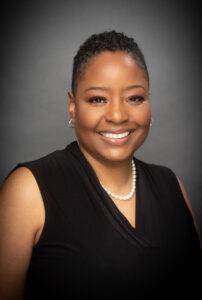
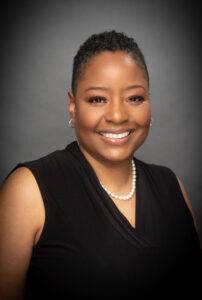 Dr. Nikia Grayson, DNP, MSN, MPH, MA, CNM, FNP-C, FACNM (she/her) is a trailblazing force in reproductive justice, blending her expertise as a public health activist, anthropologist, and family nurse-midwife to champion the rights and health of underserved communities. Graduating with distinction from Howard University, Nikia holds a bachelor’s degree in communications and a master’s degree in public health. Her academic journey also led her to the University of Memphis, where she earned a master’s in medical anthropology, and the University of Tennessee, where she achieved both a master’s in nursing and a doctorate in nursing practice. Complementing her extensive education, she completed a post-master’s certificate in midwifery at Frontier Nursing University.


 Dr. Tia Brown McNair is the Vice President in the Office of Diversity, Equity, and Student Success and Executive Director for the Truth, Racial Healing, and Transformation (TRHT) Campus Centers at the American Association of Colleges and Universities (AAC&U) in Washington, DC. She oversees both funded projects and AAC&U’s continuing programs on equity, inclusive excellence, high-impact practices, and student success. McNair directs AAC&U’s Summer Institutes on High-Impact Practices and Student Success, and TRHT Campus Centers and serves as the project director for several AAC&U initiatives, including the development of a TRHT-focused campus climate toolkit. She is the lead author of From Equity Talk to Equity Walk: Expanding Practitioner Knowledge for Racial Justice in Higher Education (January 2020) and Becoming a Student-Ready College: A New Culture of Leadership for Student Success (July 2016 and August 2022 Second edition).
