
By Anne Z. Cockerham, PhD, CNM, WHNP-BC, CNE, FACNM
Frontier Nursing University Professor
Holding on to the Star: Celebrating 100 Years of the Frontier Nursing Service is a three-part series covering the history of Frontier Nursing University. In this series, we explore the Frontier Nursing Service’s history from 1925 to 2025 through a chronological journey, highlighting the enduring themes that capture both the core mission that FNS stakeholders have consistently embraced, and the many ways that the service has changed.
Pressing Need for an Innovative Educational Shift
Throughout the 1970s, challenges intensified for the Frontier School of Midwifery and Family Nursing. Decreasing births, diminished overall population numbers in the area, faculty shortages, and financial constraints conspired to cause FNS leaders to consider closing the school. Midwifery students struggled to access enough births to meet graduation requirements, and a 1972 report from the American College of Nurse-Midwives’ site visit to Frontier confirmed the situation.
While effusive in its praise for the program’s ability to provide “comprehensive health services to the most isolated families in Appalachia,” the report documented that a weakness of the program was the insufficient number of intrapartum clinical experiences. To mitigate these problems, FNS leaders arranged for students to travel out of the area to gain the required clinical experience with births. But by 1980, the situation was becoming more dire. FSMFN Dean Lydia DeSantis was forced to notify prospective students that they would not be able to begin their graduate program as planned in the fall of 1980.
Many stakeholders actively resisted the idea of closure, in large part due to the unique nature of the education Frontier provided. The school’s dean expressed this sentiment in the Winter 1980 Quarterly Bulletin: “Our school has the only program in this country that prepares registered nurses as both family nurse practitioners and nurse-midwives. . . [our school’s] offerings. . . have been enormously successful and well-received, especially the Family Nurse-Midwifery Program. . . graduates of the school are in constant demand; 94% are presently employed in rural areas, and most are functioning in primary care settings. Rural primary care has always been a major objective of the FNS, and one of the most pressing health care needs in this Country.
In 1989, an innovative structural change in the school allowed the FNS to continue its commitment to graduate nursing education despite the changes in the service’s eastern Kentucky historical home area. Led by Kitty Ernst (a 1951 graduate of the Frontier Graduate School of Midwifery) and funded by the Pew Foundation, the Community-Based Nurse-Midwifery Education Program (CNEP) began as a pilot project. CNEP’s goal was to increase the number of practicing nurse-midwives working in underserved areas. The structure of CNEP would enable nurses to remain in their communities while obtaining graduate education as nurse-midwives by completing most of their didactic work at a distance, first by mail and phone and then online as technology evolved. Clinical experiences would be in students’ home communities.
Prospective students and FNS leaders embraced the concept. CNEP’s first class of seventeen students met to begin their program in April 1989 in Perkiomenville, Pennsylvania. This experience, modeled after the successful team-building program, Outward Bound, was called Midwifery Bound. In a June 1990 alumni newsletter, Kitty Ernst reported that 1,200 nurses had expressed interest in the program that year and that a second class of forty students had been admitted. Also in 1990, the FSMFN officially recognized that the CNEP model of education matched its own goals and mission. The President of the School and the Board of Governors voted to officially adopt CNEP as its nurse-midwifery education program in 1991.
In addition to being a practical solution to the challenges of residential education based in Hyden KY, CNEP allowed for a different type of emphasis on rural health. The flexible, innovative, decentralized approach allowed students to remain in their communities throughout their education and, importantly, after graduation. Maintaining an explicit focus on rural health despite this change in education program structure meant that the re-envisioned school could prioritize the education of rural-dwelling students who would go on to practice in rural areas. Leaders reported that, as of Fall 1991, just two years after CNEP’s inception, 181 students had been enrolled in CNEP and 59% of students lived in rural or semi-rural communities.
In the decade after the distance learning model began, the school continued to grow, beginning with nurse-midwives and then adding family nurse practitioners. Although the FNP track had been placed on hold years earlier, the commitment to education FNPs never waned. In 1999, the FNP track was relaunched as a distance learning program. By Spring 2000, 1,363 students had graduated from the nurse-midwifery educational program and 173 students were currently enrolled and working toward their dreams.
Frontier in the 21st Century
The themes that capture the accomplishments and goals of Frontier stakeholders at the dawn of the 21st century echoed those seen since the organization’s inception in 1925: flexibility and adaptiveness as the organization maintained a focus on rural health, and commitments to graduate education and primary care of families. As FNS leaders, staff, and community members marked the 75th anniversary of the Frontier Nursing Service in 2000, productivity and patient safety outcomes prompted celebration and pride: in 75 years, FNS staff had cared for 414,121 registered patients, attended 24,794 maternity patients for delivery, and recorded 11 maternity deaths.
FNS leaders recognized the importance of seeking regional and programmatic accreditation and becoming a master’s degree-granting institution to keep the FSMFN competitive with other programs. Work began in earnest in 2000 with long hours of diligent efforts by leaders, faculty, staff, and others. By 2004, FSMFN was accredited by the Southern Association of Colleges and Schools Commission on Colleges (SACSCOC) to offer a Master of Science in Nursing, the first hooding of MSN graduates had occurred, and the American College of Nurse-Midwives Division on Accreditation (ACNM DOA) had granted accreditation for the nurse-midwifery program.
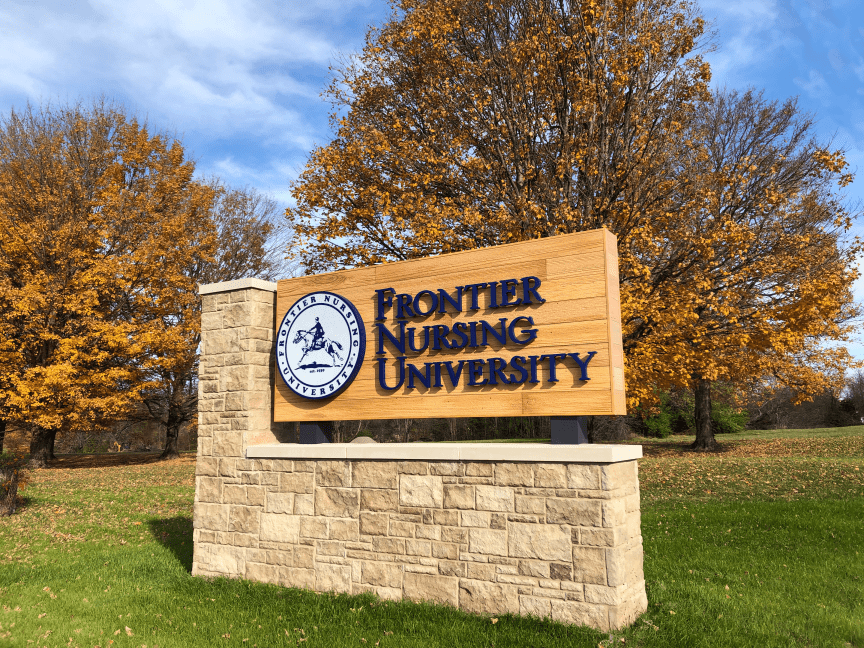
After earning accreditation and authority to grant a master’s degree for nurse-midwives and family nurse practitioners, several new educational options for Frontier students followed in quick succession. In 2005, students could choose to earn a Master of Science in Nursing as a women’s health nurse practitioner. In 2007, the Associate Degree in Nursing to Master of Science in Nursing (ADN to MSN) Bridge program launched, allowing students whose nursing degree was an ADN, rather than a Bachelor of Science in Nursing (BSN) to bridge into the midwifery or nurse practitioner program by taking one additional year of courses. In 2008, the first Doctor of Nursing Practice (DNP) students enrolled. Although the school was successful and growing, the Frontier Nursing Service experienced a difficult period between 2008 and 2011. National trends, such as the economic downturn that began in 2008, and private and federal reimbursement challenges for health care contributed to the financial unsustainability of FNS health care entities. In the fall of 2010, 70 employees lost their jobs, and the maternity unit at Mary Breckinridge Hospital closed its doors. In 2011, Appalachian Regional Healthcare, Inc. (ARH) bought Mary Breckinridge Hospital, the home health agency, and FNS clinics. An August 10, 2011, press release described the sale: “as has been the case throughout the country, a number of standalone hospitals are merging with larger healthcare systems in order to continue to be viable and sustainable.” With this sale, the Frontier Nursing Service transitioned to a single focus of educating nurse-midwives and nurse practitioners.
After the separation between the health care entities and the school, changes in the school continued. A major shift happened in 2011 when the Board of Directors approved a name change to Frontier Nursing University (FNU) to better reflect the institution’s scope and status. Since the name change, FNU has continued to expand in alignment with the university’s mission and the major focus dating back to the inception of the Frontier Nursing Service. By 2012, FNU admitted approximately 600 students annually.
In 2017, FNU added a new specialty track, allowing aspiring psychiatric-mental health nurse practitioners (PMHNP) to join the FNU community. FNU leaders and faculty selected the PMHNP from an array of advanced practice specialty options due to the institution’s commitment to providing mental health care, a service that individuals in rural areas often have difficulty accessing.
As the university’s offerings expanded, FNU leaders decided to move its campus from Hyden to Versailles, Kentucky. Although this was a difficult decision due to its historical roots in Leslie County, FNU’s growth necessitated more campus space, access to technology, and centralized administrative and on-campus activities. FNU purchased the 217-acre property in 2017, and construction and renovations proceeded during the next few years. The COVID-19 pandemic caused delays in opening the new campus but by May 2022, all Frontier Bound and Clinical Bound student sessions took place in person on the Versailles campus.

The world looks dramatically different than it did a century ago when the Frontier Nursing Service came into being. Frontier has undergone changes that would make many aspects unrecognizable to early FNS leaders and staff. But as we reflect on the goals and accomplishments of Frontier stakeholders between 1925 and 2025, we can appreciate that today’s leaders, faculty, staff, students, couriers, alumni, donors, and friends continue, in Mary Breckinridge’s words, to “adhere to the principles that gave it being.” Now solely focused, as Frontier Nursing University, on graduate education of nurse-midwives and nurse practitioners, the organization retains its commitment to primary care of the family with a robust family nurse practitioner program, primary care education for all specialty tracks, and a focus on mental health care. Frontier Nursing University continues to address the great needs present in health care shortage areas, particularly in underserved and rural areas. In 2024, 51% of students resided in Health Professional Shortage Areas, 65% in Mental Health Provider Shortage Areas, and 18% in designated rural areas. A crucial factor in the ability of the organization to persevere through changes and obstacles it has faced in the last 100 years is the ability to be flexible and adaptive. We hope Mary Breckinridge would be proud of how the organization has adapted and grown.
More from “Holding on to the Star: Celebrating 100 Years of the Frontier Nursing Service”

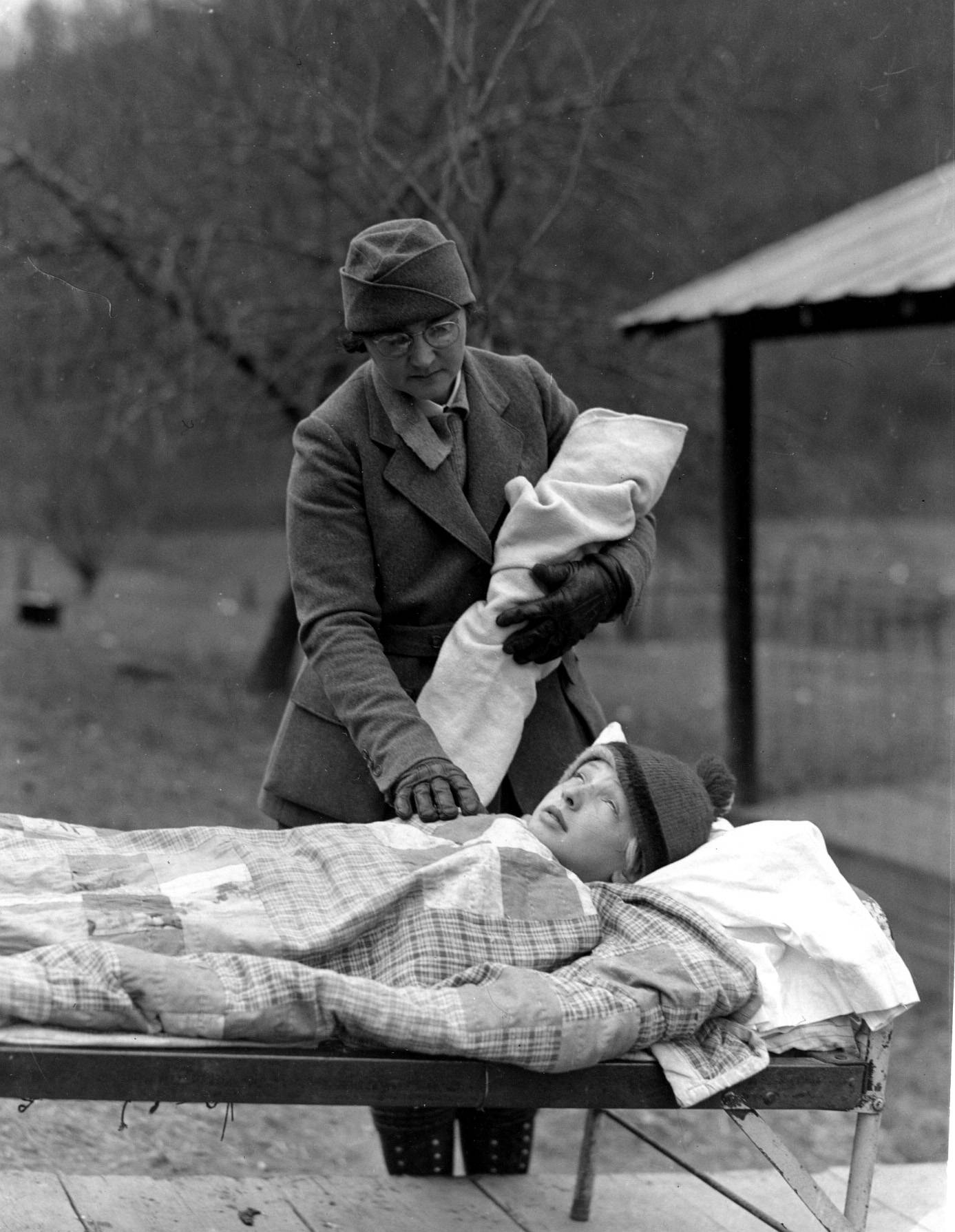

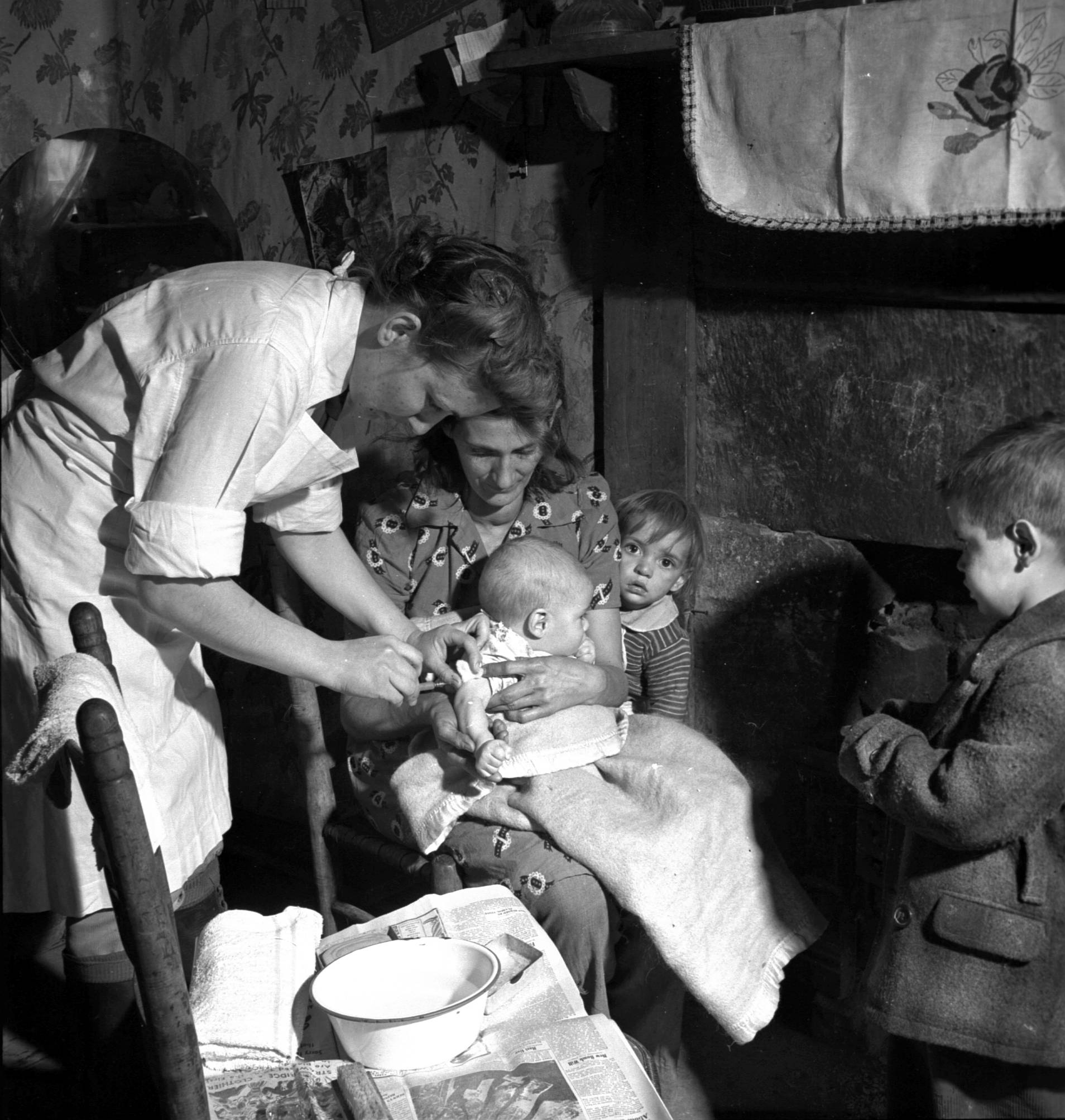 FNS leaders developed the Courier Service as a creative and adaptive strategy to address another challenge, nearly constant budgetary shortfalls. Couriers played an important part in keeping the FNS solvent and running smoothly. Many couriers were college-aged daughters and nieces of FNS donors and committee members and stayed on-site for 6-8 weeks, volunteering their time to care for horses, ferry messages and supplies, escort visitors around the FNS territory, assist nurses, and much more. The couriers’ work benefited the FNS by providing thousands of hours of unpaid work each year. Additionally, former couriers became lifelong advocates for Frontier, an even more far-reaching benefit of the courier program. Seeing the service’s work up close allowed the couriers to return home as effective ambassadors for the Frontier Nursing Service and to tell their friends and family members of the work being done in Kentucky. Couriers took the FNS message out of the mountains and strengthened long-lasting ties between donors and the FNS.
 True to a university setting, Capley also utilizes the beauty of the walking trail to serve as an educational experience as well. She prints and posts signs along the trail to help identify some of the flora.

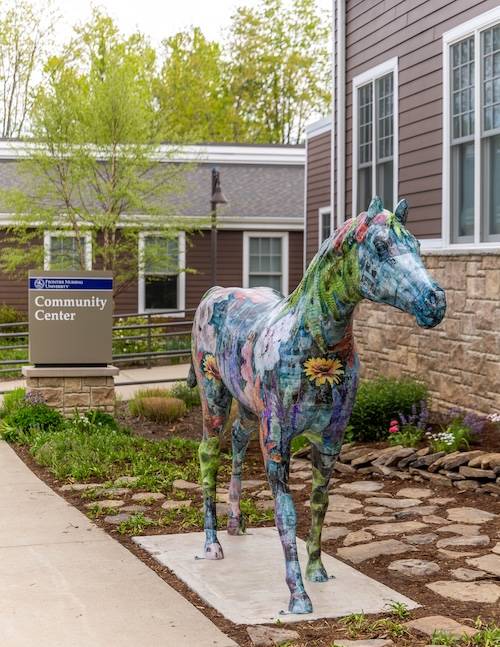 Members of the Frontier Nursing University (FNU) community recently gathered on campus for the unveiling of a new sculpture honoring FNU’s century of service and education, as well as its ongoing commitment to delivering high-quality education that prepares nurses to become nurse-midwives and nurse practitioners who work with all people, with an emphasis on rural and underserved communities. The sculpture, crafted by Kentucky artist Christine Kuhn, depicts a horse, a symbol emblematic of FNU.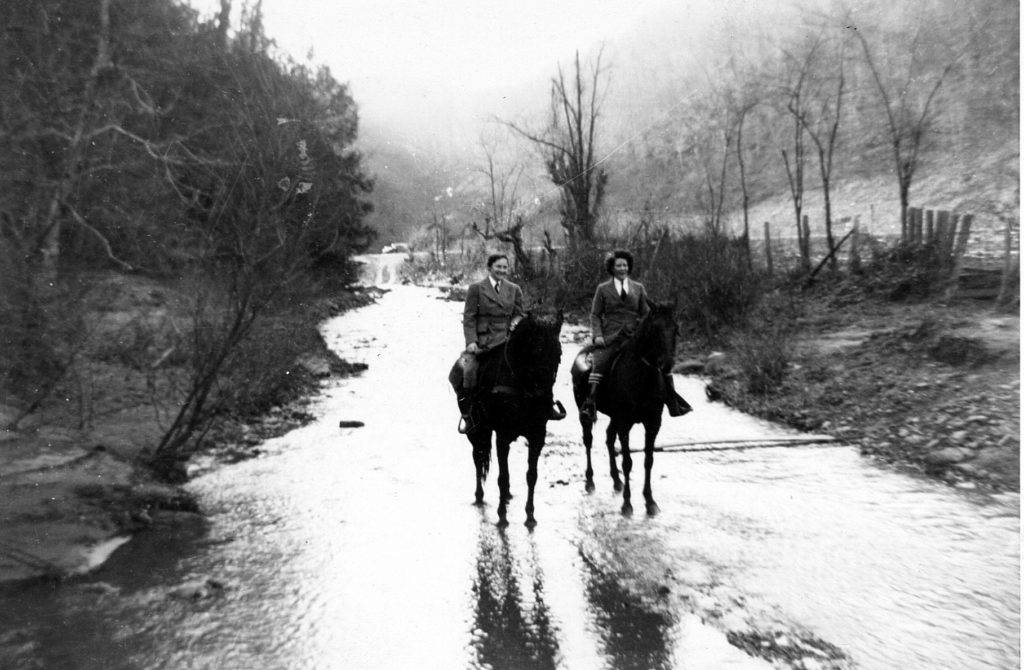
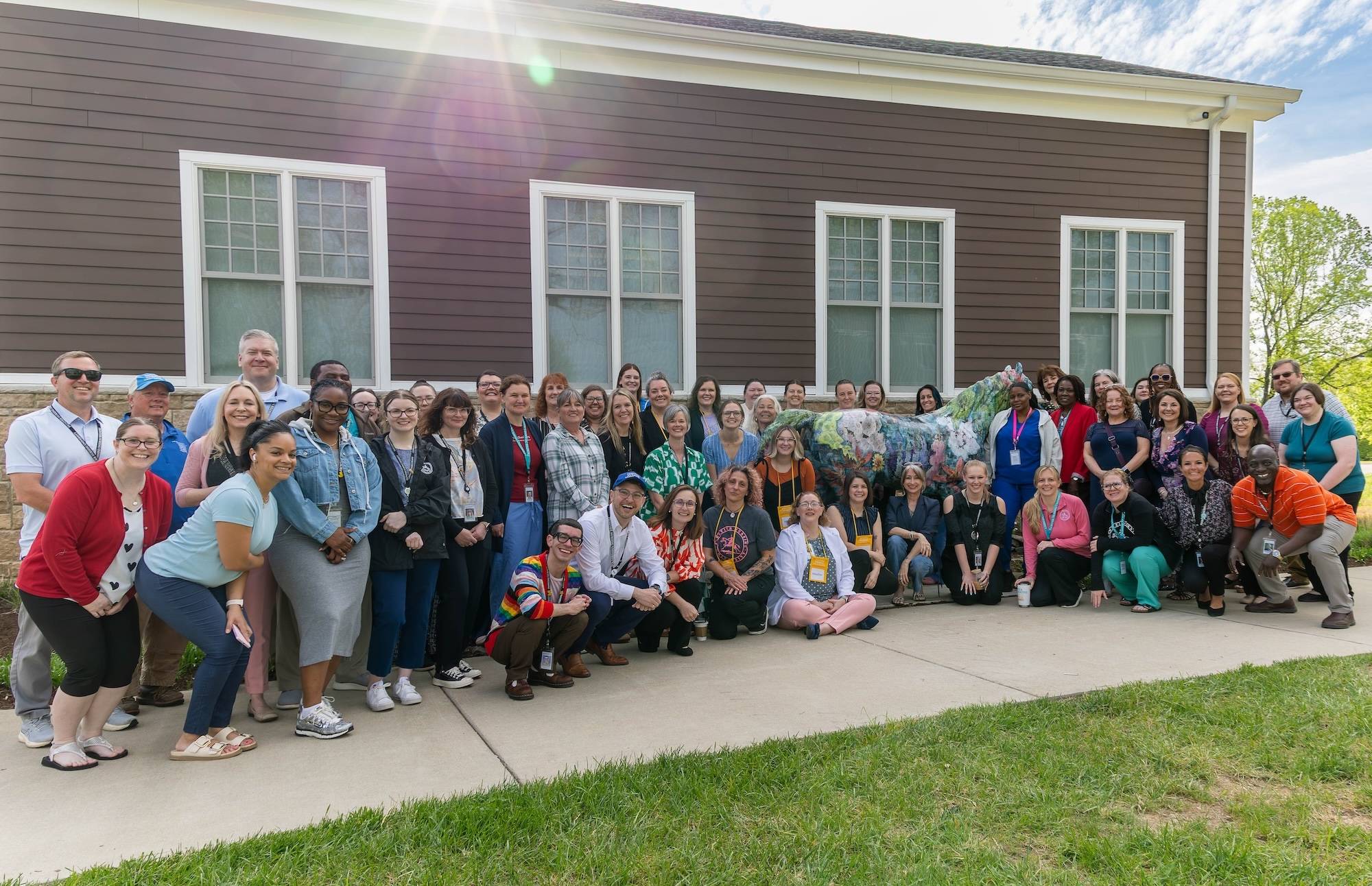

 The official ribbon-cutting ceremony for Frontier’s campus in Versailles, Kentucky, was held on September 9, 2022. Since then, it has not taken long for Frontier’s Versailles campus to feel like home.
 “Another thing we wanted to do was to recognize that we are in Kentucky and pay tribute to Kentucky, so there’s art around campus that is a connection to the state,” Dr. Alexander-Delpech said. “In the administration building you will see images of horses, which is not only a connection to the thoroughbred industry, but also to our history of Frontier midwives traveling on horseback through the mountains to provide care to the families living there.”
 What do you enjoy most about your job? What are the primary challenges?


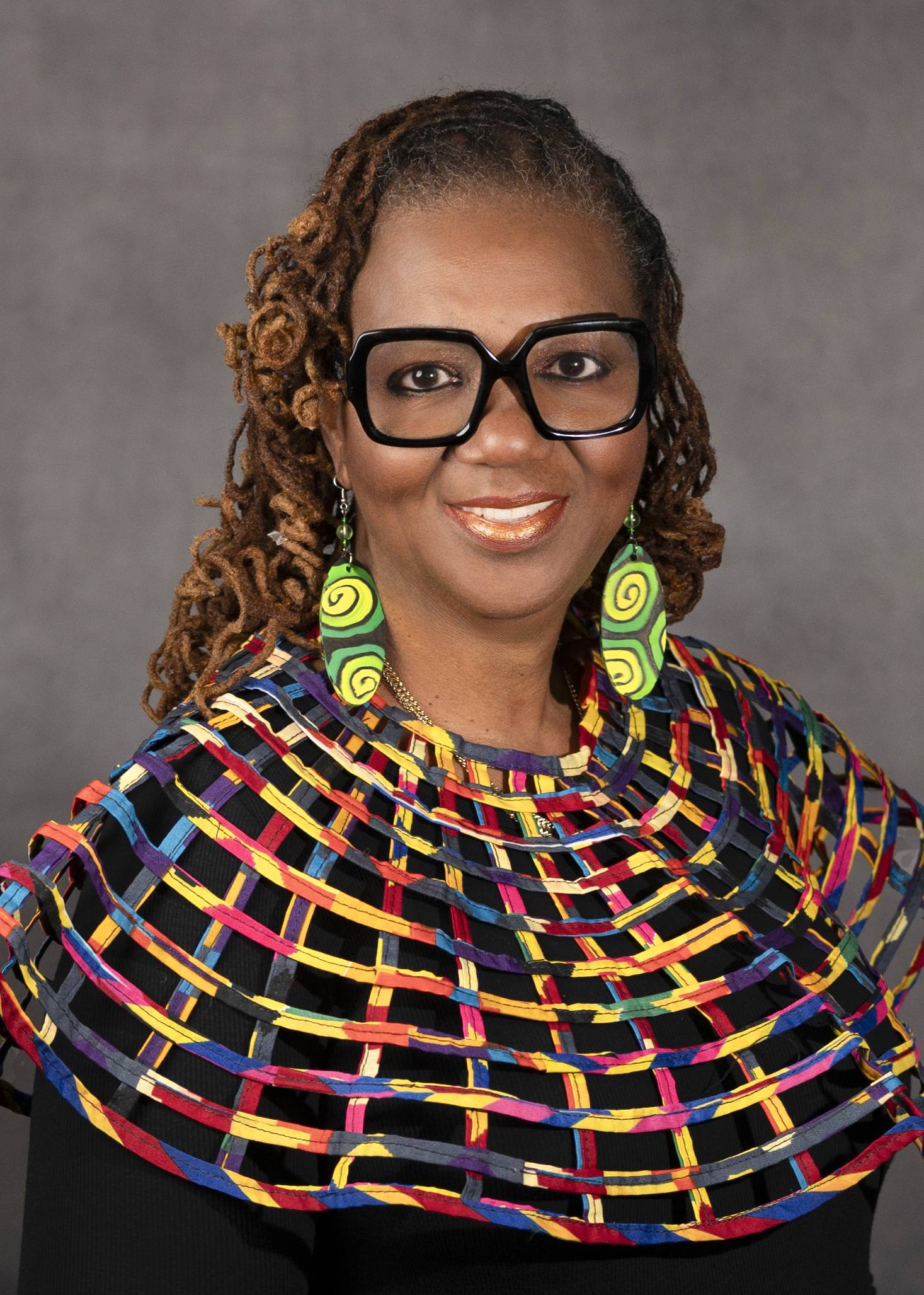
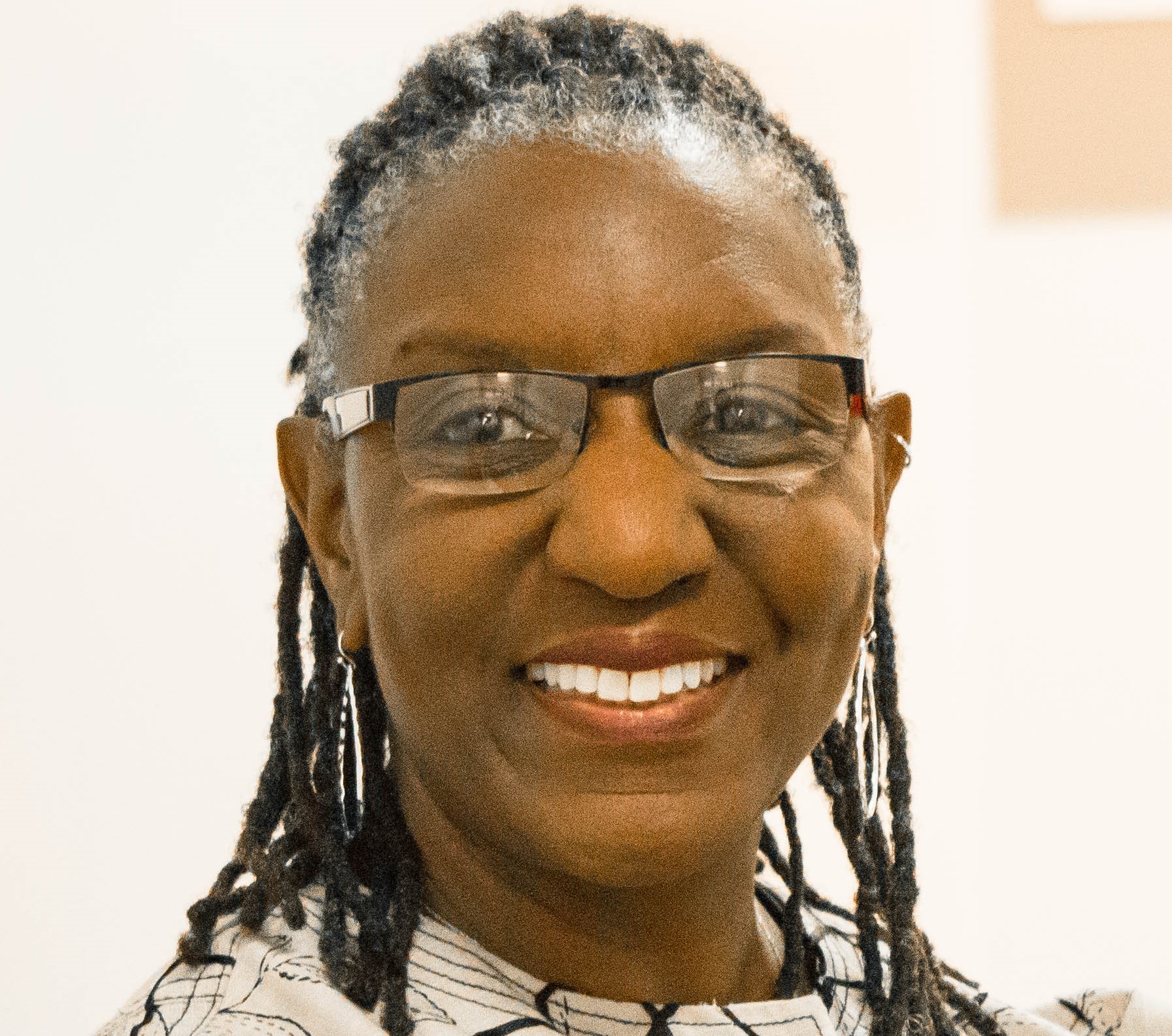
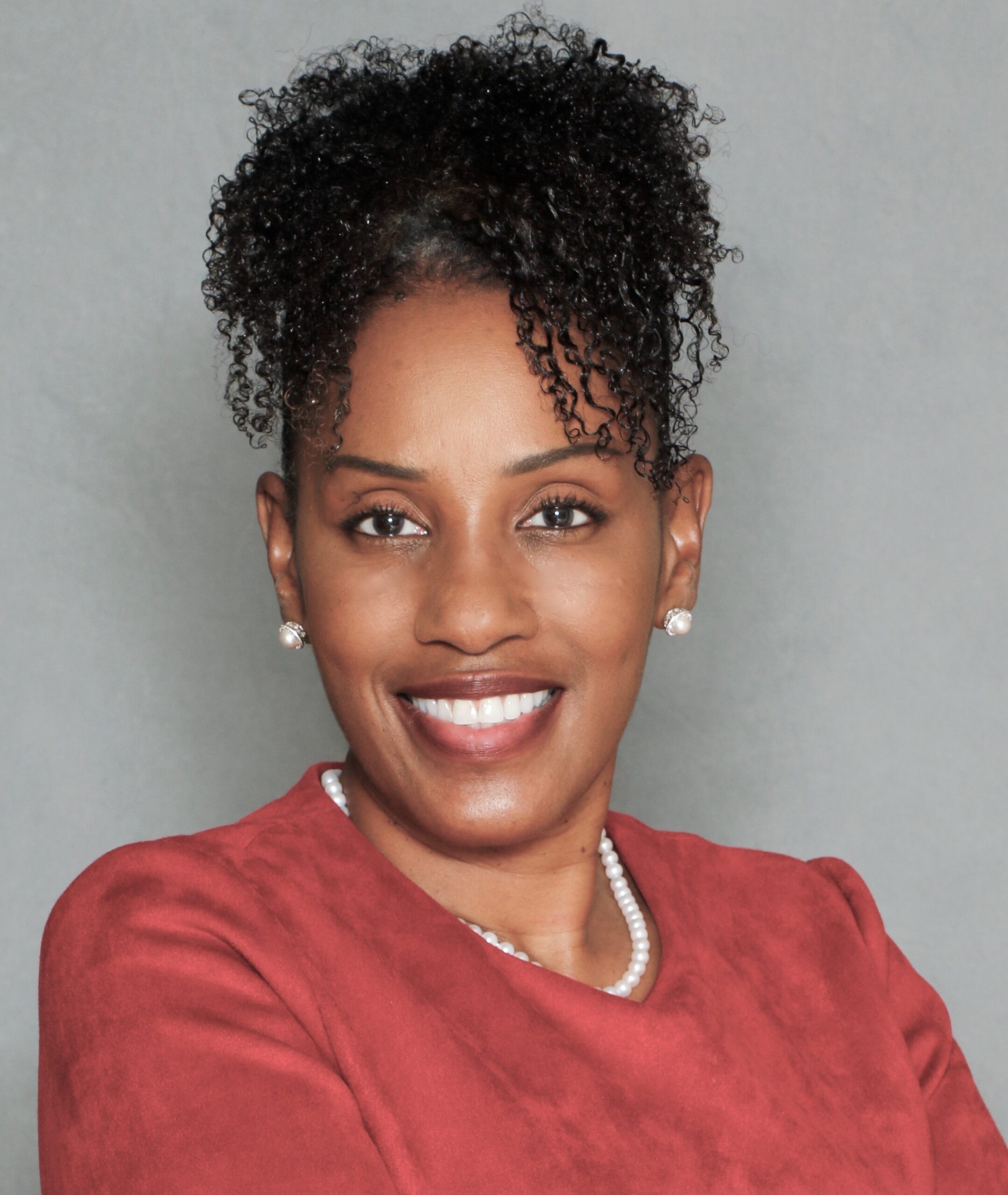
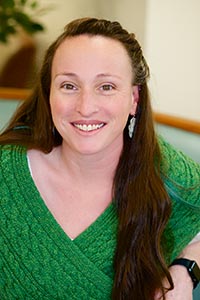
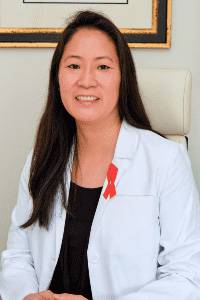 Carrie Belin is an experienced board-certified Family Nurse Practitioner and a graduate of the Johns Hopkins DNP program, Johns Hopkins Bloomberg School of Public Health, Georgetown University School of Nursing, and Johns Hopkins School of Nursing. She has also completed fellowships at Georgetown and the University of California Irvine.
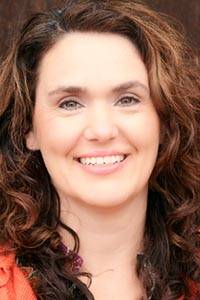 Angie has been a full-scope midwife since 2009. She has experience in various birth settings including home, hospital, and birth centers. She is committed to integrating the midwifery model of care in the US. She completed her master’s degree in nurse-midwifery at Frontier Nursing University (FNU) and her Doctorate at Johns Hopkins University. She currently serves as the midwifery clinical faculty at FNU. Angie is motivated by the desire to improve the quality of healthcare and has led quality improvement projects on skin-to-skin implementation, labor induction, and improving transfer of care practices between hospital and community midwives. In 2017, she created a short film on skin-to-skin called
 Justin C. Daily, BSN, RN, has ten years of experience in nursing. At the start of his nursing career, Justin worked as a floor nurse on the oncology floor at St. Francis. He then spent two years as the Director of Nursing in a small rural Kansas hospital before returning to St. Francis and the oncology unit. He has been in his current position as the Chemo Nurse Educator for the past four years. He earned an Associate in Nurse from Hutchinson Community College and a Bachelor of Science in Nursing from Bethel College.
 Brandy Jackson serves as the Director of Undergraduate Nursing Programs and Assistant Educator at Wichita State University and Co-Director of Access in Nursing. Brandy is a seasoned educator with over 15 years of experience. Before entering academia, Brandy served in Hospital-based leadership and Critical Care Staff nurse roles. Brandy is passionate about equity in nursing education with a focus on individuals with disabilities. Her current research interests include accommodations of nursing students with disabilities in clinical learning environments and breaking down barriers for historically unrepresented individuals to enter the nursing profession. Brandy is also actively engaged in Interprofessional Education development, creating IPE opportunities for faculty and students at Wichita State. Brandy is an active member of Wichita Women for Good and Soroptimist, with the goal to empower women and girls. Brandy is a TeamSTEPPS master trainer. She received the DASIY Award for Extraordinary Nursing Faculty in 2019 at Wichita State University.
  Dr. Sabrina Ali Jamal-Eddine is an Arab-disabled queer woman of color with a PhD in Nursing and an interdisciplinary certificate in Disability Ethics from the University of Illinois Chicago (UIC). Dr. Jamal-Eddine’s doctoral research explored spoken word poetry as a form of critical narrative pedagogy to educate nursing students about disability, ableism, and disability justice. Dr. Jamal-Eddine now serves as a Postdoctoral Research Associate in UIC’s Department of Disability and Human Development and serves on the Board of Directors of the National Organization of Nurses with Disabilities (NOND). During her doctoral program, Sabrina served as a Summer Fellow at a residential National Endowment of the Humanities (NEH) Summer Institute at Arizona State University (2023), a summer fellow at Andrew W. Mellon’s National Humanities Without Walls program at University of Michigan (2022), a Summer Research Fellow at UC Berkeley’s Othering & Belonging Institute (2021), and an Illinois Leadership Education in Neurodevelopmental and related Disabilities (LEND) trainee (2019-2020).
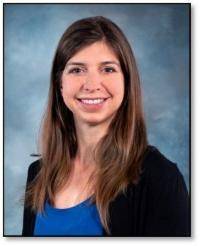 Vanessa Cameron works for Vanderbilt University Medical Center in Nursing Education & Professional Development. She is also attending George Washington University and progressing towards a PhD in Nursing with an emphasis on ableism in nursing. After becoming disabled in April 2021, Vanessa’s worldview and perspective changed, and a recognition of the ableism present within healthcare and within the culture of nursing was apparent. She has been working since that time to provide educational foundations for nurses about disability and ableism, provide support for fellow disabled nursing colleagues, and advocate for the disabled community within healthcare settings to reduce disparities.
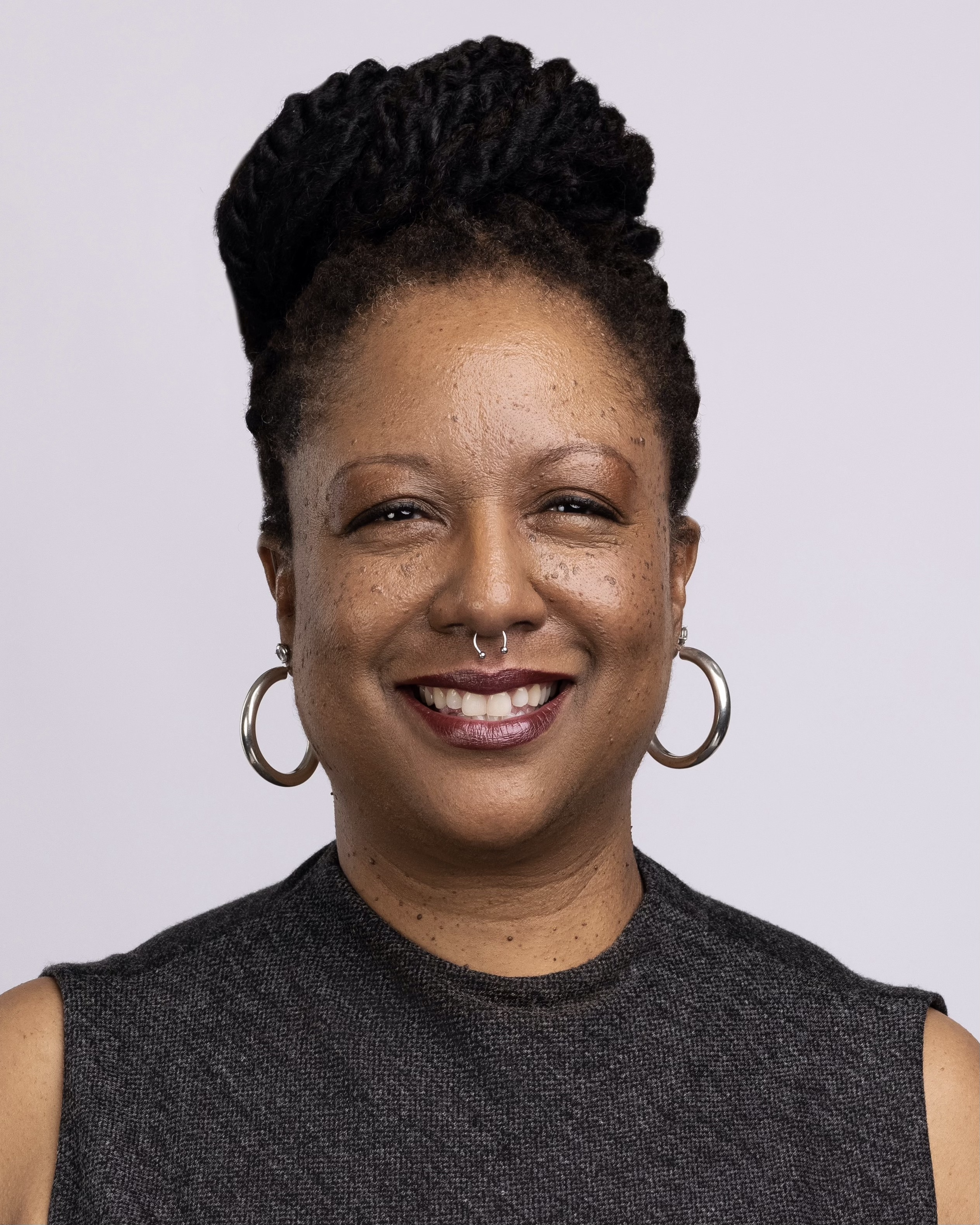 Dr. Lucinda Canty is a certified nurse-midwife, Associate Professor of Nursing, and Director of the Seedworks Health Equity in Nursing Program at the University of Massachusetts Amherst. She earned a bachelor’s degree in nursing from Columbia University, a master’s degree from Yale University, specializing in nurse-midwifery, and a PhD from the University of Connecticut. Dr. Canty has provided reproductive health care for over 29 years. Her research interests include the prevention of maternal mortality and severe maternal morbidity, reducing racial and ethnic health disparities in reproductive health, promoting diversity in nursing, and eliminating racism in nursing and midwifery.
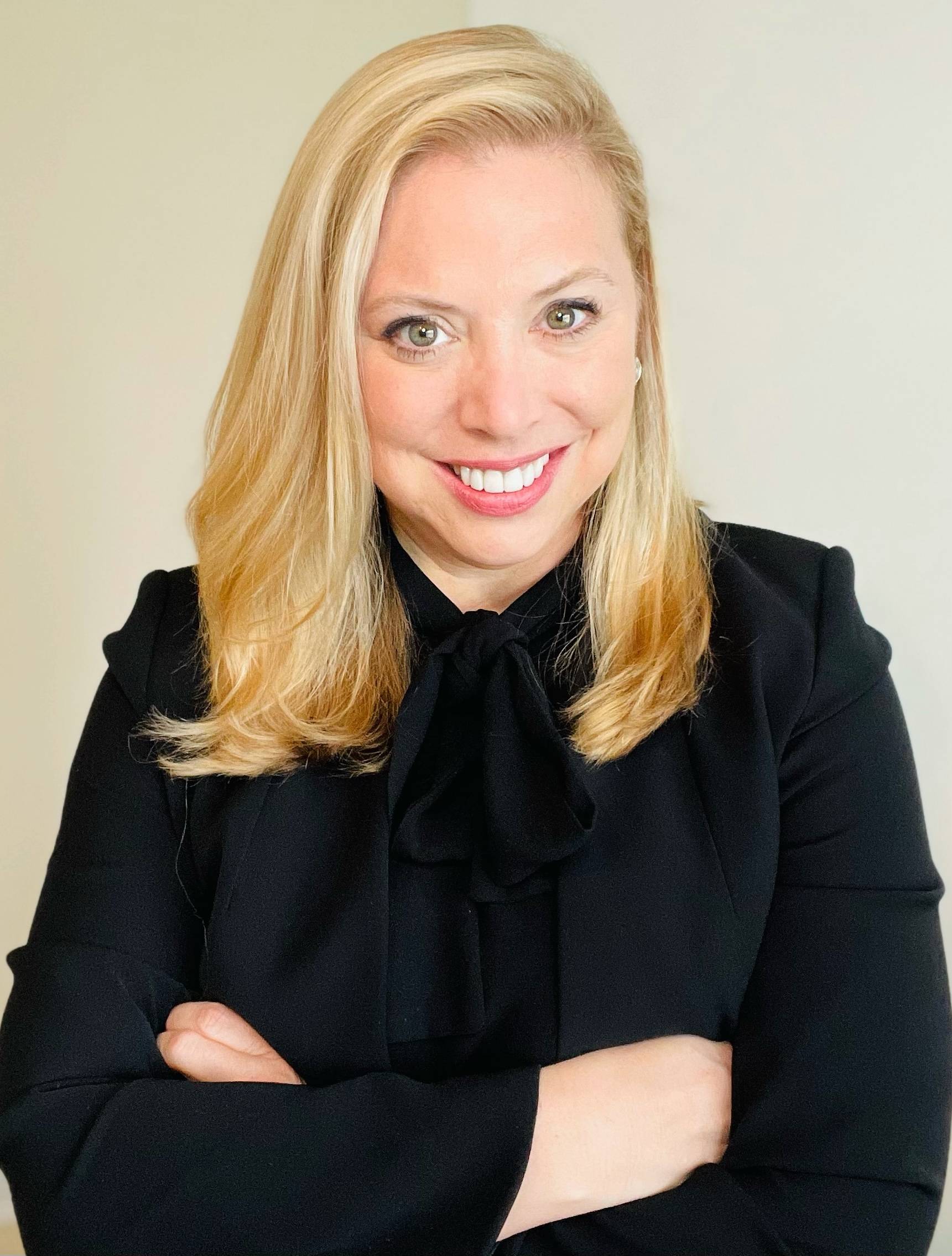 Dr. Lisa Meeks is a distinguished scholar and leader whose unwavering commitment to inclusivity and excellence has significantly influenced the landscape of health professions education and accessibility. She is the founder and executive director of the DocsWithDisabilities Initiative and holds appointments as an Associate Professor in the Departments of Learning Health Sciences and Family Medicine at the University of Michigan.
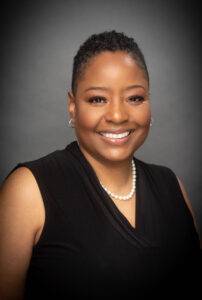 Dr. Nikia Grayson, DNP, MSN, MPH, MA, CNM, FNP-C, FACNM (she/her) is a trailblazing force in reproductive justice, blending her expertise as a public health activist, anthropologist, and family nurse-midwife to champion the rights and health of underserved communities. Graduating with distinction from Howard University, Nikia holds a bachelor’s degree in communications and a master’s degree in public health. Her academic journey also led her to the University of Memphis, where she earned a master’s in medical anthropology, and the University of Tennessee, where she achieved both a master’s in nursing and a doctorate in nursing practice. Complementing her extensive education, she completed a post-master’s certificate in midwifery at Frontier Nursing University.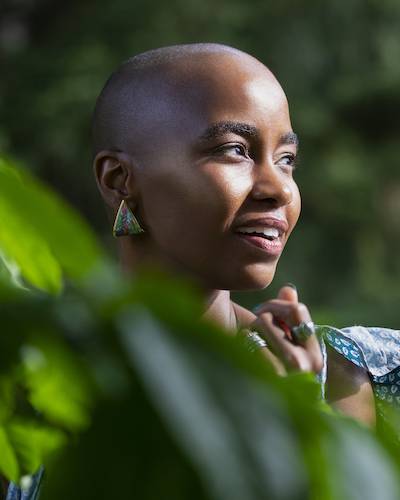


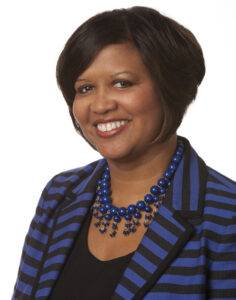 Dr. Tia Brown McNair is the Vice President in the Office of Diversity, Equity, and Student Success and Executive Director for the Truth, Racial Healing, and Transformation (TRHT) Campus Centers at the American Association of Colleges and Universities (AAC&U) in Washington, DC. She oversees both funded projects and AAC&U’s continuing programs on equity, inclusive excellence, high-impact practices, and student success. McNair directs AAC&U’s Summer Institutes on High-Impact Practices and Student Success, and TRHT Campus Centers and serves as the project director for several AAC&U initiatives, including the development of a TRHT-focused campus climate toolkit. She is the lead author of From Equity Talk to Equity Walk: Expanding Practitioner Knowledge for Racial Justice in Higher Education (January 2020) and Becoming a Student-Ready College: A New Culture of Leadership for Student Success (July 2016 and August 2022 Second edition).