Blog

  • Looking Back At FNU’s 2020 Virtual Commencement Ceremony

    Looking Back At FNU’s 2020 Virtual Commencement Ceremony

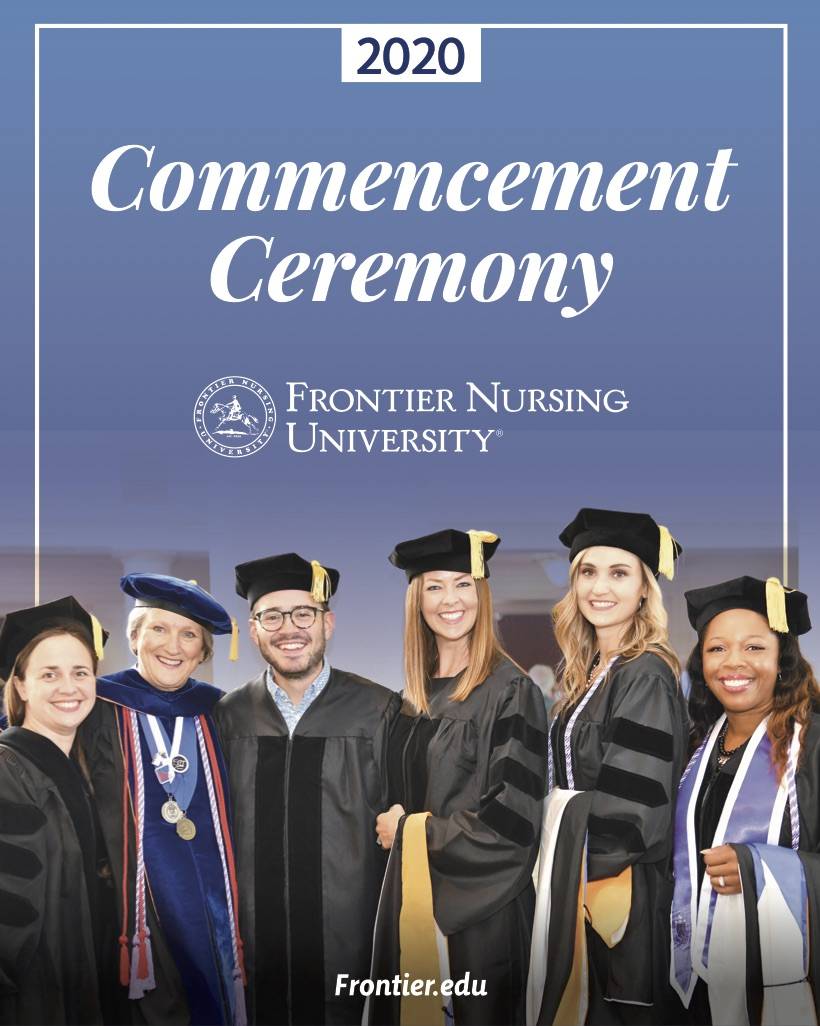
    On Saturday, Sept. 26, 2020, Frontier Nursing University (FNU) hosted its first virtual commencement ceremony. The event celebrated the 817 wonderful nurse-midwives and nurse practitioners who completed the Doctor of Nursing Practice degree, Master of Science in Nursing degree, or Post-Graduate Certificate programs this year. 

    Despite the hardships this past year has brought, it is an exciting time to graduate from FNU as the University celebrates the 50th anniversary of their Family Nurse Practitioner (FNP) program and the birth of the FNP program in the United States. 

    It has also been a year when the world has recognized just how vital nurses and other healthcare professionals are to society, as FNU President Dr. Susan Stone shared in her address to the graduates

    “You represent the calm in the storm. You are the stabilizing force, the givers of care, and of hope,” said Dr. Stone.

    This sentiment was further described by the keynote speaker for the commencement, Principal Deputy Assistant Secretary for Health, Rear Admiral (RADM) Sylvia Trent-Adams, Ph.D., RN, FAAN. RADM Trent-Adams served as the Principal Deputy Assistant Secretary for Health from January 2019 until August 2020 and has held various positions in the United States Department of Health & Human Services. A large portion of her work has been to improve access to care for poor and underserved communities, and her values align closely with the FNU mission. As expected, Trent-Adams gave a moving speech in which she inspired students to go forward into their communities and compassionately serve those who need it most.

    “We as a profession stand in the crossroad of community and healthcare systems,” said Trent-Adams. “We have an obligation to deliver the best possible care with intention that includes being self-aware and conscious of our actions, our word, and our intent.”

    Additional videos of faculty and staff congratulating and encouraging this year’s graduates can be found here.

    Although the event took a virtual format, FNU was committed to a ceremony that retained all of the major elements of previous commencements. One of many traditions kept was honoring the students who have gone above and beyond to provide exceptional leadership to their peers. Here are the winners of this year’s Leadership Awards:

    The Kitty Ernst Nurse-Midwifery Student Leadership Award: Autumn Fuselier

    Women’s Health Nurse Practitioner Student Leadership Award: Gina Kristiansen

    Family Nurse Practitioner Student Leadership Award: Brandy Camperlino 

    Psychiatric-Mental Health Nurse Practitioner Student Leadership Award: Kristin McColly

    Doctor of Nursing Practice Student Leadership Award: Dr. Minyon Outlaw 

    Exemplary DNP Project Award: Dr. Kristin Gianelis. 

    A special congratulations is in order for Dr. Gianelis, who was also recently appointed as a new member of the FNU faculty!

    As part of the annual commencement activities, FNU also honors the faculty members who have inspired and impacted students throughout the year. Here are this year’s student choice winners:

    Student Choice Excellence in Teaching Academic Faculty Award: Dr. Eileen Thrower 

    Student Choice Excellence in Teaching Regional Clinical Faculty Award: Dr. Kevin Scalf. 

    Congratulations again to all of the spectacular students who put in the time and effort to reach these wonderful accomplishments. We are so proud to have you as part of our FNU family and cannot wait to see how you will impact nursing, nurse-midwifery, and the future of healthcare.

    To watch FNU’s 2020 commencement ceremony in full, click here!
  • More Nurse-Midwives Needed to Address Racial Disparities in Maternity Care

    More Nurse-Midwives Needed to Address Racial Disparities in Maternity Care

    Every October, we pause to celebrate National Midwifery Week and the important work of midwives around the globe. This year was particularly special given the World Health Organization’s (WHO) designation of 2020 as the Year of the Nurse and the Midwife.
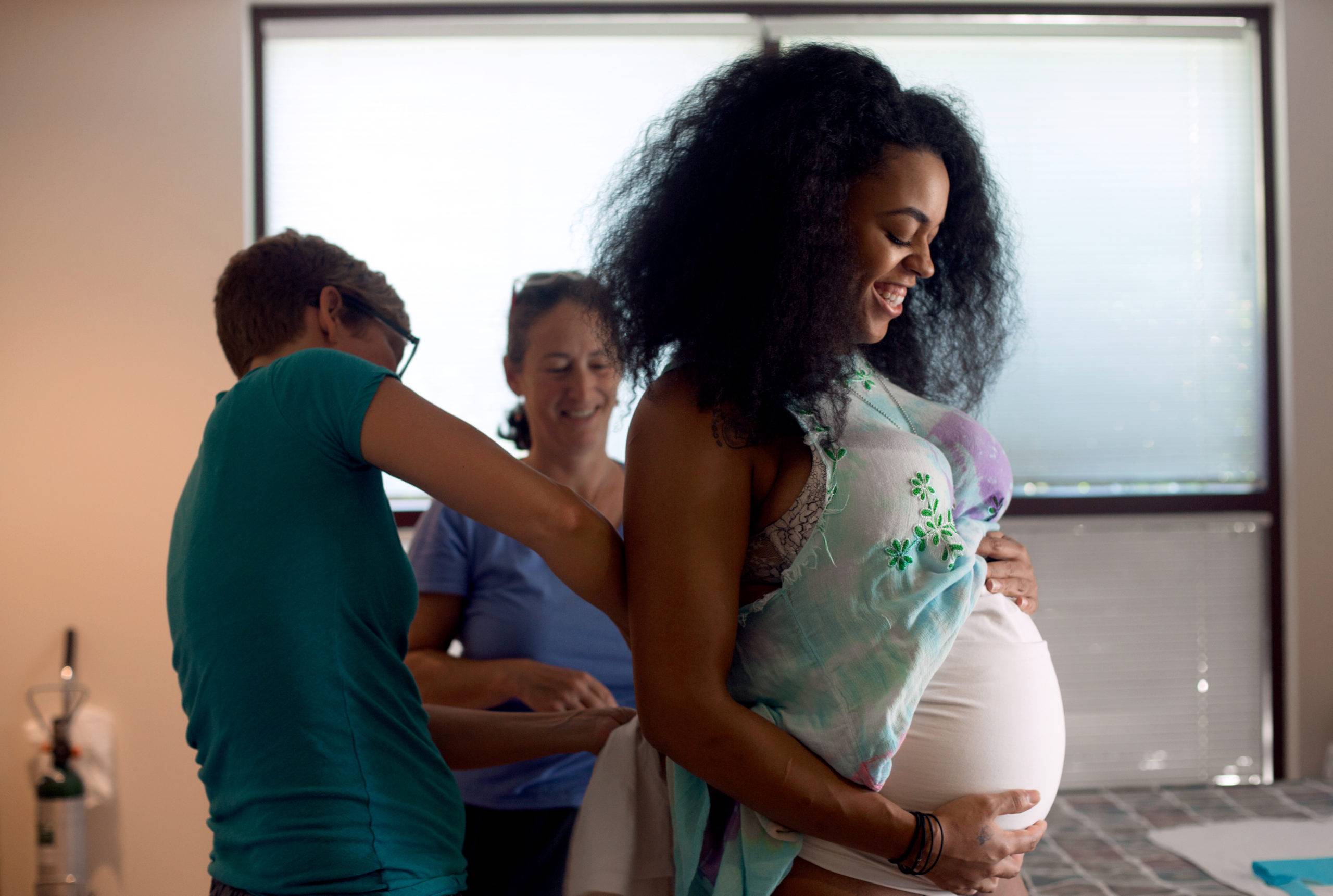
    We also use this time to bring greater awareness to the rising maternal mortality rate in the U.S. Approximately 700 women die per year during pregnancy and childbirth, the most of any developed country, leaving hundreds of newborns to navigate life without the love and care of their biological mother. 

    Black families face this harsh reality three times more often than white families. The Black population’s infant mortality rate is also more than double the mortality rate for white newborns. Midwives have been fighting these battles for many years as they care for women in underserved areas to improve access to quality maternity care.

    Several factors contribute to these troubling statistics. As COVID-19 has continued to spread across our country, the racial and ethnic disparities in health care have become even more glaringly apparent. The CDC reported over the summer that Black and Native Americans are five times more likely to be hospitalized than non-Hispanic white persons during a COVID-19 episode.

    There is no evidence that people of color have any biological factors that make them more susceptible to disease. According to the CDC, “Longstanding systemic health and social inequities have put some members of racial and ethnic minority groups at increased risk of getting COVID-19 or experiencing severe illness, regardless of age.”  

    We see the same health disparities caused by systemic racism in many health indicators in the U.S. Racism is a double-edged sword that not only affects a person’s health, but also their ability to receive quality health care. Daily racial discrimination has been linked to underlying conditions and can increase the risk of severe illness. Crowded living conditions, lack of health insurance and financial challenges are obstacles to health in some Black communities. 

    My colleague Dr. Heather Clarke and I discussed this topic during Frontier Nursing University’s recent National Midwifery Week virtual event. As Dr. Clarke shared, racism is a constant, persistent toxic stress that weathers the human body. With decreased public services, poor schools, food deserts and low paying jobs, some Black families may have fewer protective factors to shield them from the effects of stress. Dr. Clarke also noted that stress could be transmitted three to four generations forward through a pregnant mother.  

    At Frontier Nursing University, we teach that good family health begins with caring for the mother. We educate Certified Nurse-Midwives (CNMs), who are primary health care providers to women of all ages throughout their lives. CNMs focus on gynecologic and family planning services, as well as preconception, pregnancy, childbirth, postpartum and newborn care. They also provide primary care, such as conducting annual exams, writing prescriptions and offering basic nutrition counseling.

    According to the WHO, the world needs nine million more nurses and midwives to achieve universal health coverage by 2030. Recognizing this need, we began offering a distance education program in 1989 to educate nurse-midwives and nurse practitioners in their home communities. Most of our graduates continue to serve in their home communities after completing the program. 

    Students are on campus for a three-day orientation before completing online courses and then again for a brief five-day session to prepare for their clinical experience. In 2021, we will open a new, larger campus in Versailles, Ky., allowing more nurses to advance their careers with masters and doctoral degrees. We reach students across the country who work in rural and underserved areas through our distance education model. While they complete their coursework at home, they have access to a much more extensive network through FNU. 

    We also strongly support the need to increase diversity within the nursing and nurse-midwifery professions because patients are more receptive to care from a health provider who understands their culture and socioeconomic background. Our graduates serve people of all races and cultures, and our student of color population has increased from 9 to 24 percent over the past 10 years. It is imperative that our students, faculty and staff have cultural awareness and competency to help overcome racial disparities in health care. 

    Many of us can grasp, empathize and even identify with the constant and persistent stress families face when a loved one is sick. Our hope is a renewed focus on social injustices will allow people to open their hearts in the same way when it comes to racism. 

    Many mothers face unseen challenges as they bravely welcome new lives into the world with joy and hope. Nurse-midwives do their best to affect change by listening, respecting and assessing relationships, support systems, parenting styles and more. From social workers to churches to health departments, we know it takes a village to address stresses and create strong support systems. 

    COVID-19 has emphasized the importance of community for all of us. While tragic, let’s allow the universal nature of a global pandemic to help us see things in a new light and bring us together to address racial disparities in health and maternity care. This is the year of the nurse and the midwife, in more ways than one. There is no better time than now.  


    Dr. Susan Stone, President, Frontier Nursing University

  • FNU Celebrates 50 Years of The Family Nurse Practitioner Program

    FNU Celebrates 50 Years of The Family Nurse Practitioner Program

    Family Nurse Practitioners (FNP) play a vital role in today’s American healthcare system, but that wasn’t always the case. Just over 50 years ago, no educators in the United States offered an FNP program, leaving a gap for families desiring comprehensive primary care. In the late 1960s, Frontier Graduate School of Midwifery, now known as Frontier Nursing University (FNU), recognized this need and began providing a broader-based education for nurses. Frontier soon offered the nation’s first FNP program in 1970, releasing the first family nurse practitioners out into the field.

    In 1999, Frontier enrolled its first FNP class under today’s distance education model. This new model has been in place for over 20 years because it has the advantage of allowing students to complete the program from their home communities. Today, Frontier is proud to have helped over 2,600 FNP graduates meet their goals of providing quality care to families in their communities. With a long history of compassionate, visionary healthcare, it is no surprise that Frontier continues to draw in dedicated students and produce top-of-the-line nurse practitioners 50 years into the program.

    Although FNU has expanded and introduced a range of graduate nursing degrees and specialties since 1970, they have always considered their rich foundation of reaching underserved and rural communities as they move forward. Today, Frontier is proud to have graduates providing care in all 50 states and dozens of countries. While there have been many innovations to programming throughout the years, FNU has always centered around the Culture of Caring that rests at the heart of the university.
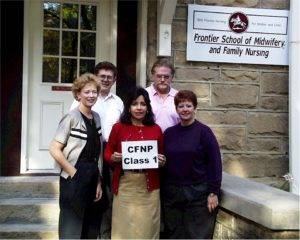
    Through their Culture of Caring, FNU emphasizes professionalism, inclusivity, respect, positive communication, and mutual support. In combination, these core values lead to an incredible sense of community that gives students a life-long support system. Many FNP students find themselves returning to FNU as educators to build on the system that brought them an in-depth knowledge of healthcare and humanity. 

    “I returned to FNU to teach because I was an FNU student and fell in love with the school. I love the passion for education in this environment,” said Dr. Amber Littlefield, DNP, FNP-C.

    Dr. Joanne Keefe, DNP, MPH, FNP-C, also returned to Frontier after graduating.

    “I wanted to teach at FNU after attending it myself for my FNP and DNP degrees,” said Dr. Keefe. “At FNU, instructors teach nursing how I always thought it should be taught, using a model where students are the focus. Administration, faculty and staff support them as they become competent providers. I wanted to be part of spreading and growing that.” 

    Because FNU invests in educating strong nurse practitioners and nurse-midwives, the majority of its instructors still actively practice in their nursing specialties in addition to teaching. FNU instructors understand the challenges students face and remain available to answer questions and provide support throughout their nursing journey. When a student enrolls in FNU’s FNP program, they are joining a team of students, educators, staff and faculty who are dedicated to improving the lives of those for whom they care throughout their lifetimes.

    It is a true honor to celebrate 50 years of this impactful program whose students and alumni continue to make a difference. Although Frontier has gone through many transformations since 1970, high-caliber programming continues to draw in and build leaders with a passion for reaching their communities through quality family care. With a history of compassion, trail-blazing programs and foundational support, there is little doubt that FNU will continue to pioneer healthcare, break educational barriers and celebrate many more anniversaries in its future.
    To learn more about the history of FNU and Mrs. Breckinridge, visit our history page. For more information on coursework, deadlines and the application processes for the FNP program, click here.

  • The Value of Obtaining your DNP at Frontier Nursing University

    The Value of Obtaining your DNP at Frontier Nursing University

    Twelve years ago, Frontier Nursing University (FNU) dedicated itself to providing yet another outstanding educational program, Doctor of Nursing Practice (DNP). The DNP is the highest degree available for a practicing clinical nurse. It was designed to prepare registered nurses to take their clinical expertise, leadership skills, and nursing career to the next level.
    At FNU, the DNP curriculum provides education in evidence-based practice, quality improvement and systems leadership, building on the knowledge acquired during a student’s master’s studies. The DNP program prepares nurses to use their knowledge and clinical expertise to impact the health care of the individual, the community, and the nation. 

    FNU offers two paths to the DNP degree. One is a Post-Master’s DNP for those who are already certified as nurse-midwives or nurse practitioners and is 30 credit hours. Those who complete a Post-Graduate Certificate at FNU may continue into this program. The second path is for those who enroll in FNU’s Master of Science in Nursing (MSN) program and choose to continue working towards their DNP. 

    We recently had the honor of sitting down with the current DNP program director, Dr. Jane Houston, who answered a few questions on what makes this program so exceptional.

    Why do you think it is crucial for those with an MSN practicing as a certified nurse-midwife or nurse practitioner to consider getting their DNP?

    With an FNU DNP degree, you will gain the knowledge and education to work within healthcare teams to effectively problem solve patient quality care issues. You will become more employable, and you will work more effectively within your specialty as a clinician leader. Considered the gold standard among nurse practitioner organizations, the DNP degree produces clinical leaders who can serve at the highest level of our professions.

    What sets FNU’s DNP program apart from other DNP programs?

    We are the ONLY nursing university program that has embedded the Institute for Healthcare Improvement’s Quality Improvement process into our DNP program. See IHI.org. We have created a comprehensive doctoral plan of study with a tailored curriculum to meet the DNP Essentials, including didactic and clinical courses taught by expert faculty and supported by FNU staff. Review the DNP Essentials to examine how our program has threaded these throughout our plans of study.

    What is the Quality Improvement Process that FNU’s DNP students follow, and how does it add value to their future work?

    Check out IHI.org and the Digital Depot on the FNU Portal (an online repository that is searchable for all our previous students’ initiatives) to see Quality Improvement changes in action. During the program, you will meet individually with the expert DNP clinical faculty to plan your quality improvement initiatives in detail before you start your clinical project courses. Once you have completed the program, you will examine clinical issues with a new lens that will help you problem-solve in your healthcare setting, with your colleagues. You will become a nurse practitioner or midwifery leader in quality improvement.

    How does the DNP help students make more significant impacts on the patients they are serving in their home communities?

    Once you are enrolled, you will learn through the DNP didactic and clinical courses how the best clinical evidence can be translated into action through your quality improvement initiatives. You will start to analyze the clinical gaps in care in your home community and learn how to problem-solve and make improvements in patient care. Following that, you will have all the tools to be a more effective leader in your chosen profession.

    Where can I find out more information on the admissions process for FNU students?

    We have set up detailed web pages on the FNU website that will walk you through the application process step-by-step. These pages hold information on admissions, discussions regarding clinical projects, plans of study, and more; get started here. Or, apply for the DNP companion program here

    We hope you will consider our immersive DNP program as you seek to expand your nursing career. To learn more about this exciting opportunity, visit FNU’s DNP page and follow the blog to see some of the fantastic work by DNP graduates.

  • COVID-19 Frontlines: FNU Alumni Steven Benso Reaches Out with Healthcare and Information During COVID-19

    COVID-19 Frontlines: FNU Alumni Steven Benso Reaches Out with Healthcare and Information During COVID-19

    The Frontier community is proud to have students and alumni serving on the front lines of the COVID-19 pandemic. Throughout the next few weeks, we are committed to sharing their stories in order to provide insight, hope and encouragement. Thank you to all the health care workers who are risking their own well-being daily to serve our nation. Click here to read more stories of courage and dedication.
    Frontier Nursing University alumni Steven Benso works as a family nurse practitioner at Allegheny Health Network (AHN) in Pittsburgh, Pa. Benso’s office within the Health Network is the headquarters for pilot programs focused on community outreach. In response to COVID-19, AHN’s newest program sends a mobile unit to underserved communities throughout the city, and Benso has been along for the ride. 

    In more typical times, Benso provides primary and urgent care through health exams and directs patients on best health practices. When asked to serve in the new mobile unit, he quickly dove into the opportunity to provide outreach and healthcare education to his community. 

    Through the outreach program, the mobile units drive to underserved neighborhoods surrounding Pittsburgh to better assess the impact of COVID-19 in these areas. While there, the healthcare workers provide swab testing and connect individuals and families with local personal care providers (PCP). The AHN team also checks in to see if anyone is struggling to feed themselves or their families or would benefit from speaking with a financial support person. 

    Benso also participates in seven drive-through testing sites provided by AHN throughout the Pittsburgh area. Additionally, Benso’s group provides telehealth services to the elderly and others who may be at a higher risk for COVID-19 complications.

    As COVID-19 spread, AHN quickly implemented further health precautions to keep their staff and patients healthy.

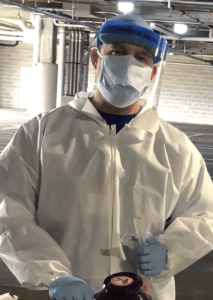
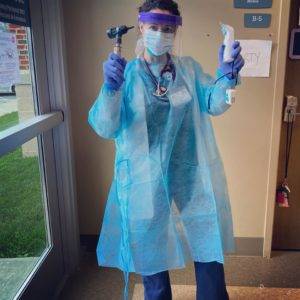
    “At a minimum, we wear facemasks around our co-workers no matter what,” Benso said. “When we see patients, we also put on a face shield. If we go into a room with a suspected COVID patient or are going to be swabbing at our drive-through or mobile van, we wear N95 masks, face shields, and gowns.” 

    As a nurse practitioner, Benso is used to wearing PPE around patients and was prepared for the additional precautions that came with a pandemic. However, being in the medical field during the crisis has dictated changes in his personal life that have been more difficult.

    “My wife is currently pregnant, so to keep her and the baby safe, along with our three other children, I often wear a mask at home,” Benso said. “Additionally, we have avoided contact with all people socially aside from my in-laws who quarantine for two weeks before visiting.”  

    Although the pandemic has had huge effects on all aspects of Benso’s life, he says he still loves his career choice, and his sacrifices are all just part of the job. 

    “Being a provider during a pandemic carries similar responsibilities, but more intense and purposeful commitment. It is not enough to want to care for the community and the world and then to go home and live recklessly without a mask or traveling to hot spots on vacation. I try to carry a burden for the community, even for those who are not doing what they are supposed to,” Benso said. 

    The rise in misinformation during the pandemic has been a constant source of frustration for Benso, but he continues to do his best each day to turn the narrative in the right direction.

    “Medical literacy is very poor in this country. When that is paired with misinformation and political turmoil, we, unfortunately, have a lot of people hesitant to follow basic healthcare precautions,” Benso said. “So many people are simply misinformed. I work to change that, using every opportunity I have with patients to educate them on the realities of COVID.” 

    As the pandemic continues to rage, another aspect of care that Benso continues to talk to his patients about is mental health, a priority that he realized while studying at FNU. 

    “Frontier has always been a supportive program with instructors who are sympathetic and empathetic to their patients. I truly believe my social responsibility and empathy were enhanced at Frontier University,” Benso said. “With Frontier, I continue to be surrounded by selfless, caring individuals around the country. Serving next to them is the highest honor. Although working during COVID-19 has its challenges, my career as a nurse practitioner could not be more fulfilling. I am so grateful that I made the choice to venture into healthcare and that I chose Frontier as my guide.”

  • Jean Owens Donates $55,000 to FNU Student Emergency Fund

    Jean Owens Donates $55,000 to FNU Student Emergency Fund

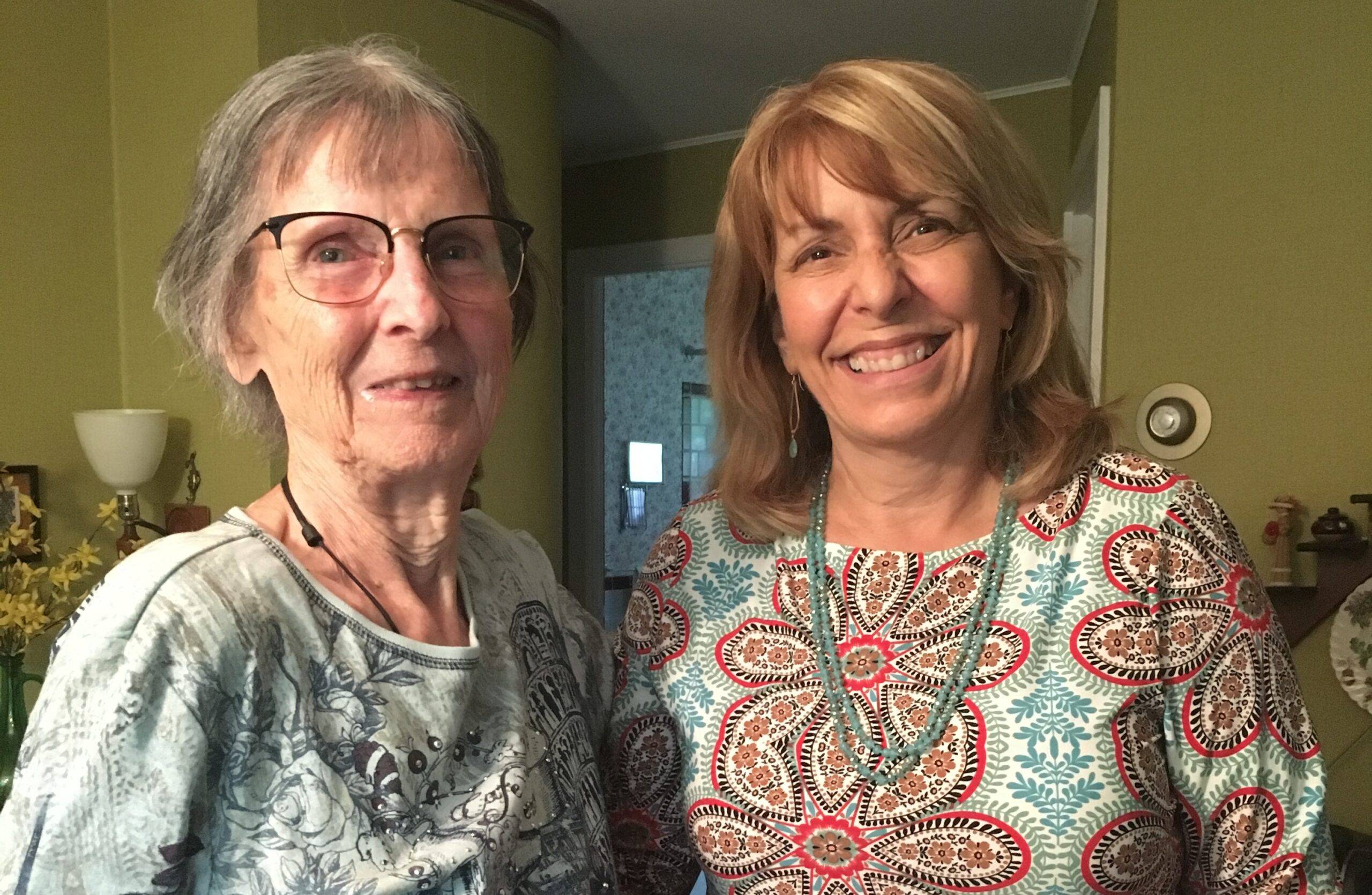
    Ms. Jean Owens (left) Dr. Susan Stone (right)

    Ms. Jean Owens has been a dedicated supporter of FNU for more than 30 years, regularly giving to the annual fund. This spring, as the COVID-19 Pandemic took hold of the country, she was moved to make her first donation to FNU’s student emergency fund.

    Now retired, Ms. Owens spent her career as a public servant in municipal government and water safety analysis. Her mother taught her the value of a dollar and not spending frivolously. She prefers, instead, to help others with her generosity and has demonstrated her appreciation for the mission and vision of FNU and its students.

    “I appreciate what Frontier does and I am happy to support them,” Ms. Owens said. “I always wish them well in their work.”

    Her gift of $55,000 to the student emergency fund supports FNU students in times of need caused by disasters, illnesses, or other extreme circumstances, enabling them to continue their studies. Her impact on these students is immeasurable, as is their impact on our nation’s healthcare system.

    “Jean Owens has been a tremendous friend and supporter of Frontier for so many years,” FNU President Dr. Susan Stone said. “This donation to the student emergency fund is so impactful for students during their times of urgent, unforeseen need. It is a gift befitting of her amazing generosity and caring for others.”

  • COVID-19 Frontlines: FNU Alumni Korah Schwab Caring for Immigrant Communities During COVID-19

    COVID-19 Frontlines: FNU Alumni Korah Schwab Caring for Immigrant Communities During COVID-19

    Korah Schwab graduated from Frontier Nursing University’s (FNU) Family Nurse Practitioner (FNP) Program in May of 2019, unaware that the world would soon enter a pandemic. Shortly after finishing her program, Schwab was offered a position at Blue Ridge Community Health Center in Hendersonville, N.C., where she began her FNP career. However, as COVID started to hit the nation, Hendersonville, a town consisting of many immigrant and retirement communities, quickly became a COVID-19 hotspot. 

    Blue Ridge Health was originally opened by a nurse practitioner as the nation’s first migrant health center. Hendersonville is primarily farm country, known for its apple orchards, resulting in a high migrant population. Blue Ridge is an uninsured clinic that accepts patients with or without health insurance; thus, they continue to care for the majority of the migrants in the area. Because many migrants find themselves working in positions without social distancing or paid sick time, these populations have been struck disproportionately hard by the virus. 

    “The beginning of this year was definitely a challenge. I was a new nurse-practitioner trying to build my clinical foundation among a growing pandemic,” Schwab said. “At first, I thought, ‘I didn’t sign up for this,’ but with a little reflection, I realized this is exactly what I signed up for. I became an FNP to help those in need, and right now, helping our country face this virus is the best way to do that.”

    Prior to COVID-19, Schwab’s work was split between the main health center and clinics Blue Ridge had set up in schools across the region. Her second role was shut down when schools in Hendersonville closed due to the pandemic. To continue supporting their community, Blue Ridge organized the school clinic staff to form a COVID-19 response team. In Schwab’s new role, she is on the front lines of COVID-19, providing walk-in screening and testing.

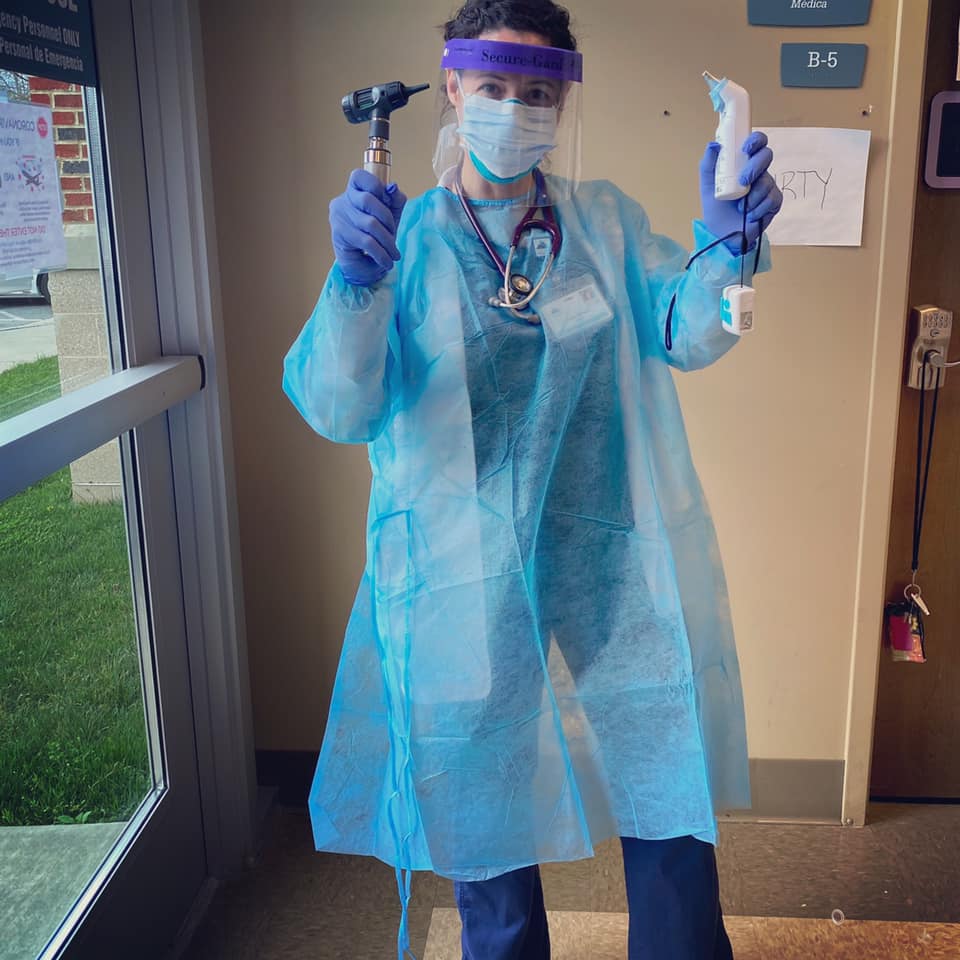
    “Luckily, we have been well supplied with PPE and were able to quickly build a solid training program, so our COVID efforts rolled out pretty smoothly,” Schwab said. “We created a COVID triage in our parking lot where we screen all of our patients at the door. If someone is exhibiting COVID symptoms, we have the capability to see them outside. Because of our early efforts, we have probably been one of the most testing accessible facilities in Western North Carolina.”

    Blue Ridge has also implemented telehealth appointments, which have been especially helpful to Hendersenville’s elderly population. Many of Schwab’s colleagues have also visited migrant farms and factories to conduct testing and contact tracing. 

    “Working with and for the whole population is incredibly important to me,” Schwab said. “I did a rotation at Blue Ridge during my clinical practicum with FNU, and immediately liked it. It has a mission very in-line with Frontier’s, which coincidentally is a mission I have been familiar with for most of my life. My mother used a nurse-midwife for all of her pregnancies, and because of that, I actually wrote a research paper on Mary Breckinridge when I was in middle school. I have always found her story extremely inspiring.”

    Schwab works 8-12 hour days seeing anywhere between 20 and 30 patients of all ages. She says that she loves her job and is grateful to have the opportunity to affect so many lives. 

    “At Blue Ridge, we help underserved communities who often wouldn’t have access to healthcare without our clinic. I was led to healthcare through Mary Breckinridge’s story, and this is exactly the kind of work I want to be doing, especially during a pandemic,” Schwab said.

  • FNU Spotlight: The Remarkable Friendship of Dr. Linda Cole, DNP, CNM, and Lisa Ross, DNP, CNM

    FNU Spotlight: The Remarkable Friendship of Dr. Linda Cole, DNP, CNM, and Lisa Ross, DNP, CNM

    In 1994, Dr. Linda Cole began her career as a nurse-midwife at the Maternity Center of East Tennessee. During Dr. Cole’s time at the maternity center, it received a new name to honor an exceptional nurse-midwife who had worked at the facility, had served as a mentor to Linda, and the Maternity Center of East Tennessee became the Lisa Ross Birth and Women’s Center in 2000.

    Seven years after the birth center renaming, Dr. Cole found herself on the American Association of Birth Centers (AABC) board. Coincidently, the AABC offered a scholarship in Lisa Ross’s honor that allowed a student or new nurse-midwife to attend the group’s annual conference. The young nurse-midwife who won that scholarship also happened to be named Lisa Ross. 

    “Here I was at this amazing conference, and my name tag said ‘Lisa Ross Scholarship Winner: Lisa Ross,’” Ross said. “Everyone kept doing a double-take, and multiple people took me aside to introduce me to Linda since she had been the director of the Lisa Ross Birth Center.” 

    That was to be the end of a string of fun coincidences – or so they thought.

    Fast forward to 2018; the scholarship winner chose to expand her healthcare education by enrolling at Frontier Nursing University (FNU) for her Doctor of Nursing Practice (DNP). By that time, Dr. Cole had also earned her DNP at FNU and returned to work at the University as the course coordinator for PC-713: Principles in Independent Practice. While Ross was attending her Frontier Bound orientation session, the two met once again. 

    “I had no idea that Dr. Cole would be there, but as we had previously met, I went up to her and asked if she remembered me,” Ross said. “She replied with, ‘of course I remember you!’ And started hugging me before I could even finish the sentence.” 

    As luck would have it, in Ross’ first semester at FNU, she inadvertently found herself in Dr. Cole’s class. 

    After the extraordinary meetings, Ross hoped that she would get to know Dr. Cole better by being in the PC-713 course. However, as one of the larger courses offered by FNU, they had little opportunity to talk on a personal level, so Ross reached out via an email that read:

    I’m sorry that we’re not in touch more during this class. Today I was thinking that if we were in the same building and I passed you in the hallway, I would tell you this:

    While I was working on my spreadsheet for the touchstone project, I kept a video with you talking playing in the background. I wasn’t listening to what you were saying, but the sound of your voice kept me calm and confident. I was getting anxious earlier. Thanks for being my midwife.” 

    Dr. Cole was flattered and responded to Ross.

    “Just because we aren’t in a brick and mortar school doesn’t mean we can’t meet up in the hallway,” said Cole. 

    The two began meeting every few weeks over video chat for sessions that they jokingly call ‘hallway meetings.’

    “I guess you would call it a mentor-mentee relationship,” Dr. Cole said, “It has been very rewarding, and we have become true friends.”

    “Dr. Cole’s wisdom had been a huge support in getting through my DNP,” Ross said, “but we have also bonded over interests, family, and whatever else comes up- it’s a personal relationship that reflects FNU’s Culture of Caring.”

    As a final icing on the cake, following the Lisa Ross Birth Center’s recent closure, Dr. Cole received some of the facility’s furniture. Dr. Cole is relocating to Alaska and will be packing lightly, so, to take the story full-circle, Ross will soon proudly be displaying furniture from the Lisa Ross Birth Center in her home. 

    “I started thinking about our whole relationship not too long ago, and I said to Lisa, this story is just too neat not to share with our FNU community,” Dr. Cole said. 

    “Hopefully, our story will encourage other students and instructors to reach out and build similar relationships,” said Ross.

    FNU prides itself on a Culture of Caring built on respect and compassion for students, instructors, and patients. If you are interested in being part of a school that puts community first, visit FNU’s admissions page.

Request Information Apply Give Now