
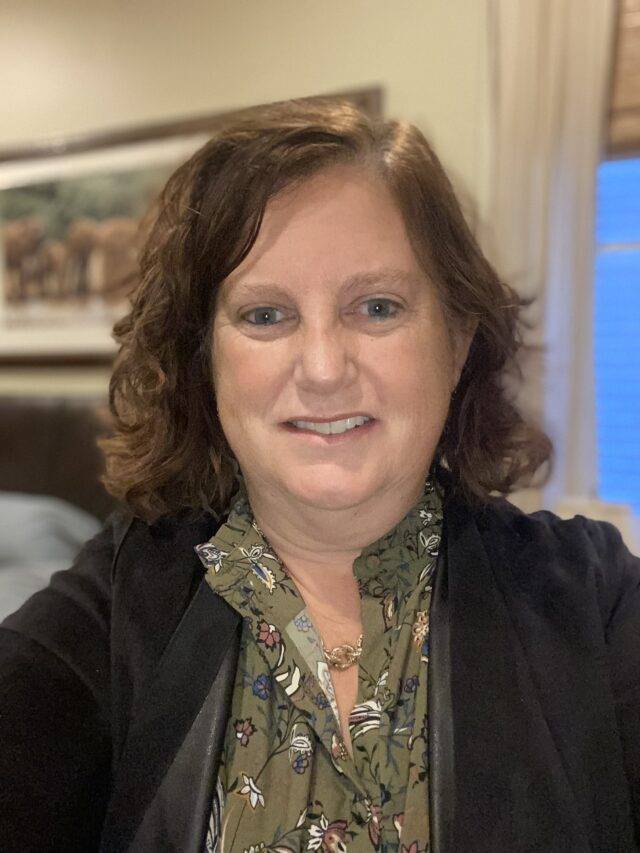
Cathy Schieffelin
Frontier Nursing University’s Courier Program Public Health Internship leaves a lifelong impression on its participants, who spend the summer learning about public health firsthand. For Cathy Schieffelin, like so many others, it was an eye-opening and life-changing experience.
After graduating with a degree in communications from Denison College, Schieffelin served as a Courier in 1990 when the program was operated in Hyden, Kentucky.
“My brief time in Hyden left an impact,” said Schieffelin, who hails from Shaker Heights, Ohio, and now lives in New Orleans, Louisiana. “Even over 30 years later, I think a lot about the place and people I came to know and work with. Wendover is never far from my mind.”
Neither is public health. She went on to serve in East Africa as a member of the Peace Corps (1994-95) and earned a Master of Arts from the Tulane University School of Public Health and Tropical Medicine in 1996. She also holds a Master of Public Health degree from the Tulane University School of Medicine. Her career stops have included jobs in public health and wildlife education. Most recently, her communications background has led her to become a self-employed author. Among her works are stories based on her unique and varied experiences as a Courier.
Schieffelin graciously shared the following short story, “Babies in Saddlebags,” inspired by her time as a Courier. “I got to witness a midwifery delivery,” Schieffelin said. “I was permitted to photograph the young mother’s delivery and to write about the role of midwives in the community. It’s always stuck with me how Kim McQuoid, one of the finest midwives I’ver ever known, could walk into a room with a panicked and distressed young mother and, with a look, soothing voice and a brief touch, change the molecules in the air. Fear and pain were replaced with calm and focus. I was astonished and grateful to be a part of that experience and to be able to record it.”
Saddlebags and Babies: Life as a Midwife
by Cathy Schieffelin
Author’s note: This story is inspired by the work of those early midwives and Mary Breckinridge
I’m up to my elbows in dirt, digging roots and tubers, ginseng, snakeroot, cohosh, all manner of medicinal herbs. Homebase is a rustic, log cabin nestled deep in the Appalachians of eastern Kentucky, just off what will be known as the Daniel Boone Parkway. My partner is a sure-footed copper-colored steed I call Penny. We spend our days and nights traversing remote mountain hollers to treat the sick, the elderly, children, and women in labor. I work for the Frontier Nursing Service based in Wendover, Kentucky.
I’m decked out in blue twill jods with matching vest, mud on my boots and my horse lathered from the exertion of climbing steep mountain passes. I collect herbs and spend time with elderly nanas who teach me old timey recipes for salves and poultices. Despite my nurse’s training and access to modern medicine, it’s the native plant knowledge that keeps people coming back. Blue cohosh’s good for bringing a baby on. Sweetflag or bitter pepper root’s good for clearing the throat and treating bloat. Whitetube stargrass (aka white colicroot) helps colic and rheumatism. I know these plants intimately: I’ve learned when to harvest and the proper drying process. I know salves for nettle stings or bug bites. I treat burns, the janders, and insomnia. My patients are anywhere between the cradle and the grave.
One evening I find Thomas, a young man from Camp Creek, at my door. He tells me Hazel Begley of Hurricane is in labor. I know Hazel. She’s expecting twins. She lost her first baby to the pressure and I worry twins may take it out of her. I load my saddlebags and tack up Penny. Her copper coat gleams like a shiny coin in the evening light. People in these parts call this time ‘the edge of dark’. Yes, it is. I mount up and ride into the setting sun. Crossing the Middlefork, water’s low, lapping Penny’s legs. Last time we had to swim this stretch as heavy rains flooded the riverbank. Penny’s ears prick forward, nickering as we trot across. We’re both relieved not to be swimming.
Hazel and Wyatt’s homestead sits in a small clearing around the bend. I smell woodsmoke before seeing plumes from their chimney guiding me in. Wyatt greets me in the yard, deep lines etched into his brow. He’s a man of few words. Hazel’s moans reach my ears, low and full throated. He takes Penny and nods for me to go inside. I remember his devastation when they lost their last one. I find Hazel inside hunched over a rocking chair, using the arm of the chair to rest her enormous belly. That’s the only enormous thing on her. She’s a mite – ropy arms and stick legs, poking out her damp cotton gown. I see where she lost her water and is trying to clean up the mess with a mop.
“Hazel, leave that. Let me take a look at ya.” I take her arm and lead her to the cornhusk-filled mattress. Her body shines, perspiration dripping from her pale face. Another contraction seizes her. Her fingers clench mine and I encourage her to breathe in, slow and steady, then release the exhale in short puffs. She tries to copy but struggles with the pain. I wet a clean cloth to wipe her face as she lays down for me after the contraction’s subsided.
It’s a long night. She’s dilated but one of the twins is breech. I manipulate her belly from the outside, while she crouches on all fours on the mattress. She’s a good patient, willing to do what I ask despite her suffering. Wyatt watches from the corner. He coos words of encouragement and I see the love between them in those brief moments when they catch each other’s eye. His terror is palpable. He knows women die doing this. Before I walked in, he pleaded, “Don’t let her die. Can’t live without her.” I squeezed his shoulder and nodded.
Ten hours later in the wee hours of the morning, Hazel gives birth to a boy and girl – Lukas and Lucy. They’re just under six pounds, caterwauling like a litter of puppies. Lukas is lively and ready to suckle. Lucy’s sleepy. They both have their momma’s fair hair and deep blue eyes, at least for now. I see Wyatt’s chin on Lukas and Hazel’s calm expression in Lucy’s face. They look healthy, with all ten toes and good sets of lungs. I spend time sewing up Hazel. She bled heavily but that seems to have been staunched, her color and pressure are improved. She’s weary and allows me to get the babies nursing, while she drifts off.
Wyatt brings me a cup of coffee and sits on the cherry wood stool gazing into the fire. He turns back, tears in his eyes as he watches his exhausted wife sleep, snuggled up. He doesn’t say much aside from thanks and more thanks. I feel his appreciation from the look in his eyes down to the mud he’s tracked in on his boots. I give him instructions for post partum care and helping Hazel get the babies latched on. He’s clumsy in his attempts, but his heart is all in. He cradles Lucy’s head as he guides her mouth to Hazel’s nipple. Bitty Lucy takes a few tries before she gets the hang of it. Lukas seems to have it all figured out and gorges on Hazel’s other side. I stay long enough to be sure Hazel’s bleeding’s stopped, and the twins are eating well and sleeping. Wyatt pays me with a freshly butchered chicken and some ginseng – valuable commodities in this impoverished mountain community. I look forward to a roast chicken dinner later and the ginseng root is worth its weight in gold. I thank him as he leads Penny to me, saddled and ready to go. Sun shines through the trees, a hint of fall in the air as I ride back across the Middlefork toward home.
For more information on Frontier’s Courier Program Public Health Internship Program, click here. Applications for the 2025 program are due by 5 p.m. ET on April 11, 2025. Visit this page on our Portal to apply.




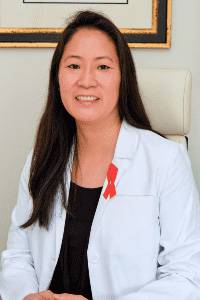 Carrie Belin is an experienced board-certified Family Nurse Practitioner and a graduate of the Johns Hopkins DNP program, Johns Hopkins Bloomberg School of Public Health, Georgetown University School of Nursing, and Johns Hopkins School of Nursing. She has also completed fellowships at Georgetown and the University of California Irvine.
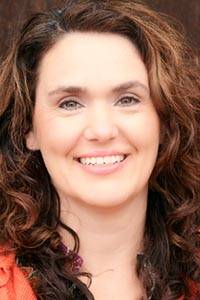 Angie has been a full-scope midwife since 2009. She has experience in various birth settings including home, hospital, and birth centers. She is committed to integrating the midwifery model of care in the US. She completed her master’s degree in nurse-midwifery at Frontier Nursing University (FNU) and her Doctorate at Johns Hopkins University. She currently serves as the midwifery clinical faculty at FNU. Angie is motivated by the desire to improve the quality of healthcare and has led quality improvement projects on skin-to-skin implementation, labor induction, and improving transfer of care practices between hospital and community midwives. In 2017, she created a short film on skin-to-skin called

 Justin C. Daily, BSN, RN, has ten years of experience in nursing. At the start of his nursing career, Justin worked as a floor nurse on the oncology floor at St. Francis. He then spent two years as the Director of Nursing in a small rural Kansas hospital before returning to St. Francis and the oncology unit. He has been in his current position as the Chemo Nurse Educator for the past four years. He earned an Associate in Nurse from Hutchinson Community College and a Bachelor of Science in Nursing from Bethel College.
 Brandy Jackson serves as the Director of Undergraduate Nursing Programs and Assistant Educator at Wichita State University and Co-Director of Access in Nursing. Brandy is a seasoned educator with over 15 years of experience. Before entering academia, Brandy served in Hospital-based leadership and Critical Care Staff nurse roles. Brandy is passionate about equity in nursing education with a focus on individuals with disabilities. Her current research interests include accommodations of nursing students with disabilities in clinical learning environments and breaking down barriers for historically unrepresented individuals to enter the nursing profession. Brandy is also actively engaged in Interprofessional Education development, creating IPE opportunities for faculty and students at Wichita State. Brandy is an active member of Wichita Women for Good and Soroptimist, with the goal to empower women and girls. Brandy is a TeamSTEPPS master trainer. She received the DASIY Award for Extraordinary Nursing Faculty in 2019 at Wichita State University.
  Dr. Sabrina Ali Jamal-Eddine is an Arab-disabled queer woman of color with a PhD in Nursing and an interdisciplinary certificate in Disability Ethics from the University of Illinois Chicago (UIC). Dr. Jamal-Eddine’s doctoral research explored spoken word poetry as a form of critical narrative pedagogy to educate nursing students about disability, ableism, and disability justice. Dr. Jamal-Eddine now serves as a Postdoctoral Research Associate in UIC’s Department of Disability and Human Development and serves on the Board of Directors of the National Organization of Nurses with Disabilities (NOND). During her doctoral program, Sabrina served as a Summer Fellow at a residential National Endowment of the Humanities (NEH) Summer Institute at Arizona State University (2023), a summer fellow at Andrew W. Mellon’s National Humanities Without Walls program at University of Michigan (2022), a Summer Research Fellow at UC Berkeley’s Othering & Belonging Institute (2021), and an Illinois Leadership Education in Neurodevelopmental and related Disabilities (LEND) trainee (2019-2020).
 Vanessa Cameron works for Vanderbilt University Medical Center in Nursing Education & Professional Development. She is also attending George Washington University and progressing towards a PhD in Nursing with an emphasis on ableism in nursing. After becoming disabled in April 2021, Vanessa’s worldview and perspective changed, and a recognition of the ableism present within healthcare and within the culture of nursing was apparent. She has been working since that time to provide educational foundations for nurses about disability and ableism, provide support for fellow disabled nursing colleagues, and advocate for the disabled community within healthcare settings to reduce disparities.
 Dr. Lucinda Canty is a certified nurse-midwife, Associate Professor of Nursing, and Director of the Seedworks Health Equity in Nursing Program at the University of Massachusetts Amherst. She earned a bachelor’s degree in nursing from Columbia University, a master’s degree from Yale University, specializing in nurse-midwifery, and a PhD from the University of Connecticut. Dr. Canty has provided reproductive health care for over 29 years. Her research interests include the prevention of maternal mortality and severe maternal morbidity, reducing racial and ethnic health disparities in reproductive health, promoting diversity in nursing, and eliminating racism in nursing and midwifery.
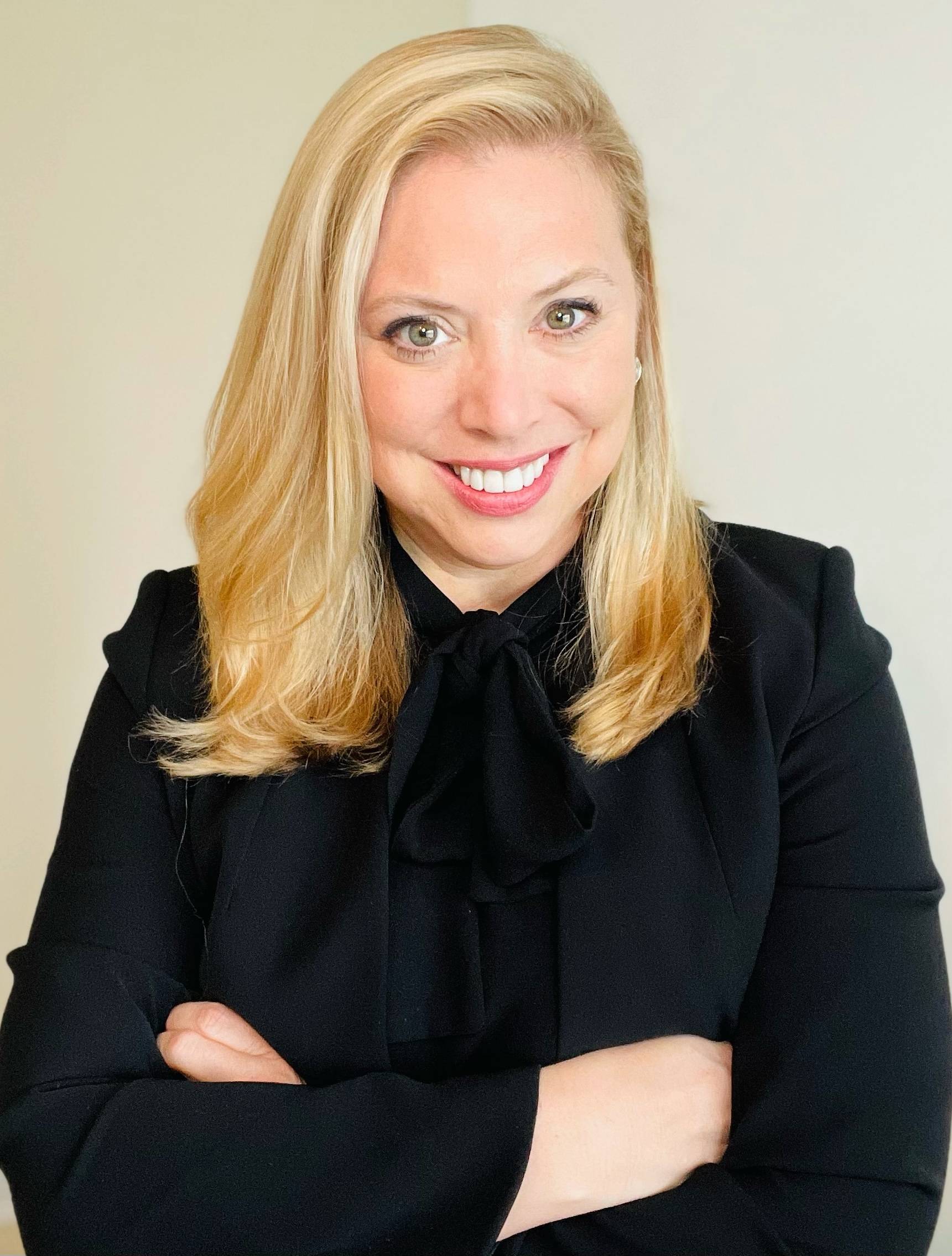 Dr. Lisa Meeks is a distinguished scholar and leader whose unwavering commitment to inclusivity and excellence has significantly influenced the landscape of health professions education and accessibility. She is the founder and executive director of the DocsWithDisabilities Initiative and holds appointments as an Associate Professor in the Departments of Learning Health Sciences and Family Medicine at the University of Michigan.
 Dr. Nikia Grayson, DNP, MSN, MPH, MA, CNM, FNP-C, FACNM (she/her) is a trailblazing force in reproductive justice, blending her expertise as a public health activist, anthropologist, and family nurse-midwife to champion the rights and health of underserved communities. Graduating with distinction from Howard University, Nikia holds a bachelor’s degree in communications and a master’s degree in public health. Her academic journey also led her to the University of Memphis, where she earned a master’s in medical anthropology, and the University of Tennessee, where she achieved both a master’s in nursing and a doctorate in nursing practice. Complementing her extensive education, she completed a post-master’s certificate in midwifery at Frontier Nursing University.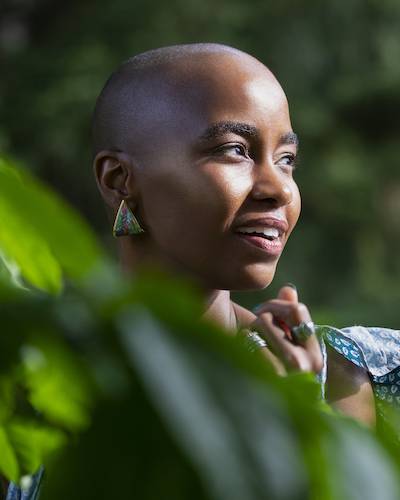
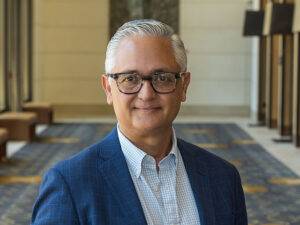
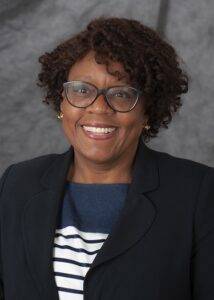
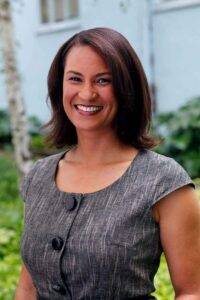

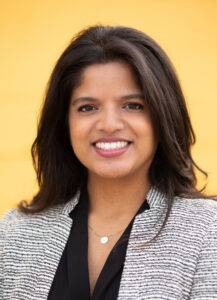

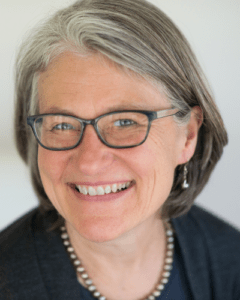
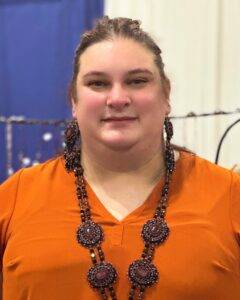
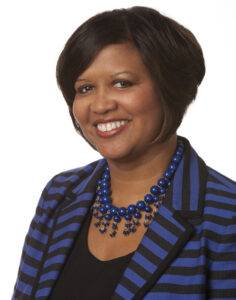 Dr. Tia Brown McNair is the Vice President in the Office of Diversity, Equity, and Student Success and Executive Director for the Truth, Racial Healing, and Transformation (TRHT) Campus Centers at the American Association of Colleges and Universities (AAC&U) in Washington, DC. She oversees both funded projects and AAC&U’s continuing programs on equity, inclusive excellence, high-impact practices, and student success. McNair directs AAC&U’s Summer Institutes on High-Impact Practices and Student Success, and TRHT Campus Centers and serves as the project director for several AAC&U initiatives, including the development of a TRHT-focused campus climate toolkit. She is the lead author of From Equity Talk to Equity Walk: Expanding Practitioner Knowledge for Racial Justice in Higher Education (January 2020) and Becoming a Student-Ready College: A New Culture of Leadership for Student Success (July 2016 and August 2022 Second edition).