
Authored By: Anne Z. Cockerham, PhD, CNM, WHNP-BC, CNE, FACNM, Associate Dean for Teaching Excellence and Innovation
As a lover of historical fiction, it was a privilege to talk recently with Janet Skeslien Charles, bestselling author of Miss Morgan’s Book Brigade. Published in 2024, Miss Morgan’s Book Brigade is a dual-timeline historical fiction novel featuring Mary Breckinridge as a major character in the novel.
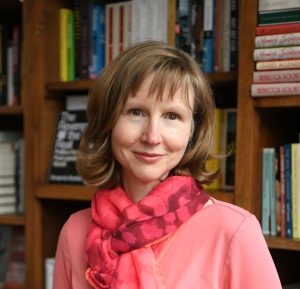

The 1918 portion of the novel is set in post-World War I France and features the work of the American Committee for Devastated France (known as CARD for its French acronym). Philanthropist Anne Morgan hired Jessie “Kit” Carson to establish children’s libraries to help rebuild French villages and morale after the war. Nurses performed other crucial work for CARD, and Mary Breckinridge provided leadership and nursing care to the people CARD served.
Having enjoyed Miss Morgan’s Book Brigade, especially the scenes featuring Mary Breckinridge, I jumped at the chance to ask Janet Skeslien Charles questions about her research and writing processes and more. Here is our conversation, lightly edited for length and clarity.
Anne Z. Cockerham: Thank you so much for taking the time to talk with me.
Janet Skeslien Charles: Thank you for reading the work. Mary Breckinridge is incredible. What she accomplished with the English, French, and Americans was amazing, especially how she brought that knowledge home and created the first comprehensive healthcare system in America.
AZC: I love historical antecedents and the ways that Mary Breckinridge’s experiences in France set her on a course for the rest of her career.
JSC: Yes. There was so much tragedy in her life, losing a husband and children. She could have just worn black for the rest of her life but instead, she dedicated her life to others. It’s inspiring.
AZC: I’m curious about the path that led you to include Mary Breckinridge so prominently in Miss Morgan’s Book Brigade.
JSC: As I did the research for the book, I discovered that she was an incredible person. She wanted to be a nurse, but at a time when her family and society expected her to get married rather than work. Her first husband died of appendicitis and then she divorced her other husband after losing her children. I was amazed at how she was able to pick up the pieces. Many of us would have been devastated, and those losses would have defined us. But she decided instead to help others and make sure that other women would not have the same losses that she experienced.
JSC: Something that is amazing to me about Mary Breckinridge was how important facts were for her. In France after World War I, she weighed the babies. Instead of saying, “I think they’re losing weight,” she had the facts, including babies’ weights over time. She used facts to reassure parents, and I found that inspiring.
AZC: She built on Florence Nightingale’s work as a statistician, didn’t she?
JSC: Yes, in some ways, today we’ve lost sight of the facts and of how important medicine and research are.
AZC: Mary Breckinridge is well-known in some circles and not in others. I’m curious if you have any thoughts about why that might be.
JSC: Women’s history is often set aside. When I watch Peter Jackson’s documentary, They Shall Not Grow Old, and other films about World War I, I’m always disappointed that they don’t feature women. They feature trenches. When we don’t see women in these major war documentaries, we don’t learn about them and it’s like they didn’t exist.
JSC: For the staff of the American Committee for Devastated France (known as CARDs), the work was arduous and dangerous. CARDs received the Croix de Guerre (War Cross) Medal for their courage under fire, working just a few miles from the front. In one instance, the Army asked the CARD chauffeurs to evacuate all villagers, thousands of them, even the ones debilitated by war fatigue. That’s why it’s important to remember women and to restore them to their proper place in history.
AZC: Miss Morgan’s Book Brigade is richly textured with major elements and small details about Mary Breckinridge, despite her CARD time not being as well-documented as her later years. One example of rich detail is “Breckie” as a nickname for Mary Breckinridge. What can you share about that?
JSC: The CARD staff used diminutives and nicknames for each other such as “Kit” for Jessie Carson, after Kit Carson the explorer. When Mary Breckinridge was in France, she was still using her married name of Thompson, so they called her “Thompy.” However, I didn’t want to feature her in the book as Thompy because after leaving France, she petitioned to take back the Breckinridge name rather than be known as Thompson. Breckie was her little boy who passed away and she loved him so much. I came up with this solution to still have a diminutive but not a name that she herself did not want. Those choices are what writing a novel is all about.
AZC: I appreciate how that decision conveys your respect for her.
JSC: Something else I wanted to convey was the friendships the CARD members had with each other, and nicknames were part of that. This is similar to military settings. In many ways, CARD was influenced by the military with their uniforms and protocols. Also, they were really there for each other.
JSC: The CARD experience helped Mary Breckinridge become more sure of herself and come into her own. We can see that in letters in the University of Kentucky collection that discuss how Mary Breckinridge and Jessie Carson dealt with a forward Frenchman. They did it with such grace and were actually worried about hurting his feelings.
AZC: What, if any, challenges did you experience as you applied the historical fiction genre to Mary Breckinridge?
JSC: For nonfiction, sticking to the facts is hard, because sometimes you don’t have all the material that you need. With historical fiction, you can connect the dots or you can create the dots. One area in which I was able to connect the dots was the friendship that developed between Mary Breckinridge and Kit Carson. I found some discussions in Wide Neighborhoods about Kit and then I found a census document that shows Jessie Carson working as a librarian at Wendover.
JSC: It was incredible to spend several years with Mary Breckinridge and to see what kind of person she was. I found that she prioritized putting other people at ease. For example, she went to a fancy Swiss boarding school and spoke French. But instead of communicating something like, “I speak 3 languages; I’m so intelligent,” she said, “I’m sure no girl ever spoke as badly as I did in 3 languages.” She wasn’t boastful even though she came from a wealthy and prominent family.
AZC: One of the aspects of your books that I enjoy is that place is at the heart of what you write about. I’m curious if you have any impressions of the place in which Mary Breckinridge did her later work, eastern Kentucky. If you were to write about eastern Kentucky, how would you address place there?
JSC: What comes to mind is the photo of the nurses on horseback, one of the most iconic photos I’ve ever seen. The terrain and transportation in eastern Kentucky are so different than what the CARD staff experienced in France. In France, they could go from place to place in motorized vehicles, even though the roads were destroyed and the roads damaged the tires.
JSC: By contrast, for the FNS in eastern Kentucky, the terrain was so rough they couldn’t get where they wanted to go by car. If the horse stepped wrong in the rocky terrain, they were in a lot of trouble. That speaks to how brave the women were, to be on horseback and even transport babies on horseback. You can feel the pride, power, and devotion. That kind of land shapes who we are. The FNS nurses were tough. I have so much respect for everyone involved in the FNS.
AZC: During your book tour for Miss Morgan’s Book Brigade, did any discussion about Mary Breckinridge come up from any of the participants?
JSC: People mentioned being impressed that the first comprehensive healthcare system in America started with a woman from Kentucky. On my book tour and doing Zoom talks, I show the stamp of Mary Breckinridge. Few people have their own stamp and it really is a badge of honor.
JSC: When they see the stamp and they see the nurses on horseback, they’re surprised to learn about the history. It’s important for people to know that the mortality rates were lower in Kentucky, where she worked, than the national rates at the time. It’s incredible to think about that rural area thriving, thanks to Mary Breckinridge. We can still learn a lot from her today, about the transformational power of learning internationally and sharing our knowledge.
AZC: Was the juxtaposition of librarians and nurses purposeful in Miss Morgan’s Book Brigade?
JSC: The only character I knew when I first started the book was Jessie Carson. Then to learn about Mary Breckinridge and the impact that she had not only in France, but in the United States, was incredible. That’s what I love about writing and reading, is how much you learn.
JSC: Teachers, nurses, and librarians are feminized professions, and they don’t earn as much as some other professions. But another way to look at it is they’re in charge of what we learn and how we feel. Think about how many lives they change for the better, and that is powerful.
AZC: I want to ask about your latest book, The Parisian Chapter, the third book in the trilogy. What can you tell us about that book?
JSC: It will be published May 5, 2026, but it’s already out as an audiobook, recorded in 11 voices. The book includes Lily from The Paris Library. It’s set in about 1995 so it’s a continuation of the other books but can be read as a standalone. I had been thinking about institutions like Frontier Nursing University and the American Library in Paris. The institutions are what we make them. Many people work together and put their hearts and souls into them so others can enjoy them and learn.
JSC: In addition to The Parisian Chapter coming in May, one of my favorite things is my monthly newsletter where I write about the different CARD staff. I have photos, because the Réunion des Musées Nationaux, the national museum system in France, has amazing photos of the CARD staff but they aren’t easily accessible online. I paid for the right to use about 150 photos on my website. In my newsletter, I focus on a theme like nurses, farming, or librarians, and every month I write something about the CARD staff. I find so much pleasure in writing a short piece because novels take me 10 years, but a newsletter article takes me a couple months.
AZC: Is there anything else we haven’t talked about that you want readers to know about Mary Breckinridge’s story?
JSC: I want people to know about her time in France. She had so many interesting chapters in her life. I’m excited that people who might not be as familiar with Mary Breckinridge’s French chapter will get to know about her work there.
AZC: It’s been a real pleasure to talk with you. Thank you!
This piece was originally published in the Winter 2026 Quarterly Bulletin.



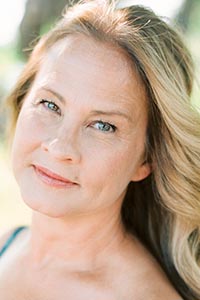
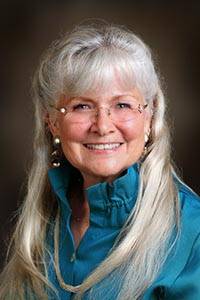
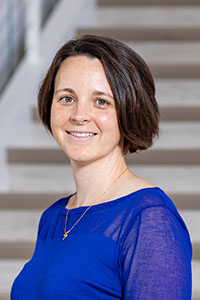
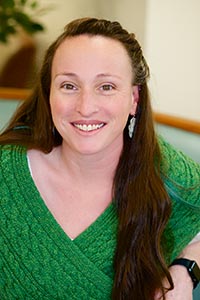
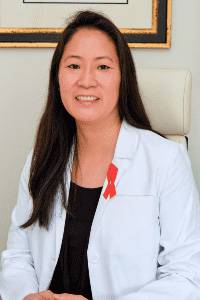 Carrie Belin is an experienced board-certified Family Nurse Practitioner and a graduate of the Johns Hopkins DNP program, Johns Hopkins Bloomberg School of Public Health, Georgetown University School of Nursing, and Johns Hopkins School of Nursing. She has also completed fellowships at Georgetown and the University of California Irvine.
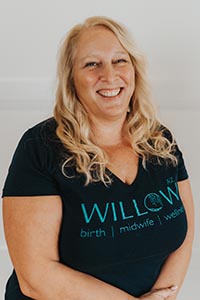
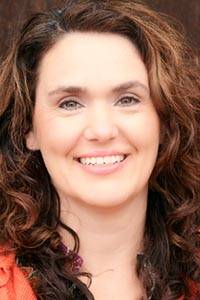 Angie has been a full-scope midwife since 2009. She has experience in various birth settings including home, hospital, and birth centers. She is committed to integrating the midwifery model of care in the US. She completed her master’s degree in nurse-midwifery at Frontier Nursing University (FNU) and her Doctorate at Johns Hopkins University. She currently serves as the midwifery clinical faculty at FNU. Angie is motivated by the desire to improve the quality of healthcare and has led quality improvement projects on skin-to-skin implementation, labor induction, and improving transfer of care practices between hospital and community midwives. In 2017, she created a short film on skin-to-skin called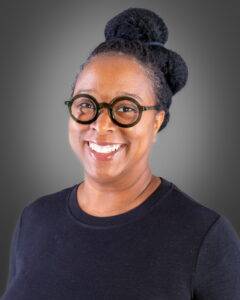

 Justin C. Daily, BSN, RN, has ten years of experience in nursing. At the start of his nursing career, Justin worked as a floor nurse on the oncology floor at St. Francis. He then spent two years as the Director of Nursing in a small rural Kansas hospital before returning to St. Francis and the oncology unit. He has been in his current position as the Chemo Nurse Educator for the past four years. He earned an Associate in Nurse from Hutchinson Community College and a Bachelor of Science in Nursing from Bethel College.
 Brandy Jackson serves as the Director of Undergraduate Nursing Programs and Assistant Educator at Wichita State University and Co-Director of Access in Nursing. Brandy is a seasoned educator with over 15 years of experience. Before entering academia, Brandy served in Hospital-based leadership and Critical Care Staff nurse roles. Brandy is passionate about equity in nursing education with a focus on individuals with disabilities. Her current research interests include accommodations of nursing students with disabilities in clinical learning environments and breaking down barriers for historically unrepresented individuals to enter the nursing profession. Brandy is also actively engaged in Interprofessional Education development, creating IPE opportunities for faculty and students at Wichita State. Brandy is an active member of Wichita Women for Good and Soroptimist, with the goal to empower women and girls. Brandy is a TeamSTEPPS master trainer. She received the DASIY Award for Extraordinary Nursing Faculty in 2019 at Wichita State University.
  Dr. Sabrina Ali Jamal-Eddine is an Arab-disabled queer woman of color with a PhD in Nursing and an interdisciplinary certificate in Disability Ethics from the University of Illinois Chicago (UIC). Dr. Jamal-Eddine’s doctoral research explored spoken word poetry as a form of critical narrative pedagogy to educate nursing students about disability, ableism, and disability justice. Dr. Jamal-Eddine now serves as a Postdoctoral Research Associate in UIC’s Department of Disability and Human Development and serves on the Board of Directors of the National Organization of Nurses with Disabilities (NOND). During her doctoral program, Sabrina served as a Summer Fellow at a residential National Endowment of the Humanities (NEH) Summer Institute at Arizona State University (2023), a summer fellow at Andrew W. Mellon’s National Humanities Without Walls program at University of Michigan (2022), a Summer Research Fellow at UC Berkeley’s Othering & Belonging Institute (2021), and an Illinois Leadership Education in Neurodevelopmental and related Disabilities (LEND) trainee (2019-2020).
 Vanessa Cameron works for Vanderbilt University Medical Center in Nursing Education & Professional Development. She is also attending George Washington University and progressing towards a PhD in Nursing with an emphasis on ableism in nursing. After becoming disabled in April 2021, Vanessa’s worldview and perspective changed, and a recognition of the ableism present within healthcare and within the culture of nursing was apparent. She has been working since that time to provide educational foundations for nurses about disability and ableism, provide support for fellow disabled nursing colleagues, and advocate for the disabled community within healthcare settings to reduce disparities.
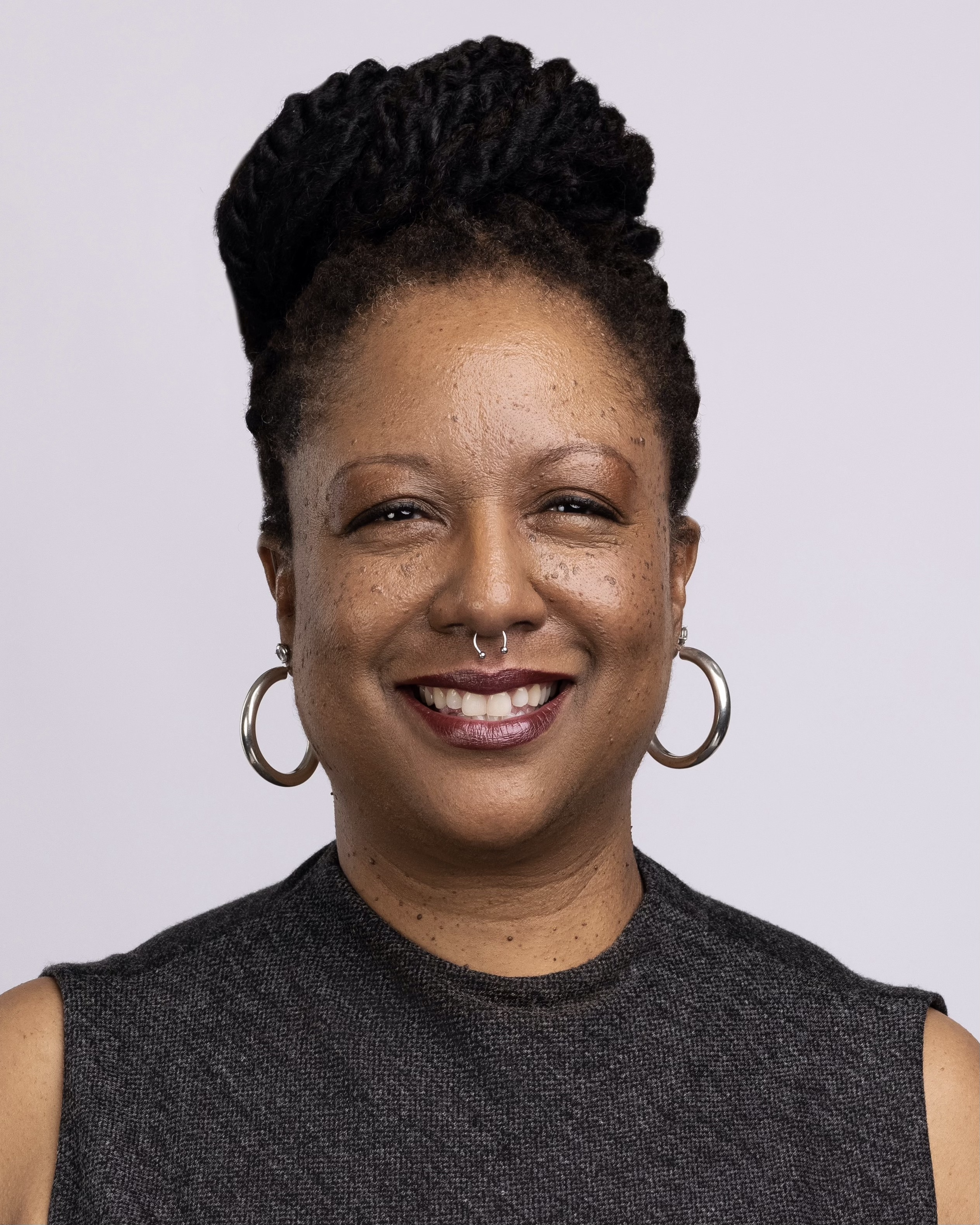 Dr. Lucinda Canty is a certified nurse-midwife, Associate Professor of Nursing, and Director of the Seedworks Health Equity in Nursing Program at the University of Massachusetts Amherst. She earned a bachelor’s degree in nursing from Columbia University, a master’s degree from Yale University, specializing in nurse-midwifery, and a PhD from the University of Connecticut. Dr. Canty has provided reproductive health care for over 29 years. Her research interests include the prevention of maternal mortality and severe maternal morbidity, reducing racial and ethnic health disparities in reproductive health, promoting diversity in nursing, and eliminating racism in nursing and midwifery.
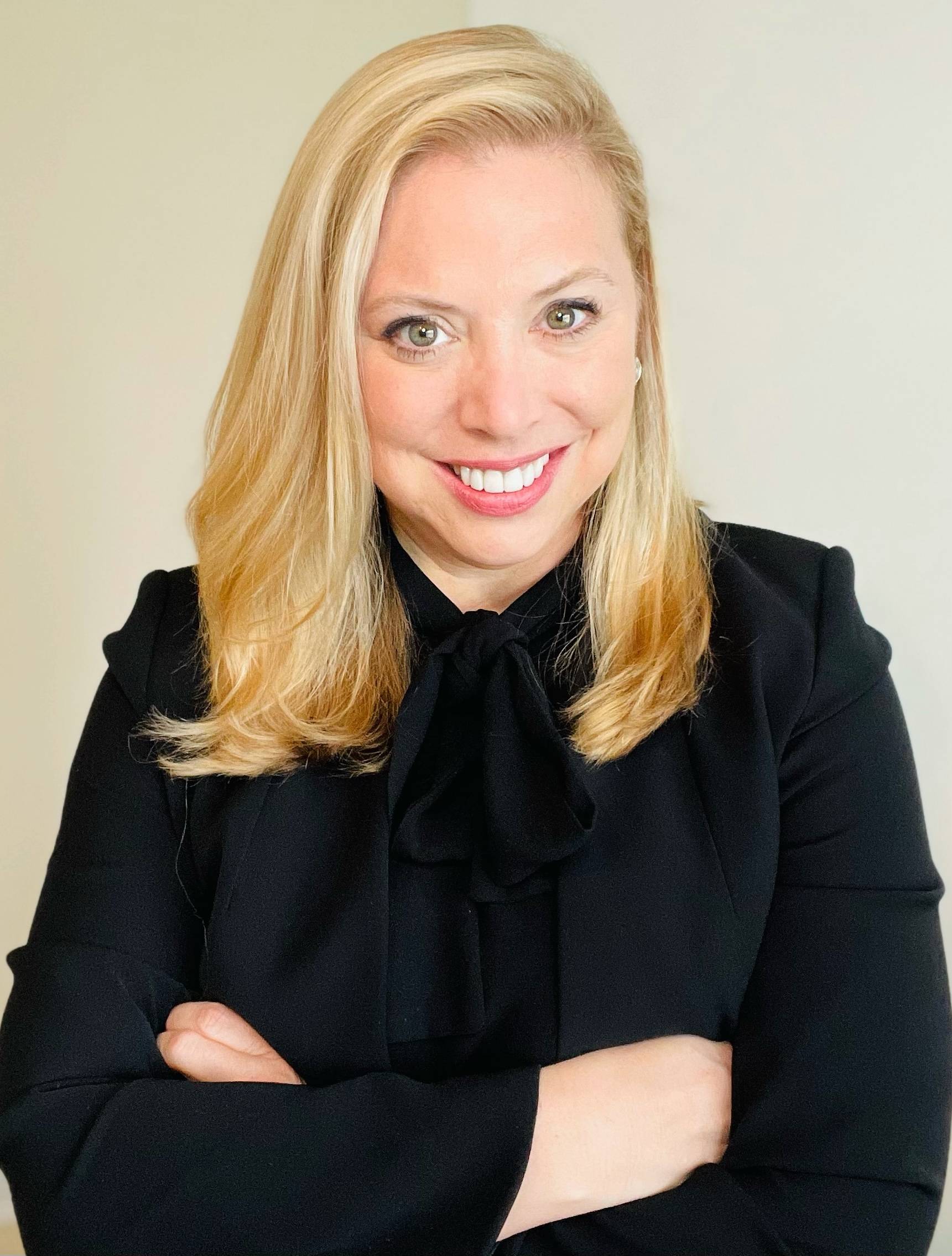 Dr. Lisa Meeks is a distinguished scholar and leader whose unwavering commitment to inclusivity and excellence has significantly influenced the landscape of health professions education and accessibility. She is the founder and executive director of the DocsWithDisabilities Initiative and holds appointments as an Associate Professor in the Departments of Learning Health Sciences and Family Medicine at the University of Michigan.
 Dr. Nikia Grayson, DNP, MSN, MPH, MA, CNM, FNP-C, FACNM (she/her) is a trailblazing force in reproductive justice, blending her expertise as a public health activist, anthropologist, and family nurse-midwife to champion the rights and health of underserved communities. Graduating with distinction from Howard University, Nikia holds a bachelor’s degree in communications and a master’s degree in public health. Her academic journey also led her to the University of Memphis, where she earned a master’s in medical anthropology, and the University of Tennessee, where she achieved both a master’s in nursing and a doctorate in nursing practice. Complementing her extensive education, she completed a post-master’s certificate in midwifery at Frontier Nursing University.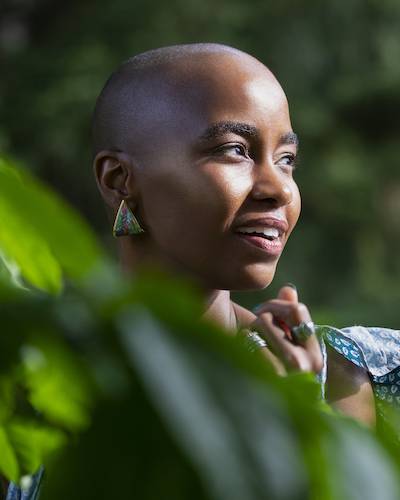


 Dr. Tia Brown McNair is the Vice President in the Office of Diversity, Equity, and Student Success and Executive Director for the Truth, Racial Healing, and Transformation (TRHT) Campus Centers at the American Association of Colleges and Universities (AAC&U) in Washington, DC. She oversees both funded projects and AAC&U’s continuing programs on equity, inclusive excellence, high-impact practices, and student success. McNair directs AAC&U’s Summer Institutes on High-Impact Practices and Student Success, and TRHT Campus Centers and serves as the project director for several AAC&U initiatives, including the development of a TRHT-focused campus climate toolkit. She is the lead author of From Equity Talk to Equity Walk: Expanding Practitioner Knowledge for Racial Justice in Higher Education (January 2020) and Becoming a Student-Ready College: A New Culture of Leadership for Student Success (July 2016 and August 2022 Second edition).