Blog

  • FNU Reflects on Rural Healthcare Efforts in Celebration of National Rural Health Day

    FNU Reflects on Rural Healthcare Efforts in Celebration of National Rural Health Day

    On Thursday, November 18, Frontier Nursing University (FNU) will join healthcare providers and organizations across the country to celebrate the “Power of Rural” on National Rural Health Day (NRHD). Organized by the National Organization of State Offices of Rural Health, NRHD is an opportunity to bring awareness to the unique challenges that rural communities face and the efforts of rural healthcare providers to create positive change in these regions.

    Founded in the Appalachian area of Kentucky, serving rural communities has always been at the heart of Frontier. FNU strives to provide accessible nurse-midwifery and nurse practitioner education to leaders in primary care to serve all individuals, with an emphasis on women and families in diverse, rural, and underserved populations. Today, 73 percent of FNU students live and complete their clinics in rural areas throughout the United States, including various regions of Alaska, Montana, Oklahoma, and Kentucky.

    Throughout the year, FNU shares inspiring stories on its blog about the impact alumni, students and preceptors have on rural communities. As we celebrate NRHD, here are some ways the Frontier community is paving the way for better health conditions in these often underserved regions.

    Preceptor Terry Sims, FNP

    For the past 13 years, Sims has worked in rural South Carolina, helping patients at the Medical University of South Carolina’s Primary Care Center in Great Falls. The rural town of Great Falls once had a thriving economy but has fallen on hard times in recent years due to the closing of a cotton mill. Like many rural areas, Great Falls faces poverty, lack of healthcare education and the need for a complete spectrum of healthcare. Sims hosts up to three preceptors at a time and sees up to 40 patients a day; however, according to those who have studied under him, Sims always takes the time to provide genuine, personalized care to everyone he treats. He also puts his preceptor students at ease with jokes and casual quizzing throughout the day.

    “I am forever thankful that Terry will always be my mentor,” Alice Dalena, one of his precepting students, said after finishing her Clinical Practicum with Sims.

    Alumni Patty Coldiron, MSN, FNP

    Born and raised in rural Harlan County, Ky., Coldiron dropped out of high school at the age of 16 to give birth to her son Joshua, born with spina bifida. Joshua’s condition, and her connection to her homeland, led Coldiron on a journey to improve healthcare in her community. Throughout the past 20 years, Coldiron has worked across the healthcare field as a certified nursing assistant, an ER nurse, and a home health specialist. She earned a master’s degree as a family nurse practitioner from FNU in 2015. In January of this year, Coldiron opened Hometown Urgent Care to meet the gap in care in Harlan County.

    “My community had never had an urgent care medical center, and I knew from working in the ER that these were services we desperately needed in Harlan County,” Coldiron said.

    Coldiron’s clinic operates daily from 10 a.m. to 8 p.m. to help make healthcare a feasible option for working families, a model that she plans on expanding. Coldiron hopes to open more Hometown Urgent Care clinics in other rural areas where citizens rely on emergency rooms for minor and urgent illnesses. She knows that accessible healthcare is key to helping communities like Harlan County thrive.

    Alumni Marli Parobek, DNP, MS, APRN, FNP-C, PMHNP-C

    After working a dozen years as a nurse practitioner in Yakima, Wash., Parobek decided to take her career to the next level to meet a growing need for mental health services in her hometown. Becoming a Psychiatric-Mental Health Nurse Practitioner (PMHNP) and earning a Doctor of Nursing Practice degree from FNU, Parobek now serves the mental health needs of her community, composed of predominantly blue-collar workers and minority races facing poverty and substance abuse struggles.

    Parobek is currently head of the inpatient psychiatric unit at Astria Toppenish Hospital, where her focus is on voluntary and involuntary inpatient psychiatry, medical withdrawal and detox. The voluntary detox program for alcohol and opiate addicts is 3-5 days of 24/7 nursing care in the hospital. Parobek’s role is to prescribe detox medications and perform psychiatric evaluations for these patients until they are discharged to outpatient programs. Marli and the Astria psychiatric unit received federal and state grants to implement their programs, offering vital services that had previously not existed in eastern Washington.

    Alumni David Moore

    Serving as the only nurse practitioner at the Front Street Clinic in downtown Juneau, Alaska, David Moore is dedicated to bringing a better quality of life to the people of his rural town. Moore is joined by a registered nurse, two behavioral health specialists, and two case managers at his clinic. Most of his patients are homeless and medically underserved, with many battling chronic illnesses.

    “Most of the people we see aren’t coming in to be treated for a cold. The majority of our patients are present with chronic illness, and they’re transient, so we only see them when some crisis arises,” Moore said.

    Although his patient load can undoubtedly be challenging, Moore credits FNU for helping to cultivate his desire to serve in rural areas and helping him to think outside of the box.

    “The way the FNU nurse practitioner program is designed, I had to be independent and dig for resources,” Moore said. “FNU taught me to go above and beyond to get the job done.”

    The Frontier community is proud to develop healthcare leaders in rural America. When modern resources are provided to underserved areas, our country grows closer to reaching a more equitable healthcare system with brighter futures for so many.

    Join us in celebrating the value of rural communities and help shine a light on the health disparities facing these regions by sharing information about NRHD with your friends, colleagues, and social media followers. Visit the NRHD site to find ideas and resources. Until all of America has access to quality healthcare, there is work to be done!

  • Answer the call: Giving Tuesday 2021

    Answer the call: Giving Tuesday 2021

    Giving Tuesday is right around the corner and we hope you “Answer the Call” to help support Frontier Nursing University students!

    Giving Tuesday, taking place on November 30th, is a global movement that inspires people to do good. It encourages people to give, collaborate, and celebrate generosity. Generosity brings people of all races, faiths, and political views together. It gives everyone the power to make a positive change in the lives of others and is a fundamental value upon which anyone can act.

    We need your help to reach our goal of $5,000 for the FNU Scholarship Fund. Consider giving this year to Frontier Nursing University where your contributions will help us provide scholarships to deserving students that demonstrate our Culture of Caring and support our mission of serving diverse, rural and underserved communities.

    Because of the generosity from past Give Tuesday donations, we have been able to provide scholarships to many students who may be struggling to come up with finances for their advanced nursing and midwifery degrees. Many of these recipients share a story similar to Dawn P., a current Psychiatric-Mental Health Nurse Practitioner FNU student.

    “My continuation in the Psychiatric-Mental Health Nurse Practitioner program has put a financial strain on my family. Due to COVID-19 and schools being closed, I have had to reduce the number of hours of work due to homeschooling,” Dawn wrote in her scholarship essay. “Not working has dramatically reduced the household income for my family. Also, this year, in particular, has presented additional challenges for our family, like in many other families, due to COVID-19.”

    Dawn hopes to one day own and open an independent, holistically integrated healthcare practice for her community. Being a scholarship recipient helps ease any financial burdens she may have now to help her eventually open her own practice.

    Besides a monetary donation, there are additional ways you can support FNU and help us meet our goal. Here are a few ways you can help:

    1. Create a crowdfunding campaign or share FNU’s campaign.
    2. Send texts or emails to friends and family asking them to join you in supporting FNU. Your text may sound something like this: Help Frontier Nursing University provide scholarships to students facing financial hardships or serious illnesses to continue their education. Every little bit helps. Click this link to give: (insert your crowdfunding link here).
    3. Share FNU’s social media posts on your own social media accounts encouraging your friends and followers to donate. Include the reasons “Why I’m passionate about FNU” in your post!
    4. Utilize Frontier’s Giving Tuesday Toolkit.

    Every little bit helps us provide scholarships to our students who need them the most. It takes just a few clicks to make a big impact! Donate here today until Giving Tuesday on November 30th, and we thank you for your contribution to our Giving Tuesday campaign!

  • Frontier Nursing University announces Antiracism and Bias Advisory Council

    Frontier Nursing University announces Antiracism and Bias Advisory Council

    Frontier Nursing University (FNU) recently introduced its Antiracism and Bias Advisory Council (ABAC). The ABAC’s purpose is to review and make recommendations for alleged bias incidents to mitigate bias at FNU.

    This committee, made up of a diverse group of Frontier employees, is needed to support diversity, equity and inclusion efforts as the university shifts to an antiracist culture. The council reports to FNU’s Chief Diversity and Inclusion Officer, Geraldine Young, DNP, APRN, FNP-BC, CDCES, FAANP.

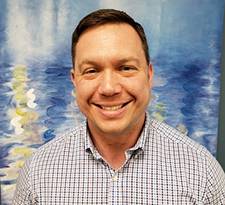
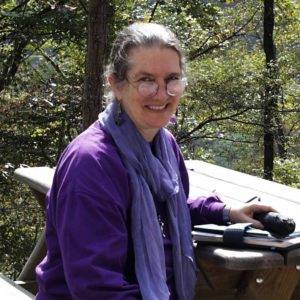
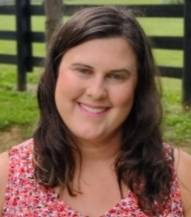
    ABAC
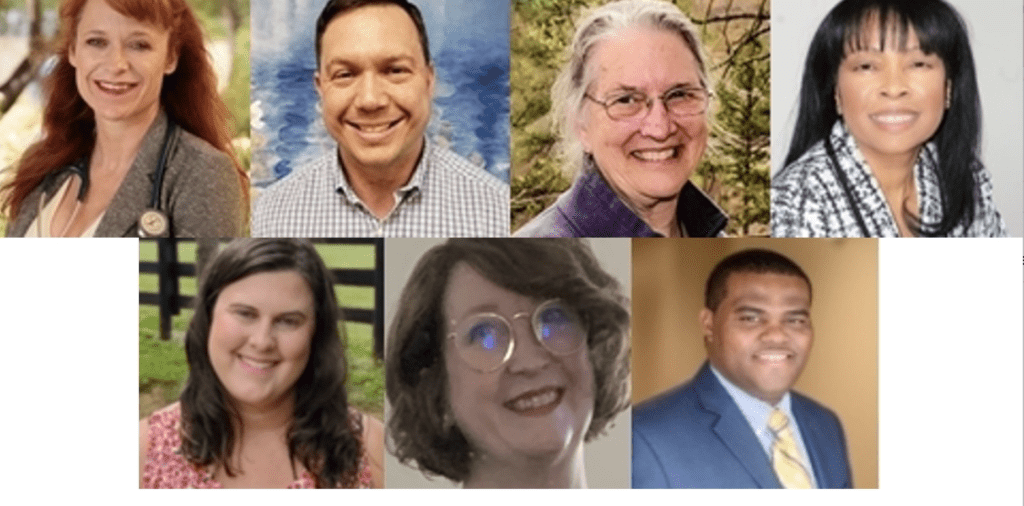
    Top Row (L-R): April Dobroth, Joshua Faucett, Mickey Gillmore, Charlotte Morris. Bottom Row (L-R): April Tabor, Tawny Tseng, Chris Turley.

    The goals of the ABAC include:

    • Align their actions with the University and the Office of DEI goals.
    • Upon submission of a bias reporting form, determine if acts of racism and/or bias have been committed.
    • Recommend a potential plan of action to the human resources director and the appropriate supervisor (department chair, program director, chief operating officer, dean, and/or president).

    One or more of the following actions may be recommended by the ABAC: 

    Conversation:  The CDIO, Human Resources Director, Dean, Chief Operations Officer, and/or President may have a conversation regarding the incident with the person(s) perceived as responsible for a bias related-incident, respecting wishes for anonymity or otherwise.

    Mediation: The CDIO, Human Resources Director, Dean, Chief Operations Officer, and/or President could arrange mediation between the individual reporting the incident and the person(s) involved in the incident.

    Referral: Support and counseling for the affected individual and/or accused individual could be arranged.

    Education: on bias.

    Disciplinary Action: Under certain circumstances and when institutional policy is violated, disciplinary action may be taken toward the person(s) who precipitated the incident. This could include a bias improvement plan suspension with or without pay or dismissal from the university. 

    No Further Action: This could be an outcome, for example, if the individual reporting the incident chooses not to further pursue it or if it cannot be determined that laws or institutional policies were violated.

    Meet the Council Members:

    APRIL DOBROTH, DNP, APRN, FNP-C, PMHNP-BC
    Clinical Director, PMHNP Program

    For over a decade, Dr. Dobroth has served in rural and underserved communities as a National Health Service Corp member and ambassador. She served as a representative for primary care providers on the New Mexico Behavioral Health Coalition (NMBHC). As a representative of the NMBHC, she worked closely with the NM Governor’s office and the director of Health and Human Services in New Mexico to address the dire need for increased access to behavioral health services in the state. She has also served as an expert speaker before the Colorado and New Mexico state legislature on mental health issues.

    “Much like the pieces of fabric that come together to form a beautiful quilt, I truly believe that there is strength and beauty in diversity and inclusion. While I have witnessed the ugliness of racism on the personal and community level, I have also seen the beauty that inclusion brings to a society. I am truly a richer person having learned of the diverse life experiences of others. Simply put, I want to be a quilter that contributes to the creation of a more inclusive educational experience at FNU.”


    JOSHUA FAUCETT, DNP, MBA, FNP-BC, CNE
    Assistant Professor, Course Coordinator PC705 Advanced Pathophysiology

    Dr. Faucett is a Family Nurse Practitioner with a decade of experience in oncology. He also completed two tours of duty during the Iraq War in the U.S. Army as an Infantry Squad Leader.  His research focus is Veteran mental health and suicide prevention.  

    “An institution that is equitable for students, faculty, and staff is an attainable goal, but it will take work for us to get there. I am here to contribute to this shared goal.”


    MICKEY GILLMOR, MN, CNM 
    Course Faculty and Co-Chair of Admissions

    Mickey Gillmor has taught at Frontier since 1995 when she answered the call to become a Regional Clinical Coordinator for what was then the Frontier School of Midwifery and Family Nursing. Her 26 years of clinical practice as a midwife have taken place within the Grady Health System, a two-county public hospital in inner-city Atlanta. She credits the Grady patients with teaching her a lot about life for Black and Latinx people in Atlanta without commercial health insurance. The challenges are real. Prior to becoming a nurse, I worked in the New York City Public Schools supporting teachers in innovative classroom and science curriculum projects.

    “White people have a lot to learn about racism in America. Straight people have a lot to learn about the challenges faced by LGBTQ people. Believers have a lot to learn about those of other faiths — and about agnostics and atheists. Young people have a lot to learn about aging! We are never done. For Frontier, diversity is essential and true diversity is not possible without equity and inclusion.  We all have a lot to learn and it will not be easy, but it is critical for the University and for our civilization. As part of this Council, I hope to support this growth and learning.”


    CHARLOTTE MORRIS, DNM, CNM, FACNM 
    Assistant Professor Frontier Nursing University 
    Course Faculty PC 713, and NP 703

    Charlotte Morris is a Certified Nurse-Midwife with over 30 years of clinical practice caring for women and working with families fighting systems injustices. Since coming to Frontier four years ago, she has had the opportunity to serve as Co-Chair of the Diversity and Inclusion Committee. Her interest in anti-racism and bias reporting at Frontier is to help promote an atmosphere of caring and support.  

    “Antiracists acknowledge that there are differences between races, but these differences aren’t responsible for inequities—policies are.” — Ibram Kendi


    APRIL TABOR, BBA, MS
    ETM Senior Grants Management Officer

    In addition to her role as FNU’s Grants Management Officer, April Tabor is the co-chair of the Mission and Philosophy Committee and a member of the DEI Infrastructure subcommittee. She was also a staff member of the Mary Breckinridge Task Force.

    “As an Equal Employment Opportunity Counselor for three years in my previous employment with the state government, I participated in yearly DEI training, recorded statements, conducted investigations, and helped resolve conflicts.”


    TAWNY TSENG, DNP, PMHNP-BC, FNP-BC 
    Assistant Professor, Course Coordinator MH707, MH717 PMHNP program

    Dr. Tseng has been a psychiatric and family nurse practitioner since 2012. The majority of her career has been spent in the care of the psychiatric population. The focus of her scholarly endeavors has been medical history with an emphasis on psychiatric history and the effects of limited or biased care.  

    “We all deserve the space we stand in and we deserve the chance to celebrate what makes us who we are while also celebrating the beauty and brilliance in others. To that end, I will quote the great Ruth Bader Ginsburg: ‘We will all profit from a more diverse, inclusive society, understanding, accommodating, even celebrating our differences, while pulling together for the common good.’”


    CHRIS TURLEY, MS, BS
    Diversity, Equity, and Inclusion (DEI) Coordinator

    While at Frontier, Turley has been instrumental in the execution of the Diversity Impact Conference, quarterly speaker series, FNU Diversity Impact Facebook Page, and conference marketing (Diverse conferences), as well as assisting with the FNU Comprehensive Mentoring and Professional Organizational Mentoring (POMP) programs. He serves as a staff member on the Admissions, D&I, Marketing, and Mission and Philosophy Committees. He also serves as the chair of the Diversity Impact Planning Ad-hoc (DIPA) Committee and co-chair on the Culture and Belonging Sub-Committee of the President’s DEI Task Force. He served as a staff member on the Mary Breckinridge Task Force.

    “I have a strong base dealing with issues concerning race relations as I had to deal with similar issues growing up in a marginalized community in Kentucky.”


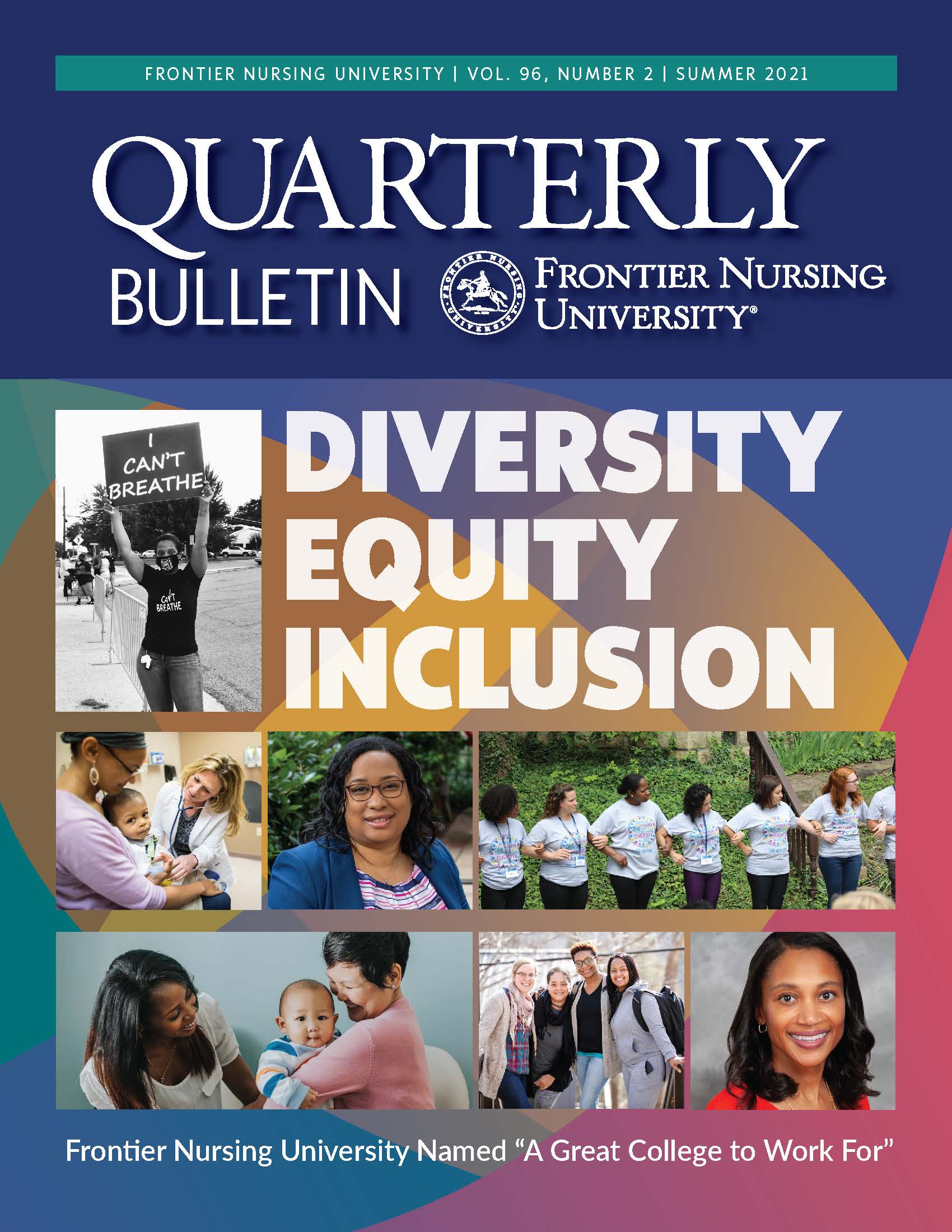
    To learn more about our recent Diversity, Equity, and Inclusion efforts, read our Summer 2021 Quarterly Bulletin.

  • Frontier’s Diversity, Equity, and Inclusion Initiatives Examined in the Summer 2021 Quarterly Bulletin

    Frontier’s Diversity, Equity, and Inclusion Initiatives Examined in the Summer 2021 Quarterly Bulletin

    The Summer 2021 issue of the Frontier Nursing University Quarterly Bulletin features comprehensive coverage of the university’s diversity, equity, and inclusion (DEI) efforts. The issue approaches DEI from all angles, including a feature on Dr. Rachel Sherman, who has become a community leader and advocate for social justice and reform. Read about Dr. Kimberly Jones-Beatty’s efforts to find data-driven solutions to the maternal mortality crisis and its disproportionate impact on underserved populations. Learn more about the multitude of university-driven DEI programs and committees, as well as the ongoing work of the Office of Diversity, Equity, and Inclusion. This issue also looks back at the 2021 Diversity Impact Conference and details the programs being funded by two newly received federal grants totaling $4,140,000. Finally, this issue of the Quarterly Bulletin highlights the involvement and leadership of FNU community members within external organizations as the university strives to be an industry leader for change.

    In addition, you will see images from the beautiful Versailles, Kentucky, campus which welcomed its first students recently and read about Frontier’s “Great College to Work For” award. We also share stories of the amazing generosity of some of our donors and some information about the variety of ways to give. 

    Further, this issue of the Quarterly Bulletin introduces you to new Courier Program Coordinator Kayla White, and shares the news and notes of the many accomplishments of Frontier’s faculty, staff, students, and alumni. 

    This is a packed issue of the Quarterly Bulletin and we can’t wait for you to read it. Click here to view it online or download the Summer 2021 Quarterly Bulletin today!

  • FNU to host NP Week virtual event focused on health equity and substance use disorders

    FNU to host NP Week virtual event focused on health equity and substance use disorders

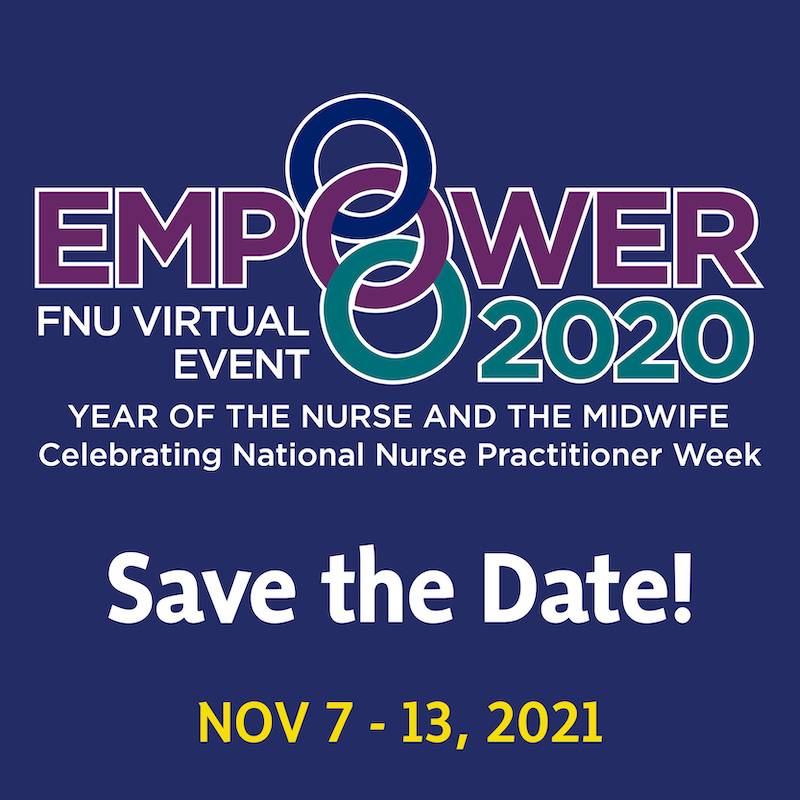
    National Nurse Practitioner Week is Nov. 7-13, and Frontier Nursing University (FNU) is celebrating by hosting a virtual event, Empower 2021: Creating a Culture of Caring, at Frontier.edu/NPWeek.

    “We are excited to offer educational and engaging sessions to celebrate nurse practitioners and their contributions during National Nurse Practitioner Week,” said Dr. Susan Stone, FNU President. “The more than 325,000 licensed NPs nationwide go the extra mile every day to provide quality, equitable patient care.”

    FNU’s free virtual event offers seven free educational sessions presented by FNU faculty and alumni on the latest practices and topics influencing nurse practitioner care and includes a continuing education opportunity:

    Assessment and Screening for Substance Use Disorders in the Primary Care Setting
    Monday, November 8 at 6  – 7 p.m. EST
    Presented by FNU faculty members Dr. Beki Asti and Dr. Nancy Pesta Walsh.

    The National Survey on Drug Use and Abuse report found that 1 in 12 American adults have a substance use disorder. In order to address the epidemic of substance abuse disorders, primary care nurse practitioners must universally assess, screen, and diagnose all clients. Participants in this session will explore evidence-based substance abuse assessment, screening, and diagnostic tools.

    Free CE Session – Novel Treatment Approaches to Substance Abuse
    Tuesday, November 9 at 6 – 7 p.m. EST
    Presented by FNU Clinical Director Dr. April Dobroth.

    The incidence of substance abuse in the United States has reached epidemic levels. To address this epidemic, advanced nurse practitioners must possess pharmacological competency in the treatment of common substance abuse disorders. Pharmacological treatments for common substance use disorders will be discussed during this session and participants will be eligible for pharmacologic CE credits.

    FNP Program Q&A – Creating a Culture of Community
    Wednesday, November 10 at 5 – 6 p.m. EST
    Presented by FNU faculty members Dr. Katheryn Arterberry and Dr. Lisa Chappell.

    Calling all future family nurse practitioners! This session is designed for registered nurses considering the path to becoming a family nurse practitioner. Find out about FNU’s distance education program and get the inside scoop from current students about their experience. Hear about the joys and challenges of life as a nurse practitioner caring for families.

    Creating a Culture of Impact: Stories of Community Quality Improvement – Alumni and Faculty Panel
    Wednesday, November 10 at 6 pm – 7 pm EST
    Moderated by Dr. Kristin Gianelis.

    Join Frontier for an impactful panel presentation hosted in collaboration with FNU’s IHI Open School Chapter. Hear stories of FNU’s mission in action through visual storytelling as nurse practitioner alumni and faculty share their community projects and initiatives for serving diverse, rural and underserved populations. Participants will be inspired by these real-life examples of quality improvement and community impact and leave with ideas to take back to their own community.

    PMHNP Program Q&A – Creating a Culture of Community
    Thursday, November 11 at 5 – 6 p.m. EST
    Presented by FNU Clinical Director Dr. April Dobroth.

    Calling all future psychiatric-mental health nurse practitioners! This session is for registered nurses considering the path to providing mental health care as a PMHNP. Find out about FNU’s distance education program and get the inside scoop from current students about their experience. Hear about the joys and challenges of life as a nurse practitioner.

    Creating a Culture of Community Engagement from a Distance – The Frontier Student Experience
    Thursday, November 11 at 6 – 7 p.m. EST
    Moderated by Dr. Tia Andrighetti.

    Frontier Nursing University is committed to students’ active engagement in their coursework with faculty and peers. FNU uses a variety of techniques throughout the curriculum to allow students to do this. Learn about the simulations, role plays, immersive discussions, games, grand rounds and other techniques Frontier currently employs.

    Advanced Practice Nurses: Adopting a Health Equity Lens
    Friday, November 12 at 12 – 1 p.m. EST
    Presented by Dr. Paula Alexander-Delpech.

    Advanced practice nurses are positioned to play a major role in addressing health disparities and shaping the future of healthcare to ensure health equity. Join FNU for an inspiring session focused on adopting a health equity lens, and walk away with some key actions to take in your own practice or work environment.

    The theme of this year’s virtual event, Empower 2021: Creating a Culture of Caring, acknowledges Frontier Nursing University’s culture of caring which is built on five main elements: professionalism, inclusivity, respect, positive communication and mutual support. Students, alumni, faculty, staff, donors and others in the FNU community embrace this culture to fulfill their full potential, both individually and collectively, exemplifying the caring behaviors they hope to bring to the broader healthcare system.

    Frontier Nursing University has more than 80 years of experience in delivering graduate nursing and midwifery programs. This is the sixth consecutive year FNU has hosted a virtual event in support of National Nurse Practitioner Week.

    Those interested in participating in Empower 2021: Creating a Culture of Caring, sponsored by Southern Cross Insurance Solutions, are asked to register at Frontier.edu/NPWeek.

  • FNU Receives INSIGHT Into Diversity 2021 Health Professions Higher Education Excellence in Diversity (HEED) Award for Fourth Consecutive Year

    FNU Receives INSIGHT Into Diversity 2021 Health Professions Higher Education Excellence in Diversity (HEED) Award for Fourth Consecutive Year

    HEED Award LogoToday, Frontier Nursing University (FNU) received the 2021 Health Professions Higher Education Excellence in Diversity (HEED) Award from INSIGHT Into Diversity magazine, the oldest and largest diversity-focused publication in higher education. As a recipient of the annual Health Professions HEED Award — a national honor recognizing U.S. health colleges and universities that demonstrate an outstanding commitment to diversity and inclusion — FNU will be featured, along with 50 other recipients, in December 2021 issue of INSIGHT Into Diversity magazine. This is the fourth consecutive year FNU has been named as a Health Professions HEED Award recipient.

    “We are incredibly honored to be selected for the prestigious HEED Award for the fourth year in a row,” said FNU President Dr. Susan Stone. “We recognized the need for more diversity in our nation’s healthcare system over a decade ago. Culturally concordant care improves health outcomes, which is in direct alignment with our mission to provide accessible nurse-midwifery and nurse practitioner education to prepare competent, entrepreneurial, ethical, and compassionate leaders in primary care to serve all individuals with an emphasis on women and families in diverse, rural, and underserved populations. While we know that we have much work to do, this award recognizes our progress and reaffirms our commitment to be a leader for change and to continue towards our goal of becoming an antiracist university.”

    Earlier this year, the Health Resources and Services Administration (HRSA) awarded FNU two grants totaling $4,140,000. The HRSA Behavioral Health Workforce Education and Training (BHWET) grant totals $1,920,000 and the Nursing Workforce Diversity (NWD) grant totals $2,220,000. HRSA, which is an agency of the U.S. Department of Health and Human Services, will award the funding for both grants in annual installments over the next four years. The goal of the BHWET program is to increase the number of psychiatric-mental health nurse practitioners who are diverse in race, ethnicity, and other underrepresented populations serving in rural and medically underserved communities. The goal of the NWD program is to increase the number and diversity of certified nurse-midwives who serve in rural and underserved areas of the country in an effort to prevent and reduce maternal mortality. 

    To help direct the university’s diversity, equity, and inclusion (DEI) initiatives and incorporate perspectives from all corners of the university, FNU has created several task forces and committees composed of faculty, staff, students, and volunteers. Created in 2015, the Diversity and Inclusion Committee develops, promotes, and provides programs and resources to enhance diversity throughout the university and healthcare workforce. The President’s DEI Task Force was formed in January 2021 to further FNU’s mission to become an antiracist university. The recently formed Antiracism and Bias Advisory Council (ABAC), derived by the FNU’s Office of Diversity, Equity, and Inclusion, is a diverse group of Frontier employees who will serve as an advisory board for any employee and student bias reporting.

    In January 2021, the FNU Board of Directors (BOD) created a BOD Diversity, Equity, and Inclusion Committee that is responsible for working with the Board of Directors and the administration to ensure that Frontier strives to be an antiracist university. In April 2021, the Board of Directors approved the endowment of a new scholarship to support African American, Black, Native American, and Alaskan Native students. The scholarship will support 10 students per year. 

    “At Frontier, we challenge our students, faculty, and staff to be the agents of change we need to dismantle racism and discrimination in healthcare,” said FNU Chief Diversity and Inclusion Officer Dr. Geraldine Young.  “Collectively, we have the power to reduce health disparities and inequities and improve health outcomes. Receiving the HEED Award is not only a great honor, but it also provides an excellent opportunity for us to continue to have important conversations and to advance both the internal and external diversity, equity, and inclusion efforts of our university.” 

    FNU’s commitment to emphasizing and valuing diversity and inclusion was formally instituted with the creation of the Diversity Impact Program in 2010, with particular emphasis on increasing the enrollment of students of color. Since then, the focus has expanded to include all facets of the university, including increasing diversity within the faculty and staff, emphasis on student retention, and diversity and inclusion training for all members of the FNU community. Led by the Office of Diversity, Equity, and Inclusion, mentoring, tutoring, coaching, counseling, writing programs, and scholarships have been implemented to support students. The office also offers community-wide education including the Diversity Impact Conference held in 2021, “Dismantling Systemic Racism and Discrimination in Healthcare:  Our Roles and Responsibilities.”

     “The Health Professions HEED Award process consists of a comprehensive and rigorous application that includes questions relating to the recruitment and retention of students and employees — and best practices for both — continued leadership support for diversity, and other aspects of campus diversity and inclusion,” said Lenore Pearlstein, publisher of INSIGHT Into Diversity magazine. “We take a detailed approach to reviewing each application in deciding who will be named a Health Professions HEED Award recipient. Our standards are high, and we look for schools where diversity and inclusion are woven into the work being done every day across their campus.”


     About INSIGHT Into Diversity

    INSIGHT Into Diversity magazine is the oldest and largest diversity publication in higher education today and is well-known for its annual Higher Education Excellence in Diversity (HEED) Award, the only award recognizing colleges and universities for outstanding diversity and inclusion efforts across their campuses. In addition to its online job board, INSIGHT Into Diversity presents timely, thought-provoking news and feature stories on matters of diversity and inclusion across higher education and beyond. Articles include interviews with innovators and experts, as well as profiles of best practices and exemplary programs. Readers will also discover career opportunities that connect job seekers with institutions and businesses that embrace a diverse and inclusive workforce. Current, archived, and digital issues of INSIGHT Into Diversity magazine are available online at insightintodiversity.com.


    About Frontier Nursing University:

    The mission of FNU is to provide accessible nurse-midwifery and nurse practitioner education to prepare competent, entrepreneurial, ethical, and compassionate leaders in primary care to serve all individuals with an emphasis on women and families in diverse, rural, and underserved populations. FNU offers graduate Nurse-Midwifery and Nurse-Practitioner distance education programs that can be pursued full- or part-time with the student’s home community serving as the classroom. Degrees and options offered include Doctor of Nursing Practice (DNP), Master of Science in Nursing (MSN), or Post-Graduate Certificates. In 2021, Frontier was named a “Great College to Work For” by the Great Colleges to Work For® program. To learn more about FNU and the programs and degrees offered, please visit Frontier.edu.

  • FNU Debuts the “Frontier Nursing University All-Access Podcast” 

    FNU Debuts the “Frontier Nursing University All-Access Podcast” 

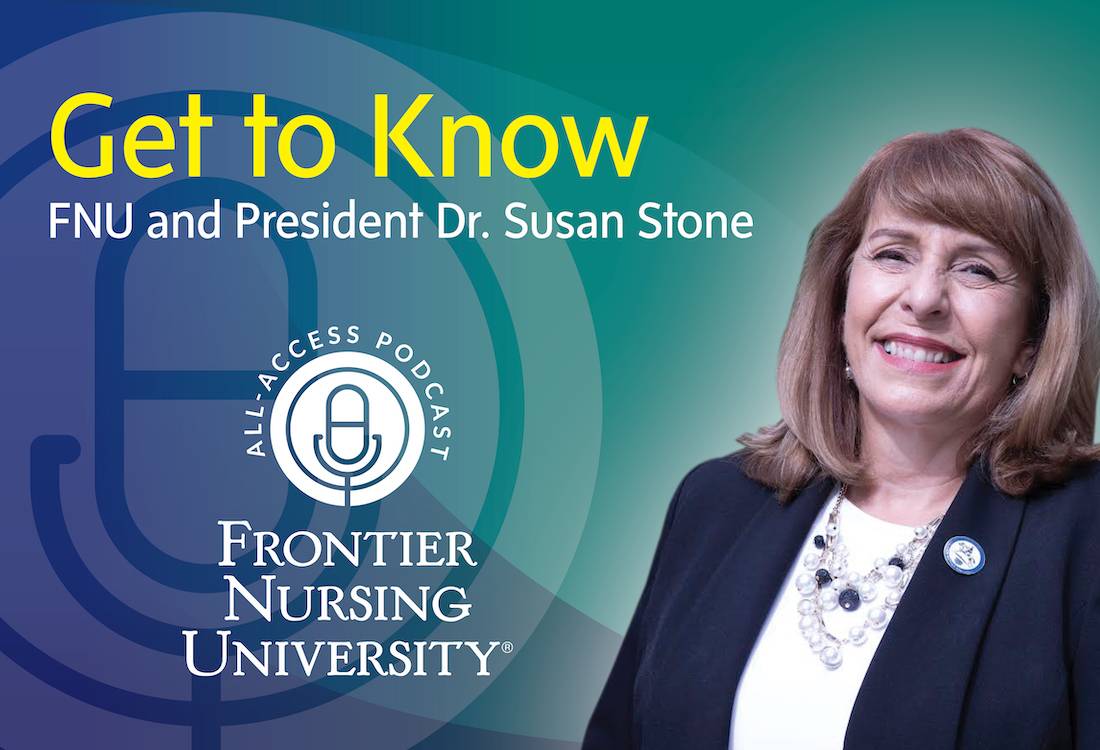
    Episode 1: Get to know FNU and President Dr. Susan Stone

    Welcome to the Frontier Nursing University All-Access Podcast! This podcast provides a closer look at Frontier Nursing University through lively and entertaining discussions with a wide variety of guests and topics. 

    As many of you already know, Frontier Nursing University was founded in 1939 and, more than 80 years later, stands as a leader in nurse practitioner and nurse-midwifery education. The mission of FNU is to provide accessible nurse-midwifery and nurse practitioner education to prepare competent, entrepreneurial, ethical, and compassionate leaders in primary care to serve all individuals with an emphasis on women and families in diverse, rural, and underserved populations. FNU offers graduate nurse-midwifery and nurse practitioner distance education programs that can be pursued full- or part-time with the student’s home community serving as the classroom. Degrees and options offered include Doctor of Nursing Practice (DNP), Master of Science in Nursing (MSN), or Post-Graduate Certificates. In 2021, Frontier was named a “Great College to Work For” by the Great Colleges to Work For® program. 

    Fittingly, Episode 1 features a casual conversation with Dr. Susan Stone, whose history with Frontier dates back to 1991 when she earned a Post-Master’s Certificate in Nurse-Midwifery from what was then the Frontier School of Midwifery and Family Nursing. Dr. Stone, who was inducted into the prestigious National Academy of Medicine in 2019, has served as Frontier’s president since 2001. 

    We hope that every episode of the Frontier Nursing University All-Access Podcast will make you laugh, cry, learn something new, or give you perspective and food for thought. 

    What You’ll Learn From This Episode: 

    • The history and growth of Frontier Nursing University
    • All about Frontier’s unique, innovative distance-learning model
    • Some fun behind-the-scenes stories
    • How Dr. Stone came to Frontier
    • Dr. Stone’s summary of the university’s current status and the vision for the future 

    Listen to the Full Episode

    Full Episode Transcript

    Enjoy the show?
    Be sure to follow the Frontier Nursing University All-Access Podcast on Google Play, Apple Podcast, Spotify, or wherever you find your podcasts. Visit the FNU All-Access Podcast page here.
  • FNU All-Access Podcast Transcripts: Get to Know FNU and President Dr. Susan Stone (Ep #1)

    FNU All-Access Podcast Transcripts: Get to Know FNU and President Dr. Susan Stone (Ep #1)

    Frontier Nursing University All-Access Podcast, Episode 1 Transcript
    Get to know FNU and President Dr. Susan Stone

    Please enjoy this transcript of the Frontier Nursing University All-Access Podcast! This podcast provides a closer look at Frontier Nursing University through lively and entertaining discussions with a wide variety of guests and topics.

    [music]

    Angela Bailey: Hello and welcome to season one, episode one of what we hope will become many more of The Frontier Nursing University All-Access Podcast. I’m Angela Bailey, Chief Advancement Officer, and your host for this new adventure. I’d like to welcome you all to the on-call lounge here on the Frontier Nursing University Campus in beautiful Versailles, Kentucky.

    Within this inaugural season, we will give you an all-access pass to delve deeper into Frontier Nursing University and the individuals who are making a daily difference in advanced practice nursing, midwifery, education, and healthcare across the country. Now, for our very first episode, I felt that it was only appropriate that we invite Dr. Susan Stone to the lounge to talk about the university, its growth, and how she came to be at the helm of this organization. Without further ado, I’m very pleased to welcome FNU President, Dr. Susan Stone. Welcome, Dr. Stone.

    Dr. Susan Stone: Oh, thank you, Angie. It’s so good to be here. I’m so excited about this new venture of ours to help share more about our wonderful university and all the work that we do here. Thank you so much for inviting me.

    Angela: Well you are very welcome. I am also so excited. It’s always such a pleasure to talk about the work, our staff, and faculty, and students, and alumni are doing across the country. I want to get into that maybe a little later, but before we get started, since this is our very first episode, I wondered would you mind sharing with our listeners a short description of Frontier and who we are, and the work that we do?

    Susan: Frontier Nursing University is a single-purpose university. Our real goal and mission is to educate nurse practitioners and nurse-midwives to serve rural and underserved families. Mostly, we’re very interested in those rural and underserved areas. We currently have students in all 50 states. Our students actually do most of their learning through distance approaches to learning.

    Our faculty are also located all over the country. The purpose of that is so that we can provide an opportunity for nurses who live in rural and underserved areas themselves to obtain a graduate degree and practice as nurse practitioners and nurse-midwives. That is basically who we are; the primary goal is to increase access to nurses for graduate education so that they can ultimately provide healthcare to rural and underserved families.

    Angela: That is one of my favorite things about Frontier. I hope that our listeners will check out our website and look at our Quarterly Bulletins because I think that access is actually happening and is exemplified in our publications, like our Quarterly Bulletin, by the work that our grads are doing. We’re talking about this distance education thing. Some folks may be confused as to why, if we’re doing community-based education, we still need a campus. Can you talk a little bit about that?

    Susan: Yes. Our transition to distance learning actually happened 30 years ago. We were one of the first schools of nursing to really adapt to provide education at a distance, but even 30 years ago, we realized the importance of creating a community with our students. It’s very important to us that our students have the opportunity to learn not only from their faculty, but also from each other.

    We believe it’s important to come together initially, and all of our students do come to campus when they start our programs. We do sessions, which we call Frontier Bound. These were early on modeled after the outward bound experience where people come together and learn to trust each other and learn together and have great experiences together.

    All of our students do come to campus to start their programs. We do, of course, [explain] what does the curriculum look like and how do you use the IT, but we also do fun things and social things so that we get to know each other. Both sessions are on campus and we do about 5 of those a term or close to 20 a year. That alone keeps us very busy with campus events.

    We also do another session called Clinical Bound, which all students do before they can go into their community clinical site, which may be a hospital, a clinic, a birthing center, or even home visits, then they have to come back to us and spend a week with us doing simulations and checking off their skills to make sure that they’re ready to go into the clinical environment.

    Those sessions also happen about six to seven times each term, and each term is a quarter so multiply that by four. Between those two sessions, we have a pretty busy campus, not to mention all of the people that work on the campus that just support all the students that are in their homes doing coursework day-to-day, such as advisers and financial aid officers and all of those things. A campus is certainly one important piece of what we do.

    Angela: Sue, I’m sure that you remember at one point in my career here at Frontier that I actually attended Clinical Bound with some of our students. One of the best days was watching the students, for lack of better terms, catch a baby from this extremely realistic model. One of the reasons I’ll never forget it is because they made me try to catch one and I was so nervous. Somewhere there’s video evidence that shall never see the light of day.

    [laughs]

    I personally understood the value of being on campus and these hands-on skills. When the pandemic hit us, it was just remarkable to me how nimble our faculty moved to be able to reset these clinical bounds into completely virtual due to the pandemic and give the students the same experience. Can you talk about that a little bit?

    Susan: Yes. It was quite a crisis. We had about 500 students in clinical sites around the country at the time that the pandemic hit and most of those clinical sites asked us to take our students out of clinical initially. We had to figure out how were we going to continue to operate our university, continue to provide these students the ability to continue their education.

    Our faculty really stepped up and immediately began creating these sessions that we could run over using Zoom as many people did across the country during the pandemic. The orientation was recreated over Zoom, and also the clinical, you mentioned the realistic models. We were actually sending small models to students so that we could watch them do things like suturing, or actually catch a baby and make sure that they had the skills that they needed.

    Also, this allowed them to get some simulation hours in for clinical. Luckily, by July, most of those clinical sites began to open up again, but we still had to do these onsite sessions for Frontier Bound and Clinical Bound. We are still doing them today and hoping to end them by this fall and open up again.

    Angela: Gosh, that is one of the things that I love the most about Frontier because where there’s a will, we will find a way, right?

    Susan: That’s right, that’s right.

    Angela: I’m sure that anybody who’s listening to this can tell from my accent that my family’s originally from Eastern Kentucky. I grew up hearing about the work the Frontier nurses did. I have so many family members that were actually delivered by Frontier nurses. When I came to Frontier, it was a dream job for me, but Sue, I don’t think that my background is nearly as interesting as yours. How did you come to Frontier? Did you always know that you wanted to be a midwife?

    Susan: No, Angie, I did not. From the time I was a little girl, I always wanted to be a nurse. That was a trajectory for me. As far back as I can remember, I wanted to be a nurse. When I was in nursing school and I did my clinical with maternity care, I fell in love with maternity care and immediately became a maternity nurse.

    I worked as a maternity nurse for 10 years, but it was stressful. I was always trying to provide the best care I could for the mothers that we were serving and trying to open up birthing rooms and do things like sibling visits and allow fathers to attend the bris, and all those things that, but it was a struggle because there were many rules and regulations within the hospital. I was doing my master’s degree and I met my first midwife. We had an assignment that we had to follow a nursing leader. This midwife told me that there was a new midwifery service developing in a town about 40 miles away from me in upstate New York. Long story short, I went to spend a day with that midwife. I saw my first birth that was attended by a midwife and it was such a beautiful birth.

    It was so peaceful and so calm. It was all about making sure that that woman had everything that she needed in order to have a safe, successful and satisfying birth. I’d never seen anything like that before. I was used to the click, click, click of hospitals, this has to be done and that has to be done and this has to be done. Not with this situation. The woman was in the bed, the midwife was sitting on the edge of the bed. The baby came out very gently and I was just– I had to go be a midwife at that point.

    Angela: I’m sorry to interrupt but I think that a lot of our listeners may not understand that back in those days, that was not the normal birth. Can you talk a little bit about the differences in between the two experiences at that time?

    Susan: At that time, and I think this happens in many hospitals still today, a woman would labor with a nurse, a physician may drop in once or twice during the labor. Usually, she was in bed on a monitor, on a fetal monitor, not allowed to eat, not allowed to get up and walk around. When it was time for the birth, the woman was transported to a labor and delivery– excuse me, a delivery room, put on a table, her legs up in stirrups.

    Basically, the attention was on making sure the doctor had everything the doctor needed to deliver the baby. We say that is one of the differences. I’ll talk about that a second, but it was really for the convenience of the hospital and the physician not really that much for the mother because it was very uncomfortable to change rooms and not letting your husband come into the birthing room, those kinds of things. Those things actually happened. Then you contrast that where the woman stays in one bed. She has one attendant who is with her the whole time and that midwife, we say, catches the baby because the woman is the one who delivers her baby. It’s nobody else. She is the one that does all the work and deserves all the credit. It’s just a very different environment.

    Angela: When I listen to my family talk about the birth stories that they have with Frontier nurses in the mountains of Eastern Kentucky, I hear stories about walking around, about continuing to work around the house and sometimes they delivered or in a bed sometimes not. My own father was delivered on a kitchen table by the light of a coal lantern. I love those differences that put the power and control really back in the hands of the mother instead of the medical community. It’s beautiful.

    Susan: That’s right, that’s right.

    Angela: You’ve talked a little bit about nursing and how you became or why you wanted to become a midwife. I want to know when you were a little girl and you wanted to be a nurse, was there a reason why or were you always a caregiver? I seem to remember some fun stories about an animal that you brought into your house.

    Susan: Oh, you’re so funny, Angie. Yes, I would rescue any animal, especially baby animals anywhere. One day I rescued a baby skunk who had lost his mother. I don’t know where his mother was. I brought this baby skunk home, I did not tell my mother. I took it up in my bedroom. I kept it in the box and then took it to bed with me. The only thing was this little, tiny baby skunk who really looked like kittens, they’re so cute, fell out of the bed and sprayed my room and all stories were off after that. My mother took it to a rescue place.

    [laughs]

    Angela: Well, I love that because you were taking care of babies from the get-go and still working to take care of mothers, babies, and families today. Oh, my goodness. That’s how you became a midwife. How in the world did an Upstate New York nurse, who wanted to be a midwife end up with Frontier Nursing University in Kentucky.

    Susan: First of all, everybody knew at this time that the school was called the Frontier School of Midwifery and Family Nursing. It was a well-known fact across the entire country if you wanted to be a midwife, that was a great place to go. Its reputation preceded it, but of course, I had no way to leave my three little children and husband, and go to Kentucky to become a midwife.

    Luckily, right at the same time I decided to become a midwife, about  three or four months later, the distance learning model was developed by Kitty Ernst and some other famous midwives. They started to promote it and wanted to do a pilot class of learning how to become a midwife without leaving your home. Kitty Ernst was an early graduate of Frontier. She graduated in 1951. She’s still going strong today at the age of 95 telling her stories. She was the one who led that distance learning. I actually enrolled in that very first class, attended school, and became a midwife. I was thrilled to be a Frontier graduate. Immediately, as the school adapted distance learning and started to grow, the tendency was to recruit some of us who were graduates and lived in some rural, remote areas.

    I lived way in Upstate New York. To act as regional clinical faculty and follow the students who were also in Upstate New York and in neighboring Vermont and Massachusetts. Gradually, I started doing that for the Frontier, then I became a faculty member. Then, when there was a leadership transition, Kitty Ernst basically told me I was going to move to Kentucky, feed the stall. Of course, at first, I said, “Never, I will never do that,” but the more I came to Kentucky and the more I taught in Kentucky, I grew to love Kentucky. I did relocate to Kentucky more than 20 years ago and never looked back for a minute even though I love New York, Upstate New York but–

    Angela: We’re so glad you did. We’re going to do an episode coming up in the very near future about that first class that you were a part of, that I’ll let our listeners know are called The Chicken Coop Midwives. You do not want to miss that episode because it’s a pretty interesting story. Going back to you getting a leadership role at Frontier, Kitty tells me this story a lot, because she’s so proud of the work that you’re doing. She said, “One day I just decided that it had to be Sue, and so I went out in the parking lot, met her and said, ‘Sue we’ve figured out who it’s going to be.’ She said, ‘who?’ I looked at her in the eyes and said, ‘It’s you.’” I can totally see that happening. Is that accurate?

    Susan: That’s pretty true story. She was just, “No.”

    Angela: Well, I would tell you–

    [crosstalk]

    Susan: I did not see myself in that role.

    Angela: Well, I will tell you still, to this day, if Kitty Ernst tells me I’m going to do something, I have a hard time saying no.

    Susan: That’s right, that’s right. You never know where life is going to lead you. It just behooves you to keep your brain open, keep your mind open to the possibilities because they can move you in very great directions.

    Angela: Absolutely. There’s so many wonderful stories and memories, and Sue, I just feel that you and I can talk about this for hours, but I feel like there’s a couple of other things that maybe our listeners will want to know in this first podcast. Let’s talk about what are you most proud of of the university? You’ve been here what 20–? 

    Susan: 26 years.

    Angela: 26 years. What are you most proud of during that 26 years?

    Susan: I’m most proud that we took this little tiny school that was offering certificates and became an accredited university that are offering master’s degrees and doctoral degrees that we’ve been able to add programs as they were needed. For example the DNP, The Doctor Nursing Practice program. Also, most recently we added the Psychiatric Mental Health program, basically just because we knew this was a need in the area. Of course, we’ve got our midwifery program, which is our largest program and probably what we’re known for the most, but our Family Nurse Practitioner program. Here we are with a broad scope of practice and practitioners that can really provide the care, the caring that nurses do as well as highly-skilled healthcare to these rural and underserved families all across the nation. With 6,000 graduates out there just from the distance learning program, we are really making an impact. That, I would have to say, is what I’m most proud of our accomplishments.

    Angela: It’s just amazing. When you started as president and dean, and I know you were dean first, but when you took on the role of president and dean, we had what? About 200 students annually?

    Dr. Susan: That’s right. 200 total, 200 total.

    Angela: Today, I looked at our dashboard with all of our numbers before we left, over 2,500 students. I mean, Sue, that’s just amazing. I hope that you’re proud of that because I know the rest of us certainly are.

    Dr. Susan: Well, certainly I am. I am proud of our faculty and staff, who’s worked so hard to serve those students every day. It’s a joy. The job is a joy.

    Angela: Well, I agree with that 100%, I have fun every single day and now I get to do a podcast. What’s not fun about that, right?

    Dr. Susan: Right.

    Angela: What’s next, Sue? What are your dreams?

    Dr. Susan: Well, I think now we need to get settled on our new campus. Then, I would like to open a rural health clinic, a health clinic where we can actually demonstrate the care that can be provided by nurse practitioners and nurse-midwives and the outcomes that we can achieve. I think that’s our next big goal. It’s going to take some work, but I know that we can do whatever we set out to do.

    Angela: Absolutely. At Frontier, I think we said this earlier, where there’s a will, we will find a way.

    Dr. Susan: That’s right.

    Angela: It’s been so wonderful to chat with you as always. Before we close the podcast, I just wonder, is there anything that you would like to leave our listeners with?

    Dr. Susan: I think that idea that you can do whatever you set out to do. I also would encourage people to be open to the care that is provided by nurse practitioners and nurse-midwives, because we really can add to the team approach to care, and with our caring and our prevention and as well as the care of chronic disease, we can really make a difference. I’m so proud of all the work that we’re doing. I hope that as we move into this community and get more settled that we can do even more of it.

    Angela: Absolutely. Thank you so much, Dr. Susan Stone, President of Frontier Nursing University. It is my pleasure to have you as our very first guest on the All-Access Podcast. Thank all of you for joining Frontier Nursing University All-Access. We hope that you have enjoyed our conversation. If you would like to learn more about Frontier and how you can make a difference for mothers, babies, and families across the country, please visit our website @frontier.edu, or you can reach out to me your, All-Access host, @angeladotbaileyatfrontier.edu. If you have enjoyed this podcast, we certainly hope that you have, please remember to rate, review and subscribe. Until next time. Thanks for listening.

    [music]

    END

    Enjoy the show? 
    Be sure to follow the Frontier Nursing University All-Access Podcast on Google Play, Apple Podcast, Spotify, or wherever you find your podcasts. Visit the FNU All-Access Podcast page here.

Request Information Apply Give Now