Blog

  • Jake Mearse: Navy Veteran Navigates a Unique Role as a Male Nurse-Midwife

    Jake Mearse: Navy Veteran Navigates a Unique Role as a Male Nurse-Midwife

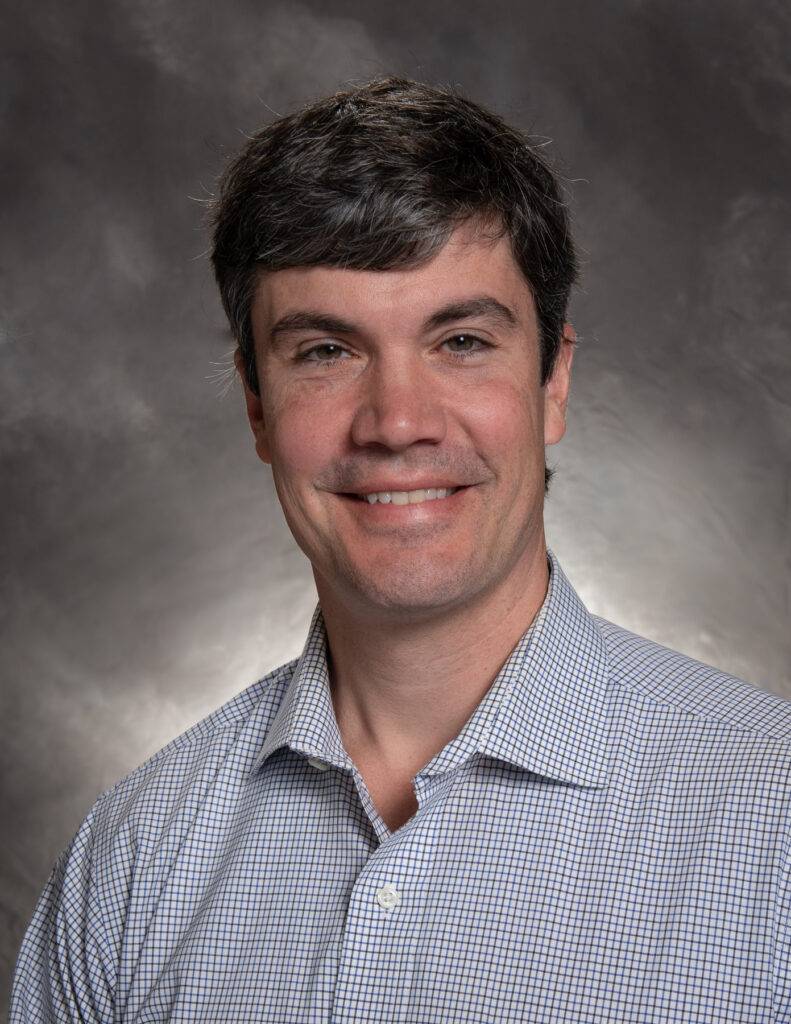
    Military personnel are known for their discipline, preparation, and commitment to service. As a former Naval Officer, Frontier Nursing University graduate Jake Mearse, CNM (Class 137), PMHNP, DNP, continues to display those same traits as he breaks down barriers in service to those in his community.  

    Today, Dr. Mearse is a certified nurse-midwife with his own practice, offering home births and clinical care in Midway, Georgia. Being a male nurse-midwife does not make him one of a kind, but he’s in rare territory. The American Midwifery Certification Board’s Demographic Report released in January 2024 found that less than 1 percent (88 out of 14,198) of all AMCB-certified midwives identified as male. There’s no data on how many of those 88 served in the U.S. Navy for 25 years, but it’s safe to assume it is an exclusive group.  

    “I’m third generation Navy, so that was kind of expected almost. That’s what our family does,” said Mearse, who grew up in Bend, Oregon, and joined the Navy when he was 18. “While I was in the Navy, I got into the medical field as a Navy Hospital Corpsman and served aboard submarines mostly in that role. Eventually, the Navy sent me to nursing school.” 

    The Navy’s Medical Enlisted Commissioning Program allows sailors and Marines to earn a nursing degree and become a Navy Nurse Corps Officer. Mearse utilized this opportunity to attend Hawaii Pacific University while stationed at Pearl Harbor. 

    “I had absolutely no interest in labor and delivery or midwifery or anything related to that,” Mearse said. “I spent most of my time as a nurse in the ER/trauma world. I loved the ER/trauma nursing. I was deployed in the Middle East a couple of times doing Mobile Trauma Bay. Once I got a commission, I worked as an RN full time.” 

    Mearse met his wife April in the Navy, and in 2004, they had their first child with the help of FNU graduate Michelle Munroe, DNP (Class 11), APRN, CNM, FACNM, FAAN. 

    “She was our midwife for two of our kids,” said Mearse, who now has seven children. “She’s the one who talked me into becoming a midwife. She pulled me aside during a prenatal visit and said, ‘I think you might want to look into doing this. You might be good at this.’ That seed that Michelle planted in my head just kept growing. Unfortunately, if you are a nurse and you’re a 6-1, 200-pound man, every time you say, ‘I want to go into labor and delivery’, they say, ‘That’s very nice, you’re going back to the ER.’ So, I had to do it on my own time.” 

    During his last few years in the Navy, Mearse used his accrued leave time to finish his midwifery training. He then entered the Navy’s “Duty Under Instruction” program in which participants stay in active duty while pursuing a degree. He attended the University of Washington with plans to become a nurse-midwife, but the Navy approved him for the psychiatric-mental health nursing curriculum instead. 

    “The whole time I was going through my DNP program studying psychiatric nursing, I was taking extra classes in women’s health, labor and delivery, trying to get as close into that world as I could,” Mearse said. “I wanted to be a midwife.” 

    Inspired by Dr. Munroe, Mearse approached FNU about enrolling in the nurse-midwifery program.  

    “Best decision I ever made,” Mearse said. “The biggest thing that was helpful with Frontier was the flexibility of the program. I was coming to them saying, look I’ve got my DNP in a field I don’t necessarily want to spend the rest of my life, and I’m active-duty military, so I’m going to have long stretches where I can’t do school and I’ll have to jump back into it. Frontier was the only school that said, ‘You know what, tell us what you need, and we’ll make it work.’ They were just incredible.” 

    Still, Mearse faced more hurdles before achieving his goal of becoming a nurse-midwife. He encountered significant pushback against the idea of a man being a midwife.  

    “On my very first day of clinical rotations, at my first clinical site, I was with a group practice, and one of the midwives in the group pulled me aside and said, “‘Just so you know, I don’t think men belong in midwifery. I do not want to help you. Please don’t ask me for anything.”’ It was a little discouraging Day 1,” Mearse said. “I had a very similar experience in a midwifery job that I took. One of my new partners pulled me aside and said, ‘I am not working with you. I am offended that you’re here. I don’t believe that men belong here, and I will do anything I can to get you out of here.’” 

    Mearse said that the only times he has experienced such gender discrimination, it has come from colleagues, not patients. He noted that patients who asked for a different provider cited cultural or religious reasons. 

    “For the most part, in my experience, patients don’t really care what your gender is. They just want to be taken care of,” Mearse said. 

    Mearse took a position at an Army hospital at Fort Stewart in southeast Georgia, and he and his family fell in love with the area. In 2002, Mearse opened Coastal Midwifery and Women’s Health, which was a success from day one. 

    “Before I had even advertised or even posted on social media that I would be doing home births, we started getting calls,” he said. “We got full really fast. Now we are at a point where we are having to turn moms away every month because we are full.” 

    Mearse strives to keep his schedule to five or fewer home births per month, and the clinic is open three days a week. At the clinic, Mearse provides full-scope gynecology and primary care, including IUDs, contraception management, and colposcopies.  

    To make access to care as convenient and accessible as possible, the clinic is open from 1:00 to 10:00 p.m. 

    “Our hours are based on what I remember being a dad in the military and never getting to go to appointments because all of the OB offices were always open 9-5 Monday through Friday,” Mearse said. “We decided to do things a little differently. We are open from 1 p.m. to 10 p.m., and we do two weekdays and Saturday because we really want families to be able to participate. We want to make this as family-friendly as we possibly can.” 

    Accordingly, running the clinic is very much a family project. Mearse’s wife, April, who is also a Navy veteran, is not medically trained but attends all the births to provide support and helps run the clinic. 

    “People come to the practice because they want a midwife. They stay with the practice because they meet April,” Mearse said. “Our kids are getting older now, but April is kind of the surrogate mom, especially to a lot of these young military moms who are 20, 21 years old, on the other side of the country from home. She helps set things up and take things down, but her most important role is being a hand-holder and encourager. She has that experienced mom energy where she can hold a young woman’s hand and say, ‘I’ve done this seven times. We’re going to get you through it. You’re going to be OK.’ I love the fact that a lot of our clients will text April instead of me.” 

    Yes, Jake and April have seven children, who are also active participants in the clinic’s day-to-day operations. They strip the beds, clean, and prepare rooms for the next client. They also help interact with the other children brought into the clinic, which features separate playrooms for older and younger children. 

    “We’re largely a military community, and we will have moms come in for their appointment, and they’ve got other little kids and the dad’s deployed,” Mearse said. “Because we have my kids there to help, moms can feel comfortable coming into their appointment they can relax and do their appointment without worrying about what the kids are doing.”  

    Mearse schedules 60-minute time slots for all his patients, ensuring ample time for questions and discussions about their care. 

    “We want our patients to be able to ask questions and get to know us and us to get to know them,” Mearse said. “I love the fact that we have a lot of moms who will come in and just hang out in the clinic even if they’re not being seen that day. They just want to come and sit and chat and drink coffee and be there. It’s wonderful.” 

    As veterans, Jake and April are particularly excited to be able to offer care to a large number of military families.  

    “When we first started this, one of the commitments we made is that we were going to try and make this affordable for military families,” Mearse said of the military discounts offered at Coastal Midwifery and Women’s Health. “We are just 10 minutes down the road from Fort Stewart. Even though we’re not able to do this for free for military families – I wish we could – they end up paying sometimes less than half of what they would pay elsewhere. If we’re making just enough to break even, I’m fine with that. We’re able to serve these people that are serving our country.” 

    Mearse hopes to be able to offer even greater access to care soon. He plans to hire another nurse-midwife as soon as she graduates.  

    “Right now, we are turning a number of moms away each month because we’re full, so it will be nice to be able to take more moms because there will be two of us,” Mearse said. “I’ve been on call 365 days a year for three-and-a-half years now. It will be amazing to be able to take a vacation and leave the practice in someone else’s hands for a little bit.” 
  • Marcus Osborne Selected as Chair of the FNU Board of Directors

    Marcus Osborne Selected as Chair of the FNU Board of Directors

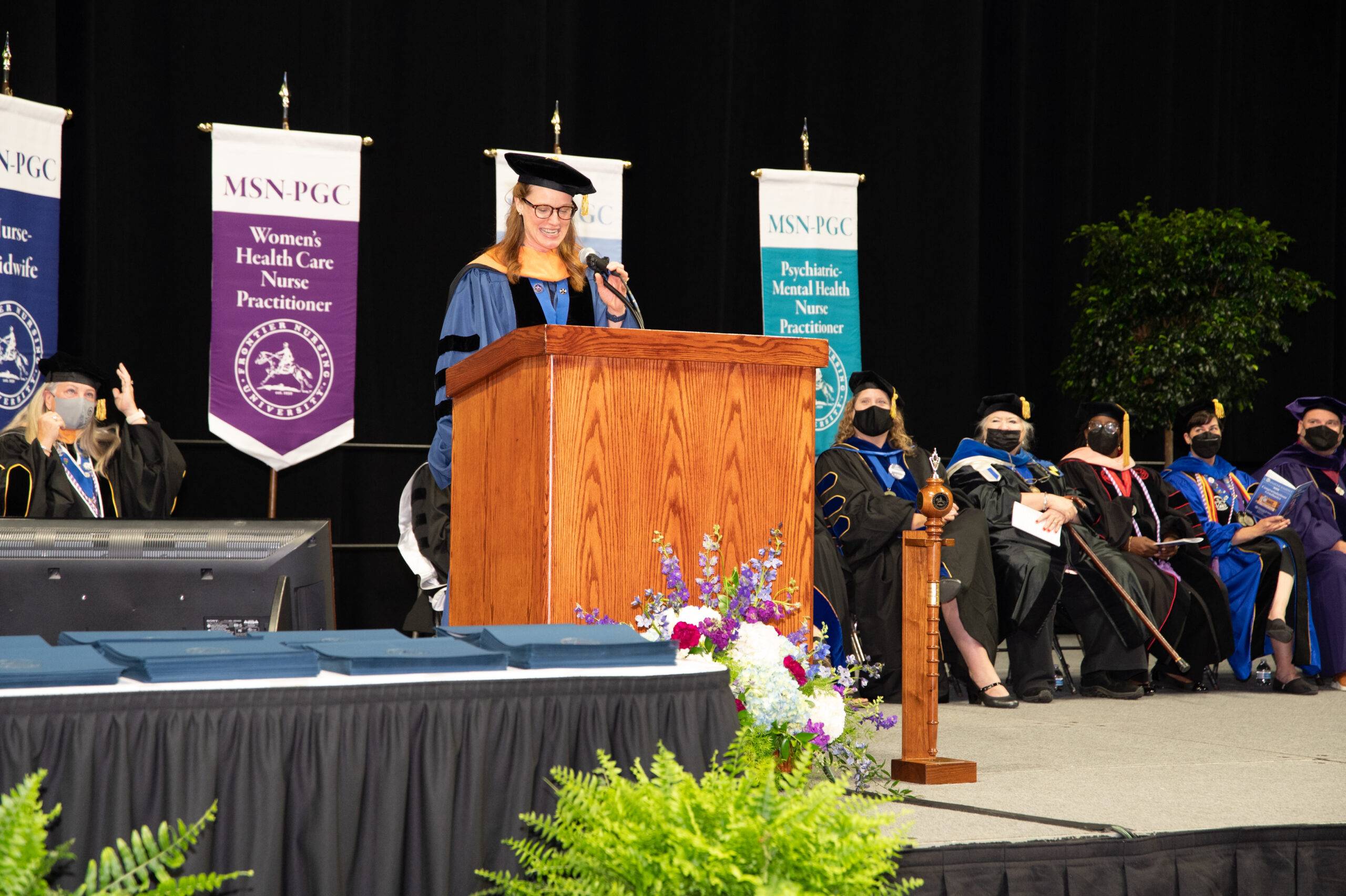
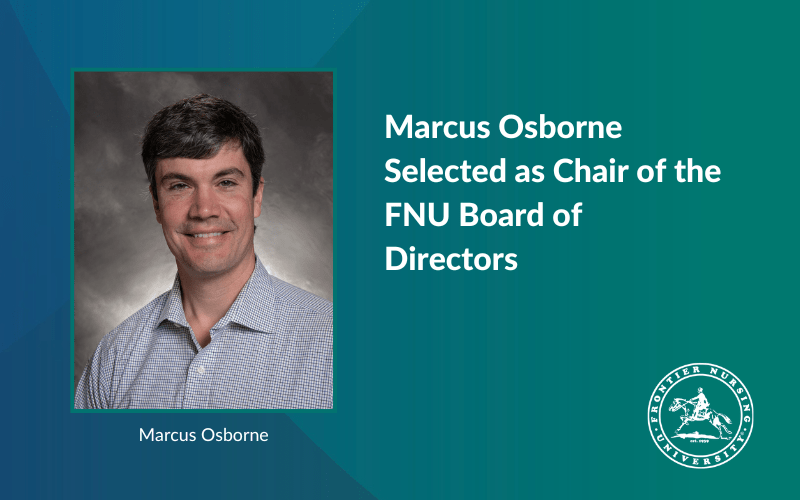
    Frontier Nursing University announced recently that Marcus Osborne has been selected to serve as the Chair of FNU’s Board of Directors. Osborne, who has served on the Board since 2017, fills the position that was held by Dr. Michael Carter for 23 years until he stepped down from the role in Spring 2025.
    “The singular word I would use is extraordinary,” Osborne said about the leadership of Dr. Carter’s tenure on the Board. “You think about the leadership that he brought during times where there was lots of change – the COVID pandemic, some of the political changes that have impacted both education and healthcare. The debt of gratitude that is owed to him is immense.”

    A Kentucky native, Osborne graduated from Transylvania University in 1997 with a degree in political science. He then took an internship role in the White House, participating in a study forecasting the impact of the internet and digital economy.

    After working a number of years as a management consultant in Boston, Massachusetts, he served as the Chief Financial Officer for the Clinton Foundation’s Health Access Initiative. He then earned his master’s in business administration degree with honors from the Harvard Business School.

    For 15 years, Osborne worked at Walmart in various roles, including the Senior Vice President of Health Transformation. Most recently, he served as CEO of RightMove, a spin-out from the Hospital for Special Surgery (HSS) providing virtual musculoskeletal care.

    “While we will miss Michael Carter, we are incredibly fortunate to have someone as innovative and collaborative as Marcus to be his successor,” FNU President Dr. Brooke A. Flinders said. “His profound professional experience and unique expertise have made him a valuable member of the Board for the past eight years. He is uniquely equipped to lead Frontier into the next chapter.”

    “This is a great honor,” Osborne said of becoming Board Chair at FNU. “It’s exciting for me to come into this role and it’s a great time to be at FNU.”

  • A Century of Stories: Dr. Kendra Faucett, DNP, CNM, APRN, CNE, FACNM

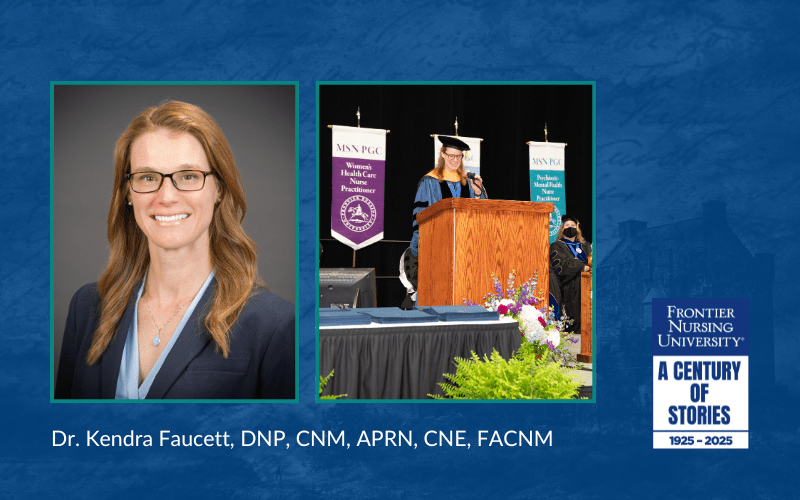
    A Century of Stories: Dr. Kendra Faucett, DNP, CNM, APRN, CNE, FACNM

    In 2025, Frontier Nursing University honored the 100-year anniversary of the inception of the Frontier Nursing Service. We are grateful for the alumni, students, couriers, donors, volunteers, friends, and employees who have made an incredible impact on FNU’s century-long journey. We celebrated this milestone year by capturing and sharing some of the countless stories that make up our history. Whatever your connection to FNU, we hope you enjoy these stories.

    Kendra Faucett with Kitty ErnstDr. Kendra Faucett is a 2012 graduate of Frontier Nursing University’s certified nurse-midwifery (CNM) program, but her FNU story neither ends nor begins there. Long before she became a nurse-midwife, she was a doula for nine years. During that time, she attended 90 births and soon learned that clients who had midwifery care had significantly better experiences.
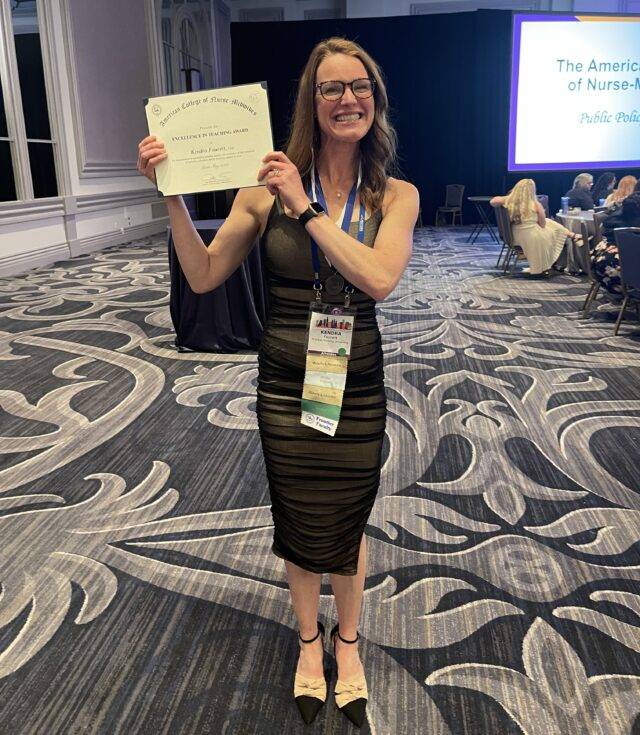
    She went back to school to become an RN and then a nurse-midwife. She was working full-time as an RN and raising a four-year-old daughter when a friend took her to Hyden, Kentucky, to see FNU’s campus.

    “We walked in the dining room and there was Kitty Ernst holding court with several students. Need I say more? Frontier here I come,” Dr. Faucett said. “The week before Frontier Bound in 2009, I learned that my adoption process was complete and that I could pick up my two sons in Haiti, ages 3 and 5.”

    Dr. Faucett started graduate school with three children ages 3-5 and a job as an RN. Not only was Frontier the right place for her, but it was also likely the only place.
    “The community-based education that is the brainchild of Kitty Ernst allowed me to join this profession,” said Dr. Faucett, who was inducted as a fellow of the American College of Nurse-Midwives in 2022. “It would not have been possible for me to attend a traditional brick and mortar school.”

    After graduating in 2012, she worked as a full-scope CNM in Frankfort and Lexington, Kentucky. During that time, she precepted several nurse-midwifery students from Frontier and realized she enjoyed teaching.

    In 2019, she joined the faculty at Frontier. From 2019-2023, she taught several different courses and was Course Coordinator of the Comprehensive Review Course. She said she found working to prepare students to pass the board exam was incredibly rewarding and that she especially loved the 1:1 tutoring to help students across the finish line. Her husband, Joshua Faucett, DNP, FNP, also taught advanced pathophysiology at that time.

    Dr. Faucett, who also obtained a DNP from Yale University, left Frontier in the fall of 2023 when she was named the Specialty Director of Nurse-Midwifery at Vanderbilt University School of Nursing.

    Kendra Faucett at Commencement

    >> Read More from “A Century of Stories” 

  • A Century of Stories: Janice Macopson, FNP-C, DNP

    A Century of Stories: Janice Macopson, FNP-C, DNP

    In 2025, Frontier Nursing University honored the 100-year anniversary of the inception of the Frontier Nursing Service. We are grateful for the alumni, students, couriers, donors, volunteers, friends, and employees who have made an incredible impact on FNU’s century-long journey. We celebrated this milestone year by capturing and sharing some of the countless stories that make up our history. Whatever your connection to FNU, we hope you enjoy these stories.

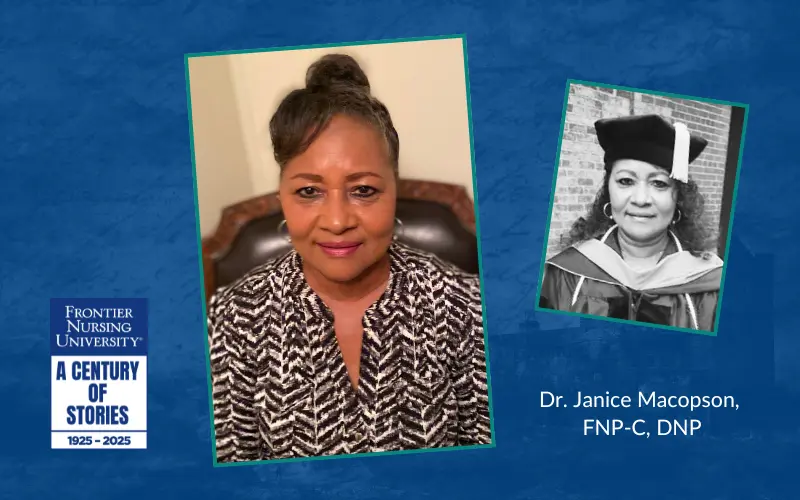
    Dr. Janice Macopson, FNP-C, DNP, has devoted her entire adult life to nursing. She retired in June 2024, ending her 49-year career. Since then, she has been quite busy exploring and enjoying the art world. She recently served as a presenter at the August Wilson Society’s Biennial Colloquium, held April 2-5, 2025, at the University of Pittsburgh.

    August, who is Dr. Macopson’s cousin, passed away in 2005, was a two-time Pulitzer Prize-winning playwright and known for his Century Cycle plays that chronicled the lives of African Americans during the twentieth century. Dr. Macopson’s presentation titled “Blood Memories: The Legacy of Ella Cutler and August Wilson” served as a deeply personal exploration of the enduring narratives carried by her great grandmother and the iconic playwright. These intertwined legacies reflected universal themes of resilience and redemption.

    Dr. Macopson’s own career reflects resilience and commitment to serve. Though retired, she was contacted recently to fill in part time at her previous employer, University of North Carolina (UNC) Health Blue Ridge. Once again, she answered the call to serve.

    “They just lost one of their providers and asked if I could help out a couple days a week for a few weeks until they get a full-time replacement,” said Macopson. “I always felt like I had a calling to do something in healthcare, and I’ve spent the last 49 years of my life working in some form of cardiac services.”

    Dr. Macopson grew up in Marion, N.C., near Spear Mountain in rural western North Carolina. Her great grandmother Eller Cutler was a midwife and worked with a local physician on Spear Mountain in the 1900s. The nearby Cutler Falls are named after her family.
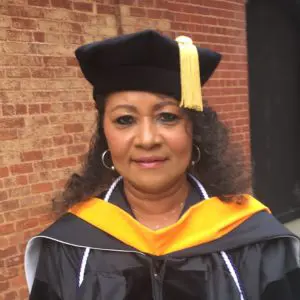
    “My family was the only African American family living on Spear Mountain in the 1900s,” Macopson said. “They were not slaves. They were landowners. Eller had a rough time in that town after her husband Jacob died. But she stayed. She was accused of things that were not true, and she was arrested because her white neighbors did not want her there. But she was resilient and savvy living on her land until her death in 1935.”

    Though Janice did not follow in her great grandmother’s midwifery footsteps, she credits her ancestry as the root of her desire to pursue a career in healthcare.

    “I feel like there was a calling for me to go into healthcare,” Macopson said. “My cousin called it ‘blood memories’ or the ‘pulse of your ancestors.’ I think it is your DNA, plus the pulse and spirit of your ancestors. It’s amazing how certain things live on from generation to generation.”

    Macopson followed her instincts and became a nurse. She became a nurse practitioner in 2001 and later began working with Blue Ridge Cardiology in Morganton, N.C., in 2011.

    She worked in various positions in Carolinas Healthcare System and in rural areas such as Burke, McDowell and Buncombe counties. She was the Director of Nursing over critical care services at Grace Hospital in Morganton for nearly 25 years before becoming a nurse practitioner in 2001, caring primarily for cardiac patients.

    “The more rural hospitals are where my heart was,” she said. “I felt that group of patients and families needed me most.” Her heart was also committed to being a lifelong learner, which is what led her to obtain her Doctor of Nursing Practice from Frontier in 2019.
    “I’ve always been in school until now,” Macopson laughed. “I was probably one of the oldest students at Frontier, but I hung in and made it through, with great support from Dr. Khara’ Jefferson (Program Director for the Doctor of Nursing Practice Program).”

    Macopson said earning the DNP was important to her role as a healthcare provider in a rural and underserved area of the state.

    “As we see the shortages in healthcare, nurses are the best group to bridge that gap. We know that nurses are the most trusted group of people in healthcare. So, I thought, I already have a master’s and if you can use that wealth of knowledge, you can be helpful to your community. The DNP gives nurses more credibility because you’ve reached the top of your educational journey.”

    >> Read More from “A Century of Stories” 

  • Shane Hagen: In Service to Country and Community

    Shane Hagen: In Service to Country and Community

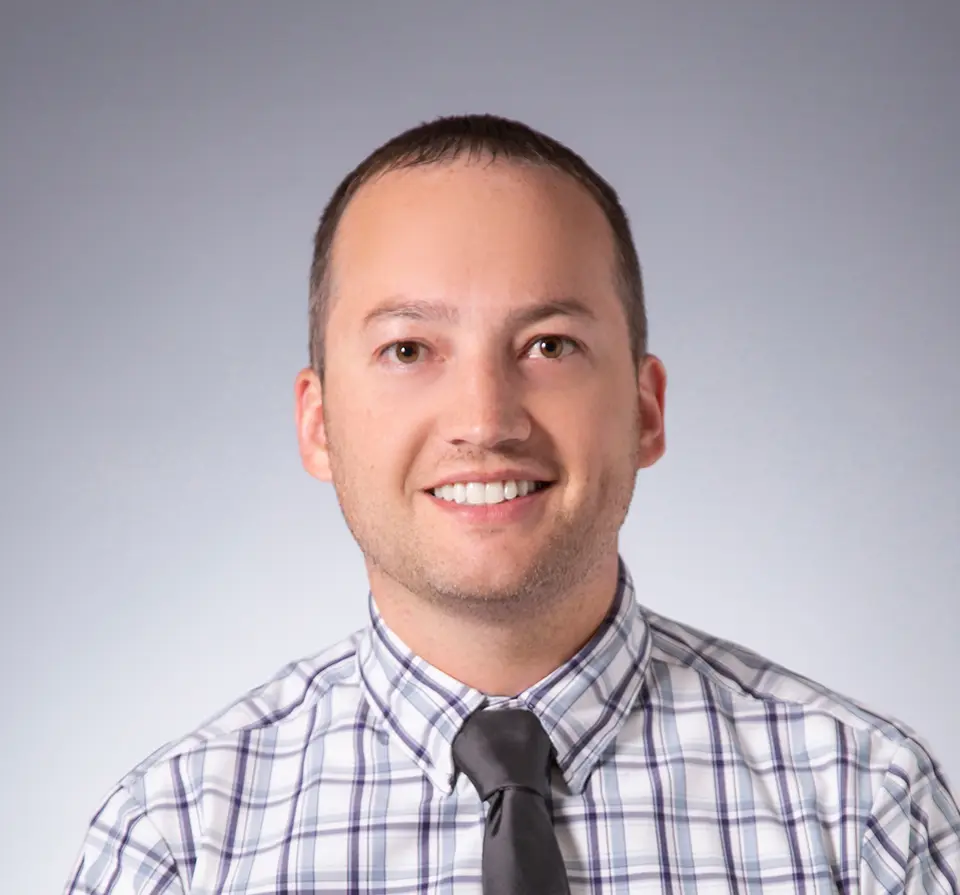
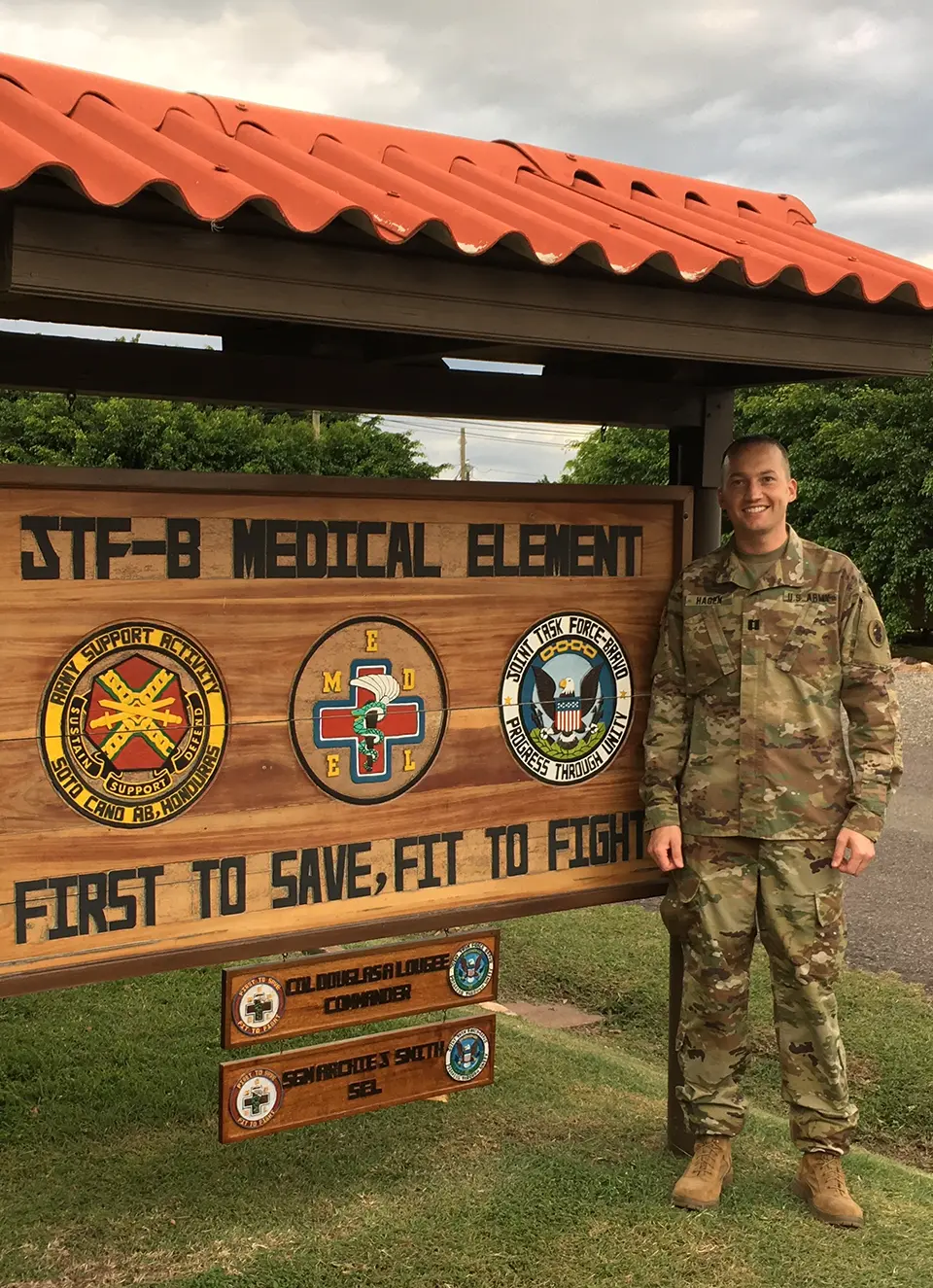
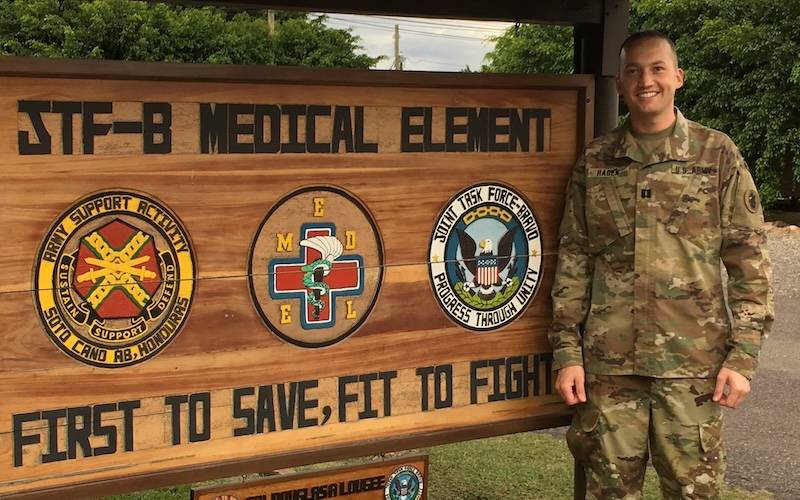
    Shane Hagen, DNP (Class 36), is an Adult-Gerontology Acute Care Nurse Practitioner (AGACNP-BC), Family Nurse Practitioner (FNP-BC), and Major in the U.S. Army Reserves. He also owns Valor Wellness and Aesthetics in Overland Park, Kansas. He recently took the time to answer our questions about his unique and impactful life in service to others. 

    Where did you grow up? 
    I was born in Watertown, South Dakota, but my family moved to Garden City, Kansas, when I was a baby. We later relocated to the Kansas City area, specifically Peculiar, Missouri, when I was in fifth grade. Aside from my military assignments worldwide, I have considered the Kansas City area home ever since. 

    What interested you in becoming a nurse? 
    My path into nursing was driven by a passion for helping others and a desire to work in a field that is both dynamic and intellectually challenging. Early on, I recognized the impact that nurses have on patient care, from bedside support to advanced practice roles. Nursing offered me the opportunity to combine clinical expertise with leadership, problem-solving, and advocacy, which ultimately led me to pursue advanced training and military service as a healthcare provider. 

    Please share your education, training, and military experience.
    I have completed multiple advanced degrees, including a Doctor of Nursing Practice (DNP) from Frontier Nursing University, along with dual board certifications as a Family Nurse Practitioner (FNP) and Adult-Gerontology Acute Care Nurse Practitioner (AGACNP). Additionally, I have an MSN degree with an emphasis on Nursing Education and Administration.  

    My education, combined with over two decades of clinical experience, has provided me with a diverse skill set that spans primary care, emergency medicine, critical care, and case management.  

    My military career in the U.S. Army Reserves, where I hold the rank of Major, has vastly expanded my scope of practice beyond traditional civilian settings. In combat environments, such as during my deployment to Iraq, I adapted to the Army’s evolving medical needs, providing care in high-intensity and resource-limited settings for both service members and local nationals.  

    The ability to think critically, act decisively, and balance both patient care and operational responsibilities has been instrumental in shaping my approach to medicine. Throughout my career, I have been fortunate to have had incredible mentors who helped me navigate the complexities of advanced practice while maintaining the highest standards of patient care. 

    Have you experienced any pushback from patients or colleagues as a male nurse? 
    I have been welcomed into this field with open arms by my peers, physicians, and patients. However, there have been occasional instances where patients have requested not to have a male nurse. I fully respect a patient’s right to request a provider of a specific gender, as much of what we do in healthcare is sensitive in nature. I believe that as long as patients receive quality care, they should have autonomy in choosing their healthcare providers. 

    Tell me about your current practice, scope of practice, etc. 
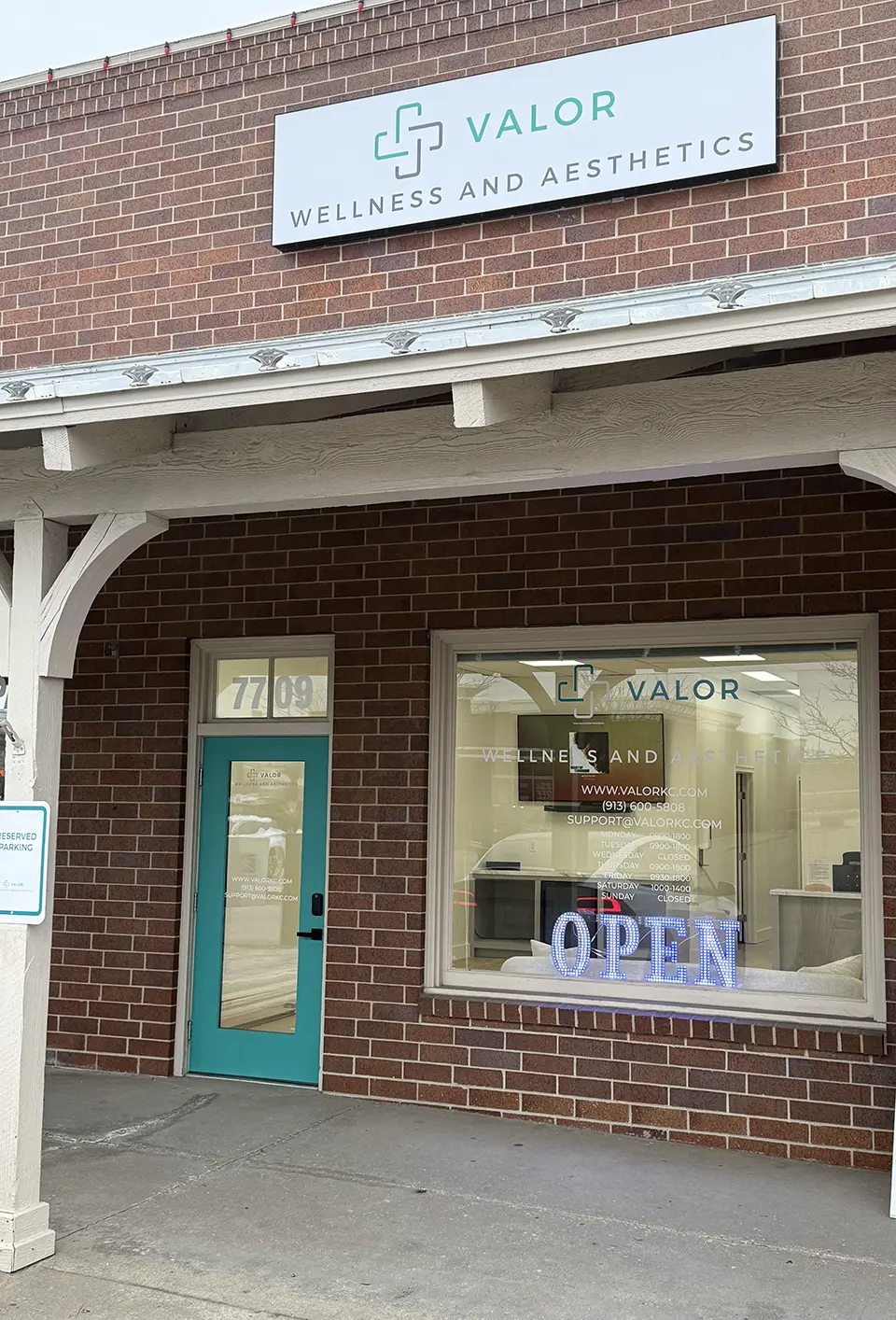
    I own Valor Wellness and Aesthetics, a practice that blends my clinical expertise, military experience, and passion for healthcare, located in Overland Park, Kansas. We offer primary care, aesthetic medicine, wellness services, and VA community partnerships for various military veteran services.  

    My goal was to create a practice that reflects the diverse healthcare experience I’ve gained over the years, allowing me to serve patients in multiple capacities, from preventative care to regenerative treatments.  

    One of the advantages of practicing in Kansas is that Nurse Practitioners have Full Practice Authority (FPA), allowing me to practice autonomously. This independence enables me to not only treat patients without physician oversight but also choose my own mentors and collaborators, fostering strong professional relationships that enhance patient care. 

    What are your long-term goals for yourself and your practice? 

    My long-term goal is to continue growing Valor Wellness and Aesthetics into a leading integrative healthcare practice, bridging the gap between traditional medicine and innovative treatments. I also remain committed to veteran advocacy, ensuring that service members receive the healthcare they deserve. 

    Beyond clinical practice, I am passionate about mentoring future healthcare professionals and advancing the field of nursing education. Having served as a professor and program director in multiple nursing institutions, I plan to stay engaged in shaping the next generation of nurse practitioners. 

    What role did Frontier Nursing University play in preparing you? 
    Frontier Nursing University provided me with a strong academic foundation and the practical skills necessary for both clinical practice and business ownership. The curriculum emphasized evidence-based practice, leadership, and rural healthcare, which directly translated into my ability to manage a practice, optimize patient outcomes, and navigate the complexities of independent practice. The university’s emphasis on community-focused care also reinforced my commitment to providing high-quality, patient-centered services at my clinic. 

    Is there anything else you would like to share? 
    I am incredibly grateful for the opportunities I’ve had in both civilian and military healthcare settings. My experiences have reinforced the importance of adaptability, lifelong learning, and mentorship in shaping a successful career. Whether in a combat environment, a university classroom, or my own clinic, my goal has always been to provide exceptional care, advocate for patients, and contribute to the advancement of healthcare. 

  • A Century of Stories: Dr. Elia R. Cole, DO, MPH

    A Century of Stories: Dr. Elia R. Cole, DO, MPH

    In 2025, Frontier Nursing University honored the 100-year anniversary of the inception of the Frontier Nursing Service. We are grateful for the alumni, students, couriers, donors, volunteers, friends, and employees who have made an incredible impact on FNU’s century-long journey. We celebrated this milestone year by capturing and sharing some of the countless stories that make up our history. Whatever your connection to FNU, we hope you enjoy these stories.
    Dr. Elia R. Cole, DO, MPH, was born in the Hudson Valley in upstate New York. As a pre-med student, she was an EMT and Director of Emergency Medical Services while attending Bard College. She also participated in summer programs to prepare for the medical field through a pediatric surgery internship in Lima, Peru, and the FNU Courier Program in Hyden, Kentucky, in 2009.

    The Courier Program was started in 1928 by FNU founder Mary Breckinridge, who recruited young people to work in the Kentucky mountains and learn about service to humanity. In the early days, Couriers escorted guests safely through remote terrain, delivered medical supplies to remote outpost clinics, and helped nurse-midwives during home visits and births. Today, the Courier Program Public Health Internship is a service-learning experience that provides an opportunity for students interested in public health, healthcare, or related fields to see what it is like to provide medical care to an underserved population. It was exactly the rural, underserved experience that Dr. Cole had been looking for.

    “It felt like I was stepping back into history, especially because I was pretty excited to learn in a place where Mary Breckinridge once stood, a place that was part of the history of American Public Health,” said Dr. Cole, who is now a physician with Northwest Permanente.

    Dr. Cole’s ties to the Courier Program have extended well beyond that memorable summer. Even as her medical career has progressed and she has moved across the country, Cole has stayed connected. She has come back for opening or closing sessions of the program or to give presentations, has served on the Courier Advisory Committee, and has been a mentor to other Couriers.

    Dr. Cole studied public health at Boston University and medicine at the Pacific Northwest University of Health Sciences in Yakima, Washington. As a third and fourth-year medical student, Dr. Cole was assigned clinical rotations based out of Fairbanks, Alaska.

    Her rural healthcare experiences included travel to remote villages, where she learned to provide healthcare with limited resources. Further clinical rotations took Dr. Cole across the country to the Midwest and the Navajo Nation. These varied experiences of life in America further fueled Dr. Cole’s desire to deliver healthcare to underserved populations.

    In recognition of her past and ongoing contributions to the Courier Program, Dr. Cole was awarded FNU’s Unbridled Spirit Award in 2024. The award is presented annually to a former FNU Courier who is dedicated to serving others, has ongoing, longstanding stewardship of Frontier, and has demonstrated conviction, courage, and a zest for adventure.

    >> Read More from “A Century of Stories”

  • Frontier’s CNM and WHNP programs prepare students for clinical practice in real-world settings

    Frontier’s CNM and WHNP programs prepare students for clinical practice in real-world settings

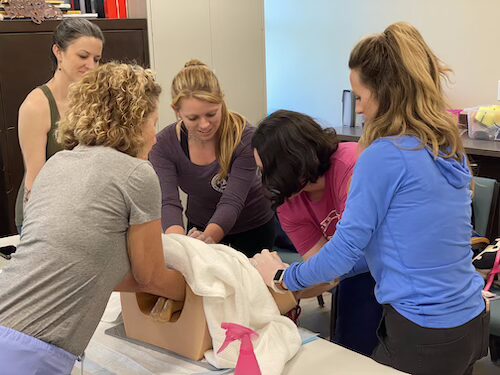
    Our midwifery students perform simulations in an office-like setting, a home birth room, a hospital birth room, and a birthing center setting.When students at Frontier Nursing University prepare to begin their clinical rotations in their home communities as part of their Master of Science in Nursing (MSN) or Post-Graduate Certificate (PGC) programs, they do so with added confidence, thanks to FNU’s skills-intensive Clinical Bound.

    Clinical Bound, an immersive training, allows students to bridge the gap between didactic learning (online coursework) and hands-on clinical practice through simulations on FNU’s campus. The goal is to provide a safe environment where students can refine their skills, make mistakes, and correct them before working with real patients.

    To effectively prepare students during Clinical Bound, FNU’s simulation labs are modeled after specific real-world environments. This provides students with practical experience in each unique setting. Our midwifery students perform simulations in an office-like setting, a home birth room, a hospital birth room, and a birthing center setting.

    “Clinical Bound is an exciting time at Frontier. This is when students switch from their didactic learning to hands-on skills, so they’re with their instructors for the first time,” said FNU President Dr. Brooke A. Flinders. “It gives them a chance to validate their skills as practicing nurses, while learning through experience to trust their clinical judgment.”

    The goal is to provide a safe environment where students can refine their skills, make mistakes, and correct them before working with real patients.

    In the Birth Center Room on Frontier’s campus, students gain clinical practice in an out-of-hospital setting, complete with a birthing tub and a homelike environment, where equipment is tucked away to create a comfortable atmosphere for the patient and family. Similarly, the Home Birth Room allows students to practice in a home setting, considering preemptive issues and planning for potential transfers to a hospital if complications arise.

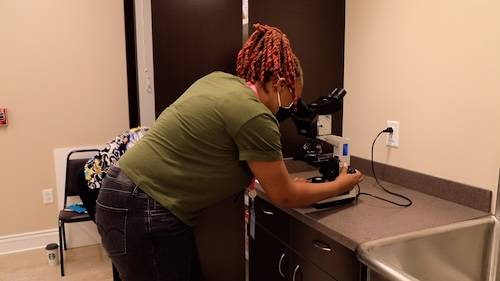
    While midwifery is often associated with home and birth centers in the U.S., The Commonwealth Fund shared 2022 data from the National Center for Health Statistics indicating that 87 percent of midwife-attended births in 2020 were in hospital settings in collaboration with nurses and physicians. Frontier’s Hospital Room provides students with the opportunity to practice using the equipment they will encounter during hospital births. The Office Visit Room is designed to simulate gynecological visits and return obstetrics appointments, and is equipped with pelvic and breast mannequins for exams, microscopes, and specimen gathering tools.

    Tour our Clinical Bound simulation labs in this episode of Frontier’s On the Trail:

     
    In the lab area, students practice a variety of skills related to gynecology and obstetrics, including maneuvers using simulators that mimic amniotic fluid and allow for different baby positions, inserting IUDs, performing endometrial biopsies, conducting cervical exams, and fetal scalp electrodes.

    A unique feature of Clinical Bound is the use of standardized patients, who are trained actors portraying real-life patient scenarios. This allows students to practice both technical skills and patient communication, while faculty members, acting as preceptors, provide real-time guidance and feedback.

    In the lab area, students practice a variety of skills related to gynecology and obstetricsSeveral students are able to observe these encounters in real-time thanks to a software program called SimIQ, which allows students to watch each other’s simulations from nearby classrooms or remote locations via tablets or computers. This innovative approach promotes collaborative learning allowing students to learn from each other and obtain helpful feedback from both faculty and peers.

    By offering in-person clinical simulations and integrating SimIQ software, students are equipped with the necessary tools to interact with patients not only in a traditional in-person setting but also in a telehealth environment. This adaptability is increasingly crucial as healthcare access continues to evolve and telehealth becomes more prevalent.

    By combining the knowledge gained through didactic coursework with hands-on simulation training, simulation labs during Clinical Bound equip students with the skills, confidence, and critical thinking needed for their clinical experiences. As they step into patient care roles, they do so with a solid foundation, prepared to apply their expertise in real-world settings.

    To learn more about Clinical Bound on Frontier’s campus, click here.

  • Frontier Introduces New CE Course: The Gift of Precepting

    Frontier Introduces New CE Course: The Gift of Precepting

    Frontier’s new “The Gift of Precepting” CE course provides participants with information about the roles, responsibilities and expectations of the clinical preceptor in guiding and mentoring advanced practice nursing students in a variety of settings. It is divided into small segments to allow for learning at your own pace.

    Integrating the Community of Inquiry theoretical framework, participants will explore teaching learning strategies that address adult learners, learn ways to create high-quality clinical experiences incorporating diversity, the existence of bias, and attention to techniques to assess student readiness to engage in clinical learning. Ways to effectively manage the clinical learning environment and evaluate student achievement of objectives will also be discussed. Legal and ethical issues regarding student and patient confidentiality that need to be considered when providing clinical learning experiences will be addressed.

    Course Outcomes:

    1. Explain the roles and responsibilities of the clinical preceptor.
    2. Apply evidence-based strategies to the preceptor role.
    3. Integrate the three presences of the Community of Inquiry as a model for Nurse Practitioner students to meet Nurse Practitioner Core Competencies and role transition.
    4. Incorporate knowledge of learning styles and adult learning principles to facilitate, instruct, model, and encourage student learning in the clinical setting.
    5. Summarize the use of assessment methods, including direct observation, formative and summative assessments, and actionable feedback to guide student learning.
    6. Recognize legal and ethical issues and constraints that impact the clinical learning environment.
    7. Cultivate an environment that facilitates student role transition from RN to APRN through role modeling, coaching, and mentorship that focuses on APRN professional roles, values, and relationships within and outside of the profession.
    8. Discuss factors that contribute to an effective and secure learning environment in the clinical setting that consider personal/cultural factors, bias, and inclusivity.
    9. Examine methods of clinical student evaluation, including psychomotor skills, therapeutic interventions, and APRN role development.
    10. Explore effective strategies for problem-solving in the clinical setting, including preventing potential problems, problem identification, and interventions.

    This activity is approved for six contact hour(s) of continuing education (which includes 0 hour(s) of pharmacology) by Frontier Nursing University. Activity ID 2502-001. This activity was planned in accordance with ANCC Commission on Accreditation Standards and Policies.


Request Information Apply Give Now