The Nurses on Horseback and the People They Served is a three-part series covering the history of Frontier Nursing University. On the rugged hills of Eastern Kentucky, nurses earned trust by listening, learning from local families, and standing beside them in moments of illness, birth, and crisis. Over time, this collaboration improved health outcomes, reduced maternal and infant mortality, and strengthened the well-being of the community they served.
By Janet L. Engstrom, PhD, APRN, CNM, WHNP-BC, CNE, Anne Z. Cockerham, PhD, APRN, CNM, WHNP-BC, CNE, and Joanne M. Keefe, DNP, MPH, APRN, FNP-c, CNE
Trusting the Nurses to Provide New Types of Care and Treatments
A major challenge for the FNS nurses was building enough trust with the community so that they would accept unfamiliar treatments such as vaccines. At the time, typhoid and diphtheria outbreaks were common and both were important causes of illness and death in children and adults. When there was an outbreak of typhoid fever in one community, two nurses were sent to the area to vaccinate as many people as possible. Although the community members had already gathered when the nurses arrived, no one stepped forward to receive the injection. Finally, one brave man understood the dilemma and stepped forward to be vaccinated and then brought his children to the nurses to be vaccinated. Everyone else followed. The next day the nurses administered 140 vaccines and by the end of the week, the entire community was vaccinated.
While many people welcomed the nurses’ care for illnesses and injuries, some were reluctant to use the FNS nurse-midwives to attend their birth. Families often had pre-existing relationships with the local midwives and continued to have them attend their births. However, the local midwives did not provide prenatal, postnatal, or infant care, so the FNS nurses provided these important services regardless of who would attend the birth. During the first year of the service, the nurses attended only 30 births, and it would take several years to before they attended most of the births in the area.
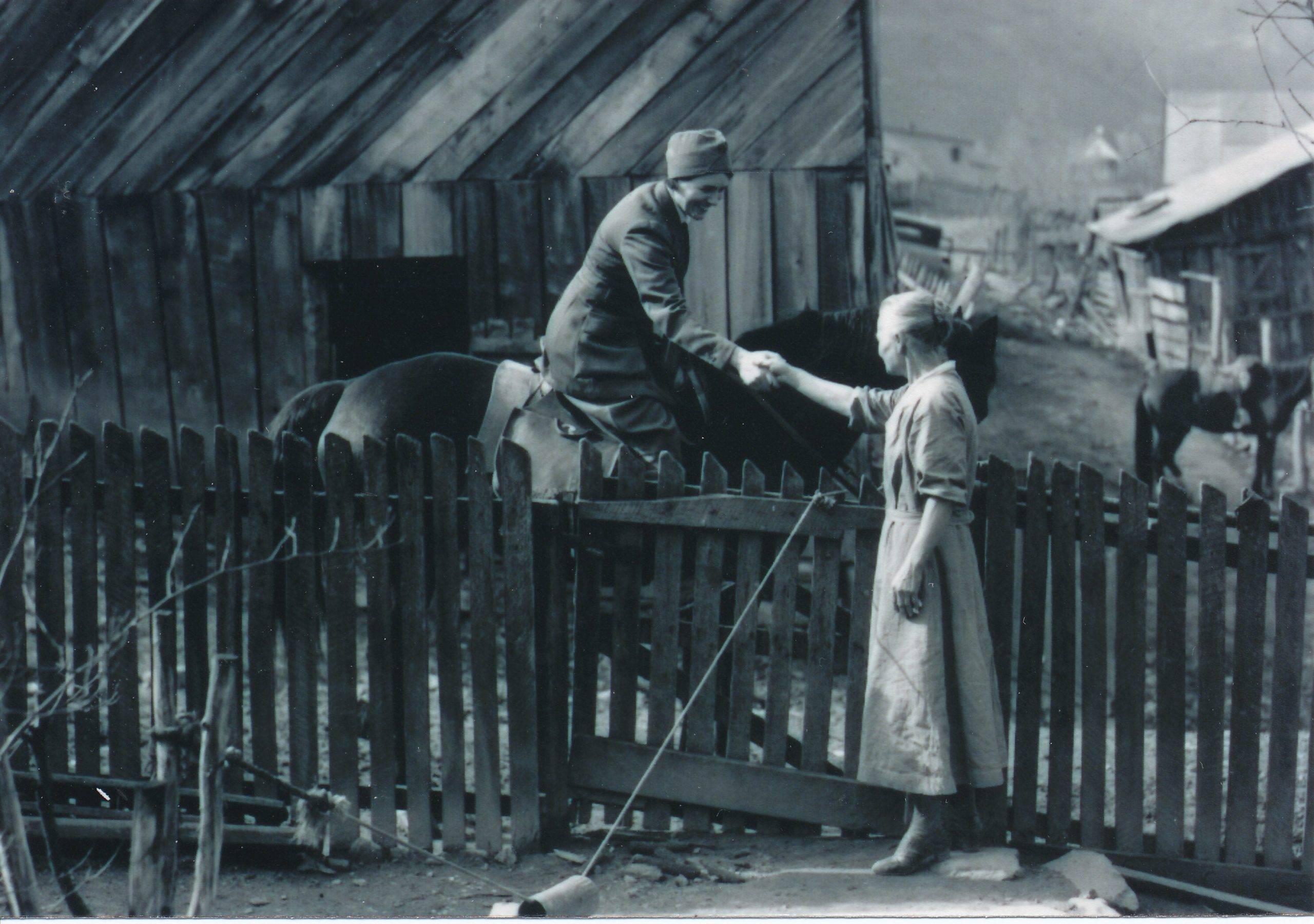
FNS nurse-midwife speaking with one of the local, community-based midwives.
Another important way of building trust in the community was to demonstrate respect for the local people’s tradition and wishes, which sometimes conflicted with the standard nursing procedures. When one nurse was attending a woman during labor, a chicken kept jumping on the woman’s bed. When the nurse tried to ‘shoo’ the chicken off the bed, the mother asked the nurse to let the chicken stay because the chicken gave them an egg every day. Eggs were an important part of the mountaineer’s diet, so the chicken stayed and laid her egg, and then the mother gave birth to a healthy baby.
Opening Their Lives to the Nurses and Guests
Many families supported the work of the FNS by allowing people from outside their community access to their lives for the purposes of documentation, marketing, and fundraising. Since much of the money needed to run the FNS came from donations from outside of the mountains, the stories of the nurses’ work and the people they served had to be told and shown to the outside world. Thus, families were asked to allow people from the outside to visit their homes, eat dinner with the family, and even sleep in their home. The families allowed their stories and pictures to appear in magazines, books and films. The sharing of their personal lives as well as their space with visitors was a great gift as many families sacrificed their privacy, their limited food sources, and precious space in their small homes.
Another demonstration of trust was when Nurse Mary Bristow. Willeford collected research data for her dissertation. Willeford surveyed families in the FNS service area asking personal questions about all sources of income and every type of health-related expense. Such questions could only be asked and answered because Willeford had worked and lived among the families and was a trusted nurse and community member.