Blog

  • Dr. Francis Aho receives 2024 Distinguished Service to Society Award

    Dr. Francis Aho receives 2024 Distinguished Service to Society Award

    Sometimes, we wind up exactly where we are meant to be in life. For Dr. Francis Aho, DNP (Class 37), CNM, that place has been with Africa Mission Services (AMS) in Kenya since 2008. She recently opened the Africa Mission Services Women’s Health Center, an 11,000-square-foot building that includes both inpatient and outpatient services, as well as a labor and delivery wing. The birth center provides an extremely rural and underserved population with vital services that were previously administered as a small component of the AMS Community Health Clinic, which serves the Maasai tribe of the Maasai Mara National Reserve in Kenya.

    “This is major for us,” Aho said. “We have an outpatient department, an inpatient maternity wing, and then an OB labor and delivery wing. We started out in a little clinic building with just an exam bed, no electricity, no running water.”

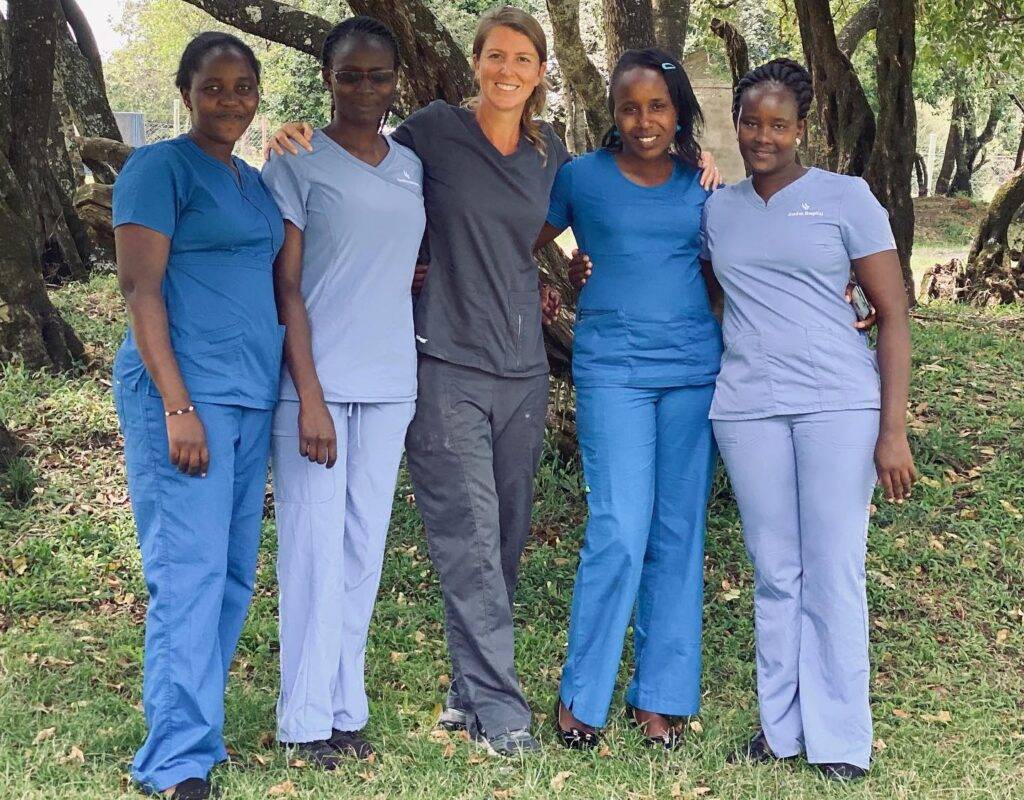
    In 2016, Aho and her team renovated an area of the AMS Community Health Clinic to provide more space for maternal health services, but the need for a larger, dedicated space is evident. In 2023, Aho and her team of four Kenyan midwives delivered 612 babies in a community with an estimated population of 11,000.

    “It is really hard to know the actual population,” Aho said. “We are on dirt roads. If you drive down the road, it looks like nobody is around here, but they are all in little huts and homes in the bush. We also have women from farther away who come for ultrasound or specialty care such as infertility.”

    What might seem overwhelming to some is exactly the environment Aho craves. Born in Switzerland, she and her family came to the United States when she was 4, moving around a lot before settling in rural western Tennessee when she was 10. She grew up in a very religious family and often read about mission trips and mission work. Her passion for serving led her to become an ER nurse, where she found that she also thrived on the adrenaline rush of providing urgent care. She thought of becoming a flight nurse, which would be both exciting and fulfilling, but the idea of mission work was also in the back of her mind. She did some mission work in Honduras and sought a more permanent position. That’s when she found AMS. She moved to Kenya in 2008.

    “At that time, there was a clinic – just a little building – and visiting doctors would open it up,” Aho said. “It would be open for a week and then shut down. I asked Africa Mission Services if I could come and open up the clinic full-time. I was 24 and thought I could change the world. A Kenyan provider, thank goodness, asked if he could help open it up. We came the same week. That was December 2008.”

    Aho recalls losing a 5-year-old patient with malaria just three days into her time at the clinic and hiking into the village to treat pregnant women while the Kenyan provider treated the men.

    “I was an ER nurse and knew nothing about women’s health,” Aho said. “I was just kind of feeling around their bellies and talking to them about nutrition. I had no clue what I was doing. That evening we delivered our first baby with a little mini Maglight. The girl who is now in charge of my office was holding the mini Maglight, and I delivered the baby.”

    Despite the uneven start, Aho was hooked. Aside from a two-year hiatus from the clinic after the birth of her twins in 2014, she has remained at the clinic along with her husband, Andrew, who is the founder of AMS.

    After the birth of her children, Aho’s awareness of the need for maternal care was heightened. She needed to learn more in order to better care for these women and their babies.

    “I think my maternal instinct kicked in. I had to change things,” she said. “I ended up going to Frontier Nursing University and decided to become a midwife. We did a big fundraiser, got equipment, and renovated a whole area at the clinic, and that’s where we set up the birth center. I hired Kenyans who were more specialized midwives and knew maternity, and we became the Women’s Health Center.”
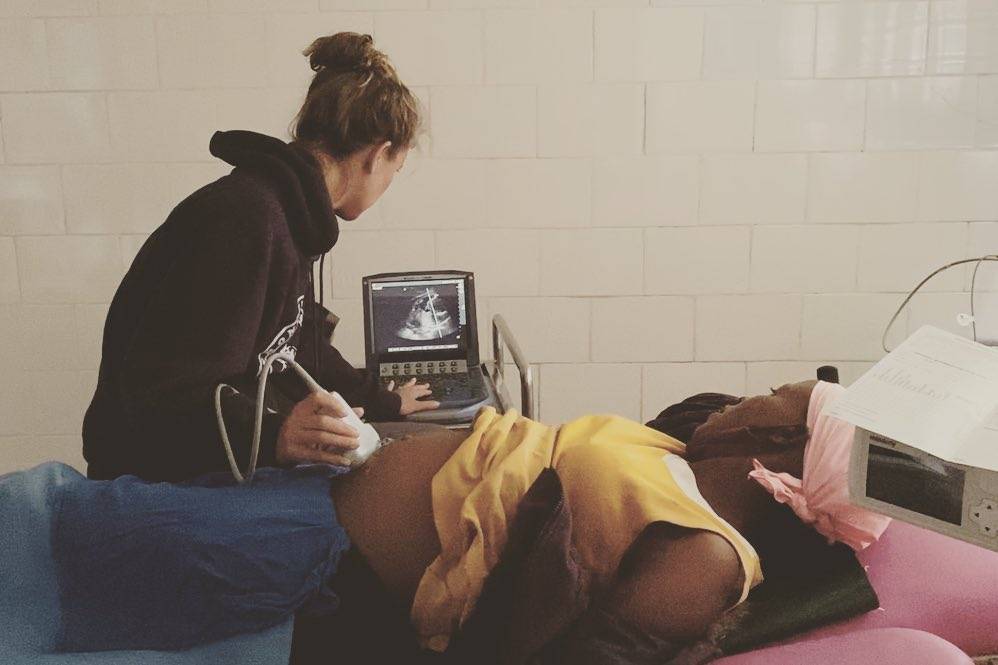
    After earning her CNM at Frontier, Aho went on to get her DNP from Frontier as well. Her DNP project led to the establishment of a prenatal class at the clinic.

    “I have learned basic OB ultrasound and taught two of my midwives,” she said. “As I was doing my DNP, I decided, as part of it, I would ultrasound all the women. I did ultrasounds on hundreds of women for my DNP project. That’s what made me learn OB ultrasound.”

    Aho’s enrollment at FNU coincided with the university updating its policies to disallow clinicals being completed internationally. Aho feared she might not be able to continue.

    “I was all gung-ho and ended up going to Frontier Bound that week they announced online that they were not allowing international clinical,” Aho said. “They worked with me. I went and did three months, then I flew back to Kenya for two months, and then I flew back and finished. I did my clinical in Chattanooga. For my DNP, they allowed me to do my project at my clinic. Being able to do it somewhere where I have autonomy and leadership, I was able to choose something that was very impactful for my population and clinic.”

    Like many others, Aho was drawn to FNU’s mission to provide care to rural and underserved communities and populations.

    “I chose Frontier because of their mission,” Aho said. “Their mission is really to give back to rural areas and underserved populations, and that really hit home with me.”

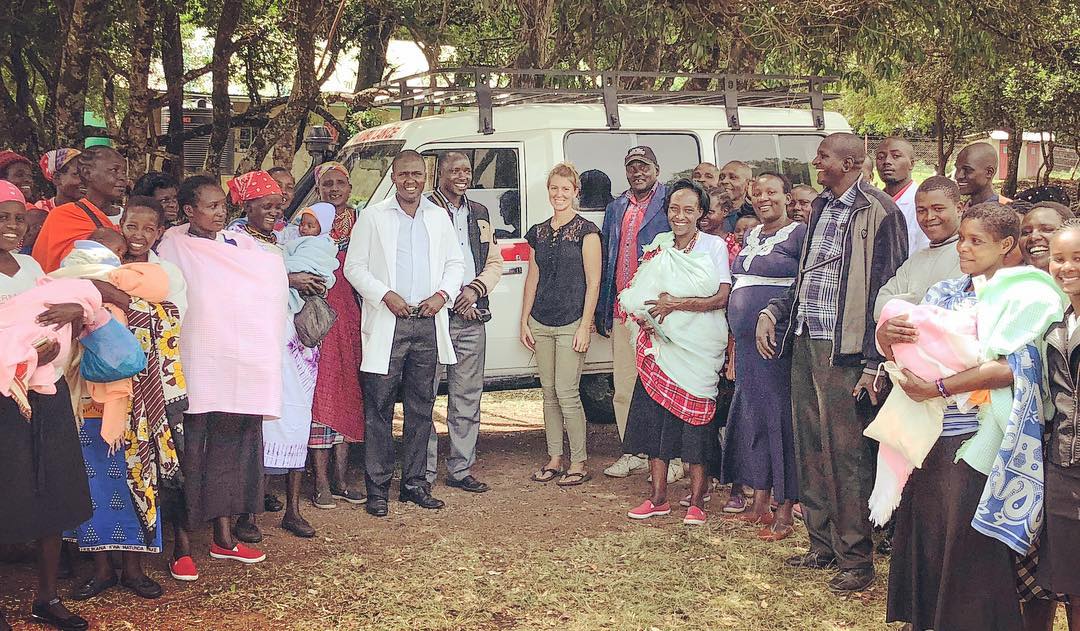
    Without question, Aho certainly serves a rural and underserved area. Not only are healthcare services limited, but so are travel and overall access to care. AMS has modified a Landcruiser to serve as an ambulance able to traverse the rough and muddy dirt roads. It is over an hour’s drive to a facility that can perform a C-section and two-and-a-half hours to get to the nearest NICU.

    “We are the first line for anything emergency-related in the area,” Aho said. “We deal with a lot higher risk than a birth center should, considering we don’t have C-sections, but we see patients that we will never see for prenatal care who will show up at our door ready to deliver. We have a population of HIV-positive moms, we deliver twins at least once a month. We have done triplets. We have done breach delivery. When we do an ultrasound and know that they are twins, we do the counseling and tell them they should go into town and deliver where there is a backup for C-section, but at the end of the day, they can afford to come to us, and they are going to show up.”

    They can afford the care Aho and her time provide thanks to AMS being aligned with the Kenyan government’s insurance program. The government provides payment for rural women, even if they are uninsured.
    “The majority of people don’t work, and they don’t have insurance,” Aho said. “They can come to our clinic, we sign them up, and then they get four prenatal care visits, the delivery, four well-baby checkups, and the immunizations that the government will pay us for. We get about $20 for the delivery. It’s not big money, but it’s more than we could charge the locals. It does help cover our payroll, but we haven’t been paid since March of 2023.”

    AMS, which is a nonprofit with no religious affiliation, relies on donations, fundraisers, and volunteers to help serve its mission. Volunteer medical teams, construction teams, and even landscaping teams provide much-needed physical support.

    “When I have a medical team, I will go out with them, and we will set up mobile clinics in the villages that don’t have a healthcare facility, and we do free clinics under a tree,” Aho said.

    With the opening of the AMS Women’s Health Center, Aho will do so with a 12-person staff, including four midwives, a lab technician, a pharmacist, and social workers who are birth assistants. Together, they are committed to providing excellent healthcare while respecting the culture and values of their patient population.

    “Having a birth here is a woman’s event completely,” Aho said. “They are polygamous in general, so they come either with a co-wife, a sister, mother, some other women – and we will often have a room full of women supporting one mother. We will let mothers come into the room if women are giving birth and they want their mom or another woman to give them strength. They have certain practices like blowing air into the mom’s mouth that give them strength, conveying strength from one to the other. I try as much as possible only to educate and change things that are not healthy for the baby or mom.”

    “I don’t want them to feel judged when they are giving birth,” Aho said. “I feel like I empathize with the women here. They have a tough life, and if I can make their childbirth experience safer and give them a place where they can rest and feel treated with respect and their cultural values respected, it gives me a high sense of fulfillment.”

    The opening of the Women’s Health Center this summer figures to be equally fulfilling. She hopes that it will grow beyond providing maternity care to addressing other needs, such as breast cancer and cervical cancer testing and treatment.
    “I never came in with the idea that I could raise enough funds or start this big women’s health center,” Aho said. “My dream is that this women’s health center way outlasts me. I will feel like I have been successful if I have trained the locals to know what I know and if the center doesn’t shut down when I leave.”

  • Introducing the 2024 Frontier Couriers

    Introducing the 2024 Frontier Couriers

    The 2024 Frontier Courier Program Public Health Internship program will include eight college students from across the country. The program is a seven-week hybrid internship designed to meet the needs of today’s students. The program will have two phases: Remote Learning and In-Person observations. Students will begin in the county of their residence and then move to the FNU campus in Versailles, Kentucky, to complete their internship. When they arrive on the FNU campus, they will utilize what they have learned from their summer reading, discussions, and projects while observing clinical host sites in and around Woodford County. Courier students will also participate in volunteer days and explore the surrounding areas in Kentucky.

    Janya Allen

    Preferred Name: Janya
    Pronouns: She/her
    School: University of Chicago
    Hometown: Chicago, IL
    Major/Minor: Neuroscience and Pre-Medicine
    Dream Job: Rural Physician in Neurology or Neurosurgery
    Courier Program: Joining the Courier Program closely aligns with my desire to observe medicine and clinical practices in a setting like rural Kentucky. I look forward to engaging with the community, immersing myself in a small town (as opposed to a big city), and cultivating a better understanding of how to serve patients

    [siteorigin_widget class=”SiteOrigin_Widget_Image_Widget”][/siteorigin_widget]

    Catherine Craig

    Preferred Name: Catherine
    Pronouns: She/her/hers
    School: Bucknell University
    Hometown: Mansfield, PA
    Major/Minor: Psychology & Economics
    Dream Job: Physician Assistant
    Courier Program: I wanted to join the Courier program because of the focus on medically underserved communities and the opportunity to explore the challenges specific to rural public health and healthcare. My goal is to integrate the experiences and insights I will gain this summer into improving the lives of those whom I may encounter and care for in the future as a medical provider.

    [siteorigin_widget class=”SiteOrigin_Widget_Image_Widget”][/siteorigin_widget]

    Samantha Jones

    Preferred Name: Sami
    Pronouns: She/her/hers
    School: University of Kentucky
    Hometown: Charlotte, NC
    Major/Minor: Public Health
    Dream Job: Pediatric Asthma and Allergy Specialist
    Courier Program: I’m really interested in pursuing a career in rural medicine and thought this program would be an amazing opportunity for me to get first-hand experience with rural public health clinics in Kentucky.

    [siteorigin_widget class=”SiteOrigin_Widget_Image_Widget”][/siteorigin_widget]

    Nora Oakes

    Preferred Name: Nora
    Pronouns: She/her
    School: University of North Carolina at Chapel Hill
    Hometown: Asheville, NC
    Major/Minor: Biology
    Dream Job: LD Nurse or Midwife
    Courier Program: I wanted an opportunity to work in rural health care outside of my hometown and to get to work with and get to know people from all over the country. I also think it is amazing to get the opportunity to intern at a place that has had such an impact on women’s health.

    [siteorigin_widget class=”SiteOrigin_Widget_Image_Widget”][/siteorigin_widget]

    Avery Hanel

    Preferred Name: Avery
    Pronouns: She/her
    School: Western Kentucky University
    Hometown: Louisville, KY
    Major/Minor: Nursing
    Dream Job: Pediatric Nurse
    Courier Program: I hope to grow in my knowledge of public health and treating patients in rural areas.

    [siteorigin_widget class=”SiteOrigin_Widget_Image_Widget”][/siteorigin_widget]

    Anna Sullivan

    Preferred Name: Anna
    Pronouns: She/her
    School: University of Iowa
    Hometown: Tinley Park, IL
    Major/Minor: Public Health
    Dream Job: Department of Child and Family Services
    Courier Program: To see firsthand what healthcare looks like in rural communities.

    [siteorigin_widget class=”SiteOrigin_Widget_Image_Widget”][/siteorigin_widget]

    Mia Simpson

    Preferred Name: Mia
    Pronouns: She/her
    School: Washington & Jefferson College
    Hometown: Pittsburgh, PA
    Major/Minor: Psychology major with minors in Forensic Science and Social Justice
    Dream Job: Clinical Forensic Psychologist
    Courier Program: I am excited to learn more about public health as well as advocate for mental health for underserved communities!

    [siteorigin_widget class=”SiteOrigin_Widget_Image_Widget”][/siteorigin_widget]

    Lauren Towns

    Preferred Name: Lauren
    Pronouns: She/her
    School: Kansas State University
    Hometown: Derby, KS
    Major/Minor: Public Health with a minor in Nutrition
    Dream Job: Healthcare Program Planning
    Courier Program: To experience public health from a new community perspective!

    [siteorigin_widget class=”SiteOrigin_Widget_Image_Widget”][/siteorigin_widget]
  • Dr. Bradley Kuo: Thinking Ahead About Mental Healthcare

    Dr. Bradley Kuo: Thinking Ahead About Mental Healthcare

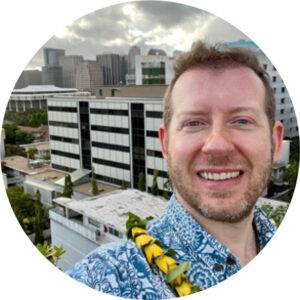
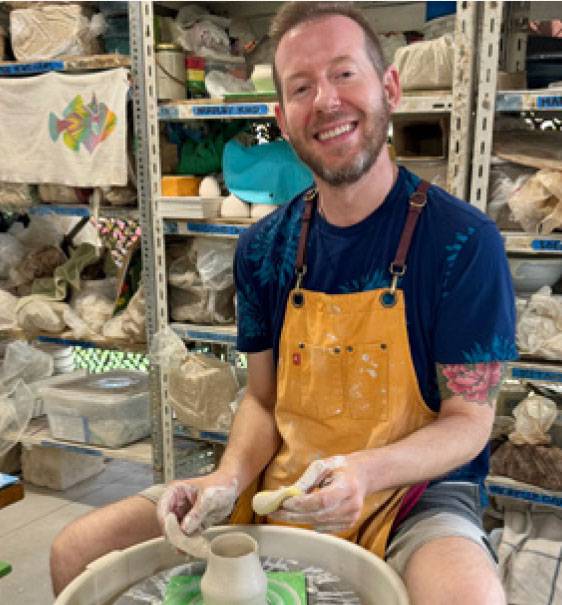
    Bradley Kuo, DNP (Class 33), M.Ed., APRN, FNP-BC, PMHNP-BC, CARN-NP

    Ever since he graduated high school a year early, Bradley Kuo, DNP (Class 33), M.Ed., APRN, FNP-BC, PMHNP-BC, CARN- NP, has made being ahead of schedule the norm. He completed an accelerated master of nursing program at the University of Hawaii at Manoa and completed his DNP at Frontier Nursing University while working five jobs. He even started his mental telehealth practice – the first based in Hawaii – in 2018, two years before the pandemic drove other practices to start offering telehealth.

    The reality is that Kuo hasn’t rushed through anything. Rather, he was making up for lost time after completing his undergraduate studies at St. Olaf College in Northfield, Minnesota, as a music major intending to become a high school choir director. He then earned a master’s of education in counseling with an emphasis in student affairs at Northern Arizona. A healthcare career was not yet on the horizon.

    Kuo worked in higher education administration for several years with stops at Cal Poly Pomona, UC Berkeley, and finally, the University of Hawaii at Manoa, where he worked for three years.

    “That last year, I started to complete the prerequisites to get into the master’s entry program in nursing at UH,” said Kuo, who grew up in Wisconsin and spent one year in Germany as a foreign exchange student. “In 2010, I did my pre-licensure year. What nurses would typically do in three years of education, I and my cohort had to get it done in one. It was very intense. As soon as we were done, we had to go right into the graduate program. After all that, I did graduate with a BSN and an MSN as an FNP and an advanced public health nurse. Over the course of those several years in the graduate program, I worked in long-term care and hospice. I really enjoyed that because it shapes how I have conversations with my patients now.”

    Kuo and his husband, Erik, now own and operate Wellness Partners Hawaii, Inc., an online telemental health clinic. Wellness Partners Hawaii opened in 2018. In 2019, Kuo enrolled in the DNP program at Frontier. By then, he had a wealth of experience in nursing, including being a nurse practitioner for hospice, working in a pediatrics clinic, and working with the Honolulu Police Department in corrections as an independent contractor. Then, he began working at Queens Medical Center in Honolulu, Hawaii. In 2015, he enrolled at Johns Hopkins and earned his postgraduate certificate for psychiatric-mental health.

    “While I was working at Queens, the thing about getting that DNP kept on nagging me,” Kuo said. “That’s when I decided it was time in 2019 to do the Frontier Nursing DNP program.”

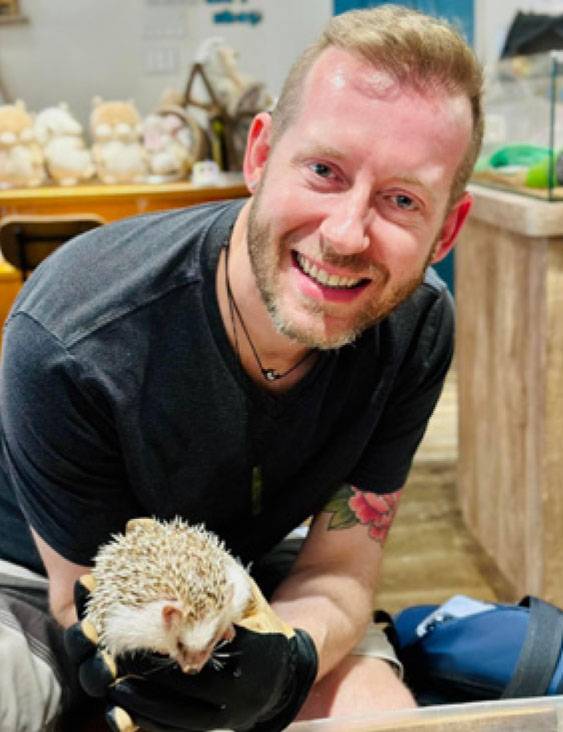
    Bradley (left) and his husband Erik

    He approached the DNP the same way he had the rest of his academic and professional career, taking on multiple projects simultaneously.

    “I needed a program that would allow me some flexibility because I was working full-time at the hospital,” Kuo said. “I was literally working five jobs while I was getting my DNP: Full time at the hospital, running my mental health business, my husband and I started a medical spa, I was working for the police department, and I held a couple of other smaller jobs. I was really busy while at the same time doing the work for the DNP. I decided I was going to torture myself and really stack up the classes. I did get my DNP done rather quickly, but it was intense. My faculty mentor, Ana Verzone (DNP, FNP, CNM, PMHNP), was amazing. She was instrumental in helping me move through my program.”

    Even with his businesses and career already flourishing, Kuo believed in the value of the DNP. His experiences since then have validated his beliefs. Kuo has become an active leader in local and state healthcare policies, serving on a seemingly endless list of boards and committees.

    “One of the things the DNP helped me achieve is that I am able to be a part of a lot more leadership roles,” Kuo said. “I am able to be a part of a lot more initiatives, and that is because of my completion of that degree. My ability to take on leadership roles has been a big piece of my work since I finished my degree at Frontier. People pointed at me, saying, “Well, you’ve got your DNP; you can manage this.” Other leadership roles were something that was asked of me. It also helped to get the attention of legislators. Using my academic title is important at times so that I can be heard in the work that we are doing.”

    Kuo has served as the chair of the legislative committee for the Hawaii Association of Professional Nurses. Last year, he was selected by the governor for an interim appointment as the APRN representative for the Hawaii State Board of Nursing until the Senate is able to solidify that appointment during the next legislative session. Kuo is also the Chair of the Board of Directors for Mental Health Kokua, a non-profit organization founded in 1973 to assist those dealing with mental illness. He is the Hawaii liaison for the American Association of Nurse Practitioners and is on the Board of Directors for the National Alliance on Mental Illness-Hawaii.

    “As APRNs and nurses, we actually have to take our seat at the table. We can’t wait for somebody to offer it to us,” Kuo said. “What that might look like is we might submit legislative testimony. That’s how we can take our seats. We can be very involved from a legislative perspective. If we wait for somebody to give us a seat at the table, it’s going to take a long time. I think there are ways to take our seat at the table that are not overbearing but can support the organizations’ or the state’s mission to move the healthcare needs forward.”

    Much of Kuo’s committee work involves ensuring that APRNs are working within their scope of education, certification, and licensure. This, he says, ultimately leads to a better overall healthcare system.
    “In the work that I do politically, it really is improving access to care for the people of Hawaii,” Kuo said. “If we’re not working outside of our scope, certain organizations in the country and this state have less of an argument to make when suggesting that we’re not properly trained and educated. Then we’re in a much better spot in being able to advocate for the patient care we are able to deliver. For that reason, the state of Hawaii put together the APRN Scope of Practice Algorithm to ensure APRNs can ask themselves if they are working within that scope. If the answer is no, they need to course correct.”

    Other legislative issues that Kuo has addressed include financial concerns, such as increasing state-funded loan reimbursement and preceptor tax credits.

    “Pay parity is a very difficult problem here,” Kuo said. “Hawaii is one of the lowest reimbursing states for care. I am envious of my colleagues in other states who get more money for the work that they do. The medicare reimbursement doesn’t meet what is needed to provide care here. I am part of a couple of groups that are working to lobby federal legislators to increase medicare reimbursement. Typically, an APRN throughout the country gets reimbursed 85% of what a physician does. We are already operating at a deficit in a state that makes it difficult for APRN-run and physician-run clinics to operate financially.”

    Fortunately, Kuo’s Wellness Partners Hawaii is succeeding. The practice now includes 17 therapists and five subscribers and averages more than 100 new patients per month and 98 percent of all care is conducted via telehealth. Common presentations include PTSD, depression, anxiety, ADHD, trauma, and issues related to substance use. The only time in-person appointments are conducted is to meet DEA requirements to start a controlled substance.

    “We have been focused on reaching the communities that have less access to care,” Kuo said. “We thought the best way for us to improve access to care is to use technology. We’ve been doing telehealth before it was even popular. During the pandemic, when everyone was trying to pivot how they deliver health care, we were already there.”

    While Kuo has found the value in telehealth, he is no stranger to in-person mental health care. His interest in mental healthcare developed when he worked in student affairs at the University of Hawaii at Manoa. He found that helping first-year college students involved a significant mental health aspect.

    “As I became more involved in the mental health world, I needed to make sure I had the education and training to back that up,” Kuo said. “That’s when I decided to go back to Johns Hopkins. Once I was done with that program, then my work in mental healthcare catapulted. I worked on ways to improve mental healthcare in the workplaces that I was in. I just grew to embrace mental healthcare.”
    While fully invested in the care of his patients, his staff, and his legislative work, Kuo does so with an eye toward the future, where he hopes to see greater access to care for all Hawaii residents.

    “We’re constantly working to improve access to care,” Kuo said. “Nurses and APRNs are trained differently, so how we deliver that care may be improved for certain members of the population. As we continue to evolve here in the state, I think nurses and nurse practitioners can have an even greater seat at the table.”

  • Dr. Tracy Hicks Puts Her Mind to Improving Access to Mental Care

    Dr. Tracy Hicks Puts Her Mind to Improving Access to Mental Care

    When you rank last in anything, there are two ways to respond: accept defeat or embrace the opportunity. After all, there is nowhere to go but up.

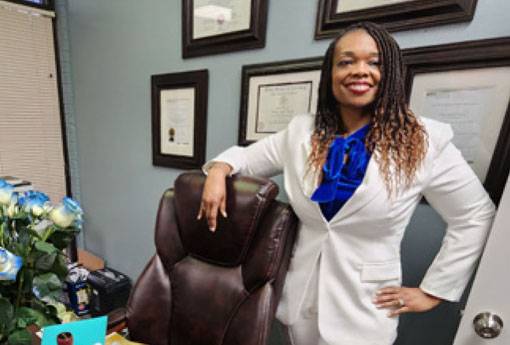
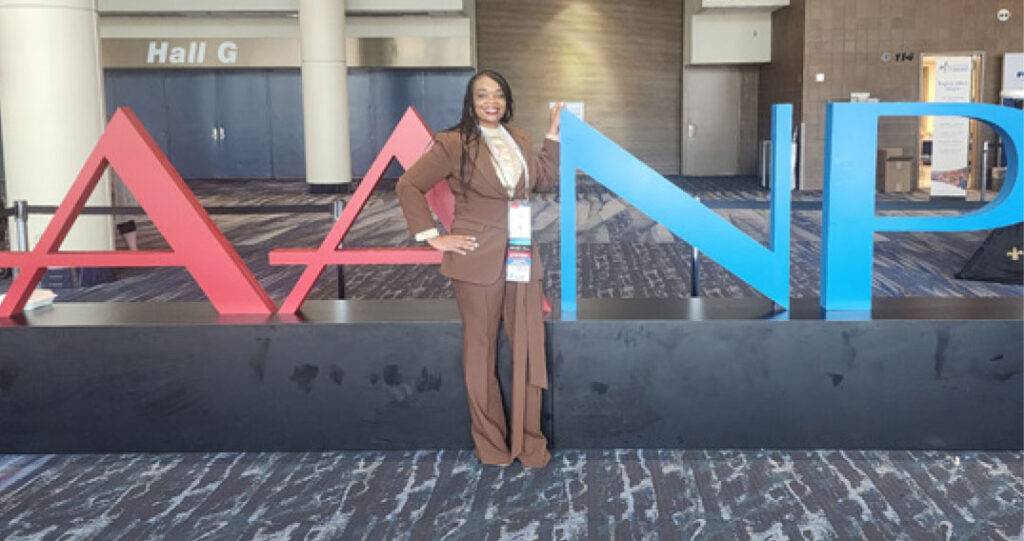
    It is safe to say that the latter is the mindset that FNU alumnus Dr. Tracy Hicks DNP (Class 23), MBA, APRN, FNP-BC, PMHNP-BC, CARN-AP, FIAAN, FAANP, adopted when she opened C-Trilogy Comprehensive Clinical Care/C-Trilogy Outreach (C-Trilogy) in Longview, Texas. In 2022, Mental Health America, a nonprofit advocating for people with mental illness, ranked Texas 51st for mental health care access, behind every other state and Washington, D.C.*

    That ranking came a full seven years after Hicks organized her practice, which officially opened in 2016. Since then, C-Trilogy has grown significantly with the intent of helping as many people as they can.

    [siteorigin_widget class=”WP_Widget_Media_Image”][/siteorigin_widget]

    “I started in 2015 with myself and a front desk person,” Hicks said. “By 2020, I had a front desk person and a part-time nurse.”
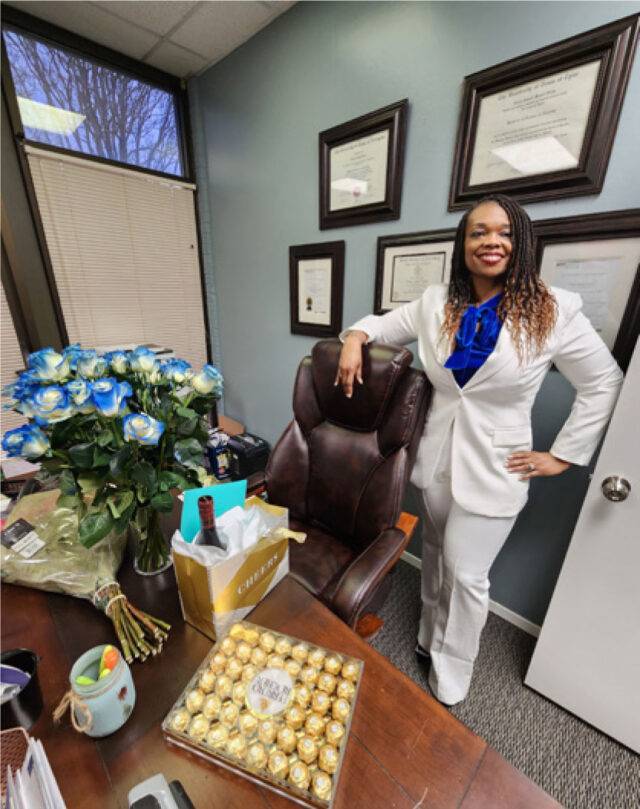
    Currently, the clinic has 12 staff members, including a psychiatrist/medical director, a physician assistant, a licensed master social worker, a licensed vocational nurse, a medical assistant, a licensed chemical dependency counselor, three psychiatric-mental health nurse practitioners, two patient navigators/crisis interventionalists, and a front desk manager/executive assistant and assistant clinical director. Incredible to think that this vitally important clinic almost never existed.

    Hicks always wanted to be a nurse, but it wasn’t until she was in the family nurse practitioner (FNP) program at the University of Texas at Arlington that she was drawn to the possibility of being a psychiatric-mental health nurse practitioner.

    “We had to take a full semester of psych with a 45-hour clinical rotation,” Hicks said. “The PMHNP Director at the time asked me if I would be interested in the PMHNP program because of my performance in didactic and clinical. I told her I wanted to complete the FNP program because I wanted to offer a holistic care model, but I promised her that I would take a semester off and return because I did love the psych rotation. I did just that, and my Program Director remains in my life today as a mentor and like a second mom.”

    Hicks’ real mom was also a nurse but encouraged her to become a physician. “I told her I wanted to become a nurse because I had watched her and how her colleagues and patients loved her,” Hicks said. “She loved her work. She made me promise that if I wanted to be a nurse, I would go to the top and make an impact.”
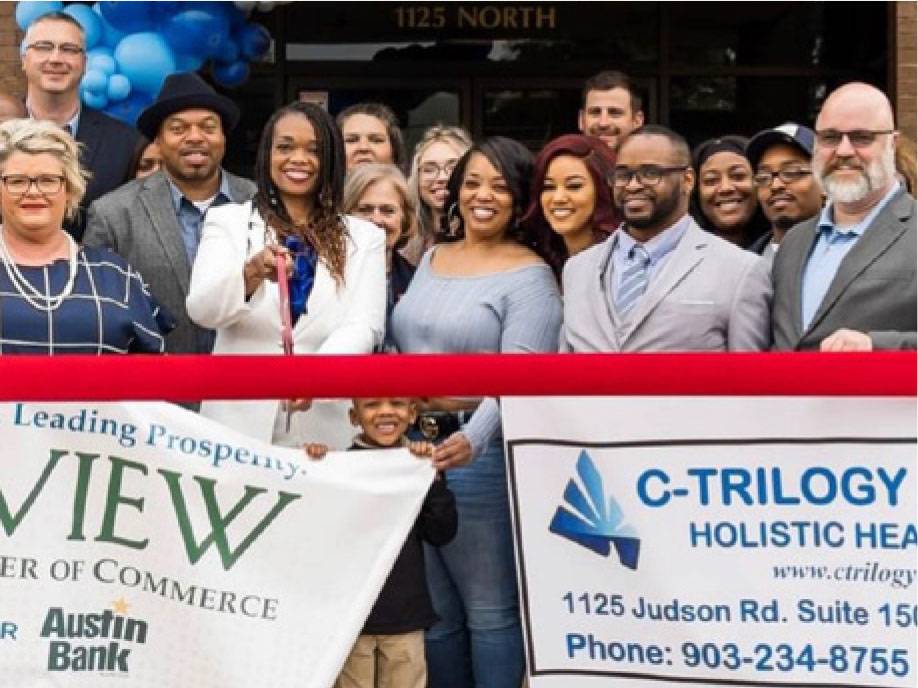
    Establishing a psychiatric-mental health clinic in the state with the lowest access to mental healthcare certainly makes an impact. Hicks credits FNU’s DNP program for helping prepare her to establish and manage her own practice.

    “When I researched universities online, I was attracted to FNU’s rural health focus,” said Hicks, who is also an associate professor in the College of Nursing at the University of North Texas Health Science Center. “I remember being inspired by Dr. Diane John. She was so helpful and supportive throughout my journey at FNU. I met Dr. Khara’ Jefferson toward the end of my journey, and she was instrumental in my grounding toward the end. Dr. Eileen Thrower taught the ‘nurse as an educator’ course, which solidified my interest in teaching at the graduate level. I also used some of my courses as a guide in setting up and refining my clinic.”

    Part of refining her clinic to meet the community’s needs included the establishment of C-Trilogy Outreach, a non-profit branch of C-Trilogy, in 2020. This came in response to a growing number of patients, both insured and uninsured, who were presenting with more complex issues during the pandemic.
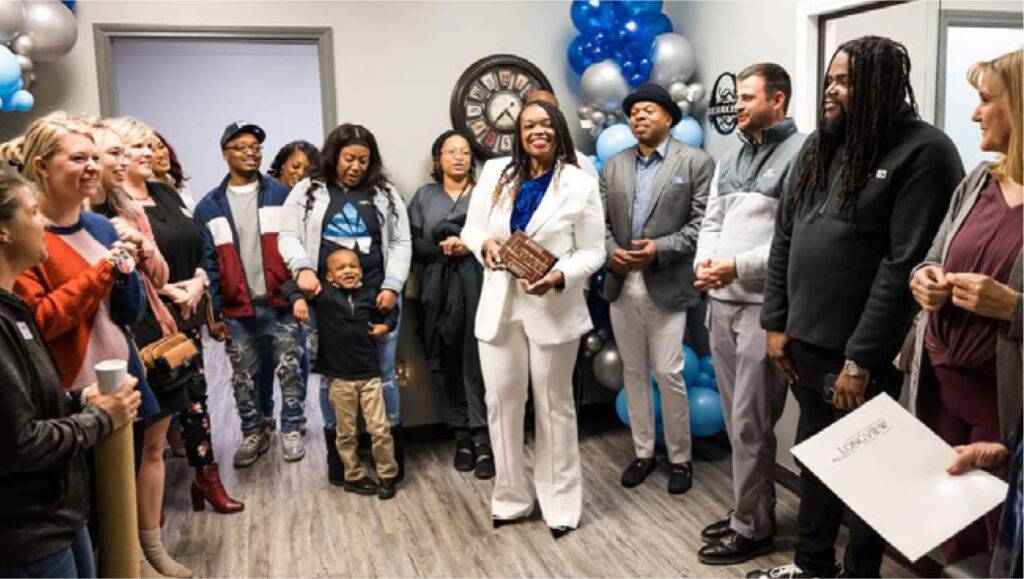
    “I established a non-profit in 2020 in hopes of securing funding to expand and transform the practice to meet the needs of the community,” Hicks said. “I researched and studied the Certified Community Behavioral Health Clinic (CCBHC) model and met with stakeholders, including the local mental health authority. I applied for grant funding through SAMHSA and was blessed to receive funding in 2022 for the planning, development, and implementation of a CCHBC Certified Community Behavioral Health Clinic Planning, Development, and Implementation Grant.”

    The CCBHC model ensures access to coordinated comprehensive behavioral health care and serves those who request mental health or substance use care. C-Trilogy has established relationships with the Harris County Jail System and the Jim Meyer Comprehensive Health Center, which is partially funded by the Ryan White HIV/AIDS Program.

    “We used to have contracts with them, but now we work collaboratively referring patients between organizations when needed,” Hicks said.

    Understanding that C-Trilogy cannot fix the state’s mental healthcare needs alone, Hicks has become a vocal leader in advocating for increased awareness and funding. As a presenter and speaker, she addresses the importance of the social determinants of health in providing individualized and holistic care on a broader scale.
    “My motto is ‘restricted NP practice anywhere is restricted access to care everywhere,’” Hicks said. “Increasing access to mental health services is key. We have to take a more proactive approach versus a reactive approach. Mental healthcare tends to get more attention when there a tragic events such as mass shootings and the pandemic, which highlighted health inequality. Issues such as this wreak havoc on the population’s mental health. We need to continue to be proactive and promote and cultivate crucial and fierce conversations on the state of mental health and the solutions that are needed. We need all healthcare providers to practice to the fullest extent of their education without unnecessary barriers and restrictions.”

    Balancing her duties as a clinician, educator, and advocate might seem daunting to most, but to Hicks, it is the most effective way for her to serve her community and her state.

    “I plan to continue work as an educator and clinic owner/entrepreneur while being an exemplary leader and addressing the needs of underserved populations,” she said. “I hope to expand my clinic model into Full Practice States. I intend to continue to support Texas Nurse Practitioners and the American Association of Nurse Practitioners as we work with legislators to secure Full Practice Authority in Texas and across the nation.”

  • 2024 Lifetime Service Award Recipient Janice Bovée

    2024 Lifetime Service Award Recipient Janice Bovée

    You could say that Janice Bovée, MSN, CNM (Class 22), was born to be a nurse. After all, when she was just four years old, she was drawing pictures of nurses, doctors, pregnant women, and babies.

    “I would dress up with a paper white nurse cap, a bathrobe worn backward as a hospital gown, collect all my dolls in my imaginary nursery, and look at my pediatrician and his nurse with deep respect and seriousness when my siblings or I had office visits,” Bovée said.

    Born in Mesa, Arizona, Bovée attended St. Mary’s High School in downtown Phoenix. Her interest in nursing seemingly never waned.

    “I was fortunate to know my destiny very early in my life,” Bovée said. “When I was 10 years old, I begged my mother to sign me up at the local nursing home as a candy-striper volunteer. However, I was too young for the program. I finally became a candy-striper through the American Red Cross program at age 16.”

    The experience only strengthened her resolve to become a nurse. Once she had her driver’s license, she would go to the hospital and watch the babies, nurses, and doctors through the nursery windows.
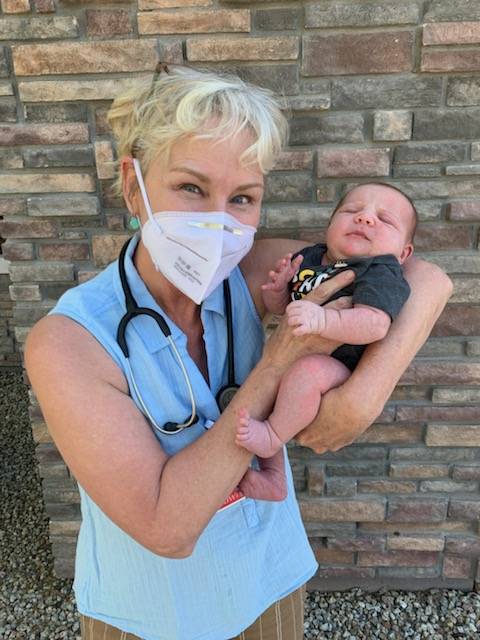
    After graduating from high school, Bovée got married and had her first child. She also enrolled in a junior college nursing program.

    “I remember sitting in a nursing classroom, enjoying the lecture, and feeling my baby move,” she said. “My labor and birth were quick and intense, a surprise breech baby, and a new awareness of what childbearing involved. I was still recovering from the work of it when I learned that I was expecting again nine months later.”

    Bovée graduated with an associate degree in nursing at the same time her second child turned one year old in 1978. She began working as an RN in labor and delivery and the emergency room at a small, rural hospital nearby. As she gained experience, she also worked in newborn and pediatric ICUs, operating rooms, and office clinical sites.

    “I absolutely loved the labor and delivery and emergency departments,” Bovée said. “I actually worked from 3-11 p.m. in the emergency department and then went upstairs to work 11 p.m. to 7 a.m. in labor and delivery. I did this for years just because I loved the work.”

    When she was 31 years old, Bovée went back to school for her bachelor’s degree. She had thoughts about going to medical school to become an obstetrician but ultimately realized that she truly wanted to be a nurse-midwife. She put that plan on hold until, at the age of 43, she went back to school to become a nurse-midwife. She was living and working in rural Washington state at the time, so Frontier’s Community-based Nurse-Midwifery Education Program was the ideal solution to allow her to continue to work while also pursuing her degree.

    “I was in class number 22,” Bovée said. “What a fabulous experience that was! The two trips to Hyden for the Frontier and Clinical Bounds were highlights in my life. It was educational and inspiring. I called it Midwife Cheer Camp, and it was dynamic. For Frontier Bound, there was a severe snowstorm, and several of us students were stuck at the Lexington Airport waiting for transportation to Hyden. We waited, worried and disappointed. Then suddenly, here comes a school bus with chains on all tires. The doors opened, and there stood Kitty Ernst hollering at us to get in. She had an ice chest full of drinks and snacks, the heater making the bus cozy, and she laughed, talked, and taught us Frontier midwife songs all the way to Hyden. It was quite a priceless orientation to Frontier.”
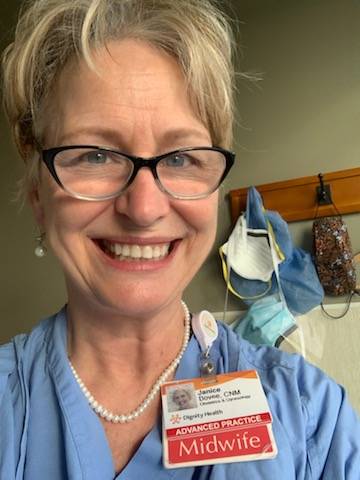
    During the clinical portion of the nurse-midwifery program, Bovée was precepted by Susan Dennis, who was also a graduate of FNU’s nurse-midwifery program.

    “She was fabulous and gave me all her attention and mentorship,” Bovée said. “We worked in a migrant farmer-workers’ clinic and attended hundreds of births, primarily speaking Spanish only. I became fluent in Spanish, which continues to be a blessing.” Bovée also learned how important of a role preceptors play. It was a lesson that she took to heart and paid forward by precepting and mentoring “hundreds of nurses and student nurse-midwives” over the remainder of her career. In total, Bovée worked 43 years as a Registered Nurse and was a Certified Nurse- Midwife for 23 years.

    “I had the privilege of ‘catching’ 1,867 babies and assisted physicians in over 500 cesarean sections,” said Bovée, who moved back to Arizona in 2001. “I have served in nursing leadership at the American College of Nurse-Midwives, the Arizona Nurses Association, and the Arizona State Board of Nursing. I have had the best nursing career ever.”

    Back in Arizona, she worked with a large OB/GYN physician-owned practice for five years, then initiated a group prenatal care program that had the support of the physician owner. That program eventually became a nurse-midwifery service with six full-time CNMs.

    “The hospital where we had privileges was happy with our service,” Bovée said. “The administrators and physicians at the hospital came around to understanding the benefits and qualities of nurse-midwifery care. It involved years of persuasion and persistence. It involved countless revisions of nurse-midwifery documents involving policy, procedure, and delineation of privileges. I consistently worked to be present at the table or at decision-making events. It took us 13 years to get permission for us to have student nurse-midwives in the hospital. I consider this my legacy. My colleagues call me the ‘Pioneer Midwife’ in the east valley, and I am honored to have this title.”
    While retired from practice, Bovée lives with and cares for her mother. She also sits on the Arizona Board of Nursing Advanced Practice Advisory Committee and has served as the local chapter president for the American College of Nurse-Midwives.

    “I am the happiest woman alive,” Bovée said. “I am grateful, healthy, loved, and ready for my next journey. I am forever a midwife!”

  • Frontier Nursing University Releases Maternal Health Documentary

    Frontier Nursing University Releases Maternal Health Documentary

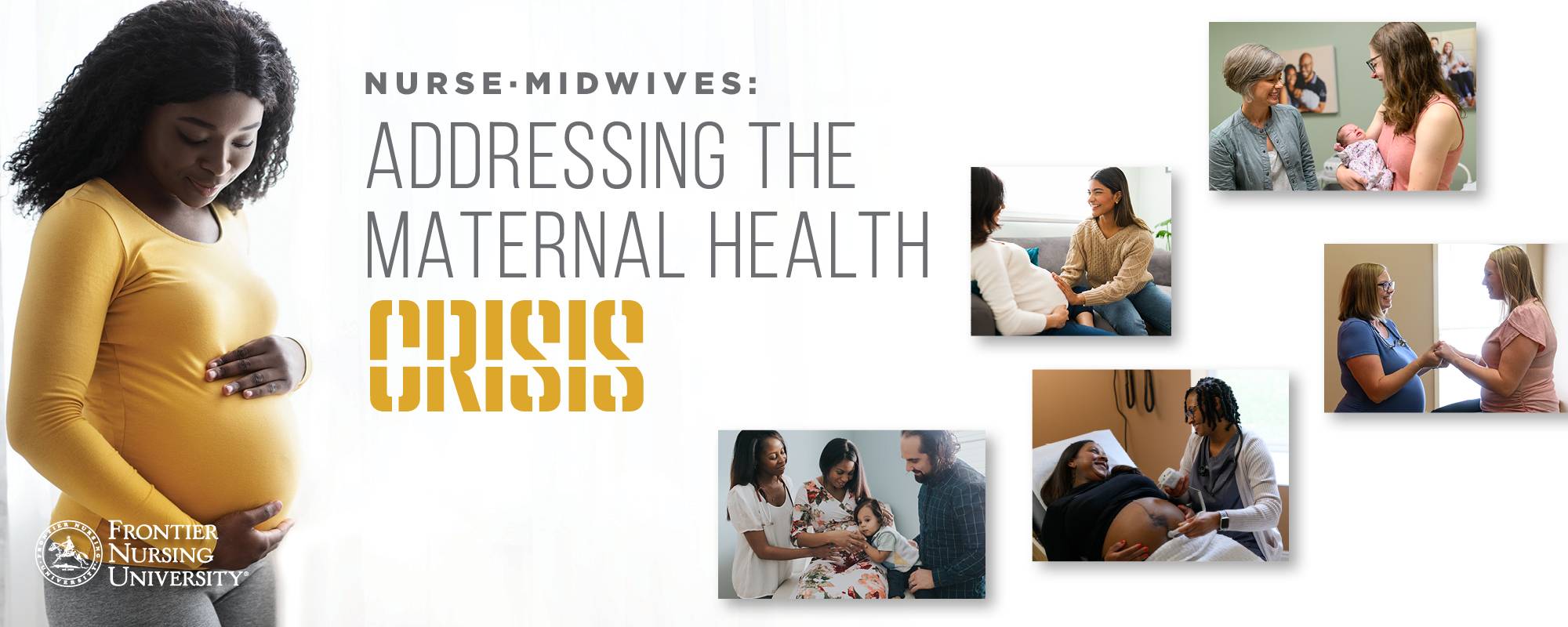
    Frontier Nursing University has produced a documentary about maternal health care and the role of nurse-midwives. The documentary Nurse-Midwives: Addressing the Maternal Health Crisis will premiere on August 15 at 6 p.m. at the Speed Art Museum in Louisville. Register for the premiere at this link. 

    “The United States has the highest maternal mortality rate among wealthy nations, and 2022 data from the CDC shows that over 80% of pregnancy-related deaths in the U. S. from 2017-2019 were preventable by providing better care,” said FNU President Dr. Susan Stone, DNSc, CNM, FACNM, FAAN. “This documentary tells the story of how distance education paved the way to addressing this crisis by educating more nurse-midwives who play a crucial role in reducing maternal mortality.”

    Before the advent of online learning, a remarkable group of nurses and nurse-midwives believed that more nurses would seek certification as nurse-midwives if they could stay in their home communities during the educational process. Thus the development of the unique and innovative Community-based Nurse-Midwifery Education Program (CNEP). CNEP was developed to allow nurses who lived in rural and underserved communities access to nurse-midwifery education without leaving home. The documentary details the development and evolution of the CNEP via interviews with visionary leaders and educators. It also shines a light on the subsequent development of family nurse practitioner, women’s health care nurse practitioner, and psychiatric-mental health nurse practitioner distance education programs and their similarly vital roles in maternal health care.

    “The work of nurse-midwives and nurse practitioners is reshaping the landscape of 21st-century healthcare,” Dr. Stone said. “From Alaska to Alabama to Appalachia to every state in America, these amazing healthcare providers are making a difference in the rural and underserved communities in which they live and serve.”

    Learn more about this documentary at frontier.edu/documentary.

  • Dr. Brooke A. Flinders Named New President of Frontier Nursing University

    Dr. Brooke A. Flinders Named New President of Frontier Nursing University

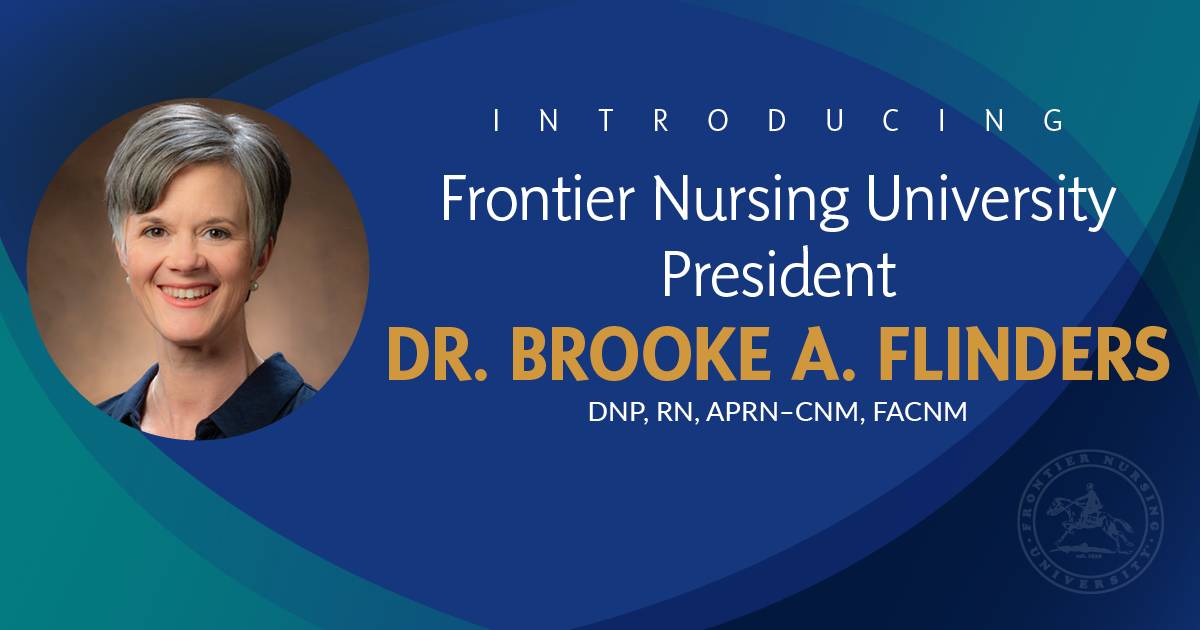
    Frontier Nursing University’s Board of Directors announced that Dr. Brooke A. Flinders, DNP, RN, APRN-CNM, FACNM, has been selected as the University’s next president. Dr. Flinders has extensive experience as an advanced practice nurse, educator, and college administrator. Dr. Flinders will leave her current position as Professor of Nursing and Associate Provost for Faculty Affairs at Miami University (Ohio) and assume the presidency at Frontier Nursing University (FNU) on August 1, 2024. Dr. Flinders holds a Master of Science in Nursing and a Doctor of Nursing Practice degree from Frontier.

    “We are thrilled that Dr. Flinders has accepted the offer to become the next President of Frontier Nursing University,” said FNU Board Chair Dr. Michael Carter, DNSc, DNP, FAAN, FNP/GNP, BC. “Dr. Flinders’ wealth of experience as an educator, practitioner, and administrator will be a tremendous asset to our students and to our faculty and staff who support them. We are extremely excited about the future of Frontier under Dr. Flinders’ leadership.”

    “Our long and rigorous search brought forward several qualified presidential candidates, but ultimately, Dr. Flinders stood out as the best choice for Frontier Nursing University,” said co-chair of the Presidential Search Committee Dr. Kerri Schuiling, PhD, CNM (ret), NP, FACNM, FAAN, who is a member of FNU’s Board of Directors and chaired the search committee. “Through her interactions with the search committee, Board of Directors, faculty, staff, students, and alumni, Dr. Flinders demonstrated her understanding of and commitment to the mission of Frontier Nursing University.”

    Dr. Flinders obtained her Associate Degree of Science in Nursing (1994) and Bachelor of Science in Nursing (2003) degrees from Miami University (Ohio). She has significant clinical experience, including full-scope practice as a Certified Nurse-Midwife.

    “I am proud and honored to accept the position of President of Frontier Nursing University,” Dr. Flinders said. “My connection to Frontier extends nearly two full decades, and I am so proud to be one of its more than 10,000 graduates. I loved my time as a student and have been thoroughly impressed by the university’s lived mission and how it has been embraced by the faculty, staff, administration, and students through their culture of caring. I believe wholeheartedly in Frontier’s mission and am excited to carry it forward.”

    During her academic career, Flinders received Miami University’s Distinguished Alumni Award from the Department of Nursing (2021) and, in recognition of their service efforts during the COVID pandemic, Flinders and each of her nursing colleagues received the President’s Service Medallion. Flinders was inducted as a Fellow of the American College of Nurse-Midwives in 2021.

    “As a proud graduate of Frontier School of Midwifery and Family Nursing and Frontier Nursing University, I am eager to build upon the amazingly strong foundation that already exists,” Dr. Flinders said. “Healthcare provider shortages and the maternal mortality crisis plague our country. Frontier has a long history of finding unique solutions to complex problems, and we will continue to be a leader in identifying and implementing solutions by producing highly prepared nurse-midwives and nurse practitioners who have answered the call to serve.”

    Founded in 1939 as the Frontier Graduate School of Midwifery, Frontier Nursing University has an enrollment of over 2,500 students. FNU offers a Master of Science in Nursing degree, Doctor of Nursing Practice degree, and Post-Graduate Certificate, and specialties including Certified Nurse-Midwife, Family Nurse Practitioner, Women’s Health Care Nurse Practitioner, and Psychiatric-Mental Health Nurse Practitioner.

  • Frontier Nursing University Offers 
Course on Caring for Veterans 

    Frontier Nursing University Offers 
Course on Caring for Veterans 

    Frontier Nursing University has created a continuing education course to prepare healthcare professionals to provide culturally sensitive care to veterans within their community. Developed by military-connected faculty at FNU, the “Care of the Veteran” program is a self-paced module that will guide clinicians through understanding military culture, service-connected health concerns, and developing a plan of care utilizing military service benefits.

    “We are excited to offer this course for any clinician who wants to increase their understanding and improve the care they provide to this special population,” said FNU Dean of Nursing Dr. Joan Slager, CNM, DNP, FACNM, FAAN. “This course was developed by multiple FNU faculty who are veterans and understand the unique healthcare needs and challenges that veterans face.”

    In 2019, there were 19.2 million veterans in the United States. According to 2020 data from the Agency for Health Research and Quality, veterans ages 18 to 44 have higher rates of hypertension, high cholesterol, heart disease, cancer, and arthritis when compared to non-veterans ages 18 to 44.

    The course consists of six modules:

    • Introduction to Veteran Care
    • Physical Health
    • Mental Health
    • Advocacy
    • Older Veteran Care
    • Care of Veteran Women and Families

    The interactive learning sessions include a real patient case study, clinical applications, and additional resources. The course provides five contact hours of continuing education by Frontier Nursing University, an American Nurses Credentialing Center accredited provider.

    At the completion of the entire program, the learner will be able to:

    • 1. Identify veterans in clinical practice.
    • 2. Describe service-connected health risks.
    • 3. Identify a plan of care for veterans and their families.

    This course is available for $99.99 through May 15, 2028. FNU students, faculty, and staff receive FREE access, and FNU alumni and preceptors receive 25% off course access.

    To learn more and to register for the Care of the Veteran course, please visit https://ceu.catalog.instructure.com/courses/care-of-the-veteran or contact continuing.education@frontier.edu.

    Continuing education hours granted through Frontier Nursing University are accepted by the AMCB. You can follow these simple steps here to ensure your CE’s are uploaded correctly.

    Frontier Nursing University is excited to announce the launch of our Continuing Education Program. Learn more here.

Request Information Apply Give Now