Blog

  • Staff Spotlight: Bridgett Lyall

    At the heart of Frontier Nursing University is a talented and diverse community of students, alumni, faculty, staff, Couriers and preceptors. Spotlight blogs feature members of our FNU community who are focused on the mission of educating nurse-midwives and nurse practitioners to deliver quality health care to underserved and rural populations.


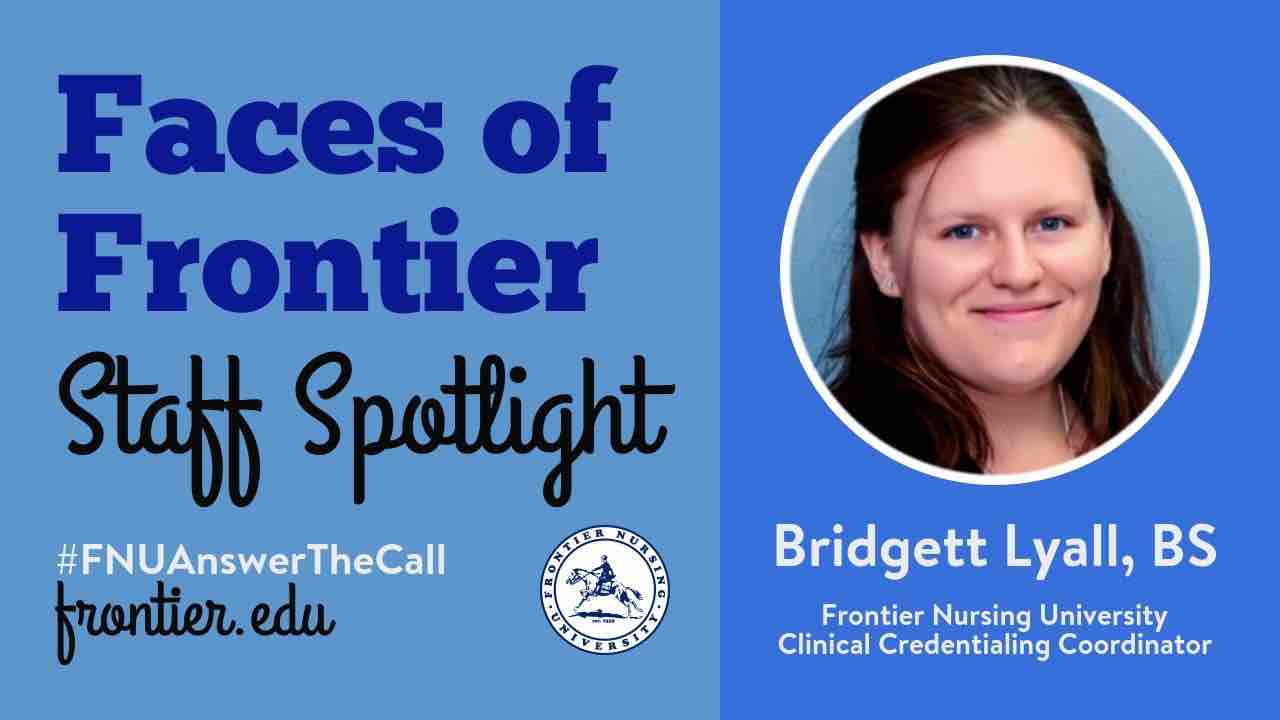
    For many students at Frontier Nursing University (FNU), clinicals are one of the most stressful but rewarding times during their education journey. Bridgett Lyall, a FNU clinical credentialing coordinator, works hard to simplify the clinical experience. She and her team make sure all sites, preceptors and students have turned in the appropriate paperwork in order for students to complete their clinical practicum.


    Bridgett enjoys the opportunity to help students  with the clinical portion of their FNU education.


    “Students know that I am on their side, working hard on their behalf to make the process as smooth as possible,” she said.


    The group dynamics in the credentialing department are Bridgett’s favorite part of her job. The combination of mutual respect on a professional level with real friendships on a personal level make for a wonderful work experience.


    When Bridgett decided to pursue a career in higher education, the history and reputation of FNU appealed to her.


    “FNU is open to positive change and has a huge influence on family health and birth options. Both of these were very important to me in my job search,” said Bridgett.


    Bridgett has been in her role at FNU for almost three years. In her spare time, she likes to bike the Legacy Trail in Lexington, read and play video games with her partner.

  • Frontier Nursing University President Dr. Susan Stone Named President-Elect of American College of Nurse-Midwives

    Susan Stone, DNSc, CNM, FACNM, FAAN, president of Frontier Nursing University, has been named president-elect of the American College of Nurse-Midwives (ACNM). ACNM is the professional association that represents certified nurse-midwives (CNMs) and certified midwives (CMs) in the United States. With roots dating to 1929, ACNM is the oldest women’s health care organization in the United States. The organization’s elected leaders play an important role in guiding the midwifery profession.   
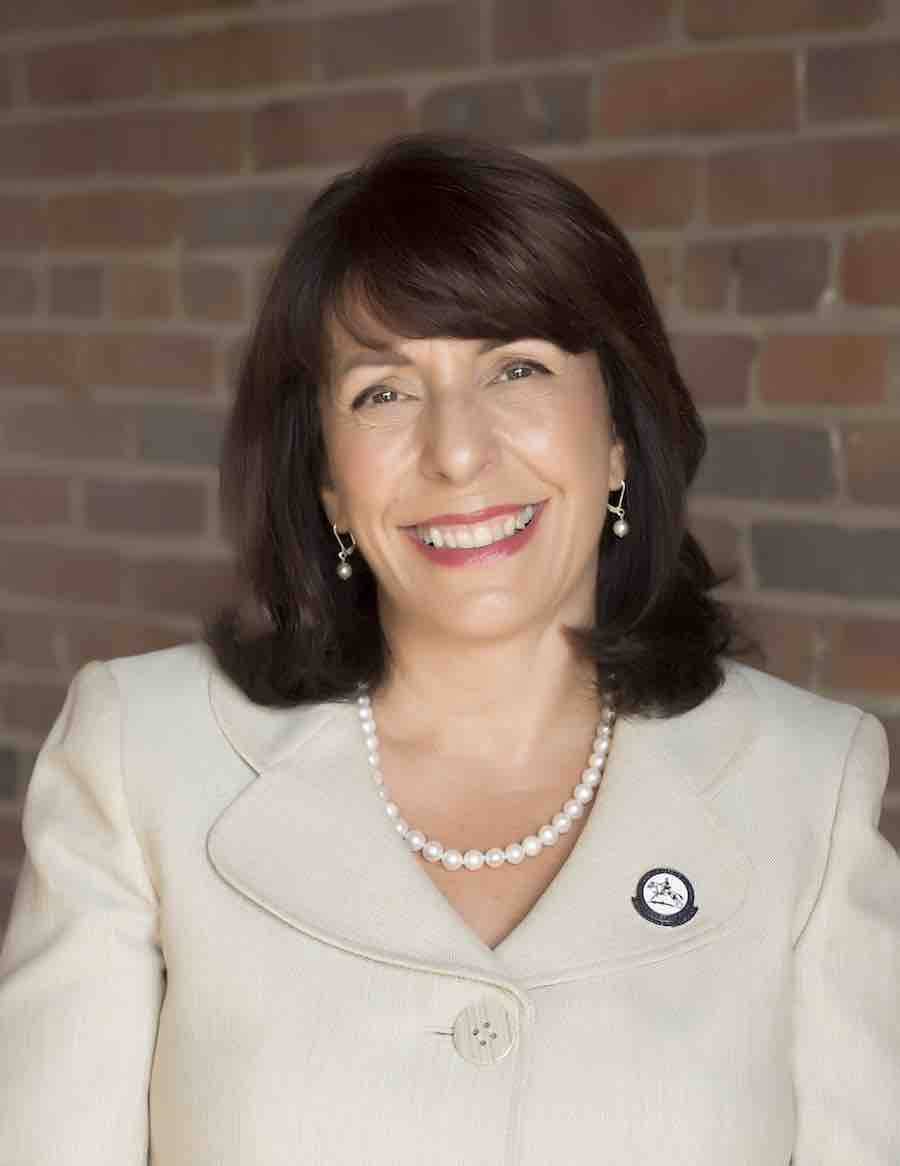
     

    Stone will work alongside the current ACNM president for one year and officially begin her term as president after the ACNM 63rd Annual Meeting in Savannah, Ga., in May 2018. Stone has been active in ACNM for nearly 25 years. She has also served for more than 10 years with the ACNM’s collaborative partner, the Accreditation Commission for Midwifery Education (ACME), and as chair of ACME’s Board of Commissioners for four years. As president, she will be responsible for establishing and carrying out the goals and objectives of ACNM.


    “Our goal is to educate health care providers and the public about the value of midwifery, and the positive outcomes that result from our evidence-based practice,” said Stone. “Midwives are increasingly important as a solution to the impending shortage of obstetrical providers. As president of ACNM, my focus will be on reducing legislative barriers for midwifery practice, continuing to establish effective collaborative relationships with other health care providers and developing strategies to dramatically increase and diversify the midwifery workforce.”


    Stone has worked in the field of reproductive health care for women for over 30 years. She is an early graduate of Frontier Nursing University’s (FNU) distance education nurse-midwifery program and practiced full scope midwifery care for several years. Believing that having more nurse-midwives would ultimately serve the goal of improved health care outcomes for women, she shifted her focus to the education of nurse-midwives. She has served as president of FNU for the last 16 years. During this time, the University has grown from 200 students to the current enrollment of nearly 2,000 students. Stone continues in the role of FNU president with a goal of improving health care for families through increasing the number of well-prepared nurse-midwives and nurse practitioners.


    “I am excited to welcome Dr. Susan Stone to the Board of Directors as ACNM’s president-elect in May. Sue brings expertise and vision to these roles,  particularly in the areas of Board management and strategic financial development which will serve the members of ACNM very well,” said ACNM President Lisa Kane Low PhD, CNM, FACNM, FAAN. “We are fortunate to have her, and I look forward to our collaboration over this next year as she prepares to assume the role of president.”


    Other Frontier Nursing University faculty who are also newly elected officers include Kathleen Moriarty, CNM, PhD, RN, CAFCI, FACNM, the new Region IV Representative, and Charlotte Morris, CNM, DNP, one of two elected new Nominating Committee members.  Dr. Moriarty has been a member of ACNM since 1992 and a midwife for more than 20 years. She was re-elected to a second term to serve as ACNM Region II Representative. Dr. Morris serves as course faculty at FNU. She has been a midwife for more than 30 years and a member of the Midwives of Color Committee (MOCC) since 1997.  


    Other FNU faculty already serving in ACNM officer roles include the DNP Director, Joan Slager, CNM, DNP, CPC, FACNM, an ACNM Board team member and the Associate Dean of Midwifery and Women’s Health Tonya Nicholson, DNP, CNM, WHNP-B, FACNM, an ACNM Nominating Committee member. FNU Board of Directors member Kerri Schuiling PhD, CNM, NP-BC, also serves as an ACNM Nominating Committee member.


    About Frontier Nursing University:

    FNU is passionate about educating nurse-midwives and nurse practitioners to serve women and families in all communities, especially rural and underserved areas. FNU offers graduate Nurse-Midwifery and Nurse-Practitioner distance education programs that can be pursued full- or part-time with the student’s home community serving as the classroom.  Degrees and options offered include Doctor of Nursing Practice (DNP), Master of Science in Nursing (MSN) or Post-Graduate Certificates. To learn more about FNU and the programs and degrees offered, please visit Frontier.edu.


    About the American College of Nurse-Midwives:

    The American College of Nurse-Midwives (ACNM) is the professional association that represents certified nurse-midwives (CNMs) and certified midwives (CMs) in the United States. With roots dating to 1929, ACNM sets the standard for excellence in midwifery education and practice in the United States and strengthens the capacity of midwives in developing countries. Members are primary care providers for women throughout the lifespan, with a special emphasis on pregnancy, childbirth, and gynecologic and reproductive health.Learn more at acnm.org.
  • LGBT Health Awareness Week March 27-31, 2017

    Lesbian, Gay, Bi-sexual, and Transgender (LGBT) Health Awareness Week marks a time for health care providers to come together to promote LGBT health and to increase awareness as to the unique health needs of the LGBT community. The LGBT community faces many health disparities and challenges in accessing health care. Sadly, members of the LGBT community continue to face bias and discrimination in the health care setting.

     

    A study conducted by Smith & Mathews (2007) found that as many as 18% of physicians surveyed reported feeling uncomfortable treating LGBT patients. Despite the importance of disclosure in the healthcare setting, many LGBT patients are left feeling uncomfortable in doing so with their health care providers for fear of bias (Eliason, 2001). In addition, LGBT patients face health disparities related to systemic factors, social discrimination, and lack of access to culturally competent health care (Ard & Makadon, 2017).


    The National LGBT Education Center has identified several ways that health care providers can come together during this week to support the LGBT community including:


    • Host or sponsor an event with a local LGBT organization

    • Hold a town hall meeting to engage LGBT community members in the health care delivery process

    • Host a grand rounds or training session at your health care facility

    • Create a welcoming environment for your LGBT clients by placing health posters and brochures in your facility that are specific to the health care needs of the LGBT community (see www.lgbthealtheducation.org)

    • Obtain training that will enable you to provide the best care to your LGBT clients (see www.lgbthealtheducation.org)


    Additional Resources:

    Promoting a welcoming health care environment

    Additional training for clinicians


    References:

    Ard, M. & Cooke, G. (2011). Addressing intimate partner violence in lesbian, gay, bisexual, and transgender patients. Journal of General Internal Medicine, 26 (8), p. 930-933.


    Eliason, M.J. & Schope, R. (2001). Does “Don’t ask don’t tell” apply to health care? Lesbian, gay, and bisexual people’s disclosure to health care providers. Journal of Gay and Lesbian Medicine Association, 5 (4), p. 125-34.


    Smith, D.M. & Matthews, W.C. (2007). Physicians’ attitudes toward homosexuality and HIV: survey of a California Medical Society. Journal of Homosexuality, 52 (3), p. 1-9.  


    The National LGBT Health Education Center (March 2017). LGBT Health Awareness Week 2017: Coming Soon!  Retrieved from: https://www.lgbthealtheducation.org/events/

    Dr. April Dobroth, DNP, FNP-c is a practicing clinician and Frontier Nursing University Southwest Regional Clinical Faculty (RCF) member.

  • Why You Should Consider a Doctor of Nursing Practice Degree

    Why You Should Consider a Doctor of Nursing Practice Degree

    Are you considering a Doctor of Nursing Practice degree? Here’s the who, what, when and why of the DNP.

    WHO SHOULD GET A DNP?
    Why not you? You care about the families you serve, you aim to improve health care, and you want a meaningful career. You are poised to be a part of the future of nursing practice in the United States, and DNP graduates will be leading the way in clinical settings.

    WHAT ARE THE MAJOR COMPONENTS OF DNP EDUCATION?

    • Organizational and system leadership
    • Informatics and Technology
    • Advanced Clinical skills
    • Ethics and Policy
    • Translation of evidence into practice
    • Interprofessional Practice

    WHEN SHOULD I CONSIDER A DNP?
    The time is now. As health care evolves, the DNP is expected to become the entry-level to advanced nursing practice. This means that all advanced practice roles, like nurse-midwives and nurse practitioners, will be required to have a DNP to obtain initial certification and licensure to practice. This may be the case within the next 5-10 years. You can be on the leading edge of this development. This will give you a professional edge in all practice settings.

    WHY SHOULD I CONSIDER A DNP?
    The DNP is about equipping clinicians to more effectively do what advanced practice nurses have been doing for years — changing systems and communities to optimize client care. Instead of relying on trial and error, however, the DNP prepares you to quickly and efficiently improve health care delivery for each individual client AND all clients collectively. In other words, affecting effective action.

    HOW DO I GET STARTED ON A DNP?
    Explore the DNP options in different university settings and determine a good match for you. Here are some questions to ask yourself as you compare possible programs:

    • Do I need to work while in school? If so, are there full- and part-time options?
    • Would I have to relocate or travel to the campus? Would this be problematic for me?
    • Would I prefer distance classes?
    • Does the mission of the university align with my nursing philosophy?
    • Does the program have a proven record of success?

    If you are considering a DNP, Frontier Nursing University (FNU) has a post-master’s DNP program, as well as an option to complete both your MSN and DNP degrees. Go here for more information.

    U.S. health care needs leaders like you. The most valuable product of DNP education is the graduate — a leader, an innovator, a change agent. This could be you!

    Related Content:

    Moving Toward Clinical Leadership: DNP Student Stories
    Hear from several FNU Doctor of Nursing Practice students about their DNP projects and the impact of their project work on their local community health care. They will also share why the DNP is essential in their career journey as a nurse-midwife or nurse practitioner.

    The DNP Impact: Nurse-Midwives Improving Care for Families
    The Doctor of Nursing Practice (DNP) was developed to meet the demand for advanced practice nursing leaders in an increasingly complex health care system. Hear from FNU Doctor of Nursing Practice graduates and how their DNP degree was essential to improving the health care of their communities. Stories of DNP projects and community outcomes will demonstrate the impact of advancing your education and clinical leadership.

  • Courier Spotlight: Fred Bunch

    At the heart of Frontier Nursing University is a talented and diverse community of students, alumni, faculty, staff, Couriers and preceptors. Spotlight blogs feature members of our FNU community who are focused on the mission of educating nurse-midwives and nurse practitioners to deliver quality health care to underserved and rural populations.


    In 1928, Mary Breckinridge, founder of Frontier Nursing University established the Courier Program, recruiting young people to work in the Kentucky Mountains and learn about service to humanity. Couriers escorted guests safely through remote terrain, delivered medical supplies to remote outpost clinics, and helped nurse-midwives during home visits and births. Frontier has benefited tremendously from the 1,600 Couriers who have served since 1928.


    Fred Bunch Jordan attended college right after high school. After a difficult freshman year, he decided to take some time off from school and spoke with an advisor regarding his options during his time off. His advisor suggested looking into the Courier Program at Frontier Nursing Service. Only four days passed from the time he called Frontier to the day he arrived in Kentucky.
    Fred first served as a Courier for three and a half months in 1990. Fred then made the decision to return to Wendover once again for another four months in 1991.  

    Fred spent his time as a Courier attending home health visits. He remembers visiting three brothers with Down Syndrome and helping the boys shave and feed their livestock.

    In addition to home visits, Fred spent time in the Mary Breckinridge Hospital. He worked with a family nurse practitioner assisting with entry-level triage care, such as taking temperatures and blood pressures.

    During his free time, Fred visited with the local Wooten family, where he drank a little bit of moonshine and ate a lot of fried fish. To get to the Wooten house, Fred had to walk across a small handmade bridge to arrive at the front door where there was a Moody’s Bible nailed over the top. Fred accompanied George Wooten fishing and on a visit to a mine, which Fred admits frightened him a bit.

    One of Fred’s most eye-opening experiences came on a home health visit in Cutshin. It was on this visit that it dawned on him that his life back home – where he has the opportunity to go to college, the ability to travel and never goes hungry – was a privilege. According to Fred, this realization was very humbling for him. He also began to understand the economic difficulties that the Hyden area faced. Other than coal, job options were limited.

    Fred was happy to be in Wendover, and he felt like he had accomplished what he came for. He had the opportunity to experience a culture different from his own and do something worthwhile. His time as a Courier inspired him to take a deeper look at it his life and evaluate what was important to him. It was an illuminating experience that he will always carry with him.

  • The Importance of Psych Certification for Nurse Practitioners

    According to Heather Shlosser, Director of Frontier Nursing University’s (FNU) Psychiatric Mental-Health Nurse Practitioner (PHMNP) program, now is the time to enter mental health care.


    “There is a national shortage of mental health care providers,” said Dr. Shlosser. “Compound that with primary care shortages and the issue becomes very significant. FNU’s Psychiatric-Mental Health Care Nurse Practitioner program teaches students to look at the whole picture- mind, body and spirit – so they can provide both primary and psychiatric care.”


    In short, psychiatric-mental health nurse practitioners are advanced practice nurses that seek to improve mental health care and the overall health status of communities. They have a focus on lifetime care for individuals and are committed to promoting mental health through assessment, diagnosis and treatment of behavioral problems, mental disorders and comorbid conditions.
     

    Now taking applications for its summer term, FNU’s Psychiatric-Mental Health Nurse Practitioner specialty track option is offered for practicing nurse-midwives and nurse practitioners who have completed a master’s degree. Students can complete a post-graduate certificate with the option to complete a Doctor of Nursing Practice (DNP) degree.

    “With this certification, there are numerous avenues nurses can choose,” said Dr. Shlosser. “Crisis intervention, substance abuse, community mental health centers, primary care settings, specialty medicine, cardiology, women’s health…the list continues.”


    In 2018, the PMHNP specialty track will expand to registered nurses seeking a Master of Science in Nursing (MSN) with entry options for RNs with a bachelor’s or associate’s degree in nursing. Students who successfully complete the program can apply for the national certification exam.


    “We encourage students to continue their studies and earn a doctoral degree with the FNU DNP,” said Dr. Shlosser. “There is an even greater shortage of doctorally prepared NPs.”

    For more information on FNU’s PMHNP program, go here.

  • Preceptor Spotlight: Sandy Blaser, CNM

    By Jamie Wheeler


    At the heart of Frontier Nursing University is a talented and diverse community of students, alumni, faculty, staff, Couriers and preceptors. Spotlight blogs feature members of our FNU community that are focused on the mission of educating nurse-midwives and nurse practitioners to deliver quality health care to underserved and rural populations.


    We are happy to announce that Ms. Sandy Blaser, CNM, from Pittsburgh, Pa. is our featured preceptor this winter term.  We are proud to call Ms. Blaser one of our own; she is a 1997 aluma of Frontier Nursing University with a certificate in nurse-midwifery.  Ms. Blaser was nominated by regional clinical faculty Metta Cahill, who calls her “a stellar clinician, a masterful preceptor, and an energetic, generous, humorous human being.”
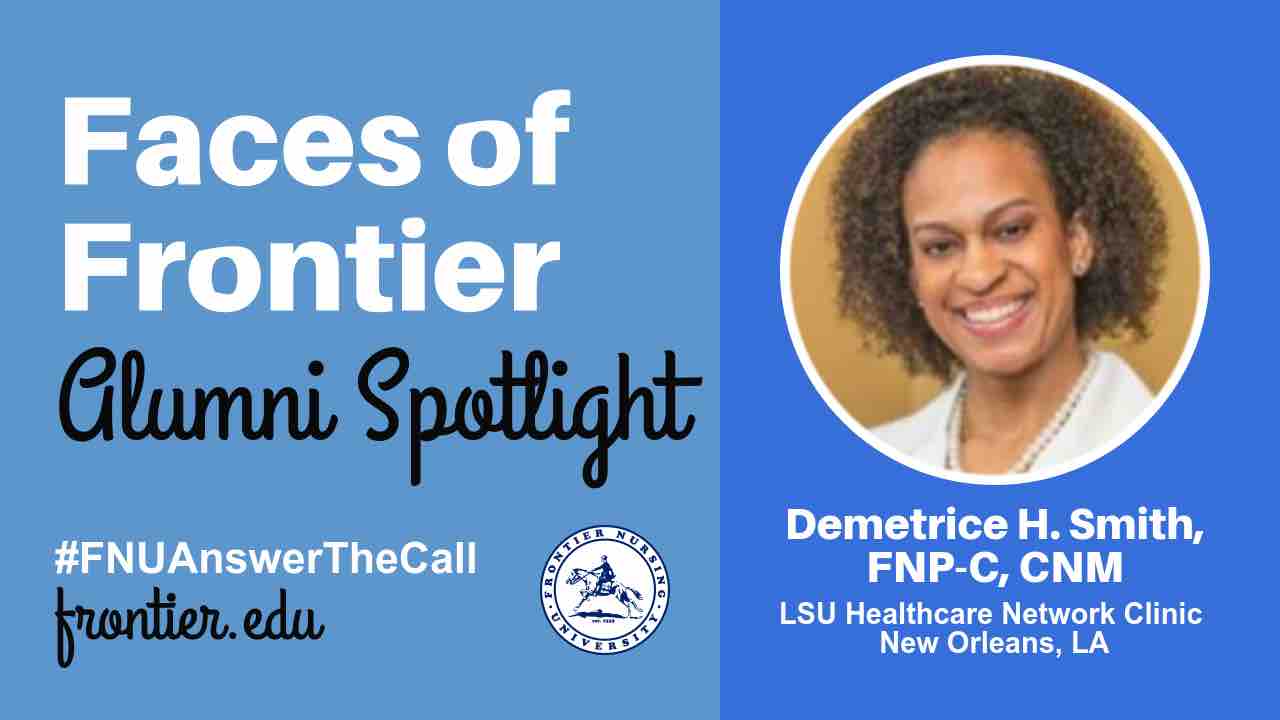
     

    Metta goes on to describe Sandy in more detail: “She prides herself on being up-to-date on every aspect of OB and GYN care, and moves from room to room providing expert care to all. She always has one student with her and often can juggle two at a time in the office, without missing a beat and making it all look effortless. She goes the extra mile for both patients as well as students. She is a human dynamo!”


    Ms. Blaser, affectionately known as “The Blaze,” has always been there for FNU students, even those who struggle clinically.  She strives to give her students the same professionalism she provides her clients. Kia Frazier (CNEP class 125, fall 2016 graduate) describes Ms. Blaser as “one of the hardest working, compassionate people that I have encountered. She is able to bring the nurse-midwifery model of care into a patient’s room with grace. She amazed me from the first day to the last day I was fortunate enough to work with her.”


    Stephanie Lowe (DNP class 12, fall 2014 graduate) echoes this sentiment and says that “Sandy taught me the value of hard work and dedication to my patients. She also taught me devotion to field nurse-midwifery through her willingness to precept so many students.”


    Ms. Blaser has been in practice over 14 years, and has been a preceptor with us since 2010.  She is active in community theater and even precepted two students while rehearsing for a role in the musical comedy “Sister Act” at Pittsburgh’s Byham Theater.


    We are thankful to Ms. Blaser’s continued service to our students.  She will receive a Starbucks gift card as a small token of our appreciation.

  • FNU Alumni Spotlight: Demetrice H. Smith FNP-C, CNM

    At the heart of Frontier Nursing University is a talented and diverse community of students, alumni, faculty, staff, Couriers and preceptors. Spotlight blogs feature members of our FNU community that are focused on the mission of educating nurse-midwives and nurse practitioners to deliver quality health care to underserved and rural populations.


    Demetrice H. Smith, FNP-C, CNM tends to women in every stage of their pregnancies, but this has not always been the case for Demetrice.


    She began her nursing career as a registered nurse in labor and delivery after completing her Bachelor of Science in Nursing degree. She went on to become a family nurse practitioner (FNP) and continued to work with women in prenatal and postnatal care.


    It soon became apparent that an area of her practice was lacking. Demetrice found that she was missing out on a critical stage of her patients’ care – the birth. Dissatisfied with this arrangement, Demetrice decided to study nurse-midwifery at Frontier Nursing University (FNU) after hearing a program recommendation from a friend.


    Since becoming a certified nurse-midwife in 2015, Demetrice is now able to care for her patients in all their pre- and postnatal needs. She is also a virtual clinic instructor for a graduate nursing program. She enjoys helping students establish a solid foundation for their nursing careers.


    One thing that sets Demetrice apart as a caregiver is her ability to empathize with her patients. She has had three high-risk pregnancies and can encourage patients in similar situations not only physically, but also emotionally. Demetrice has also lost four pregnancies, and though the heartbreak was not easy to bear, it has equipped her to provide a deeper level of care for patients experiencing miscarriages. Patients feel comfortable in her care knowing that she has not only the education and expertise to assist them but also the experience to connect with them on a personal level.


    Demetrice values her experience at FNU and is considering expanding her education with FNU’s Doctor of Nursing Practice Degree program.


    “I would recommend the FNU program to anyone. The support from the teaching staff and the ancillary staff is outstanding,” said Demetrice.


    The FNU community thanks Demetrice for her devotion and care for women’s health.

Request Information Apply Give Now