National Nurse Practitioner Week is coming up in November, and Frontier Nursing University (FNU) is celebrating by hosting a free virtual event dedicated to nurse practitioners. From November 12-18, the “Mission Focused: Nurse Practitioners Answering the Call” virtual event will explore the experiences of NPs who are passionate leaders committed to better care for families, women, and rural and underserved populations. All sessions are free and easy to join at Frontier.edu/NPWeek.
National Nurse Practitioner Week is held annually to celebrate exceptional health care providers and to remind lawmakers of the importance of allowing NPs to practice to the full extent of their experience and education. There are approximately 222,000 NPs currently licensed in the U.S. (Source: aanp.org)
NPs, prospective students and others can participate in the virtual event from anywhere and view the full schedule here. The FNU virtual event will cover topics such as:
Growing as Leaders Through Education and Practice
Caring for Rural, Diverse and Underserved Populations
Improving Care Through Innovation and Entrepreneurship
Creating a Culture of Caring in Service to Families
Frontier Nursing University is the birthplace of nurse-midwifery and family nursing in the United States and has more than 75 years of experience in delivering graduate nursing and midwifery programs.
Barbara and Donald Jonas, founders of the Jonas Center for Nursing Excellence, awarded honorary doctorate
Frontier Nursing University (FNU) hosted its 2017 commencement ceremony on Saturday, Oct. 21, in Hyden, Ky. Over the past year, more than 600 nurse-midwives and nurse practitioners from almost every state across the nation have completed an FNU distance-education program. The commencement ceremony was attended by more than 160 graduates and 1,200 of their family members and friends. The ceremony also included a special video presentation of the awarding of an honorary doctorate degree to philanthropists Barbara and Donald Jonas who founded the Jonas Center for Nursing Excellence.
FNU President Dr. Susan Stone presided over the commencement ceremony and degrees were conferred on graduates of Frontier’s Doctor of Nursing Practice (DNP) and Master of Science in Nursing (MSN) programs. MSN graduates completed the Nurse-Midwifery, Family Nurse Practitioner or Women’s Health Nurse Practitioner specialty tracks. FNU also bestowed awards on several faculty members and students including leadership and student choice awards.*
Dr. Jennifer Hatcher, director of diversity and inclusivity and associate professor for the University of Kentucky College of Nursing, delivered the keynote address. Dr. Hatcher holds a Bachelor of Science in Nursing, a Master of Science in Nursing as a family nurse practitioner, a Master’s in Public Health and a PhD in Nursing. She is the founder and director of the DREAM Center, a multidisciplinary research center focused on promoting positive health outcomes for underrepresented minorities by promoting workforce diversity, health equities research and training the next generation of health equities scholars. Dr. Hatcher has been continuously funded by the National Institutes of Health for more than a decade to conduct health disparities research focused on improving health outcomes for underrepresented minorities.
In honor of their extensive support and contributions to the advancement of nursing, FNU awarded Barbara and Donald Jonas with the honorary degree of Doctor of Humane Letters. Mr. and Mrs. Jonas established the Jonas Center for Nursing Excellence, a first-of-its-kind philanthropic program dedicated to advancing nursing. The focus is on establishing grants based on partnerships between schools of nursing and clinical practice settings as well as convening opinion leaders to develop solutions to long-standing problems challenging the nursing profession.
The Jonas Center has supported more than 1,000 Jonas Scholars and is the nation’s leading philanthropic funder of graduate nursing education. The Jonas Scholars program has had a significant impact on Frontier Nursing University students. Two members of the 2012-2014 cohort received $30,000 in scholarship support, four members of the 2014-16 cohort of students received $50,000 in scholarship support, and four more students in the 2016-18 cohort are receiving $70,000 in scholarship awards. That’s a total of $150,000 impacting ten FNU students.
By: Angela Bailey, Associate Director of Development & Alumni Relations
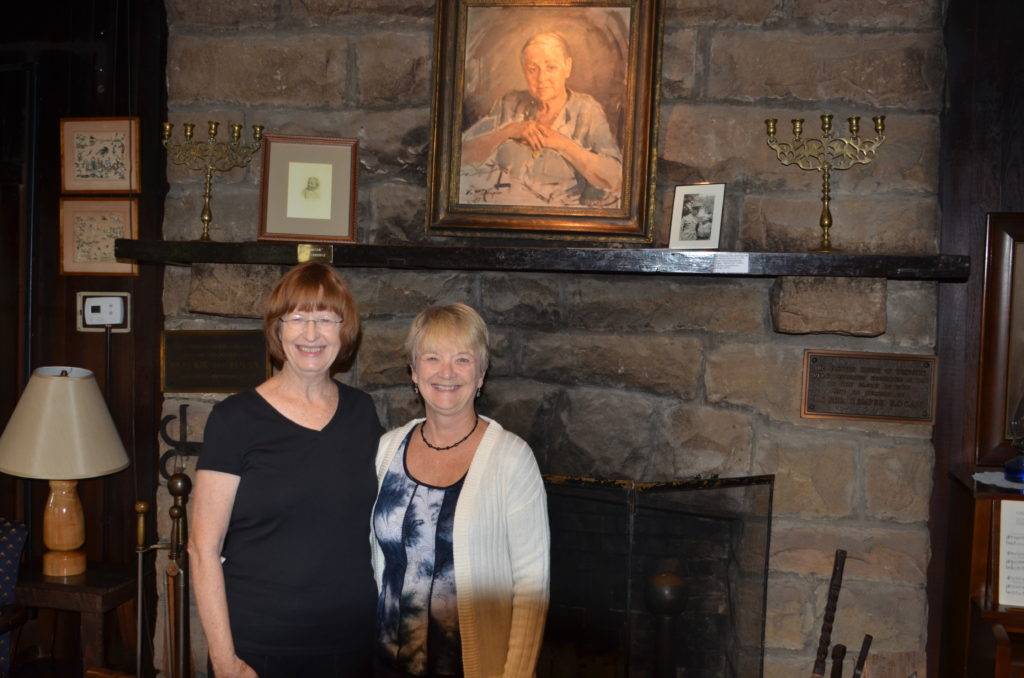
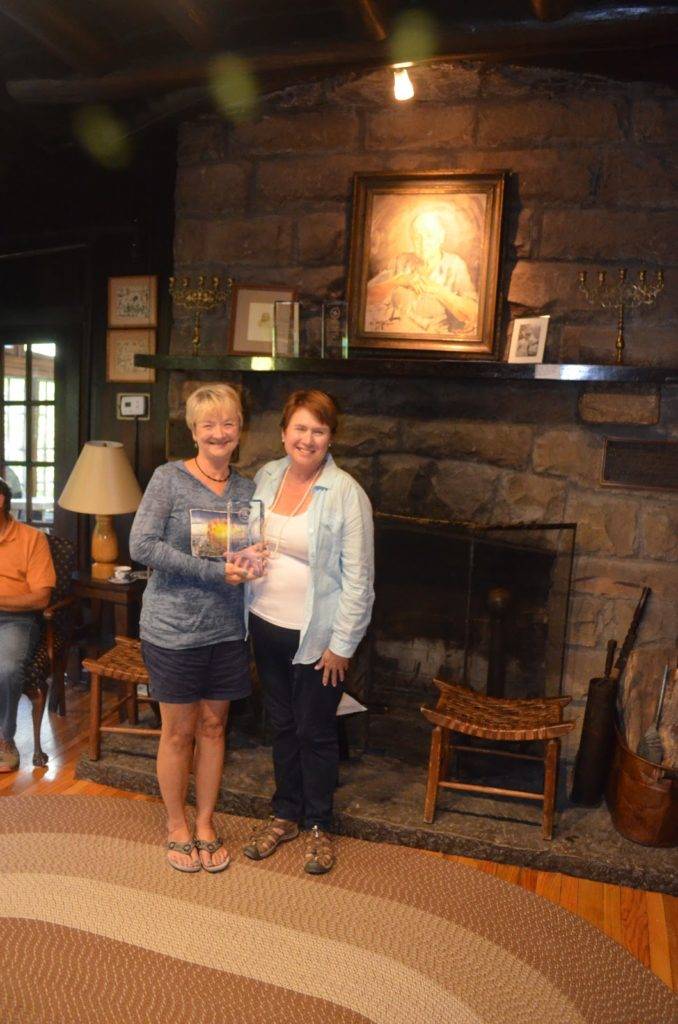
Jill Alliman, left, and Patty Kandiko, right.
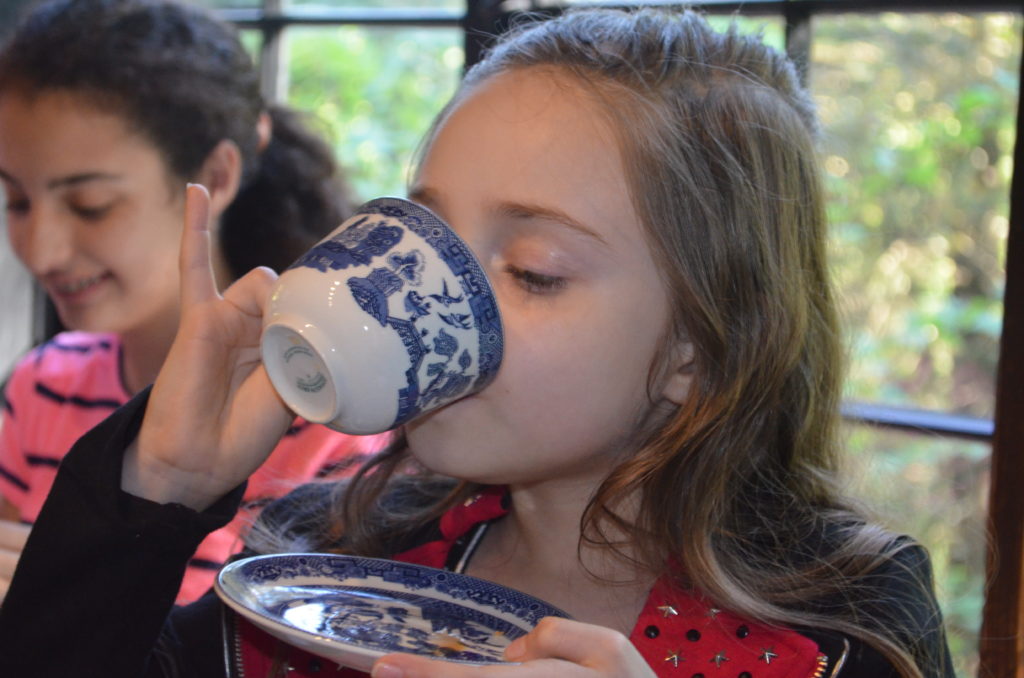
On September 22, alumni, family and friends gathered at the Big House in Wendover, Ky., to celebrate the annual Frontier Nursing University Homecoming. The weekend featured many special moments including a district tour, formal tea, and a cookout with live bluegrass music under the stars! As always the highlight of Homecoming weekend is the Awards Ceremony held in the Big House living room where Mary Breckinridge looks on from her portrait over the many men and women who work daily to continue her vision.
2017 Award Winners:
Distinguished Service to Society – Jill Alliman
Distinguished Service to Alma Mater – Patty Kandiko
Courier Unbridled Service Award – Cherry Forbes Wunderlich
Mary Breckinridge Lifetime Service Award – Thompson Charitable Foundation
The Mary Breckinridge Lifetime Service Award recognizes an individual or organization providing longstanding support and commitment to the mission and work of Frontier Nursing Service and Frontier Nursing University. We are exceptionally proud to present this year’s award to the Thompson Charitable Foundation. Founded in 1987, the Foundation was established with the primary focus of funding projects related to education, health, and human services. This includes funding for capital and building improvements for human service organizations and educational institutions along, with funding for youth and Christian organizations.
We hope that you will join us for Homecoming next year! Look for details coming soon!
Frontier Nursing University faculty, alumni, students, staff and preceptors, as part of over 200 registered participants, traveled to Alaska for the 2017 AABC Birth Institute. The conference was held from October 5-8, at the Hotel Captain Cook in Anchorage.
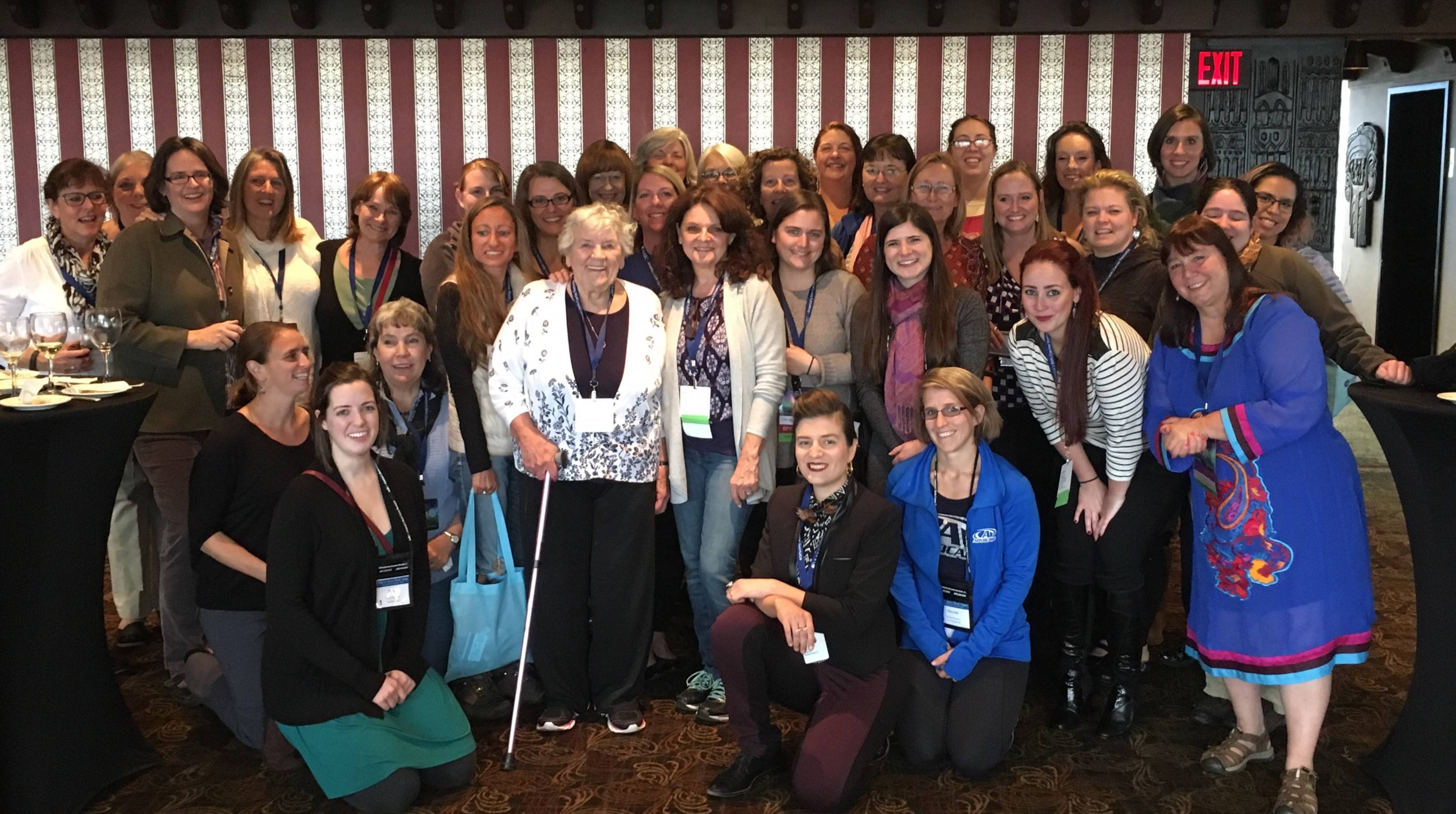
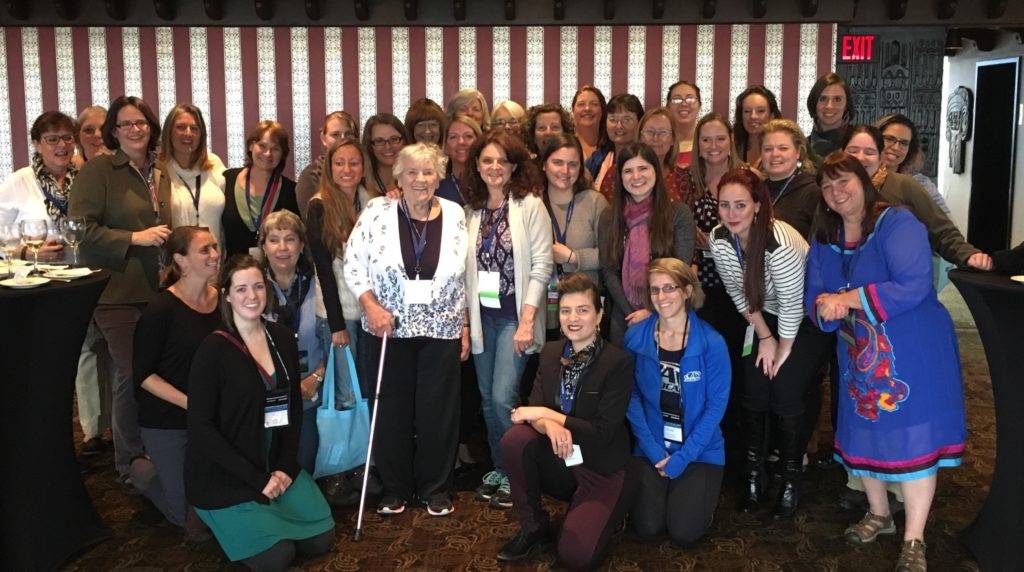
The annual FNU reception during AABC was held on Thursday, October 5. There were around 40 attendees at this year’s reception that included faculty, staff, students, alumni and preceptors. Director of Development Denise Barrett welcomed everyone and gave news from Frontier including current enrollment statistics, updates from the Psychiatric-Mental Health Nurse Practitioner track, the Nursing Workforce Diversity HRSA grant, and progress on the new Versailles, Ky., campus. Kitty Ernst attended and inspired the crowd with her remarks.
FNU Exhibit Booth and PRIDE Student Essay Winners
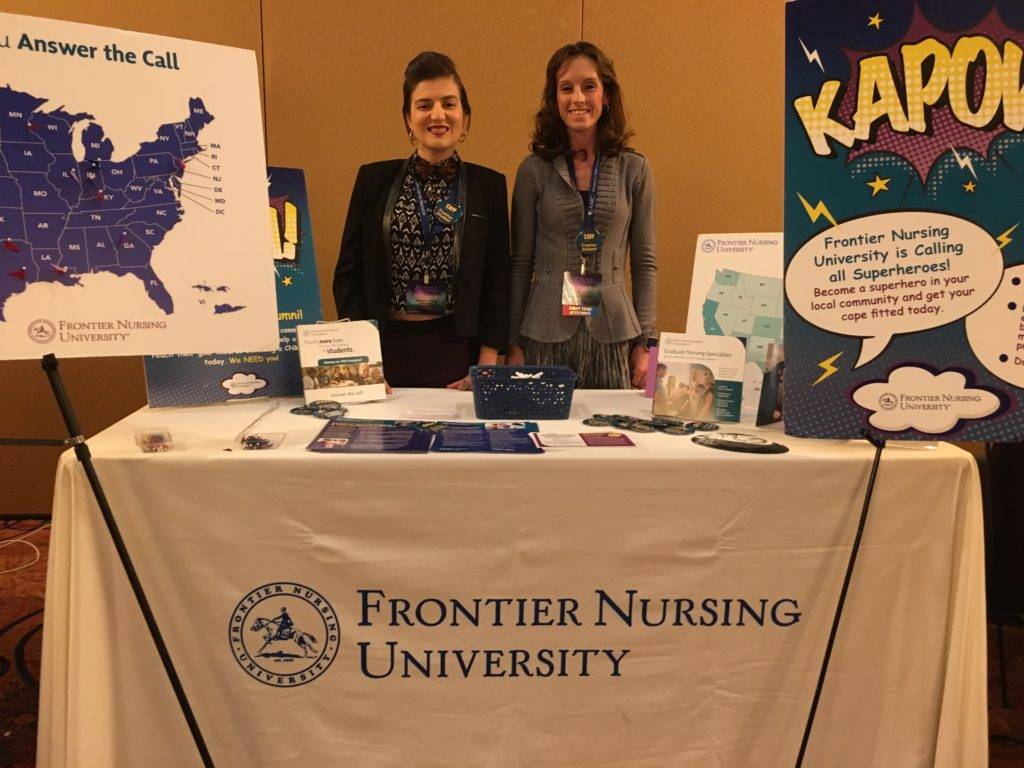
The FNU Exhibit Booth recognized preceptors as “superheroes,” and we were happy to hand out blue superhero capes to all the preceptors attending. Every year our diversity initiative PRIDE Program sends students to represent FNU at the conference. This year the students who won the essay contest and attended the conference were Jennifer McKay and Stephanie Martinez. The PRIDE ambassadors participated in sessions held at the conference, attended the FNU reception and the FNU Gala, and assisted at the FNU exhibit booth. For more details on the PRIDE program, visit www.frontier.edu/prideprogram.
FNU Virtual Event – Panel Session
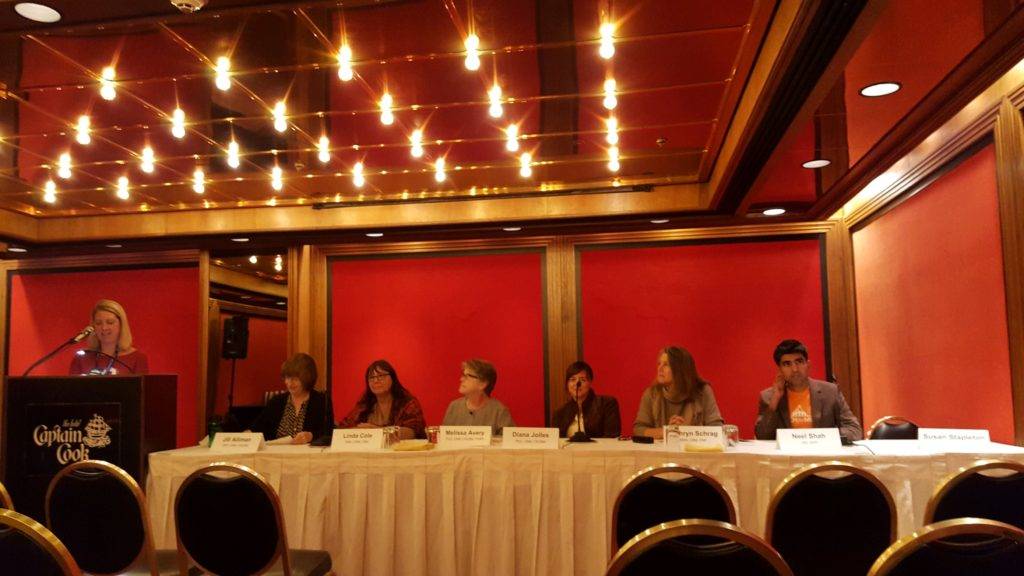
On Friday evening, FNU hosted a live-streamed online panel discussion from the AABC Birth Institute. The session titled “Freestanding Birth Centers: A Place for Woman Centered Care” featured co-editors and several authors of the recently published book “Freestanding Birth Centers: Innovation, Evidence, Optimal Outcomes.” The event was hosted as part of Frontier’s 2017 Virtual Event celebrating National Midwifery Week.
As you may have gathered from the title, this isn’t going to be a typical breast cancer awareness month post with lots of advocacy for mammography and self-breast exams. American women are already fearful of breast cancer, having received 30 years of public health messaging on the importance of early detection. We’re aware, already! We’ve been told by mammography campaigns that we are selfish or even crazy if we put off being screened, and pink ribbons abound in our everyday lives, adorning everything from cars to bathroom stalls (*Resource 1). But is all this screening and early detection really working? If we really want to “save the ta-tas”, what’s the best way to go about it?
The answer to this question is somewhat complicated, so bear with me. While the number of breast cancer diagnoses has risen since 1990, the number of breast cancer deaths has gone down. At first, it seemed reasonable to believe that the reduction in death rates was due to screening effectiveness: more women were getting mammograms, and deaths were going down, so surely screening was working! Breast cancers were being detected earlier, allowing for earlier treatment, preventing more breast cancer deaths. Makes sense, right? But growing evidence now suggests something else was really responsible for the reduction in breast cancer deaths: better treatment. Treatment was improving to the point that no matter when a breast cancer was discovered—earlier or later in the disease process—fewer women were dying of it.
While the idea that early detection saves lives makes a lot of sense intuitively, more and more evidence is suggesting that it just isn’t so. We don’t actually see a decrease in breast cancer deaths when women who are at low or average risk do formal monthly self-breast examinations. Nor do we see any differences with screening clinical breast exams performed by doctors or advanced practice nurses (*Resource 2). These findings about self-breast exams are based on studies that include hundreds of thousands of women, so the evidence that these screening methods don’t work is quite strong.
More recent evidence suggests that even mammography doesn’t actually save lives; while it may prevent a few more women from dying of breast cancer each year (about 2 or 3 in 1000), there are more deaths from other causes in the group of women that regularly engage in mammography screening — so the overall death rates are about the same, whether women get mammograms or not (*Resource 3). Mammography means slightly fewer deaths from breast cancer, and slightly more deaths from other causes, at the same ages.
So why doesn’t screening work better? After all, it seems like it should, right? It turns out that screening “works”— in the sense that it makes a difference between life and death for women with breast cancer — in a surprisingly small number of situations. Some breast cancers grow very, very slowly—and provide plenty of time for intervention no matter how the cancer is found. Other cancers (thankfully few in number!) are so aggressive that finding them early doesn’t really matter, because no available treatments work (*Resource 4). So it’s the medium-speed cancers that screening is designed to address. But even medium-speed cancers are treatable with chemotherapeutics and interventional radiology these days, and early detection just isn’t as important as it was in the days before these treatments improved.
But what’s wrong with breast cancer screening, if it reassures us? Even if it doesn’t actually save our lives, isn’t there value in finding out on a regular basis that no disease is lurking in our breasts? Well, this brings us to the downside of screening: unreliable results. It turns out that formal monthly self-breast examination, clinical breast exams by a physician or advanced-practice nurse, and mammography frequently find problems that aren’t really there. In fact, somewhere between 91 and 98% of all abnormal screening mammogram results for women ages 40 to 70 are false positives: they don’t turn out to be cancer. These abnormal results also occur frequently: 50% of women who have annual screening mammograms will experience an abnormal result in a 10-year period (*Resource 5). After an abnormal screening mammogram, we have to sort out what’s really happening….and that means a woman has to wait nervously while additional tests are performed. Sometimes that means an ultrasound or MRI, and sometimes that means a biopsy. Either way, it’s usually days to weeks before she knows whether or not she cancer. That’s a long time to be in limbo, and abnormal mammograms cause a lot of anxiety (*Resource 5).
Sometimes even with the additional testing, a woman still won’t know whether or not she really has invasive cancer. Mammograms are so good at finding tiny clusters of concerning-looking cells that they are now identifying a whole category of maybe-cancers: cells that look like they could become invasive cancer, but haven’t yet. These ductal carcinomas in situ, which make up 1/5 of new breast cancer diagnoses, (*Resource 6) are typically treated rather than observed–which means about 15 in 1000 screened women are getting treatment for abnormal cells that might, if left alone, never actually become invasive and harm them (*Resource 3).
Currently, the U.S. Preventive Services Task Force recommends screening mammography starting at age 50 for low and average-risk women, to be repeated every two years. They do not recommend clinical breast exams or formal self-breast examination. Women have the right to understand the benefits and the risks of screening, and conversations with clinicians should provide an overview of their options, not just an appointment for mammography. It should be noted that some groups of women are at very high risk for developing breast cancer, and they may benefit from mammography and/or preventive surgery. Women with heritable BRCA-1 and-2 mutations are at very high risk for developing breast cancer, as are women who have a history of chest radiation — particularly as young adults or children (*Resource 7). These women should talk with breast specialists about an individualized plan of screening and prevention. While disparities in breast cancer deaths persist among women of different ethnic and racial groups (*Resource 8), screening recommendations don’t change based on ethnicity.
If screening for most women isn’t all it’s cracked up to be, what can we do to prevent breast cancer? Fortunately, there are some things we can do to reduce our risk (*Resource 9): first, maintain a healthy weight and normal body mass index. Obesity increases breast cancer risk. Second, reduce or avoid alcohol consumption. Alcohol helps breast cancers develop. Third, breastfeed as long as possible. Breastfeeding reduces the risk of breast cancer considerably, and the longer we nurse, the better. These steps actually reduce the risk of developing breast cancer in the first place.
Finally, while we no longer recommend monthly self-breast examination–since the extra time doesn’t really make a difference, and women only have so much time and energy–it’s true that women still often find their own breast cancers in the course of daily events. Anything a woman notices in her breasts that’s different for her should be brought to the attention of her clinician to be evaluated. Then we aren’t using these tests for screening, we’re using them for diagnosis–and their benefit-to-risk balance improves.
For more information and a handy video about the benefits and risks of breast cancer screening, let Dr. Gilbert Welch explain:
Woloshin S, Schwartz LM, Black WC, Kramer BS. Cancer screening campaigns–getting past uninformative persuasion. N Engl J Med. 2012;367(18):1677-1679.
Kosters JP, Gotzsche PC. Regular self-examination or clinical examination for early detection of breast cancer. The Cochrane database of systematic reviews. 2003(2):Cd003373.
Loberg M, Lousdal ML, Bretthauer M, Kalager M. Benefits and harms of mammography screening. Breast Cancer Res. 2015;17:63.
Fletcher SW. Breast cancer screening: a 35-year perspective. Epidemiol Rev. 2011;33:165-175.
Evans A, Vinnicombe S. Overdiagnosis in breast imaging. Breast (Edinburgh, Scotland). 2017;31:270-273.
Derman YE. Clinical Practice Recommendations Based on an Updated Review of Breast Cancer Risk Among Women Treated for Childhood Cancer. J Pediatr Oncol Nurs. 2017:1043454217727515.
PDQ Screening, Prevention Editorial Board. Breast Cancer Prevention (PDQ(R)): Patient Version. In: PDQ Cancer Information Summaries. Bethesda (MD): National Cancer Institute (US); 2002.
From October 1-7, Frontier Nursing University (FNU) collaborated with nurse-midwives, faculty, and health care providers to present 2017’s Mission Focused: Nurse-Midwives Answering the Call virtual event. Each year during National Midwifery Week in October, FNU presents this exciting event to explore the experiences of Certified Nurse-Midwives who are passionate leaders committed to better care for women and families.
The closing session, titled “Nurse-Midwives on a Mission: How Can I Make a Difference?”, reflected on some of the key takeaways from the week and the action steps that can be taken by a nurse-midwife or future nurse-midwife to truly make a difference in maternity and primary care.
The 20-minute session, available here, is presented by Jane Houston DNP, CNM, Clinical Director for Midwifery and Women’s Health at FNU. Her primary question: “Are we answering the call of Mary Breckinridge?” Houston reaches a conclusion by revisiting the virtual presentations shared throughout the week to recognize midwifery-led care:
Workforce, Leadership, and Student Issues in the U.S.
In conclusion, Houston restates the question: “Are we answering the call of Mary Breckinridge?” Her answer: A resounding “YES!”
“The FNU community under the Banyan Tree is strong, resilient, resourceful, diverse, inclusive, multifaceted and is ready, able, and answering the call of our Founding Mother, Mary Breckinridge,” said Houston.
Thank you to Houston and all of the presenters, participants, and virtual attendees that made this event possible.
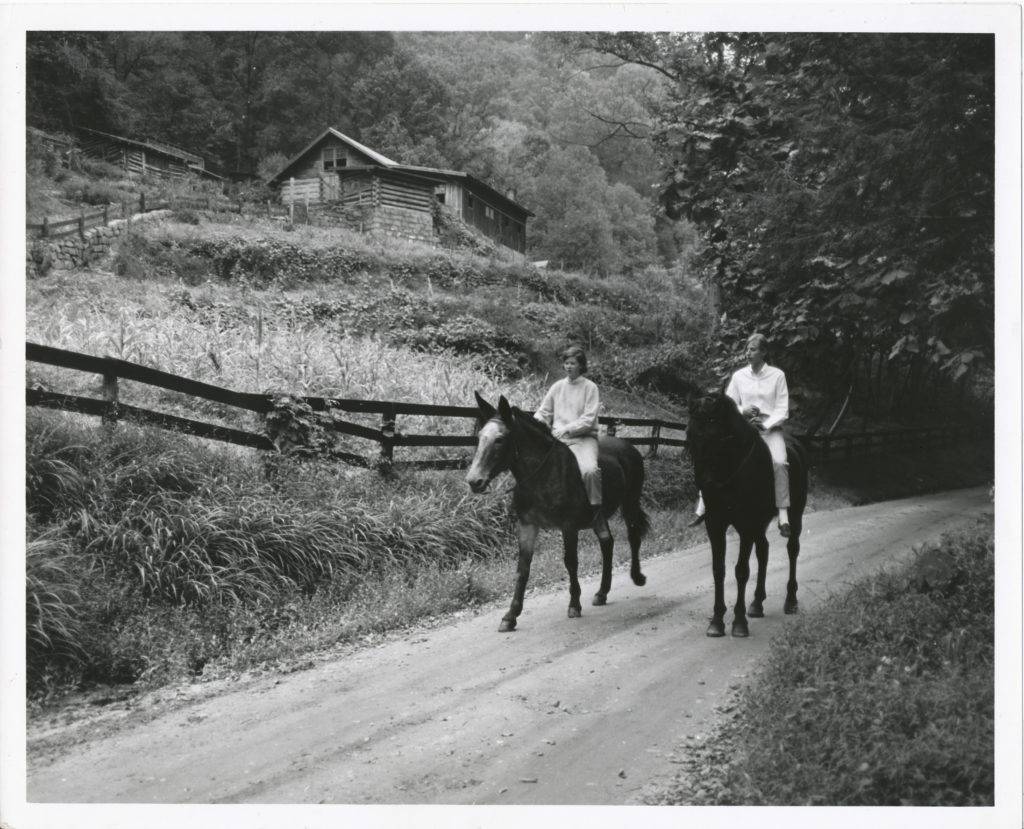
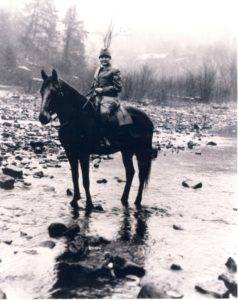
Jill Davenport served as a Courier for Frontier Nursing Service (FNS) from 1966 through 1967 in order to gain a sense of direction for her life. When Jill and her best friend, who both lived in Louisville, Ky., at the time, heard of FNS by word of mouth, the two jumped at the opportunity to ride horses and help people in the mountains.
According to Jill, she felt like a “lost soul” at school, unsure of the path she would take with her life. Her hope was that a stint in the Courier Program would be a time to figure out her next steps in life while being of service to the Appalachian community.
Jill excelled in the Courier Program, learning several different tasks aside from nursing. She was skilled at driving, very cheerful, and willing to help with whatever was needed. She routinely took care of the farm animals, made tea, and drove the FNS jeeps to pick up patients. Occasionally, Jill found herself in odd situations, like changing a flat tire in the middle of a road or chasing a loose pig.
Once, Jill had the opportunity to observe a birth at the hospital.
The woman in labor had not been given anything for her pain and was having a natural delivery.
“It was the most amazing thing I ever saw,” said Jill. “It was so amazing that I fainted right there in the delivery room!”
For the majority of her time as a Courier, Jill was assigned to assist a nurse-midwife from Texas named Anna May January. Anna was working on a breast cancer survey for the American Red Cross, which required reaching out to women who had multiple deliveries and breastfed most of their babies. Jill and Anna spent two months traveling to women’s homes and learning about their pregnancies, children and how long the children were nursed. The women welcomed Jill and Anna into their homes, many even offering them a bed to stay overnight.
Mary Breckinridge passed away about a year before Jill served as a Courier. Although she never met Breckinridge, Jill recalls that her reputation and spirit lived on through Frontier.
“Everybody loved the nurses: the moonshiners, the coal miners, the children, and the grandmothers. If you had FNS on your jeep or shirt, it was like an instant entry into a world that would have been otherwise closed,”said Jill.
Jill feels honored to have served with Frontier Nursing Service. She describes her time as a Courier as an eye-opening experience in which she gained a deep appreciation for the Appalachian region and its people.
“It was a time for which I will always be grateful,” said Jill.
At the heart of Frontier Nursing University is a talented and diverse community of students, alumni, faculty, staff, Couriers and preceptors. Spotlight blogs feature members of our FNU community who are focused on the mission of educating nurse-midwives and nurse practitioners to deliver quality health care to underserved and rural populations.
In 1928, Mary Breckinridge, founder of Frontier Nursing University established the Courier Program, recruiting young people to work in the Kentucky Mountains and learn about service to humanity. Couriers escorted guests safely through remote terrain, delivered medical supplies to remote outpost clinics, and helped nurse-midwives during home visits and births. Frontier has benefited tremendously from the 1,600 Couriers who have served since 1928.
Today, Frontier Nursing University (FNU) finalized the purchase of the Versailles, Ky., campus of The United Methodist Children’s Home and adjacent property. The properties have been under contract since March 2016, but the actual purchase has been postponed while The Methodist Home of Kentucky built their new facility in Nicholasville, Ky.
FNU, which has maintained a campus in Hyden, Ky., since its founding in 1939, as well as administrative offices in Lexington, Ky., will be moving staff offices as well as all on-campus student activities to the newly purchased property in Versailles. The move will allow FNU to better serve students and continue its longstanding commitment to the mission of educating nurse-midwives and nurse practitioners to provide healthcare to women and families with a focus on those in rural and underserved areas. FNU will maintain operation of the Wendover property including the Wendover Bed & Breakfast Inn, a national historic landmark and the historic log cabin home of FNU founder Mary Breckinridge, in Wendover, Ky., near Hyden.
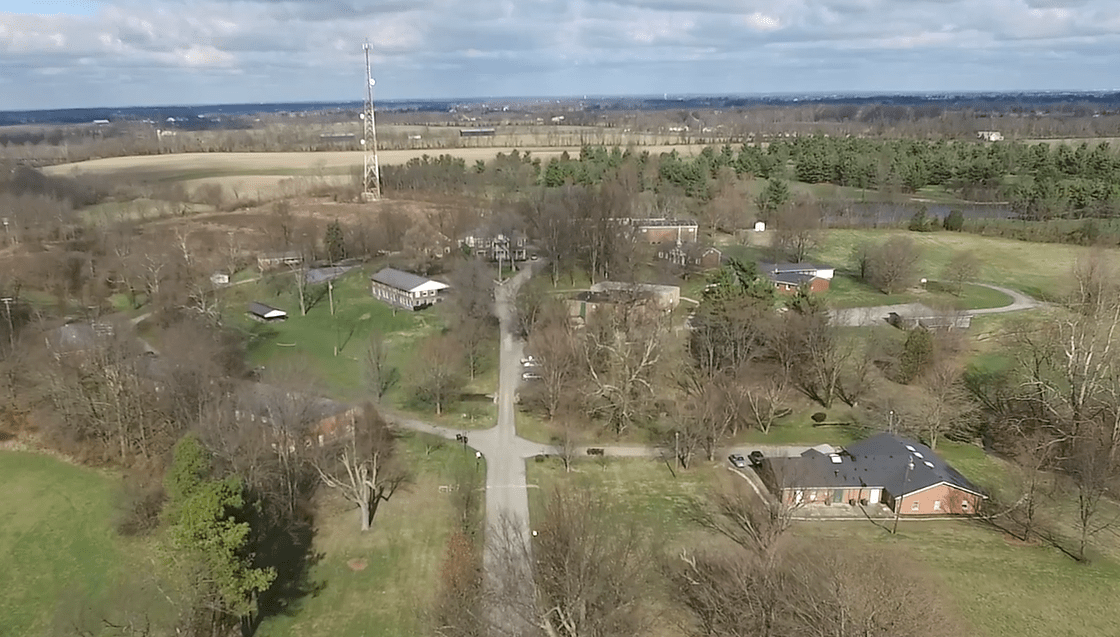
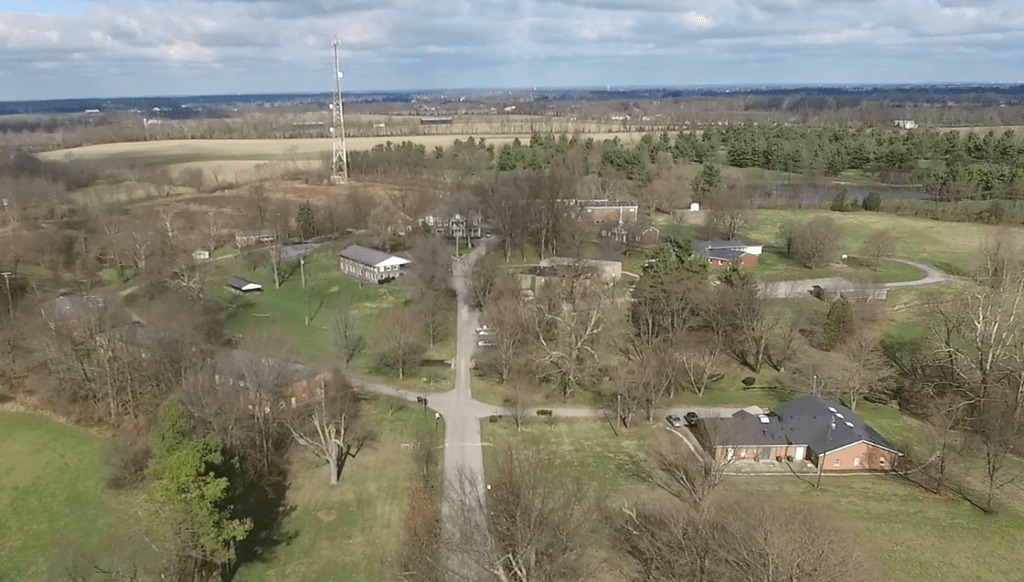
An aerial view of FNU’s future campus in Versailles, Ky.
The new campus is located in a beautiful rural setting less than ten minutes from the Lexington Bluegrass Airport, and it is accessible from major highways. The campus will allow for increased accessibility, more cutting-edge teaching and learning facilities and enhanced lodging for students and faculty.
FNU’s vision is that the opening of the Versailles campus will permanently establish Frontier Nursing University as a leader and national model of excellence for distance learning for advanced nursing and midwifery education. In addition to hosting students, the new campus can be used as a national level primary care and women’s health think tank for gathering leaders in the nursing and midwifery field for national and regional meetings.
FNU expects renovations on the campus to begin later this year with the administrative offices moving to the Versailles campus in late spring or early summer of 2018. The target date for students to begin attending orientations and clinical sessions on the Versailles campus is fall 2018.
The move to the new campus will allow FNU to continue to expand enrollment — currently over 2,000 students — and also improve program offerings in order to meet the growing demand for access to quality healthcare nationwide, especially in rural and underserved areas. FNU will continue to recruit, educate, and graduate nurses to increase access to quality healthcare for rural and underserved communities.
FNU’s founder Mary Breckinridge established the Frontier Nursing Service and what is Frontier Nursing University today as part of her demonstration project to provide care to women and families with a focus on those in rural and underserved areas. FNU is focused on educating nurse-midwives and nurse practitioners to keep Mary Breckinridge’s vision alive. FNU moved to a community-based distance education delivery in 1989 and since has been offering all programs in this format.
The goal is to reach nurses in rural and underserved areas allowing access to graduate education to become nurse-midwives and nurse practitioners and in turn better serve their communities. Mary Breckinridge’s vision of increasing access to healthcare and improving lives of families is now accomplished worldwide through the work of FNU graduates who are leaders in advanced nursing and midwifery care.


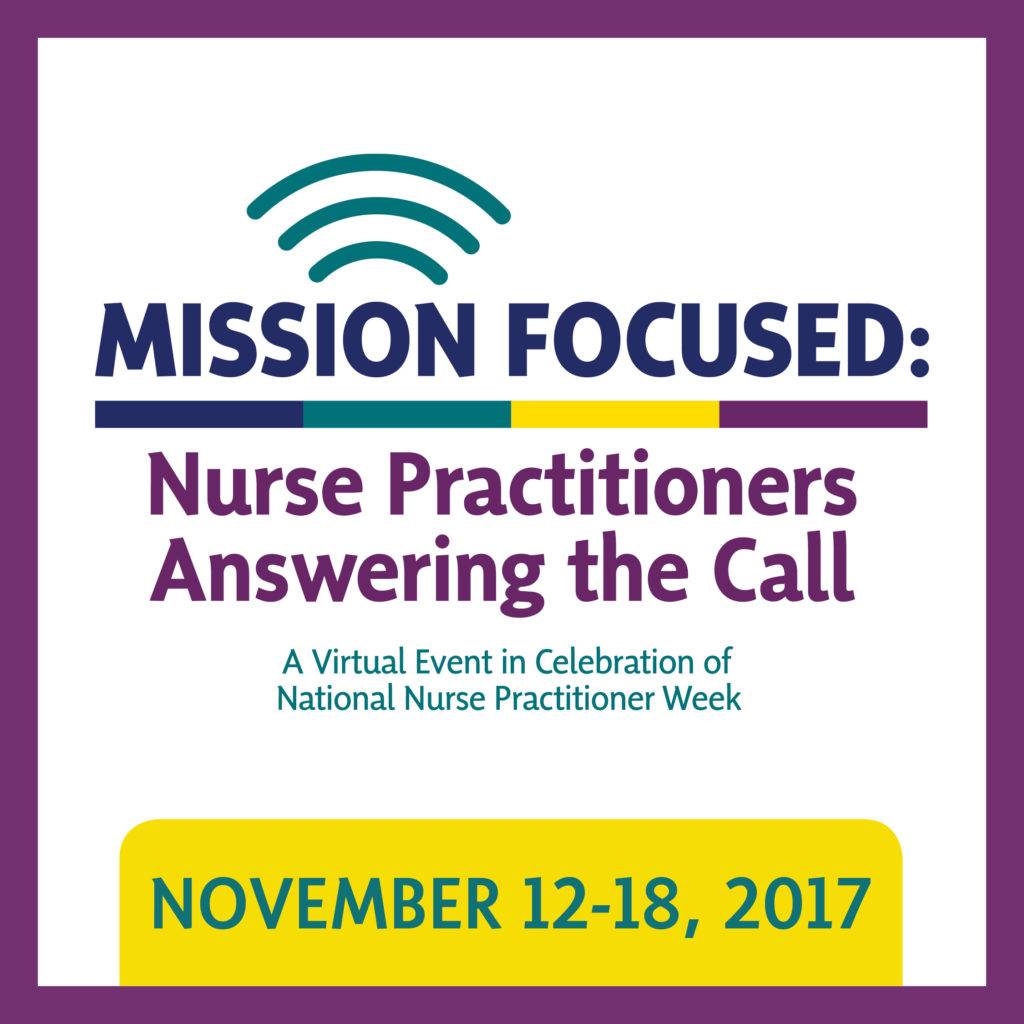 National Nurse Practitioner Week is coming up in November, and Frontier Nursing University (FNU) is celebrating by hosting a free virtual event dedicated to nurse practitioners. From November 12-18, the “Mission Focused: Nurse Practitioners Answering the Call” virtual event will explore the experiences of NPs who are passionate leaders committed to better care for families, women, and rural and underserved populations. All sessions are free and easy to join at Frontier.edu/NPWeek.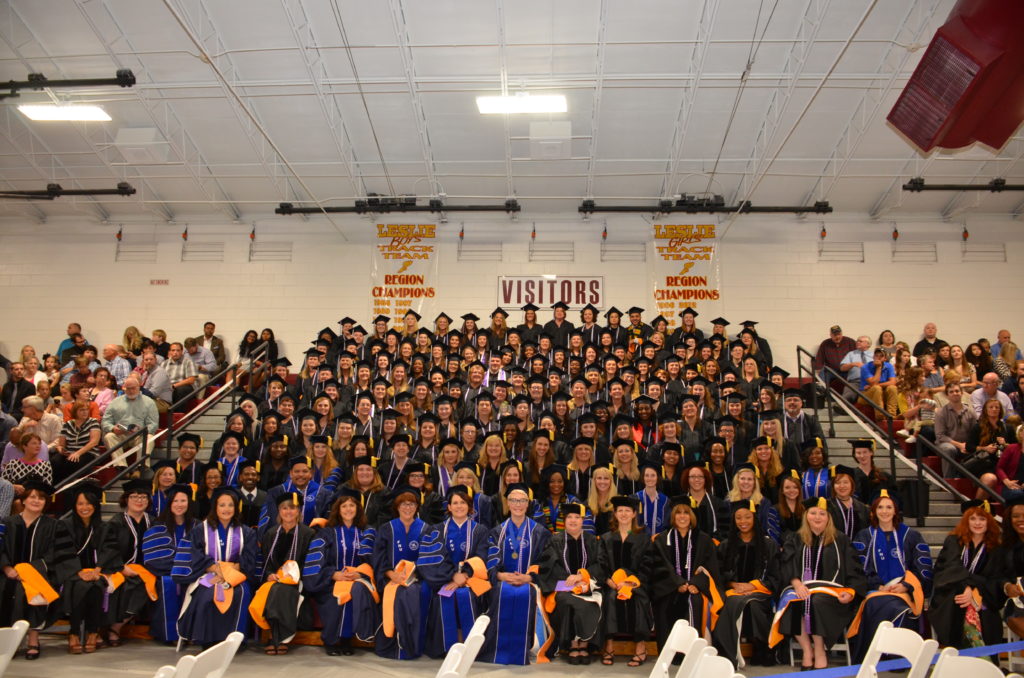



 collaborated with nurse-midwives, faculty, and health care providers to present 2017’s